



















































































































Best T Shirt Fabric for Apparel Programs, Chosen by Wear Job
The best t shirt fabric is the knit family that matches how the tee will be worn, washed, and decorated—not a single trophy fiber.
This page shortlists daily cotton jersey, cotton-poly blends, polyester t shirt fabric for sweat jobs, and a stretch rayon-spandex mill knit when drape and snap-back lead. Knit names such as jersey stay construction notes; the types of t shirt fabric guide already owns that dictionary.
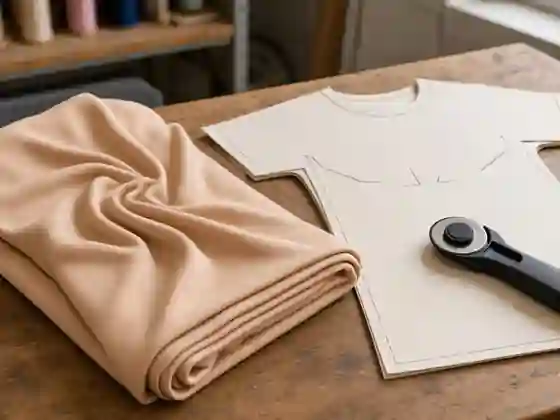
The Best T Shirt Fabric Is a Job Match, Not a Trophy Fiber
Best means the right T-shirt fabric family for the wear, wash, and print job sitting on the tech pack.
A lifestyle basic that must feel familiar and take water-based ink is a different cloth from a training tee that has to dry between sessions. Travel merino and finished-blank catalogs answer other questions; apparel buyers still have to pick cotton jersey, a blend, a performance knit, or a stretch viscose hand. Write the wear job, wash protocol, and decoration method on the RFQ before you argue about a trophy fiber name.
Scan live knits under Underwear & T-Shirt Fabric after you lock the job. Leave women’s underwear ranking and Cool T-Shirt nylon-spandex taxonomy on the pages that already own them.
| Program job | Family to sample first | Typical watch-out |
|---|---|---|
| Daily retail / conventional print | Cotton jersey, especially combed ring-spun cotton | Shrink and wrinkle if finishing is thin |
| Promo / mixed catalogs / easier care | Cotton-polyester blend | Less “pure cotton” hand |
| Training, events, sublimation | Polyester knit or poly-spandex | Heat and odor feel for some wearers |
| Soft drape with snap-back | Stretch rayon-spandex mill knit | Sample pilling and print stretch |
Cotton Jersey When Daily Comfort and Conventional Print Lead
Cotton jersey remains the daily comfort and conventional-print starting point for many casual tee programs.
Cotton breathes, takes screen and DTG inks that rely on absorbent fibers, and is the hand most wearers already trust. Yarn process still changes the shirt: open-end cotton is the cheap blank; combed ring-spun cotton is the smoother print bed retailers pay for.
Pure cotton stretch is mostly mechanical from jersey loops, so elbows and body panels recover less cleanly than knits that add spandex. Cotton knits also need shrinkage control in finishing because they are not heat-set like many polyester qualities.
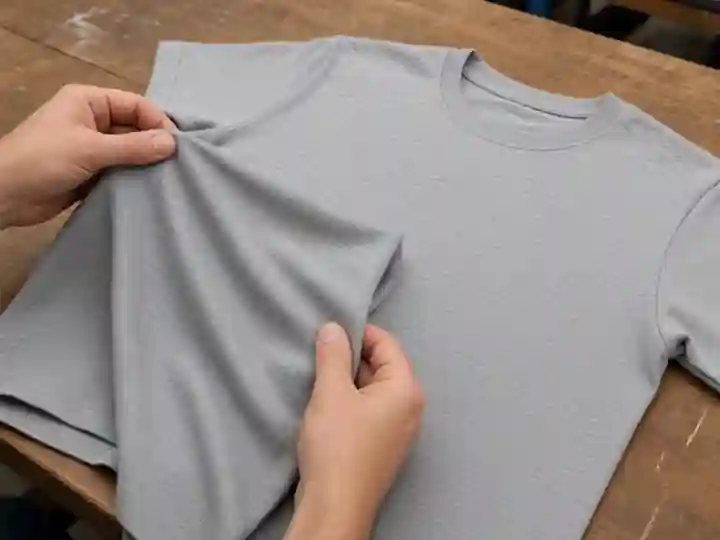
From the field: Brand founders keep saying a “premium” tee is not a GSM number — r/ClothingStartups. Fiber, yarn, knit, wash, and finish decide the hand. Lightweight fashion tees also twist and shorten after hot dryer cycles, especially on tubular blanks that torque as they relax — r/TShirt.
Cotton-Poly Blends When Wash Survival Matters as Much as Hand
Blends win when laundry, wrinkle, and mixed catalogs matter more than a pure cotton hand.
A 50/50 or cotton-majority CVC keeps some cotton comfort while polyester holds shape and dries a bit faster. Wholesale programs still treat a cotton-led 65/35 class as the quiet workhorse for value tees that see industrial washing.
Tri-blend tees add rayon for a soft, drapey, vintage hand. They are a fashion-hand choice. Armhole pilling shows up when the job is daily abrasion, not boutique merch.
Fitted cuts often sit better on a blend because a little synthetic content hides small size misses. If the hangtag promise is “feels like cotton,” put the cotton percentage on the mill sheet instead of hoping the word blend does that work.
Polyester T Shirt Fabric When Sweat and Shape Retention Win
Polyester knits lead when untreated cotton would stay wet and lose shape in a high-wash rotation.
Polyester t shirt fabric is hydrophobic, so sweat sits on the surface and evaporates instead of soaking the yarn. That is why athletic and event tees default here, and why dye-sublimation lives on polyester rather than cotton.
Untreated cotton’s absorbency is a comfort plus at a desk and a problem in hard sweat. Engineered cotton wicking exists as extra yarn or finish technology; it is not automatic on every cotton jersey.
Some wearers still call polyester “plastic.” Sample the actual GSM and finish. Microfiber performance knits can feel softer than old promotional poly blanks, but odor management stays a synthetic-program topic.
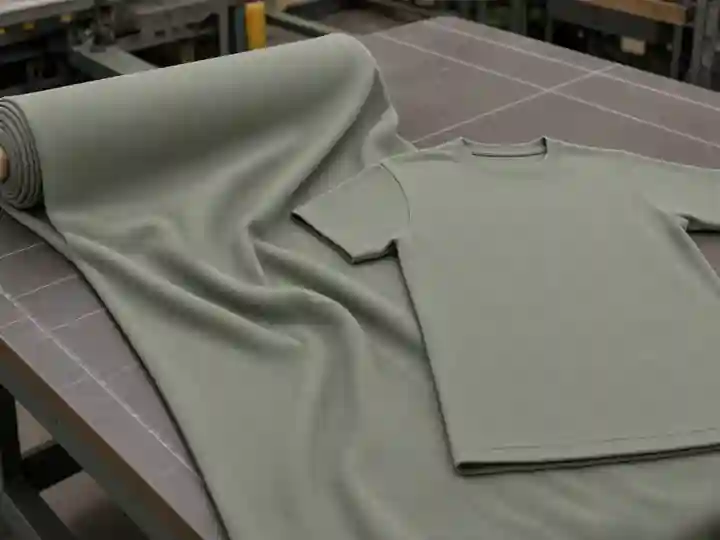
Weight, Print Method, and Label Fields That Change the Shortlist
Fabric weight (GSM), knit construction, generic fiber %, and decoration method lock the sample before anyone argues about “soft.”
Jersey knit is a loop construction, not a fiber name. CottonWorks notes that jersey, the common T-shirt knit, typically gives more stretch across the width than along the length, and cut edges can curl. Interlock is a more stable double-knit family when the tee needs a cleaner both-sides look.
Screen / DTG / sublimation are not interchangeable with every fiber. Cotton-rich knits still suit many conventional inks. Sublimation wants polyester. DTF is flexible, but heavy spandex can crack a film print when the garment stretches farther than the ink film.
US labels need generic names and percentages by weight. On this site the stretch yarn is spandex. Rayon and viscose are related naming choices—confirm the mill’s generic name on the order.
| Field | Why it changes the shortlist |
|---|---|
| Fiber % (cotton / poly / rayon / spandex) | Hand, print, and legal name |
| Knit (jersey vs interlock vs warp knit) | Drape, curl, stretch direction |
| Fabric weight (GSM) | Opacity and substance, not a quality score |
| Decoration method | Ink system vs fiber family |
| Wash protocol | Residual movement after finishing |
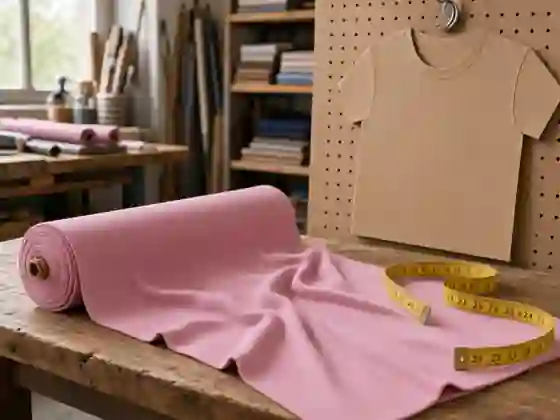
Choose This Stretch Rayon-Spandex Knit When Drape and Snap-Back Lead
When the tee must drape softly and snap back, a published rayon-spandex mill knit is the option blank catalogs usually skip.
Breathable Rayon Spandex Textile for Apparel is listed for T-shirts, casual wear, and sportswear with a smooth, breathable, stretch hand.
The live overview lists Width 172 cm, Weight 170 g/m², Composition 92% Rayon, 8% Spandex, and Conversion 1 kg ≈ 3.3 m.
The page says the cloth is made on imported warp knitting machines. Highlights copy says 8% Spandex provides 4-way stretch. Dye language mentions eco-friendly dyes plus colorfastness, wash fastness, and UV resistance as published wording—not a UPF rating.
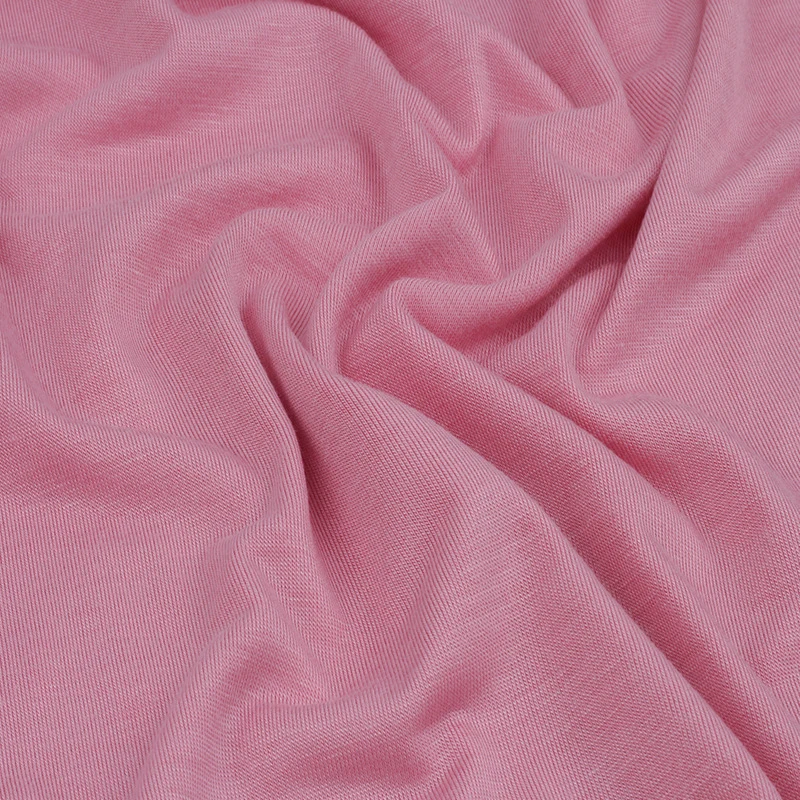
Tip: Some sewers like cotton-spandex jersey and find rayon/spandex overly stretchy and quicker to pill — Sewing Things. Wash and abrasion samples before you promise a cotton-jersey life on a viscose stretch tee.
Skip this SKU when the program must stay 100% cotton for a chosen ink system, when the job is a cotton-poly workhorse, or when you need a documented UPF number. For construction names, use the types guide; for a development ask with composition and weight already decided, use Contact Us.
FAQ
What’s better, 100% cotton or 100% polyester?
Cotton wins everyday comfort and many conventional prints. Polyester wins dry-down, shape, and sublimation. Pick the job, then sample.
Are 100% cotton t-shirts the best?
They are the best default for many daily tees. They are a weak default for hard sweat, high-wash uniforms, or all-over sublimation.
What is the coolest material for a t-shirt?
For still air and desk wear, lightweight cotton or a drapey cellulose knit often feels cooler. For movement, a polyester knit that sheds moisture usually beats untreated cotton that stays wet.
What is the best t-shirt material for printing?
Match ink to fiber. Cotton-rich for many screen and DTG jobs; polyester for sublimation; confirm DTF on high-spandex knits so the print does not crack.
What GSM is a good everyday tee?
Industry blogs talk in midweight bands, but Fabric weight (GSM) is an opacity and drape lever. Use the mill’s measured g/m² on the approved quality, including 170 g/m² when you sample the rayon-spandex SKU above.
When does a rayon-spandex knit beat cotton jersey?
When the brief wants a fluid viscose hand plus spandex snap-back rather than a classic cotton blank. Sample pilling and decoration stretch.
Is jersey a fabric type or a knit?
Jersey is a knit. Cotton, polyester, and rayon can all be knitted as jersey. Fiber answers what the yarn is.
What should a mill RFQ list besides “soft cotton tee”?
Generic fiber %, knit construction, target Fabric weight (GSM), stretch need, wash protocol, and decoration method. GSM alone will not buy a premium hand.
References
- CottonWorks™ — Single & Double Knits (jersey construction, width stretch, edge curl).
- FTC — Threading Your Way Through the Labeling Requirements Under the Textile and Wool Acts (generic names, percentages, rayon/viscose and spandex naming).
- The Sewing Things Blog — My Favorite Knit Fabrics for T-Shirts (independent maker notes on cotton-spandex vs rayon/spandex pilling).
- Reddit r/onebag — What’s the best shirt material? (Wayback) (user language: no universal best; cotton hang vs polyester hand).