



















































































































What are stretch fabrics starts on the cooling card
What are stretch fabrics? They are cloths that give under pull, usually because of knit loops, spandex fiber, or both, and a buyer still has to decide what one cooling nylon mill table actually prints.
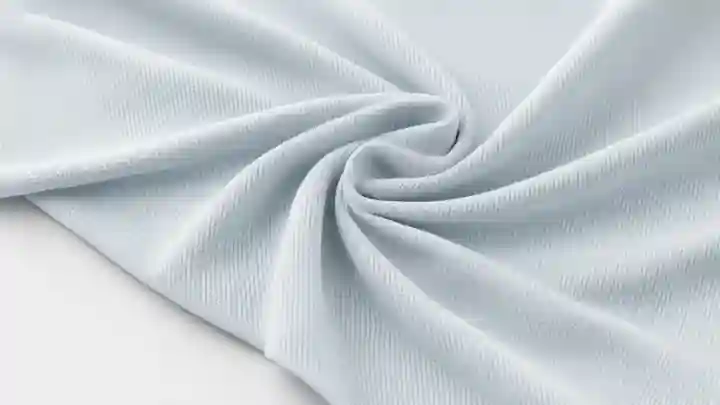
The family answer is broad. Ranking pages talk about jersey, rib, nylon spandex blends, and direction classes. This page holds that family beside one Cooling Mini-Grid Nylon Fabric row so you can see printed cells and blank cells in the same glance.
Stretch fabrics beside one cooling nylon card
Buyers who type the family question still meet one cooling nylon card that cannot stand for every stretch cloth.
A stretch-fabric search usually wants a plain definition first. Wikipedia-style pages call the family 2-way or 4-way and place it in sports clothing. That language helps a newcomer.
It still leaves the mill table as its own document rather than a glossary.
The cooling nylon row on this site answers a narrower ask. It prints a product name, a nylon and spandex composition, a width, and a weight. It leaves a family definition, a direction count, and a stretch percent off the table.
Keep both layers on the desk. Use the family words when you brief a teammate. Use the printed cells when you ask for a sample of this cloth.
A procurement reader who only saves the product URL still needs a one-line family note in the order sheet. Write that stretch fabrics are cloths that give under pull, then paste the product name and the fiber line under it. That habit stops a later teammate from treating the single URL as a full stretch-fabric encyclopedia.
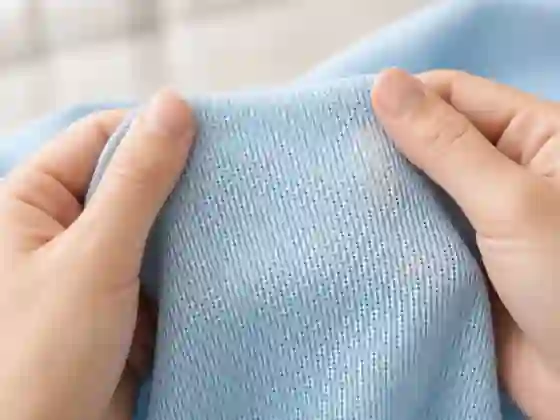
Fiber stretch and knit stretch on the same brief
On the same brief, stretch may arrive from spandex fiber, from knit loops, or from both together.
US pages name the elastic fiber as spandex when mills blend it into nylon, polyester, or cotton yarns. That name stays spandex here. Lycra is a brand name for the same fiber class, and this card does not print a brand license.
Even a quiet yarn can still give once it sits in interlocking loops. Those loops straighten under pull, which is why a jersey tee can feel stretchy before anyone reads a fiber line. Independent fabric notes and sewing education pages treat that loop give as a separate path from an elastomeric yarn.
Bias on a woven can show limited give where yarns sit at an angle. That bias movement is a construction trick, not a substitute for a printed spandex share on a cooling nylon knit. Keep bias talk in the pattern room unless the mill table names a woven stretch program.
A sportswear brief that only says “needs stretch” still has to choose a path. Ask whether the program wants printed spandex, a knit that already gives, or both.
The cooling nylon card answers the fiber path with a nylon and spandex line. It leaves knit geometry off the table.
2-way and 4-way as a buyer decision frame
Before a mill table opens, buyers often use 2-way and 4-way as direction classes.
| Direction class | What buyers usually mean | When it changes the next ask |
|---|---|---|
| 2-way stretch | Give mainly in one primary direction, often across the roll | Everyday tops and skirts that need comfort stretch |
| 4-way stretch | Give across the roll and along the roll | Fitted activewear, yoga, and swim programs that move in two axes |
Education pages and mill explainers lean on that split. Treat it as a decision frame that sits above this cooling nylon table.
If the brief still needs a direction word, write it in the sample note. Leave the composition line alone.
Sportswear fabric programs often prefer 4-way language for multi-axis motion. That preference still has to return to a named cloth with fibers, width, and weight before a cutter can plan.
Width tells how much goods sit across the table. Weight tells how heavy a square of cloth feels in a stack. Direction words never replace those two planning cells.
Printed cells versus blank cells on the cooling nylon table
Read the cooling nylon table for name, nylon, spandex, width, and weight, then notice the blank direction and stretch-percent cells.
Fiber shares on a covered textile label sit under US textile fiber identification rules. Those rules care about generic names and percent by weight. They do not turn a composition line into a stretch-percent lab sheet.
| Cell on the cooling nylon table | Printed on this card? |
|---|---|
| Product Name Cooling Mini-Grid Nylon Fabric | Yes |
| Composition 79% Nylon, 21% Spandex | Yes |
| Weight 175G/m² | Yes |
| Width 165cm (Selvage Included) | Yes |
| Stretch-family definition | No |
| Direction count (2-way / 4-way) | No |
| Stretch percent | No |
The published card lists 79% nylon and 21% spandex, a width of 165 cm, and a weight of 175 g/m².
That sentence is the whole numeric story on this page. Marketing lines about colorfastness, UV, or mill history stay off the claim list.
From the field: Sewists who only see fiber shares still ask what the cloth is called, because two nylon-spandex knits can feel different even when the percents sit close together — echoed in community shape-retention talk on KnittingHelp.
When the cooling nylon card is enough to sample
Sample when fiber, width, and weight match the brief even if direction words are still open.
A sample request that already names nylon-spandex, a target width near the printed goods width, and a target weight near the printed square weight can point at this card. The blank direction cell does not block that ask. It only means the direction word still lives in the brief, not on the table.
Hold the sample when the brief must have a printed stretch percent or a printed 2-way / 4-way cell. This table does not supply those numbers. Looking harder at the same four cells will not create them.
Browse neighboring sportswear knits in the Sportswear & Yoga Fabric hub when the job is category shopping. Come back to this table when the order needs the printed cooling nylon line.
Cooling Mini-Grid Nylon Fabric product for a stretch-fabric sample
Choose this cooling nylon product when those four cells are the ask.
| Field | Printed value |
|---|---|
| Product Name | Cooling Mini-Grid Nylon Fabric |
| Composition | 79% Nylon, 21% Spandex |
| Weight | 175G/m² |
| Width | 165cm (Selvage Included) |
Cooling Mini-Grid Nylon Fabric sits under Superior Stretch and Comfort Fabric on the product page. Open that page when the family question has already been answered and the next step is matching nylon, spandex, width, and weight.
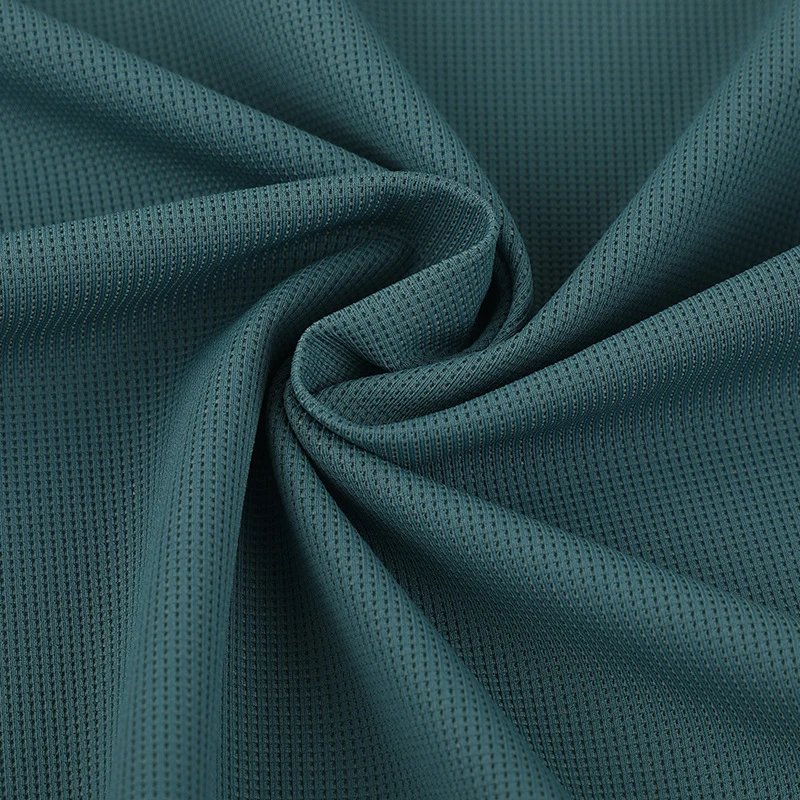
Skip this card when the brief still requires a printed direction count or a stretch percent. Choose another sheet that prints those fields, or keep the ask open until a later technical note arrives.
What a composition label still leaves open
After the percents, a composition label still leaves hand feel and garment job open.
Community threads show the same leftover questions. Someone reads “92% polyester, 8% spandex” and still asks for a cloth name.
Someone else finds cotton blends that grow baggy after a day of wear and wants a yarn that keeps its shape. Those worries are real buyer language. They are not extra numbers for this cooling nylon table.
Write the garment job beside the composition. Say sportswear fabric for a fitted top, or a cooling knit for warm training, then match the printed width and weight. Hand feel stays for the swatch stage.
If two teams argue about “enough stretch,” ask each team to name the garment job and the planning cells they already accept. Percents alone rarely settle that argument. A short note that pairs the job with nylon, spandex, width, and weight travels farther than a lonely stretch adjective.
FAQ
What are stretch fabrics in plain language?
They are cloths that give under pull. The give can come from knit loops, from spandex fiber, or from both. Buyers then place one mill card beside that family answer.
Are stretch fabrics always four-way?
No. Many education pages also name 2-way stretch for cloth that gives mainly in one primary direction. Four-way language is a decision frame for multi-axis motion, and it stays optional until a brief or a later sheet asks for it.
Is spandex the same fiber as elastane?
Yes as a fiber class. Spandex is the preferred US generic name. Elastane is the name common in continental Europe.
Lycra is a brand. This US page keeps spandex on the cooling nylon card.
Does a nylon-spandex composition prove stretch percent?
No. Composition names fiber shares by weight. Stretch percent is a separate measurement that this cooling nylon table does not print.
Can stretch come from knit structure alone?
Yes. Loop construction can give without an elastomeric yarn. Many commercial stretch cloths still add spandex when the program needs stronger return to shape.
Does “stretch cotton” mean 100% cotton?
Usually no. Stretch cotton programs often blend cotton with a small spandex share. Read the composition line before treating the cloth as pure cotton.
Is a cotton-spandex label automatically stretchy enough for sportswear?
Not by itself. Fiber shares hint at stretch capacity, but garment job, knit construction, and hand feel still decide whether the cloth fits a sportswear brief.
Can a regular sewing machine handle stretch cloth?
Often yes with a stretch or ballpoint needle and a stitch that can move with the cloth. Stop at that residual answer here; a full sewing tutorial belongs on a sewing education page.