



















































































































What Fabrics Are Water Resistant for Apparel Teams
The short answer to what fabrics are water resistant is this: tightly woven or finish-treated cloths — often polyester or nylon, sometimes dense or waxed cotton — that shed splash and short drizzle. They are not the same as waterproof coatings or laminates built to stop liquid under pressure. Below: the usual families, the water resistant vs waterproof split, and a water-repellent polyester when the job is light rain apparel.
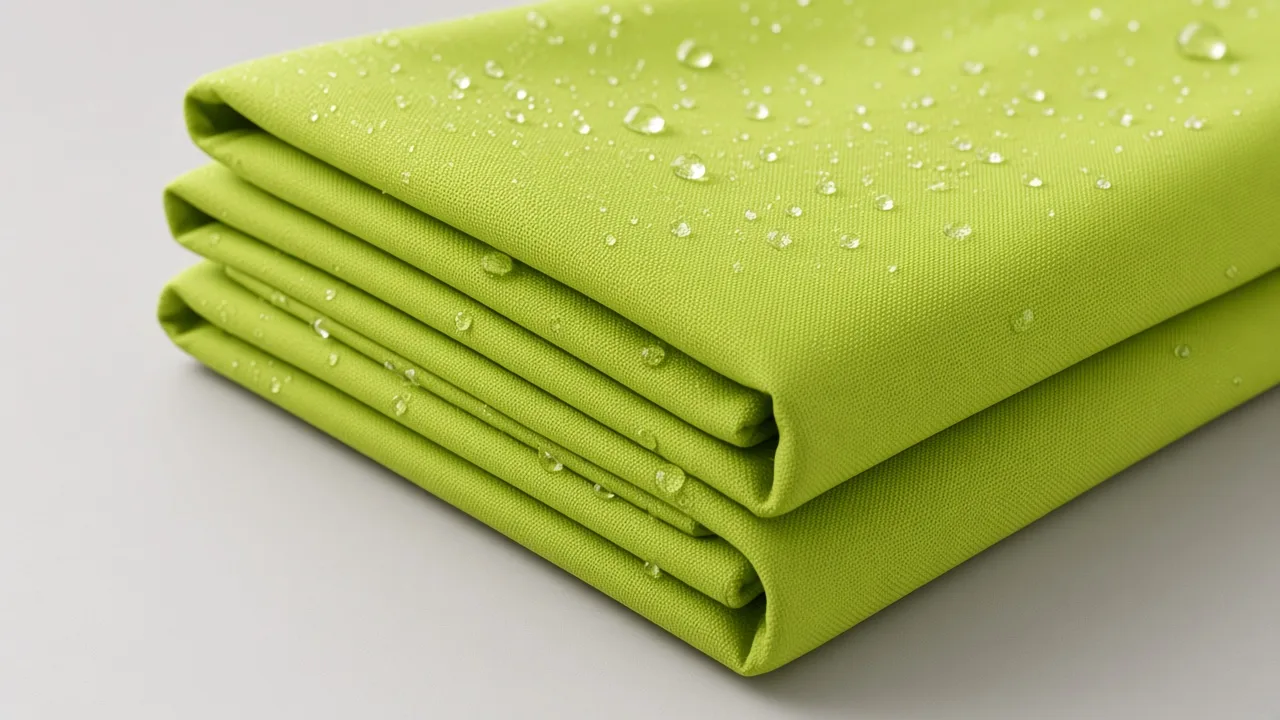
What Water-Resistant Fabrics Actually Do
They shed light rain and splash; they are not a promise that water cannot get through.
A water-resistant fabric slows wetting. Drops sit up or run off instead of spreading at once. If rain lasts, if water pools, or if someone leans on a wet seat, the same cloth can still darken and pass moisture.
That is why commuter shells, fashion “rain” jackets, and casual outdoor pieces often use water-resistant cloth. The garment stays wearable in a short shower. It is the wrong mental model for a taped-seam storm shell.
Browse Shengchao’s waterproof fabric hub when you need the barrier side of the same cluster.
Water-Resistant, Water-Repellent, and Waterproof
Resistant is light moisture; repellent is a beading face finish; waterproof is a pressure barrier.
Retail aisles mash the labels together. For sampling language, keep three jobs:
| Label | What the cloth is doing | Typical apparel use |
|---|---|---|
| Water-resistant | Tight weave or inherent fiber behavior slows soak-in | Splash, mist, short drizzle |
| Water-repellent | Face finish (often called DWR) makes droplets bead | Light-rain shells that should stay dry-looking on the outside |
| Waterproof | Coating, laminate, membrane, or film blocks liquid under pressure | Rainwear that must stay dry in sustained weather, usually with planned seams |
A durable water repellent (DWR) finish is a common way to make polyester or nylon behave well in light rain. It is still a face story. On a laminated rain shell, a worn DWR can let the face wet out even when the membrane still blocks liquid. For waterproof construction and weight choices, see lightweight waterproof fabric.
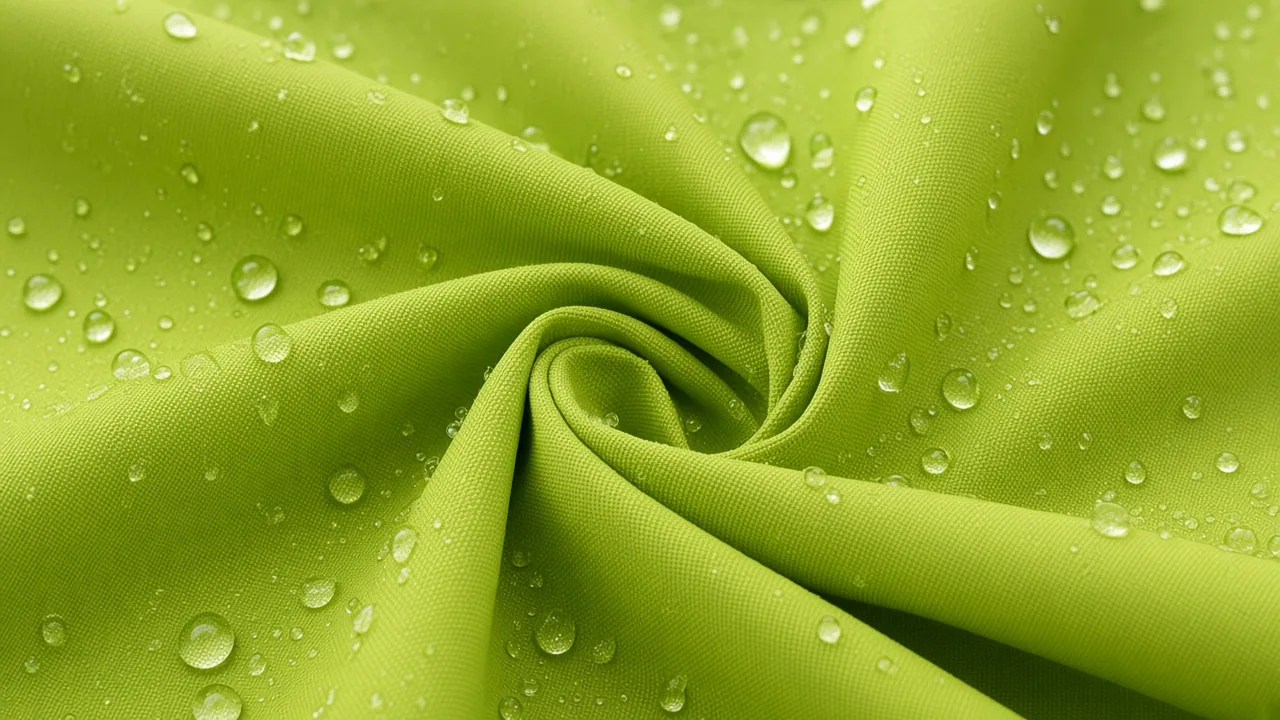
Types of Water Resistant Fabric You Will Actually Meet
Tight polyester and nylon, DWR synthetics, some dense or waxed cottons — not untreated open weaves.
These are the types of water resistant fabric apparel teams keep meeting on RFQs:
- Tight polyester or nylon: A dense weave gives splash a harder path. 100% polyester does not mean waterproof. It can be water resistant, especially with a tight weave or a water-repellent finish.
- DWR-treated synthetics: Ripstop nylon and polyester rain jackets in the consumer market usually rely on this face chemistry. Some brands add a polyurethane coating on the back when they also claim waterproof.
- Dense or waxed cotton: Tight cotton and waxed canvas show up when teams want a natural-fiber hand. Wax adds weight when wet. It is still a different job from a continuous polymer film.
- PUL, vinyl, and oilcloth: Makers treat these as waterproof classes for wet bags and covers. They are useful to name so they are not confused with shower-proof shirting.
An outdoor jacket built for a short commute can live on a tight polyester with DWR. The same silhouette asked to survive a day of trail rain usually needs a barrier construction and a seam plan, not only a beading face.
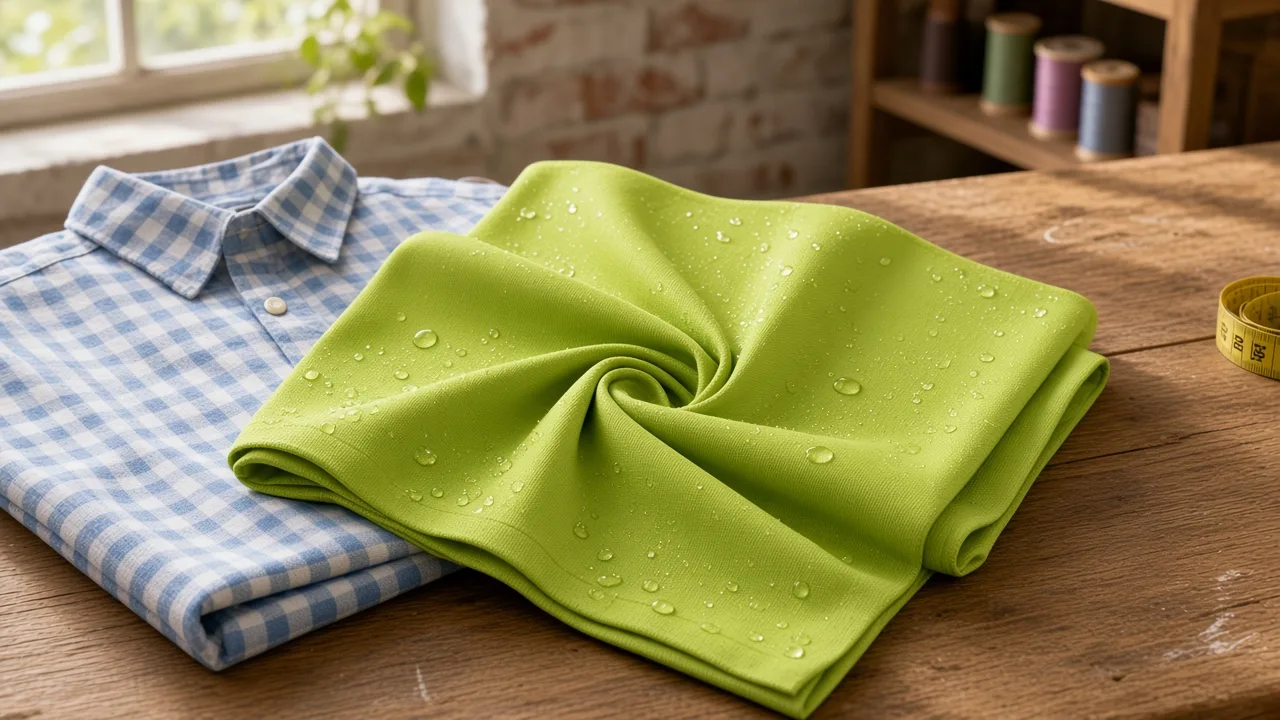
Open weaves, untreated silk, and loose cotton soak quickly. They are not water-resistant fabrics in any useful sampling sense.
How Face Finishes Are Checked
Spray methods rate face wetting; hydrostatic methods rate penetration — do not treat them as one number.
AATCC TM22-style spray tests wet a taut specimen and score the wetted pattern. They describe how much the face stayed dry-looking. They do not, by themselves, say how much water pressure the cloth held.
Hydrostatic methods (often discussed with AATCC 127 or ISO 811 families) push water until it comes through. Those reports belong to waterproof barrier work. No spray grade or water-column figure is invented here for any Shengchao SKU.
If a mill sheet only says “water resistant,” ask which method was run and which face was tested. If the sheet is silent, treat the phrase as marketing language until a method appears. Buyers who confuse a spray result with a hydrostatic result often over-spec a light-rain cloth or under-spec a storm shell.
When Water-Resistant Fabric Is the Wrong Spec
Hours of rain, pooling, or taped-seam rainwear need a waterproof construction, not only a beading face.
From the field: Sewers hunting a “natural waterproof” cloth still draw a line after long rain. One r/sewing poster called merino water resistant because of lanolin, then said they would still want a plastic raincoat after standing out for hours. Replies pointed to waxed canvas or engineered coatings, not untreated wool. That is user language for a spec switch, not a lab result.
Switch away from water-resistant-only cloth when the garment must stay dry in prolonged rain, when water will sit in folds, or when stitch lines have to stay sealed. Sewing creates holes. If the finished item must remain a barrier, plan tape, weld, or another join method the mill supports.
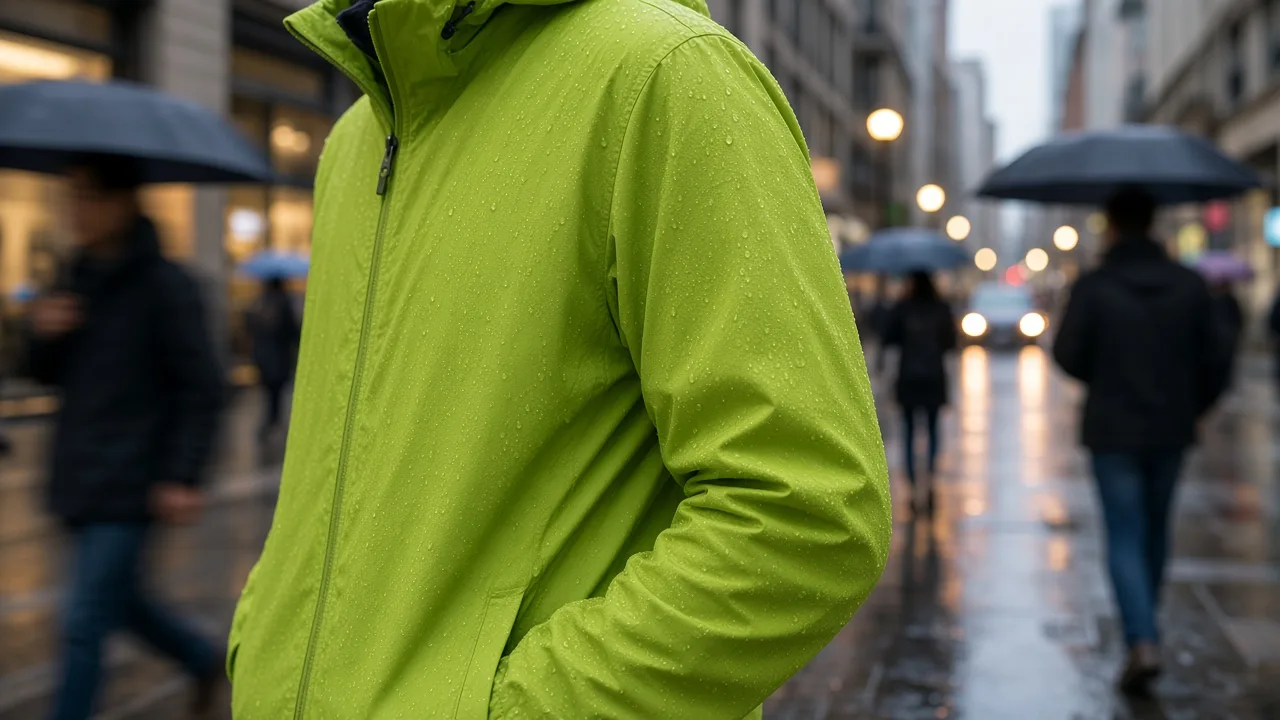
A city commute outdoor jacket that only sees splash can stay on a water-repellent polyester. A multi-hour trail shell should not. Pack straps, seat surfaces, and long contact with wet gear also punish face-only protection faster than a dry hang-test suggests.
Choose a Water-Repellent Polyester for Light Rain Apparel
Use the published 200 g/m² polyester with a light-rain finish; do not treat it as a hydrostatic waterproof rating.
When the brief is light rain and splash on a polyester apparel cloth, Shengchao’s water-repellent polyester fabric matches that job on the live product page. Soft handfeel and wrinkle resistance are listed alongside the water-repellent finish for jackets and casual outdoor apparel, which fits fashion and sportswear shells that only need shower-level protection.
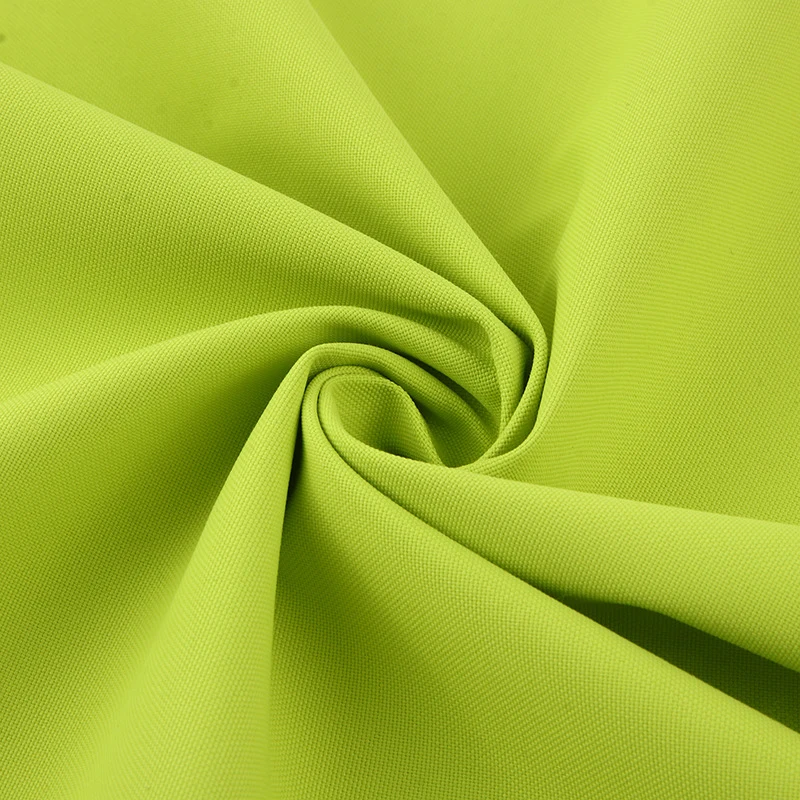
| Item | Published detail |
|---|---|
| Composition | 100% polyester |
| Weight | 200 g/m² |
| Width | 145 cm |
| Density | 210T |
| Yarn count | 150 × 150 D |
| Stated finish job | Water-repellent finish for light rain and splashes |
| Applications listed | Jackets, casual wear, fashion, sportswear, outdoor apparel |
The live page does not publish a spray grade or a hydrostatic value. Do not invent one in the tech pack.
This SKU is the wrong shortlist item when you need a documented waterproof barrier, stretch nylon-spandex rain cloth, or the lightweight waterproof selection path. Use the hub for other waterproof constructions. Sample conversation can go through the usual contact channel once the spec sheet is in front of both sides.
FAQ
Which fabrics are water resistant in everyday apparel?
Tight polyester and nylon, many DWR-treated synthetics, and some dense or waxed cottons. They shed splash and short drizzle. Open, untreated cloths are not in this group.
Does 100% polyester mean waterproof?
No. 100% polyester does not mean waterproof. The fiber can help a tight cloth resist light moisture, and a water-repellent finish can add beading. Waterproof still depends on coating, laminate, membrane, or another barrier — plus how the garment is sewn.
What is the difference between water-resistant, water-repellent, and waterproof fabric?
Water-resistant cloth slows soak-in. Water-repellent cloth has a face finish that makes water bead. Waterproof cloth is built as a liquid barrier under pressure. The three words are not interchangeable on a spec sheet.
Which fabric is 100% waterproof?
No fiber name is “100% waterproof” by itself. Vinyl, PUL, coated nylon or polyester, and laminated membranes are the classes people mean when they want a full barrier. Seams still decide whether the finished item leaks.
Is a spray test the same as a waterproof rating?
No. A spray test such as the AATCC TM22 family scores how the face wets. A hydrostatic test scores penetration under pressure. Ask for the method name before you treat either result as the other.
Is wool or untreated cotton water resistant?
Dense wool and some tight cottons can shed a short shower. Untreated cotton and many wools still soak in lasting rain. Waxed cotton is a treated special case, not a default cotton shirting behavior.
When should a buyer specify waterproof fabric instead?
Specify a waterproof construction when rain will last, water may pool, or stitch lines must stay sealed. A beading face finish is not that specification.
What does Shengchao’s water-repellent polyester publish for light rain?
The live page lists 100% polyester, 200 g/m², 145 cm width, 210T, 150 × 150 D, and a water-repellent finish for light rain and splashes on jackets and casual outdoor apparel. It does not list a hydrostatic or spray number.
References
- Waterproof fabric (Wikipedia) — constructions, DWR wet-out, barrier materials.
- AATCC 22 water repellency spray test (method explainer) — wetting versus penetration language.
- Waterproof fabric guide (The Sewing Directory) — ripstop and laminated cotton as resistant rather than full barriers.
- r/sewing: looking for natural waterproof fabric (Wayback) — hours-in-rain versus lanolin “resistant.”
- r/sewing: is there a type of fabric that is water resistant? (Wayback) — tight-weave polyester, waxed canvas, PUL.