



















































































































How a Mill Buyer Splits 170g Cotton Polyester Spandex Plain Fabric
170g cotton polyester spandex plain fabric is a headline with five open slots. A mill cannot pull one stock style from that phrase alone.
The number belongs in the weight line. Cotton, polyester, and spandex each need their own share of fiber weight. Plain still has to say whether the buyer means a woven 1/1 or an unprinted solid.
A live search on 5 October 2026 did not converge on one tested recipe. Shops offered polyester-spandex wovens, ITY knits, and cotton-spandex jerseys under neighboring titles.
Shengchao’s catalog search for cotton, polyester, and spandex together returned no product. The polyester-spandex row that is actually published sits at a different weight and leaves cotton off the label.
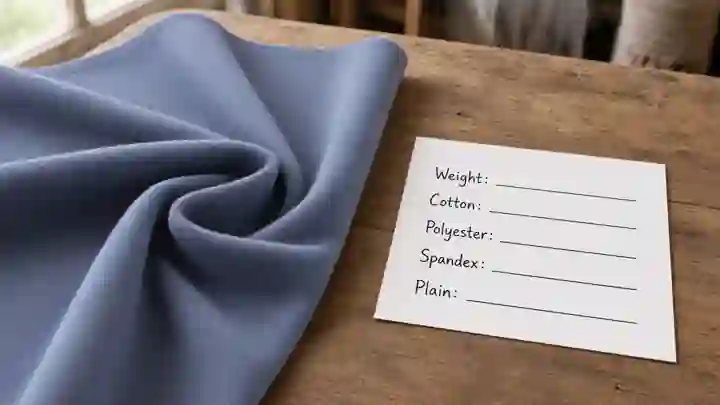
What the words 170g cotton polyester spandex plain fabric ask a mill to make
The headline asks for a weight, three fibers, and a construction word, and those slots stay separate until a spec sheet fills them. Treating the whole phrase as one style name is how a sample request goes to the wrong family.
Read it from the left. “170g” is a mass figure, usually grams per square meter, and it says nothing about fiber. “Cotton” names a natural fiber.
“Polyester” names a manufactured fiber. “Spandex” names the stretch fiber. “Plain” is the leftover word, and mills use it in more than one way.
Market pages under the same search show how wide the gap is. One woven listing is 96% polyester and 4% spandex. A white ITY knit uses that same 96% polyester and 4% spandex split and is built as a knit with a smooth face.
A 170 g card from another mill puts polyester, plain, and spandex in the title and lists “cotton-like” as a finish option. Cotton-like there is a finish name, with no cotton percentage beside it.
| Slot in the headline | What a buyer still has to write | What the search pages actually showed |
|---|---|---|
| 170 g | Mass per unit area, and how it was weighed | Other masses, including 190 GSM knits and a 226 gsm woven |
| Cotton | Percentage of fiber weight, or none | Often absent, or present only in a two-fiber cotton-spandex story |
| Polyester | Percentage of fiber weight | Common as the dominant fiber in polyester-spandex listings |
| Spandex | Percentage of fiber weight | Often a small share, sometimes the only stretch fiber beside cotton |
| Plain | 1/1 weave, or solid and unprinted | Both uses appear, sometimes on the same neoprene cloth |
Until those five lines are filled, two suppliers can both answer the headline and ship different cloth.
Why 170 g/m² has to stay in the weight slot
170 g/m² is only the asked mass per unit area, and it is not the weight printed on the live polyester-spandex row. Fabric weight, in mill language, is that mass. Softness and thickness sit on other lines.
ASTM D3776/D3776M covers measurement of fabric mass per unit area, the quantity the trade still calls fabric weight. The store page lists four options. Option A is the full piece, roll, bolt, or cut.
Option C is a small swatch, and that result applies to the swatch rather than automatically to the whole lot. SI units and inch-pound units are separate. A headline that says 170 g does not record which option was used.

People also ask whether 170 GSM fabric is thick. Thickness is a distance through the cloth. Mass per unit area can feel light or full depending on how the yarn is packed.
A spongy neoprene in the same search is described as heavy at 300 gsm and between 1 mm and 2 mm thick. That pair of figures belongs to that neoprene listing. A 170 g tag on another cloth does not inherit that thickness.
Buyers who shop only the gram number run into the same complaint production teams post about blanks. Blend changes the hand even when the grams match. Polyester spandex fabric by the yard can land near 170 g, near 190 GSM, or well above it, and the hand follows the fiber and the loops or the weave, not the headline alone.
How cotton, polyester, and spandex take three separate lines
Cotton, polyester, and spandex are three fiber lines, and a US label lists them by share of weight. Leaving one percentage blank is how cotton appears in a chat and disappears on the roll.
The FTC textile labeling guide requires generic fiber names and percentages by weight, largest share first. Fibers under 5% are generally called other fiber. Spandex can still be named at a small share when it is there for stretch.
The guide’s own example is 96% acetate and 4% spandex. There is a 3% tolerance for fiber content, which covers small manufacturing drift. That tolerance still leaves cotton off any cloth whose label has no cotton.
16 CFR 303.7 sets the US generic names. Polyester is a manufactured fiber whose fiber-forming substance is at least 85% by weight of the specified ester polymer. Spandex is a manufactured fiber whose fiber-forming substance is at least 85% segmented polyurethane.
Those 85% figures describe the fiber itself, separate from any fabric blend recipe. In US buyer prose the stretch fiber is spandex. Some pages prefer another generic name used outside the US, and buyer-facing prose stays with spandex.
Cotton changes the story when it is actually on the label. A cotton-spandex mill guide in the search results calls 95% cotton and 5% spandex a typical blend for that two-fiber cloth. That recipe has no polyester line.
A 50% cotton and 50% polyester blend, the ratio people ask about next, has no spandex line. Three names in a headline do not create either of those recipes.
Dye route follows the fiber that is really there. Cotton-rich cloth is often discussed with reactive dyeing. Polyester-rich cloth is discussed with disperse dye and, on high polyester shares, sublimation.
A buyer who needs cotton’s dye path has to see cotton’s percentage. A buyer who needs polyester’s color path should look for a cotton percentage before treating the word “blend” as a cotton line.
When plain means a 1/1 weave and when it means a solid
Plain weave means a 1/1 woven interlacing, while plain on a cloth card often means an unprinted solid. The headline’s last word does not choose between them.
CottonWorks describes the plain weave as one warp yarn over one weft yarn and under the next, with the neighboring warp doing the opposite. The notation is 1/1. The design repeats on two warp yarns and two weft yarns.
Because the yarns cross often, the cloth tends to be stiffer, with less drape, and more stable against skew, seam slippage, picking, or snagging. That description is about woven cloth. A knit stays a knit when the page never names a 1/1.
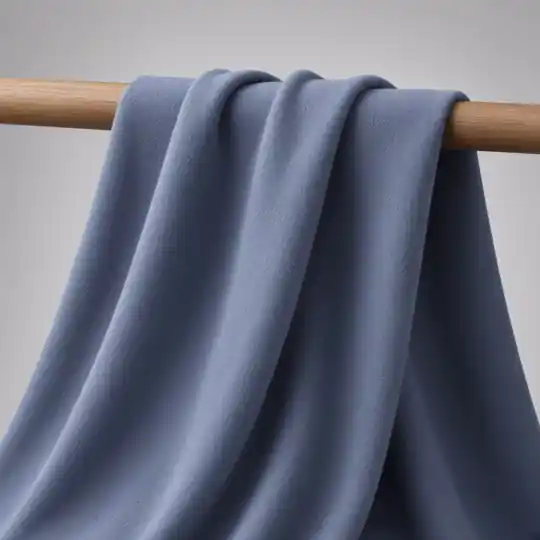
The neoprene page tied to a top video result shows the other use. Its pattern line says Plain, Solid. Its construction line says Knit.
Composition on that page is 92% polyester and 8% elastane, which a US label would call spandex. The same cloth is stretchy, opaque, and about 1 mm to 2 mm thick. An Amazon listing of a related color even prints Weave Type as Plain.
The maker’s own page still says knit. “Plain” there means the cloth is a solid. The loom did not run a 1/1.
So a buyer who needs chambray, broadcloth, or another true plain weave has to write 1/1 or plain weave, plus yarn and ends and picks. A buyer who only wants an unprinted face should write solid. Using one word for both is how a warp-knit roll gets ordered as if it were shirting.
What the live polyester-spandex product row is allowed to claim
The live row is polyester and spandex at 195 g/m² and 165 cm, made on warp knitting machines, for tops, yoga wear, and sportswear. It answers a polyester-spandex program. It does not fill the cotton slot, and it does not publish 170 g/m².
SHENGCHAO Fabric Polyester Spandex Stretch Fabric is the product page. The overview table prints Composition as 83% Terylene (Polyester), 17% Spandex. Application is Tops, Yoga Wear, Sportswear.
Width is 165 cm. Weight is 195 g/m². In reader language that polyester share is polyester.
Terylene (Polyester) is the table’s wording, quoted when the table itself is cited. The page also says the cloth is manufactured with imported warp knitting machines. A warp knit is a knit structure, different from a 1/1 plain weave.
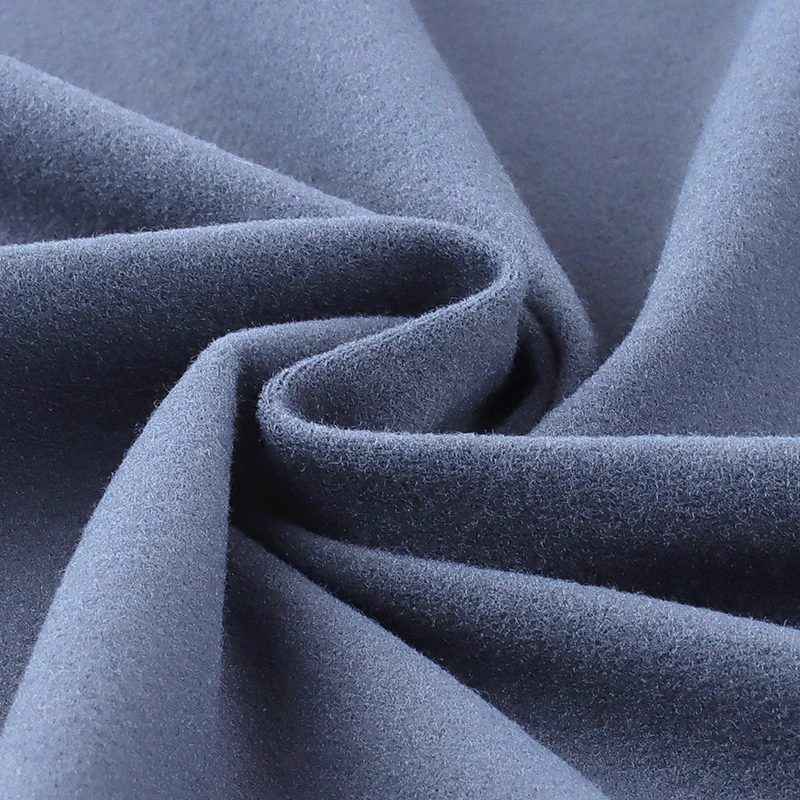
The page highlights drape, wrinkle resistance, stretch, moisture-wicking, and a breathable hand for yoga wear, sportswear, and tops. Those are the claims printed with this row. They stop short of a lab report and stop short of a cotton-rich hand.
| Asked by the headline | Published on this row |
|---|---|
| About 170 g/m² | 195 g/m² |
| Cotton, percentage unstated | No cotton line |
| Polyester, percentage unstated | 83% polyester, written in the table as Terylene (Polyester) |
| Spandex, percentage unstated | 17% spandex |
| Plain, weave or solid unstated | Warp knit, from the page’s knitting-machine sentence |
This is the right row when the garment is a top, a yoga piece, or sportswear and the fiber line can be polyester with a high spandex share. Polyester spandex fabric in that use is about stretch, smooth drape, and easy care, which is what the page describes. It is the wrong row when the tech pack still says cotton, when the costing sheet is locked at 170 g/m², or when the construction callout says plain weave.
The family sits on the polyester-spandex hub, which presents knitted fabrics in that material group and already lists this style. Buyers comparing other knits in the same family start there. They do not start from a cotton-jersey page or a pants-only stretch page.
What to send when the headline and the hand will not match
Same weight and the same fiber list can still feel different after yarn, knit or weave, and finishing, so the sample request has to name those. A gram figure plus three fiber words will not lock the hand.
From the field: On PatternReview, sewists hunting a heavier tee knit separate 95% cotton with 5% spandex from cotton/poly interlock and from a polyester double-brushed knit. The weight they mention for that cotton-spandex jersey is about 220 gsm, which is already a different cloth from a polyester-spandex warp knit. — Best cotton knit for making tees
Ask the mill for the finished mass per unit area, the fiber percentages in descending order, and the construction in words that cannot be read two ways. For a woven plain, say 1/1 and send the yarn and density you need. For a knit, say warp knit, weft knit, jersey, or interlock.
Add the end use: top, yoga, sportswear, trouser, or shirting. Add whether the face is solid or patterned.
Then handle the cloth. Forum buyers who match GSM and composition still see the hand change after washing, because yarn, compaction, heat setting, and dye route never made it onto the first line of the email. A swatch in the real color, cut wide enough to feel the drape, tells you more than another synonym in the subject line.
If the program can live with polyester and spandex, 195 g/m², 165 cm, and a warp knit for tops, yoga wear, or sportswear, the published row above is the one to sample. If cotton has to appear on the fiber line, this row is the wrong sample, and the headline still needs a cotton percentage from a cloth that actually has it.
FAQ
Is 170 GSM fabric thick?
170 GSM describes mass per unit area, not thickness. In tee-shirt talk it often sits toward a lighter or middle knit, while a heavy neoprene in this same search is listed at 300 gsm. The polyester-spandex row on this site publishes 195 g/m², so it is a different mass from the 170 g in the headline.
Is 95% cotton and 5% spandex a good blend?
It is a common two-fiber cotton-spandex recipe, including in a PatternReview thread that calls jersey at about 220 gsm “not thin.” It can make a soft, stretchy knit. It has no polyester line, so it is not the 83% polyester and 17% spandex row published here.
Is a 50% cotton and 50% polyester blend good?
That ratio splits cotton and polyester and still leaves spandex at zero unless you add it. People ask because the hand lands between absorbent cotton and faster-drying polyester. Plain weave and a 170 g/m² target stay unstated until the spec says both.
What is a cotton polyester blend called?
Buyers say cotton-polyester or poly-cotton, sometimes with the percentages in front, as in 50% cotton and 50% polyester. If spandex is present it gets its own line. Three names in a title still leave those percentages unwritten.
What’s better, 100% polyester or 100% cotton?
Neither one is the cloth in the headline, and neither one is the live row. 100% cotton has no polyester and no spandex. 100% polyester has no cotton and no spandex.
The published Shengchao row is 83% polyester and 17% spandex, aimed at tops, yoga wear, and sportswear.
Why are people avoiding polyester?
The usual objections are hand, heat, and odor, especially on cloth worn next to the skin in hot weather. Polyester also shows up when buyers want faster drying, stronger color, or less wrinkling than cotton. Read the fiber line before you drop polyester from the program.
Can a 195 g/m² polyester-spandex cloth replace a 170 g cotton blend on paper?
Only when the buyer accepts the published differences. This row is 195 g/m², 165 cm wide, 83% polyester and 17% spandex, and it is a warp knit for tops, yoga wear, and sportswear. It does not put cotton on the label, and it does not change 195 g/m² into 170 g/m².
References
- Threading Your Way Through the Labeling Requirements Under the Textile and Wool Acts, U.S. Federal Trade Commission.
- 16 CFR 303.7, Generic names and definitions for manufactured fibers, Electronic Code of Federal Regulations.
- ASTM D3776/D3776M, Standard Test Methods for Mass Per Unit Area (Weight) of Fabric, ASTM International.
- Basic Woven Fabric Designs, CottonWorks.
- Best cotton knit for making tees, PatternReview sewing discussion.