



















































































































Lightweight Waterproof Fabric for Apparel Buyers
For apparel development, lightweight waterproof fabric is a shell cloth that stays light enough for jackets and stretch outdoor pieces while still presenting a real liquid-water barrier—not simply the lightest DIY tarp textile on a retail shelf. This article separates waterproof, water-resistant, and waterproof-breathable constructions, shows how hydrostatic pressure tests are read, and points to when a stretch nylon-spandex waterproof option fits better than ultralight non-stretch cloth.
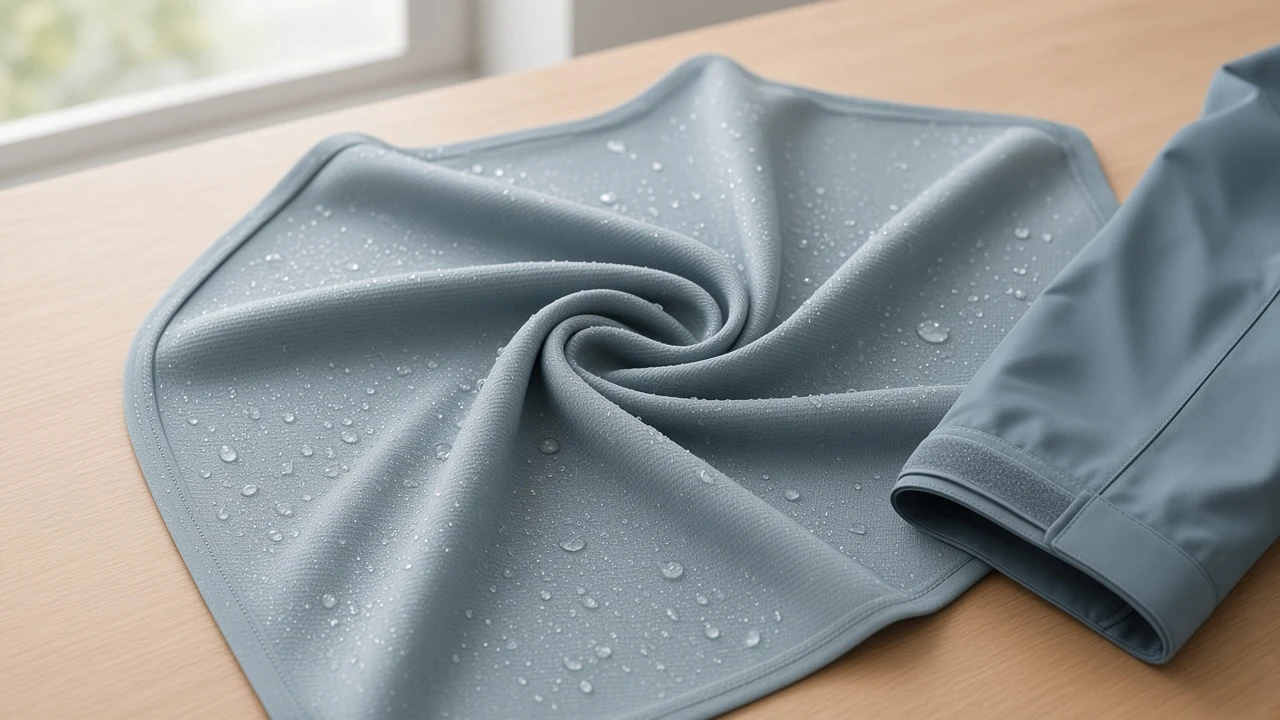
What Lightweight Waterproof Fabric Means for Apparel Buyers
For apparel, “lightweight waterproof” means a usable garment weight with a barrier story you can defend in sampling—not a race to the lowest ounces-per-yard listing.
Retail search results often push ultralight silnylon, pack laminates, or craft coatings aimed at tarps and stuff sacks. Those materials matter for DIY gear. Apparel buyers usually care about different constraints: handfeel next to skin or lining, stretch recovery, seam plans, and how the cloth behaves after abrasion on packs or seat surfaces.
A practical working definition: the fabric should remain light enough for the silhouette you are building, while the barrier comes from a coating, impregnation, or laminate—not from untreated woven nylon alone. Durable water-repellent (DWR) finishes help rain bead, but they are a different class of protection than a continuous barrier film.
Use the waterproof fabric hub when you are browsing Shengchao’s waterproof assortment after you lock the construction type.
Waterproof, Water-Resistant, and Waterproof-Breathable
Waterproof implies a barrier intended to resist liquid water under pressure; water-resistant usually means surface shedding; waterproof-breathable adds vapor transport with its own wet-out risks.
Buyers often search waterproof vs water resistant as if the phrases were interchangeable. For sampling language, keep three buckets:
- Water-resistant / DWR: fiber and yarn surface energy is lowered so droplets roll. Useful for light rain. Sustained pressure, long storms, or abrasion can still drive wet-through.
- Waterproof barrier (coated or laminated): a continuous polymer layer blocks liquid water until seams, pinholes, or coating damage open a path.
- Waterproof-breathable (WPB): a membrane or laminate aims to block liquid water while allowing some vapor movement. Real users still report wet-out when the membrane is overloaded in prolonged rain.
AATCC notes that hydrostatic pressure results are not automatically the same as rain or spray method results. That single boundary keeps marketing language honest when a sheet only shows one test.
Coatings, Laminates, and Finishes That Create the Barrier
Most true barriers come from coatings or laminates; DWR alone is usually not enough under sustained water pressure.
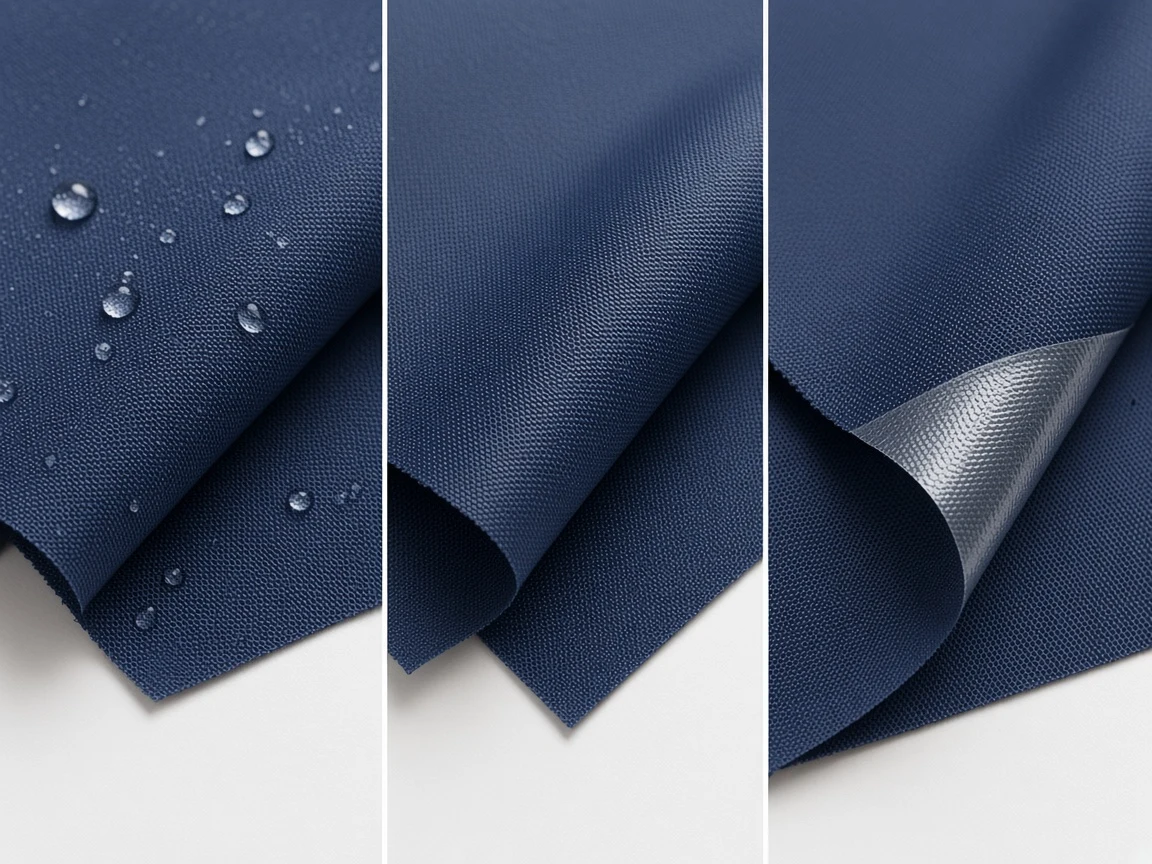
| Construction | What the buyer is buying | Typical apparel role | Watch-outs |
|---|---|---|---|
| DWR / water-repellent finish | Surface shedding | Light shells, first-line rain bead | Can wear off; not a full barrier |
| PU or similar coating | Polymer film on one face (PU coating families) | Rain shells, packs, covered panels | Breathability often limited; coating abrasion matters |
| Silicone impregnation / sil-coat families | Polymer driven into yarn/fabric | Ultralight shelters, some rain gear | Great weight stories; durability trade-offs in hard wear |
| Laminated membrane (2L/3L WPB) | Film bonded between or behind textiles | Performance shells | Wet-out and face fabric abrasion still matter |
Shortlist by end use first. A city stretch rain jacket and an ultralight tarp do not share the same “best” construction even when both are sold as lightweight waterproof fabric.
How to Read Hydrostatic Pressure Tests
Ask for the method name, which fabric face faced the water, and whether rain or spray tests were also run—hydrostatic numbers alone do not equal field rain.
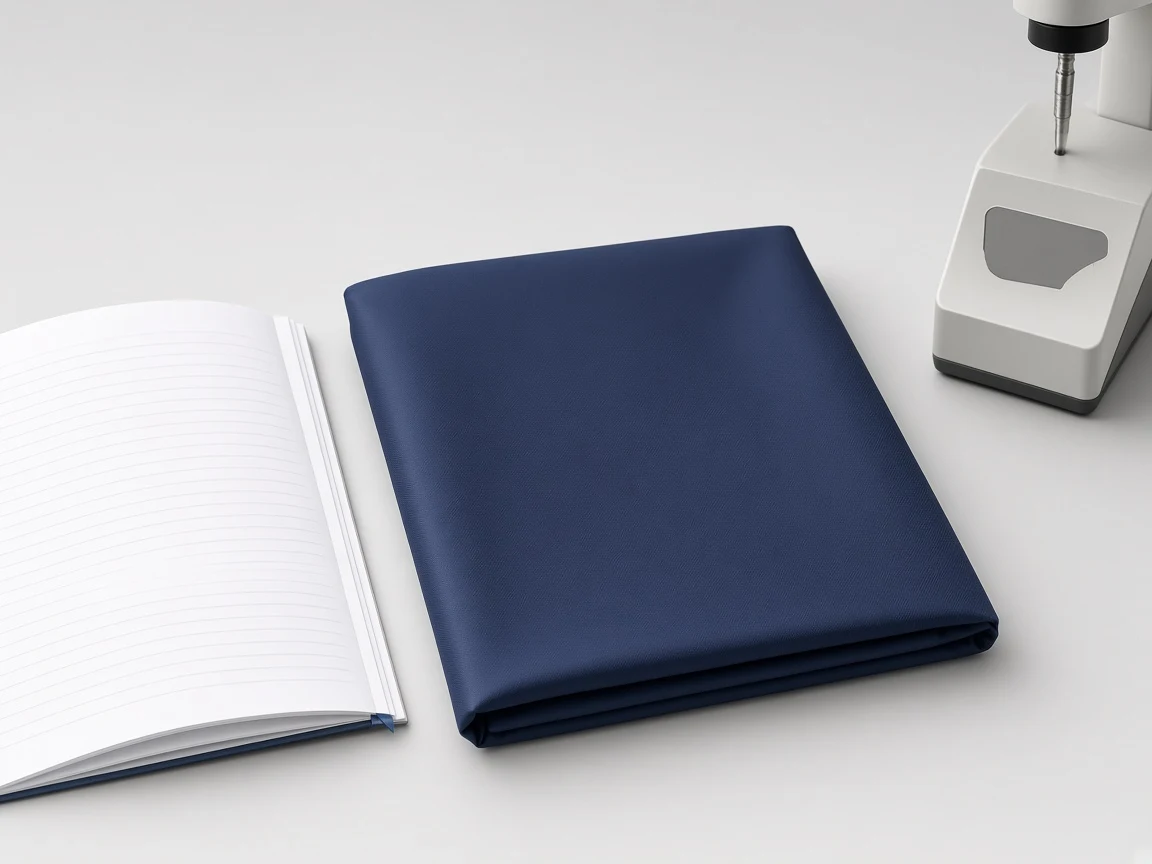
A hydrostatic pressure test such as AATCC TM127 raises water pressure against one fabric face until leakage appears at multiple points. Independent labs describe the common endpoint as three leakage points, with specimens large enough to clamp (often around 200 × 200 mm). ISO 811 is the closely related international hydrostatic family used in many technical discussions.
What to put on a sampling checklist:
- Method ID (for example an AATCC hydrostatic method or the matching ISO hydrostatic family).
- Face tested (face vs back can differ).
- Conditioning notes if the lab reports them.
- Whether spray or rain methods were run in parallel.
- Any statement about seams—fabric HH is not the finished garment.
If a mill sheet only says “waterproof” with no method, treat that as a conversation starter, not a finished specification.
Weight Versus Durability Trade-Offs Buyers Argue About
Ultralight fabrics save grams, but experienced makers often rank long-term waterproofness after abrasion above the absolute lightest listing.
From the field: In community discussions about coated fabrics and waterproof-breathable shells, buyers often put long-term waterproofness after abrasion ahead of raw weight, and they report that some WPB laminates still wet out when overloaded (Backpacking Light forum on DWR wet-out; MYOG/Ultralight threads in research). Those are user-language signals for apparel teams: do not buy grams alone.
For jackets and hiking pants that see seat abrasion, zipper tape contact, or pack straps, ask how the coating or laminate ages. Pure silicone impregnation and multi-pass PU systems behave differently over time; community makers debate delamination risk on some PU systems versus impregnated silicone. Your mill conversation should name the barrier chemistry and the abrasion expectation—not only a marketing weight class.
When Stretch Nylon-Spandex Waterproof Fabric Fits Better
Choose stretch waterproof cloth when the garment needs recovery and mobility alongside a waterproof finish—especially jackets and hiking pants that move with the body.
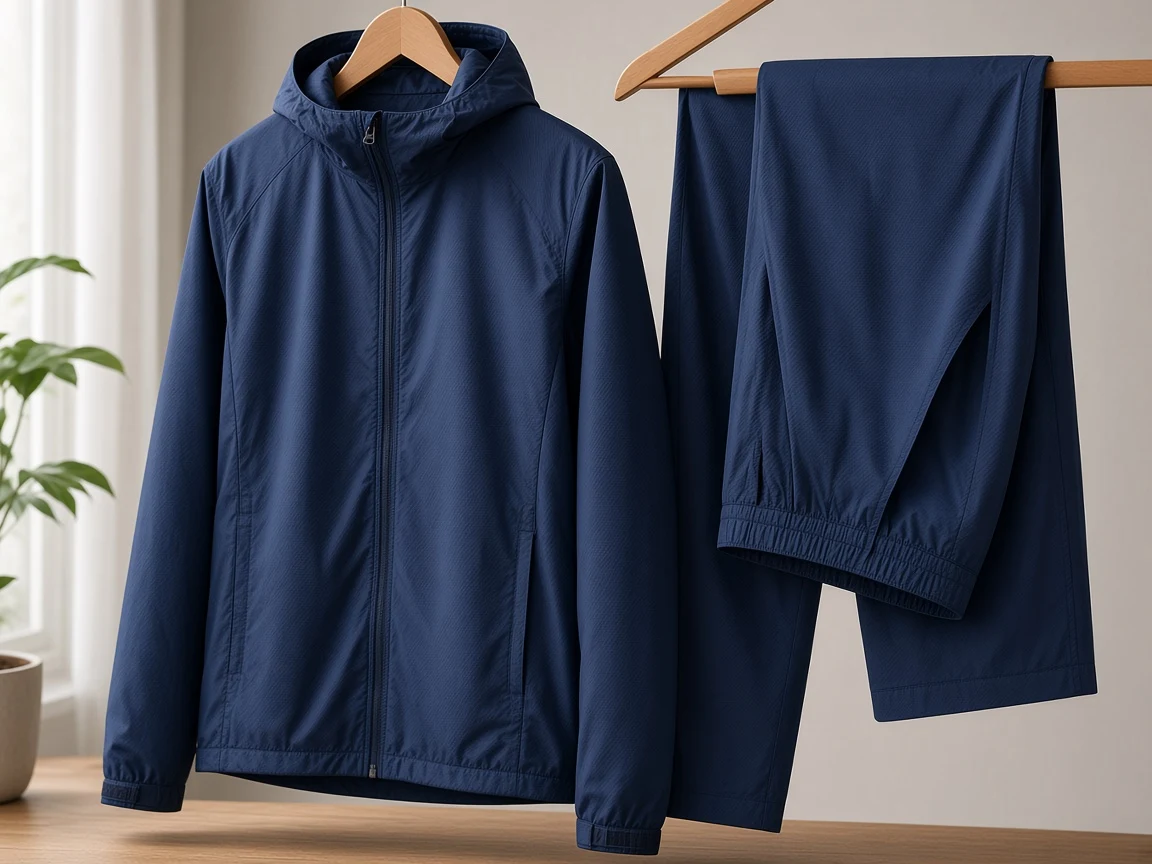
Ultralight non-stretch silnylon and many pack laminates optimize packability. They are poor matches when a pattern needs elbow ease, knee articulation, or a closer athletic fit without binding.
Stretch nylon-spandex waterproof fabrics sit in a different decision lane:
- Mobility for hiking pants and soft-shell-adjacent jackets.
- Handfeel closer to apparel than to tarp cloth.
- Weight still in a light apparel band for the Shengchao 70D option, not ultralight shelter grams.
If the product brief is “light enough to wear all day” rather than “lightest possible tarp,” stretch waterproof is usually the better shortlist.
Spec Checklist and a 70D Waterproof Nylon-Spandex Option
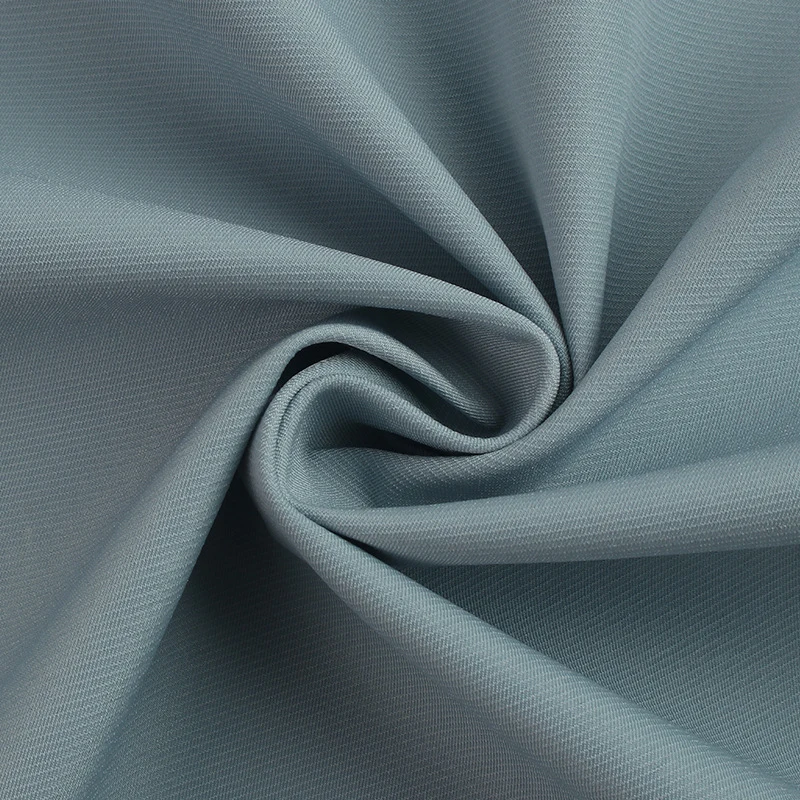
Use published composition, denier class, weight, and width first; plan seam sealing for stitch lines; then sample stretch waterproof candidates such as Shengchao’s 70D nylon-spandex waterproof fabric.
Buyer checklist before sampling
- End use: jacket shell, hiking pant, or mixed outdoor set.
- Barrier type requested: coating, laminate, or finish-only DWR.
- Stretch need: yes/no and approximate recovery expectation.
- Published weight and width for pattern yield.
- Hydrostatic method and face if a HH value will be claimed later.
- Seam plan: taped, sealed, or covered—because sewing creates stitch holes.
Shengchao’s 70D waterproof nylon spandex fabric is published for outdoor jackets, hiking pants, and quick-dry clothing. The published weight is 140–145 g/m², the width is 150 cm, and the composition is 90% Nylon, 10% Spandex. Stretch from the 10% spandex supports mobility in jackets and hiking pants. Live product specs on the page follow.
| Spec | Published value |
|---|---|
| Product | 70D Waterproof Nylon-Spandex Fabric |
| Weight | 140–145 g/m² |
| Width | 150 cm |
| Composition | 90% Nylon, 10% Spandex |
| Applications named | Outdoor jackets, hiking pants, quick-dry clothing |
The page describes waterproof protection for rainy or wet conditions, a lightweight quick-dry handfeel, stretch from the spandex content, and a 70D nylon structure aimed at wear resistance. It does not publish a hydrostatic head number on the live page—so do not invent one in tech packs. Request the test method if your brand needs a numeric HH claim.
Browse related waterproof options from the waterproof fabric hub after you lock stretch versus non-stretch.
FAQ
What is the difference between waterproof and water-resistant fabric?
Waterproof usually implies a barrier meant to resist liquid water under pressure. Water-resistant fabrics often rely on DWR or similar finishes that help water bead but can wet through under sustained exposure.
How is waterproof performance tested for apparel fabrics?
Hydrostatic pressure tests such as AATCC TM127 raise water pressure until leakage points appear. Rain or spray methods can return different results, so ask which method and which face were tested.
Is the lightest waterproof fabric always best for jackets?
No. The lightest outdoor DIY textiles optimize grams for shelters and packs. Jackets often need abrasion tolerance, handfeel, and sometimes stretch that ultralight options do not prioritize.
Why do some waterproof-breathable fabrics still feel wet?
WPB laminates can still wet out when the membrane is overloaded in long rain or high humidity. Users also feel cold from thin shells even when liquid water is blocked.
Do sewn seams stay waterproof without sealing?
Needle holes can create water paths. If the garment must stay dry at stitch lines, plan seam tape, sealing, or covered construction—not fabric HH alone.
When does stretch nylon-spandex waterproof fabric fit better than ultralight silnylon?
When the pattern needs mobility and recovery—hiking pants, closer-fit jackets, or active outdoor wear—stretch nylon-spandex waterproof fabric fits better than non-stretch ultralight shelter cloth.
What specs should a US apparel buyer request on a lightweight waterproof fabric sheet?
Ask for composition (use “spandex” in US English), denier class, weight, width, barrier type, hydrostatic method and face if claiming HH, and seam recommendations. Skip sitewide certification claims unless a specific SKU has documented evidence.