



















































































































What Fabric Are Swimsuits Made Out Of?
Most modern answers to what fabric are swimsuits made out of point to synthetic stretch knits: nylon or polyester as the base fiber, blended with spandex for recovery. Cotton rarely carries a fitted suit through wet wear. This article maps those fibers, clarifies label names, contrasts nylon-spandex with polyester-spandex, and ends with a mill polyester-spandex swim knit you can sample.
The Core Fibers Swimsuits Are Made From
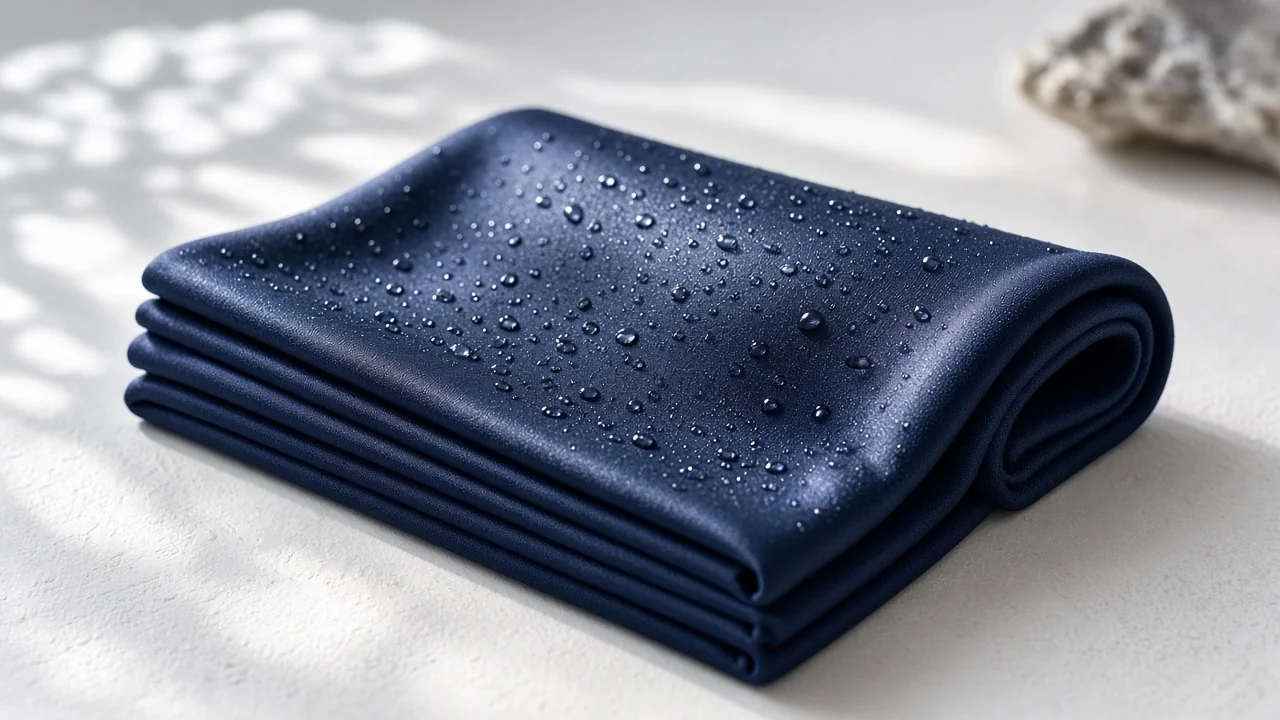
Swimsuits are made from synthetic knits: a nylon or polyester base plus spandex for stretch.
That package is what most sellers mean by swimsuit fabric. The base fiber carries wet strength, color, and much of the chlorine or UV story. Spandex supplies the snap-back that keeps a wet suit from hanging open.
Community sewists and developers often describe typical ready-to-wear blends as roughly 80–90% nylon or polyester with about 10–20% spandex. Those ranges are education and hangtag patterns, not a rule every mill SKU must match. A published mill sheet can list a different stretch percentage and still be a legitimate swim knit when the construction is built for water use.
Cotton and other hydrophilic naturals absorb water, sag when wet, and age poorly in chlorinated pools, which is why they usually stay in cover-ups rather than fitted shells.
For B2B sampling, write the end-use on the RFQ as swimwear or bikini fabric so mills do not substitute a land-only stretch jersey with a similar hangtag.
What Spandex Means on a Swimsuit Label
In the US, the stretch fiber is usually listed as spandex; tricot names the knit, not the fiber.
Spandex is the North American generic name for the highly elastic synthetic fiber also called elastane in many ISO contexts. Lycra is a brand name inside that fiber family, not a separate fiber chemistry. On a US English tech pack, keep the word spandex unless a lab report deliberately uses elastane.
Tricot is a common warp-knit construction for swim goods. Seeing “swim tricot” on a quote tells you about structure and hand, not whether the yarn is nylon or polyester. Always read the fiber line next to the construction name.
When stretch recovery matters on the sample table, labs can measure fabric stretch and growth after a held extension. Methods such as ASTM D6614 exist for that job, while some high-stretch knits are better served by related knit stretch methods. Ask for the method name on any recovery claim you treat as a go/no-go.
Nylon-Spandex vs Polyester-Spandex Swim Fabrics
Nylon-spandex often feels softer for fashion beachwear; polyester-spandex is commonly preferred when pool chlorine and color hold matter more.
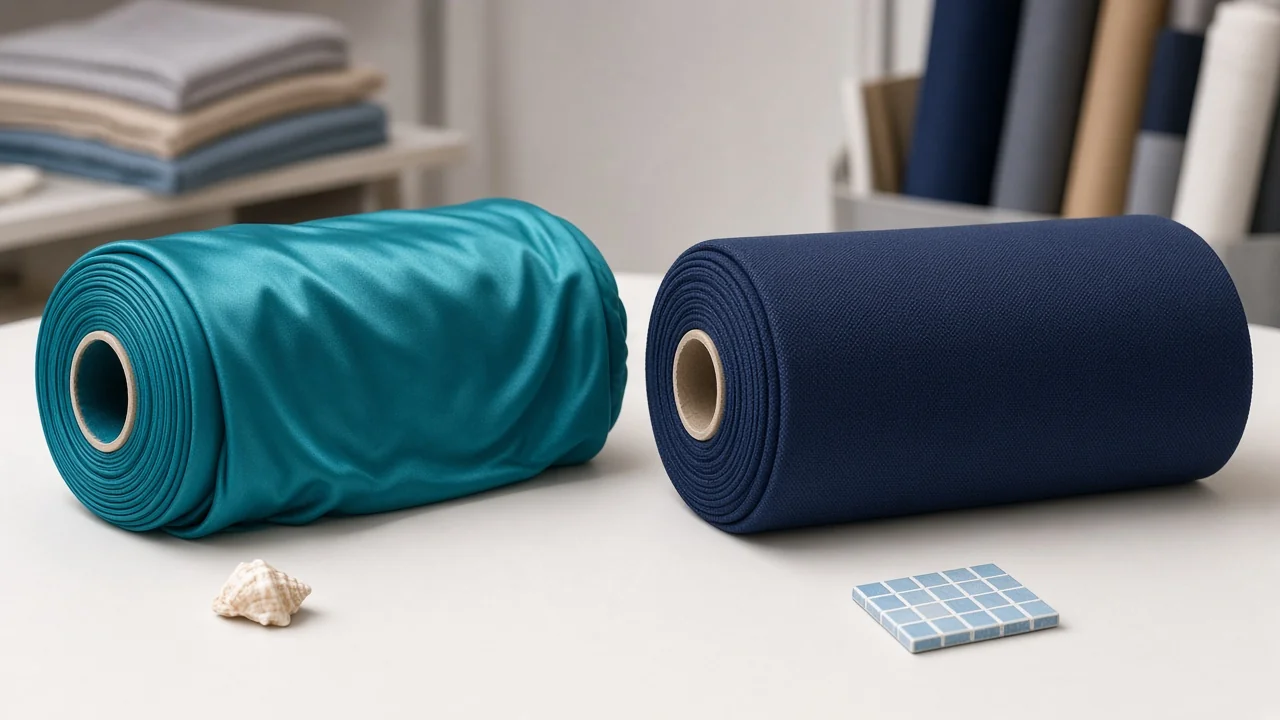
Think in programs, not in a single “best” fiber. A resort capsule that prioritizes silky hand and print clarity usually starts on nylon-spandex. Buyers comparing nylon spandex swimwear against polyester routes for beach capsules usually keep softness and print clarity first. A lap-pool line worn several mornings a week usually starts on polyester-spandex or another chlorine-oriented polyester route.
| Decision factor | Nylon-spandex | Polyester-spandex |
|---|---|---|
| Hand feel | Softer, smoother fashion hand | Often slightly firmer |
| Typical program lean | Beach, resort, fashion swim | Frequent pool / training-leaning |
| Chlorine resistance (qualitative) | Ordinary grades age faster in heavy pool use | Generally stronger color and shape hold in chlorine |
| Abrasion comfort | Often favored in soft fashion knits | Strong workhorse base for durability briefs |
Education merchants often illustrate nylon-spandex near 80–85% nylon with 15–20% spandex. Treat those figures as industry examples, then read the mill sheet in front of you.
If you still need a construction-level shortlist after this composition map, use the sibling guide on what fabric for swimwear without treating it as a second materials primer.
Why Fiber Percentage Alone Does Not Make Swimwear Fabric
Matching blend percentages is not enough — recovery, wet opacity, and water-environment durability still matter.
From the field: Community sewists often ask whether any store knit with a similar nylon/poly + spandex hangtag will survive a bathing suit. Working answers land on the same point: swim fabric still needs four-way stretch plus resistance suited to salt, chlorine, and sun fading—not only a familiar fiber ratio (archived r/sewing thread).
That objection is the procurement version of the same lesson. An athletic jersey can share a hangtag blend and still open when wet, pill on pool decks, or lose recovery after chlorinated sessions. Label the end use as swim on the RFQ, request wet opacity checks, and ask how the mill talks about chlorine resistance for the stretch yarn—not only the base fiber name.
Linings, PBT, and Recycled Synthetics in Swimsuits
Many suits add linings or specialty polyester variants; recycled nylon or polyester can mirror virgin performance when engineered for swim.
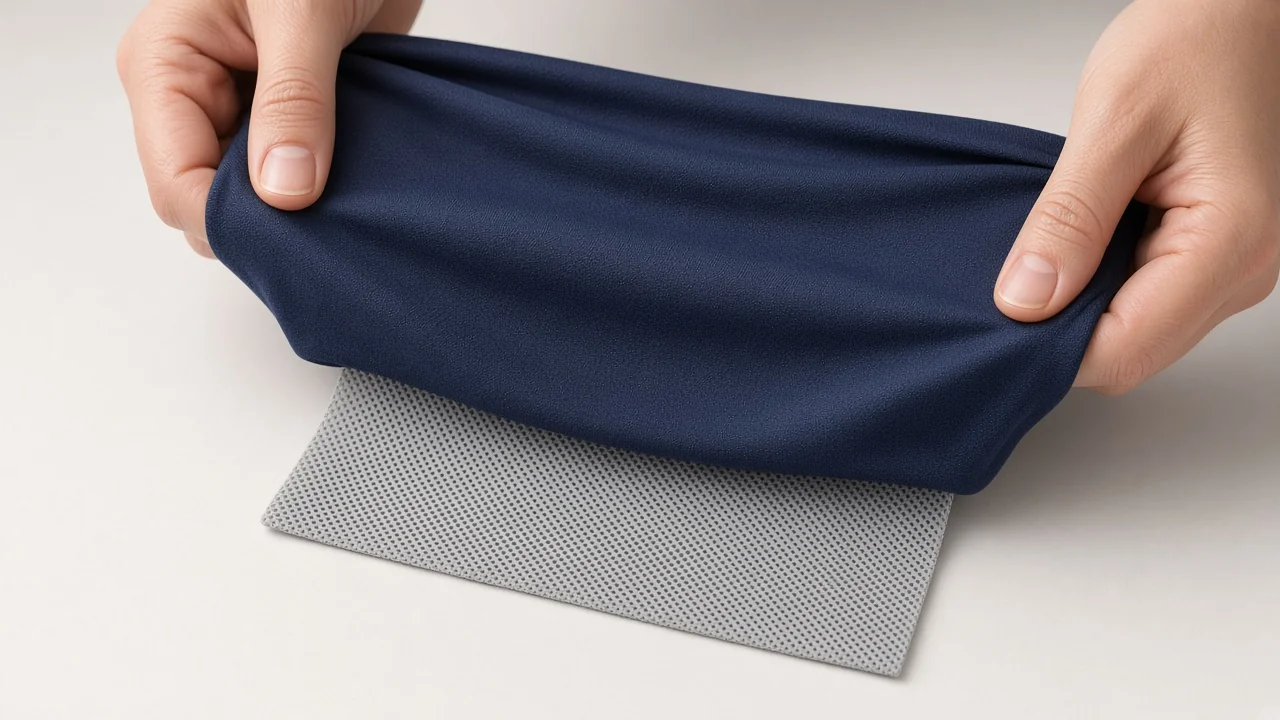
Power mesh / swim lining sit next to the skin for support and opacity, especially in light colors or thin shells. Linings are often nylon-based meshes or light swim knits; they are part of the materials story even when the outer face gets all the marketing attention.
PBT (polybutylene terephthalate) shows up in some performance swim constructions because mills position it for harsh chlorinated-pool life, sometimes with firmer stretch and less reliance on high spandex content. Treat PBT as a specialty polyester family, not as a consumer hangtag everyone will recognize.
Recycled nylon and recycled polyester appear in swim lines when brands want a lower virgin-resource story. Performance still depends on the full blend, knit, and finish—not the word “recycled” alone.
How US Fiber Labels Describe Swimsuit Materials
US labels list generic fiber names and weight percentages; small functional spandex amounts may still be named.
Under US textile labeling guidance, covered apparel generally discloses generic fiber names and percentages by weight in descending order. A fiber under 5% is often grouped as “other fiber,” but a stretch fiber with a definite functional role—spandex for elasticity—may still be named even at a low percentage. That is why a mill SKU can honestly list 5% spandex when that yarn is doing the recovery work.

Keep US English “spandex” on buyer-facing sheets for US SEO and US retail partners. Elastane remains valid on ISO-oriented lab language; do not treat the two words as different fibers.
If a hangtag highlights only a trademark stretch name, ask for the generic fiber line beside it so procurement, customs, and product pages stay aligned.
Choose Polyester-Spandex Swimwear Fabric to Sample
This section points to a live mill polyester-spandex swim knit with published sheet specs.
Shengchao’s live polyester-spandex swimwear knit publishes 190 gsm, 160 cm, and 95% polyester + 5% spandex.
Browse the swimwear & bikini fabric hub when you want related stretch knits, then open the Path① SKU for published specs.
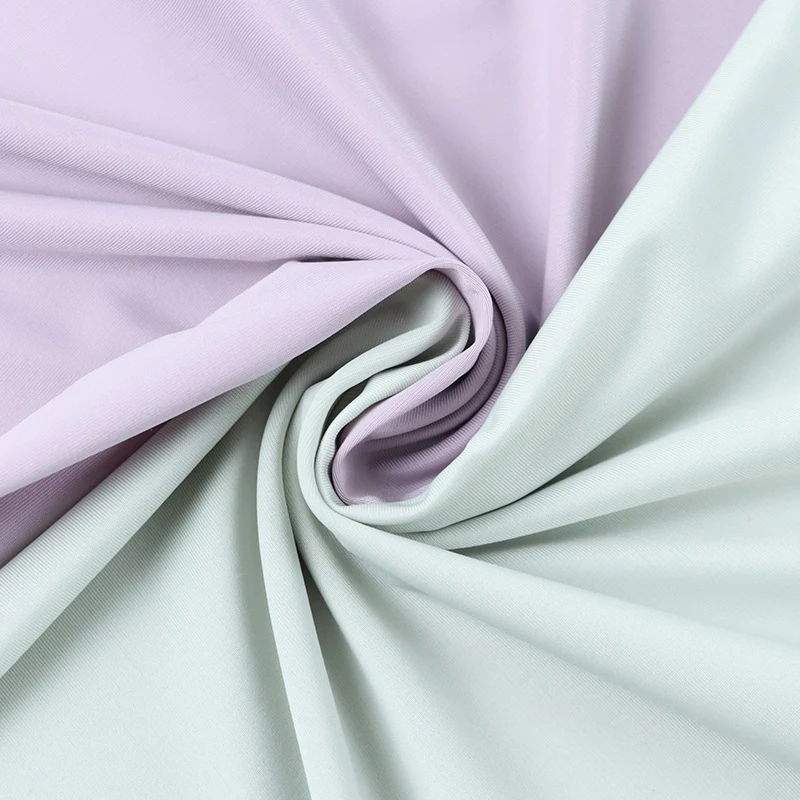
The published sheet values are listed below.
| Spec | Published value (YZBJN-02) |
|---|---|
| Product | Polyester Spandex Fabric For Swimwear |
| Fabric type | Single-sided knit |
| Weight | 190 gsm |
| Width | 160 cm |
| Composition | 95% polyester + 5% spandex |
| Yarn | 75D polyester |
Shengchao publishes this polyester spandex fabric for swimwear for swimwear, activewear, and sun-protective clothing contexts on the product page. The yarn detail on the live sheet is 75D polyester for this single-sided knit. The 5% spandex line is the live sheet fact; it sits below many retail “10–20%” education ranges, so judge recovery on handloom samples rather than on a generic percentage rule.
Skip this SKU when the brief demands a soft nylon-hand fashion story or a chlorine-hour / UPF number that is not printed on the live page—ask for alternate swim knits or lab data instead of inventing claims.
FAQ
What fabric are swimsuits made out of?
Most modern swimsuits use synthetic stretch knits: nylon or polyester blended with spandex. The base fiber and stretch yarn share the work of wet fit, recovery, and durability.
What is the stretchy swimsuit material called?
In US English it is usually called spandex. The same fiber family is often called elastane in ISO language, and Lycra is a familiar brand name—not a separate fiber.
Is nylon or polyester better for swimsuits?
Neither wins for every program. Nylon-spandex often wins on soft fashion hand; polyester-spandex often wins when frequent chlorinated-pool life and color hold dominate the brief.
Does fiber percentage alone make a fabric “swimwear fabric”?
No. Community developers still look for four-way stretch, wet coverage, and resistance suited to salt, chlorine, and sun—not only a familiar nylon/poly + spandex ratio.
Why is cotton uncommon for modern swimsuits?
Cotton holds water, sags when wet, and breaks down faster in chlorinated pools. It remains common in cover-ups and towels more than in fitted shells.
How should US brands read swimsuit fiber labels?
Read generic fiber names and weight percentages in order. A small spandex percentage can still be named when it has a definite stretch function, so do not assume a low number means “no stretch fiber.”
What polyester-spandex fabric does Shengchao publish for swimwear?
Open the live YZBJN-02 product page for the published sheet: 190 gsm weight, 160 cm width, and a 95% polyester + 5% spandex blend.
Do bare elastane chlorine yarn tests prove a finished suit will last?
No. Yarn-level chlorinated-water methods on bare elastane are scoped to yarn breaking-force retention and are not a direct prediction of finished fabric or garment life.