



















































































































What Fabric Is Good for UV Protection?
Tightly built polyester or nylon is usually the practical answer to what fabric is good for uv protection. Open cotton jerseys and sheer summer weaves often let far more ultraviolet through, even when they feel thick in the hand. This piece shortlists fibers, checks fabric density / weave and color, explains UPF (Ultraviolet Protection Factor) literacy, and maps outdoor apparel applications to a mill-ready polyester option.
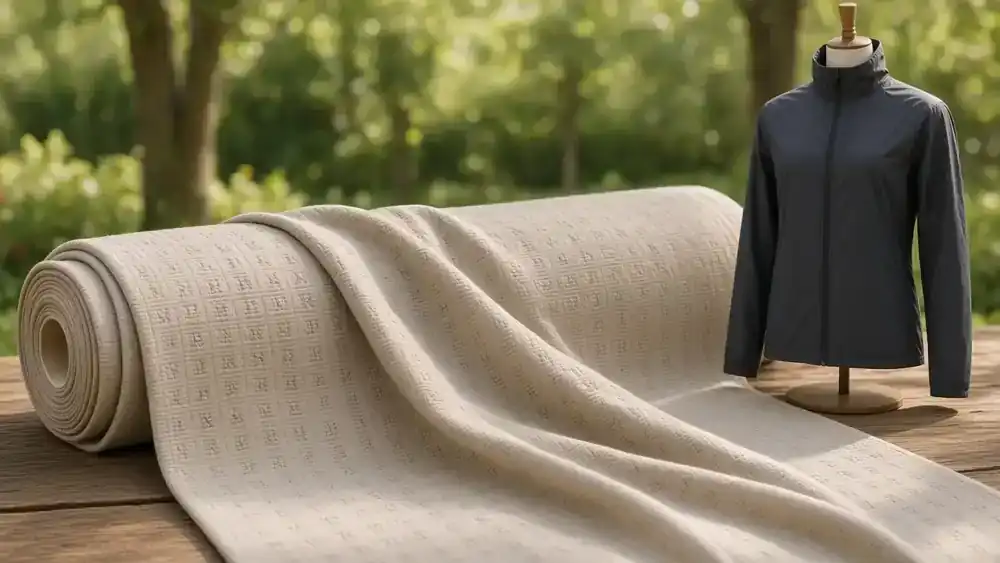
Which Fabrics Are Good for UV Protection?
Dense polyester or nylon constructions are the usual good starting point for UV-protective fabric programs. Closed knits and weaves leave fewer gaps for UV to pass, while many open cotton tees score poorly once you look past marketing language.
A published survey of commercial summer fabrics found polyester, wool, and blends reached UPF 30+ more often than cotton, linen, or viscose. That trend still leaves room for exceptions: a dense dark canvas can outperform a sheer synthetic, and a loose poly mesh can fail outdoors. For UV resistant fabric sourcing, treat fiber as a baseline, then confirm structure and—when a number will appear on a hangtag—lab UPF.
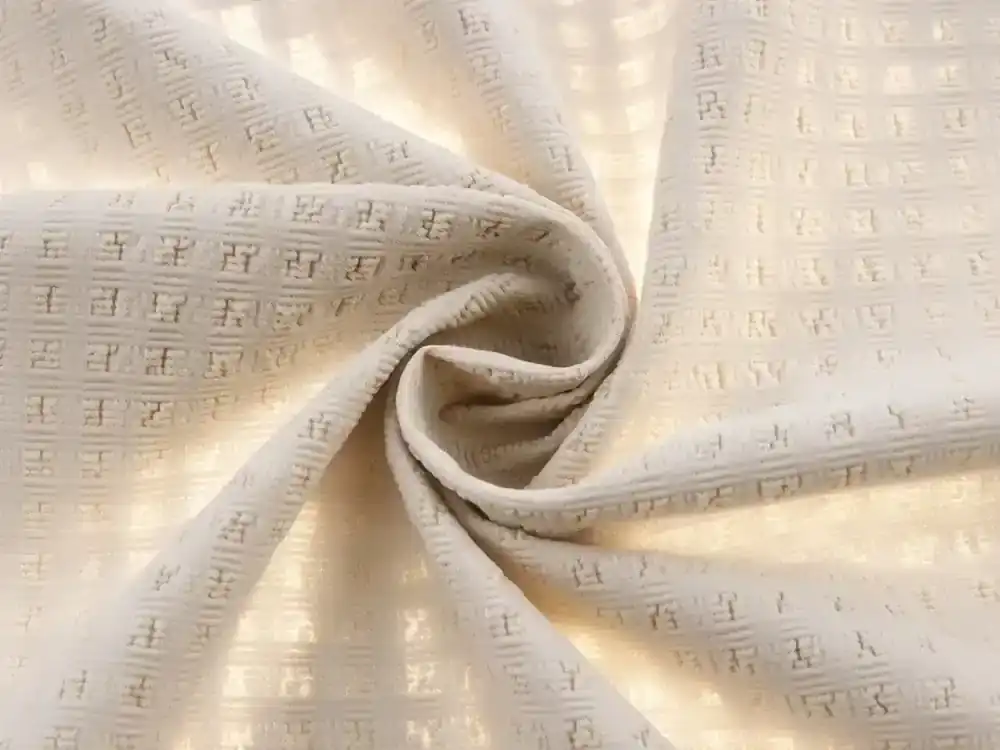
Fiber Shortlist: Polyester, Nylon, and When Cotton Struggles
Polyester and nylon generally outperform open cotton and linen for sun-oriented apparel. Clinical guidance often steers outdoor clothing toward those synthetics when the weave is tight; cotton and hemp are weaker starting points without densification or treatment.
| Fiber direction | Why buyers shortlist it for UV work | Watch-outs |
|---|---|---|
| Polyester | Strong inherent UV absorption in many constructions; common in outdoor shells and sun shirts | Sheer poly knits still fail; confirm density |
| Nylon | Dense fiber structure can support high UPF when knit/woven tightly | Community hikers note weave can trump a generic nylon-vs-poly ranking |
| Wool / dense canvas | Closed, heavy constructions can block well | Weight and heat load may not suit hot-weather tees |
| Cotton / linen / viscose (open) | Familiar handfeel for summer | Often low UPF unless dark, dense, treated, and preferably labeled |
Outdoor hobbyist threads on nylon versus polyester make the same practical point: change the weave, yarn, pigment, or UV additive and the “winner” flips. Fiber chemistry helps; fabric density / weave still decides whether a sun protective fabric earns the job.
Spandex (this site’s English uses spandex, not elastane) can appear in stretch shells. Stretch itself is not the problem—over-extending the gaps is. Keep fit ease in mind when the garment will pull across shoulders or knees.
Density, Color, Weight, and Coverage Matter as Much as Fiber
Closed structure, darker or brighter color, sensible weight, and real skin coverage usually raise protection more than a fiber name alone. UK radiation guidance is blunt: you cannot reliably judge clothing protection by eye, because structure and color both swing the result.
Use this scan before you book lab time:
| Check | Stronger UV direction | Weaker UV direction |
|---|---|---|
| Structure | Dense knit/weave; little visible light through the cloth | Sheer, open jersey, large mesh |
| Color | Dark or saturated shades that absorb more UV | Pale, washed-out pastels at the same construction |
| Coverage | Long sleeves, full torso, high neck options | Cap sleeves, deep vents that expose skin |
| Mass / hand | Enough grams per square meter to close gaps without turning plastic | Ultra-light open knits sold only on “cool feel” |
Hold-to-light remains a rough screen for sampling rooms. It is not a substitute for a measured UPF when retailers or destinations require a labeled claim. Coverage still matters: fabric only protects the skin it actually covers.
How to Read UPF Labels Without Guessing
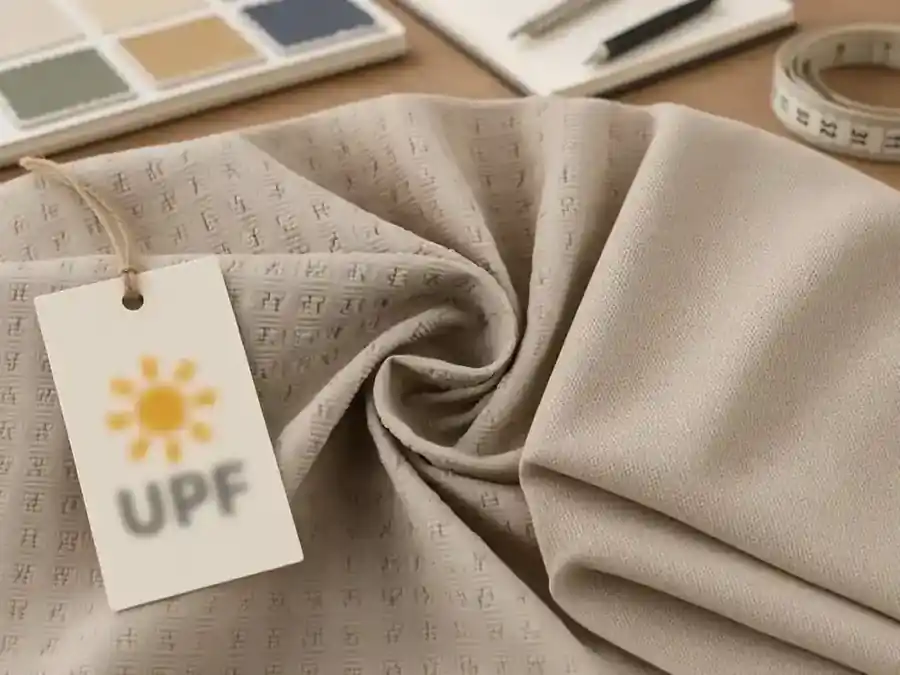
UPF (Ultraviolet Protection Factor) states how much UV radiation a fabric lets through to skin. A UPF 50 fabric is commonly explained as blocking about 98% of the sun’s rays (allowing roughly 1/50th through). UPF 30–49 is often described as very good; UPF 50+ as excellent in consumer education.
UPF clothing labels are useful when they come from a measured method rather than a vibe word like “UV friendly.” Eye checks and marketing adjectives do not replace lab transmittance work when you need a numeric claim. Finishes that add UV absorbers can help some programs, but wash-down risk is why many outdoor buyers prefer protection that is inherent to fiber and structure.
When a mill page lists outdoor UV positioning without printing a UPF number, treat that as qualitative guidance. Ask for lab data if the garment brand plans to hang a rated claim in the destination market.
Matching Fabric Choices to Outdoor Apparel Jobs
Outdoor apparel applications change which GSM and handfeel you tolerate inside the same UV logic. A sunscreen jacket can carry a mid-weight wrinkled polyester; a hot-weather tee may chase lighter mass only if the knit stays closed.
| Job | Fabric lean | Why |
|---|---|---|
| Sunscreen jacket / wind shell | Mid-weight polyester with closed face | Coverage + durability on exposed trails |
| Long-sleeve sun tee | Dense knit that still breathes | Blocks UV without turning into a sweat sack |
| Pants / set bottoms | Tighter weave or denser knit at key panels | Legs see long sun hours on water and snow glare |
| Sportswear set | Balanced GSM with quick-dry polyester | Movement plus all-day outdoor exposure |
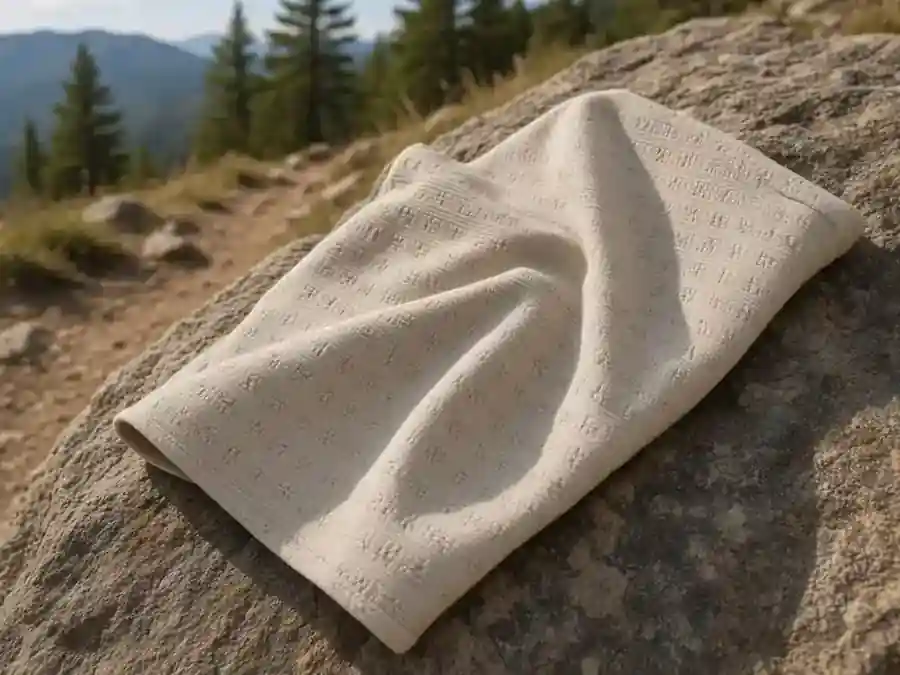
For a concrete mill example, Shengchao’s UV Protection Polyester Fabric publishes 100% polyester at 145 g/m² and 148 cm width for sunscreen jackets, T-shirts, pants, and sportswear sets. That sits in the mid-weight outdoor lane rather than a gauze fashion look.
When Wetness, Stretch, and Wear Change the Result
Soaked or over-stretched cloth can lose effective protection even when the dry, relaxed sample looked solid. Government clothing-protection notes flag stretch as a substantial CPF drop and wetness as a change that can move either direction—so wet-state testing matters for swim and sweat programs.
Important: A white everyday T-shirt is a common teaching example at about UPF 7 dry and about UPF 3 wet. That is not a mill SKU claim—it is a reminder that moisture and open knits stack against you on bright water days.
Wear and fading also erode performance over a season. If UPF depends on a topical finish, check how many washes the supplier will stand behind. Inherent polyester or nylon constructions usually age more predictably than a coating story, provided the cloth has not thinned into see-through zones.
Product Fit: UV Protection Polyester Fabric for Outdoor Programs
For programs that need a polyester outdoor base without chasing gauze aesthetics, UV Protection Polyester Fabric is a direct fit inside this shortlist. The live product lists 100% polyester, 145 g/m², 148 cm width, and applications in sunscreen jackets, T-shirts, pants, and sportswear sets, with outdoor UV protection, lightweight breathability, wrinkled texture, and quick-drying durability called out on the page.
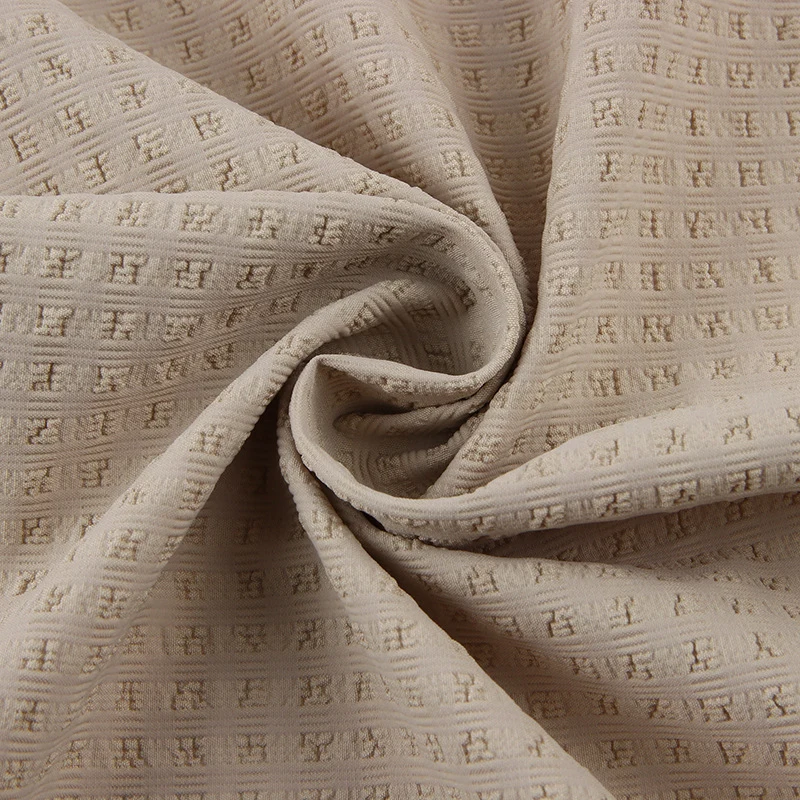
It is a weak match when you must print a numeric UPF on day one without lab work, or when the silhouette needs high spandex stretch for mobility. For a lighter sun-shell / cooling windbreaker lane, Shengchao also lists a polyester sun-protective cooling fabric at 65 g/m²—use it as a lateral option, not a drop-in twin of the 145 g/m² wrinkled sunscreen cloth.
Next step for developers: confirm composition, GSM, width, and end use against the pattern block, then request UPF lab data only if the brand will sell a labeled rating.
FAQ
Is cotton ever good enough for UV protection?
Dense, dark, or treated cotton can perform better than a sheer white tee, but open cotton and linen summers often tested poorly in published apparel surveys. Prefer labeled UPF or a closed synthetic when exposure is all-day.
What does UPF mean on fabric or UPF clothing?
UPF rates how much UV passes through the textile to skin. Higher numbers mean less transmission; consumer education often treats UPF 50 as blocking about 98% of rays.
Does polyester always beat nylon for sun protection?
Not as a blanket rule. Polyester is a strong starting fiber, yet weave, color, additives, and fit can erase a generic ranking—exactly what outdoor community threads argue when comparing shirts.
How much does color matter compared with fiber?
Color is a real lever: darker or brighter shades often absorb more UV than pale ones at the same construction. It still will not rescue a see-through knit.
Does wet or stretched fabric keep the same protection?
Often no. Stretch widens gaps; wetness can raise or lower protection depending on the cloth, so programs for swim or hard sweat should plan wet-state checks.
If the fabric is UV-oriented, do I still need sunscreen?
Yes on uncovered skin. Fabric only helps where it covers; face, hands, and neck gaps still need a separate sun strategy.
What should a fabric RFQ include beyond “UV fabric”?
List fiber content, GSM, width, end use (jacket, tee, pants, set), colorway, and whether a numeric UPF label is required—with the test method the brand expects.
Does Shengchao publish a UPF number on the recommended polyester?
The live UV Protection Polyester Fabric page states outdoor UV positioning with composition and GSM but does not print a UPF rating. Request lab confirmation if your hangtag needs a number.
References
- The Skin Cancer Foundation — Sun-Protective Clothing
- UK Government (UKHSA / legacy NRPB note) — Ultraviolet radiation (UVR): clothing protection
- Gambichler et al., BMC Dermatology — Protection against ultraviolet radiation by commercial summer clothing
- Cleveland Clinic — Does Sun-Protective Clothing Actually Work?
- Reddit r/Ultralight discussion (user language) — Between nylon & polyester which is superior for blocking UV rays?