



















































































































4 Way Stretch Fabric for Pants in Tight Bottoms
The right 4 way stretch fabric for pants stretches and returns both around the body and along the length, which is why tight leggings and yoga bottoms specify it instead of a one-axis chino cloth.
If you are sampling four way stretch fabric for a bottoms line—or sorting 2-way vs 4-way stretch on a mill sheet—the next sections cover direction literacy, which pants jobs actually need four-way, fabric growth at the knee, knit versus woven stretch, what to put on the fabric sheet, and one live nylon-spandex weft knit for tight programs.
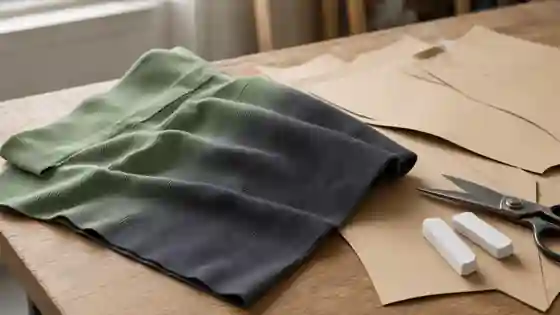
What 4-Way Stretch Means on Pants
Four-way stretch means the cloth elongates and snaps back both crosswise and lengthwise, so a pant can squat, sit, and step high without binding on one grain.
Knits already have some mechanical give because loops can deform. Spandex is the filament that pulls those loops back toward the original size after the move is over. Negative ease patterns for tight bottoms are cut smaller than the body on purpose; they only fit if the cloth can extend on both axes.
That is the pants-specific reading of four way stretch fabric. A hangtag that only says “stretchy” does not tell you whether the length of the leg will move with a lunge.
Two-Way Versus Four-Way—and Why Labels Disagree
Two-way stretch is usually one axis of stretch-and-return, most often around the hips and thighs, with little useful give along the length.
Some vendors use “two-way” to mean stretch and return on a single grain. Others treat any bidirectional knit as four-way. Pattern sewers have argued about this wording for years, which is why a mill RFQ should name warp and weft Stretch percentage instead of trusting the adjective alone.
| Label you see | What to verify on a swatch | Typical pants use |
|---|---|---|
| Two-way / 2-way | Give mainly selvage-to-selvage; length stays more stable | Chinos, many stretch denims, walking trousers |
| Four-way / 4-way | Give around the body and along the leg, then snap back | Tight leggings, yoga bottoms, dance tights |
| “Stretch woven” | Often modest crosswise give; check length separately | Hiking pants, travel trousers, work pants |
Pull a marked 10 cm of cloth both ways and watch it return. If the length barely moves, you do not have four-way no matter what the product title says.
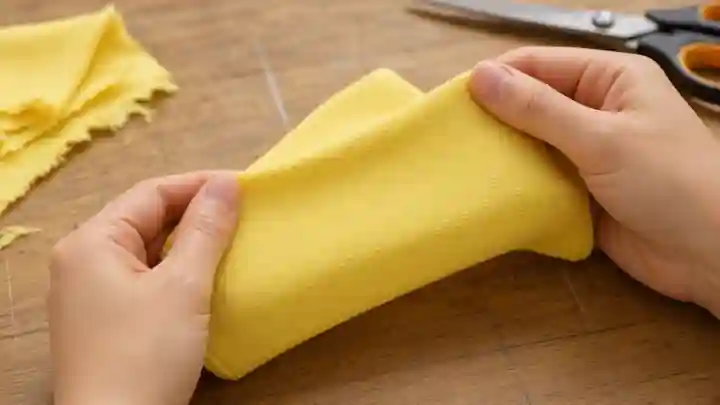
Which Pants Jobs Need Four-Way Stretch
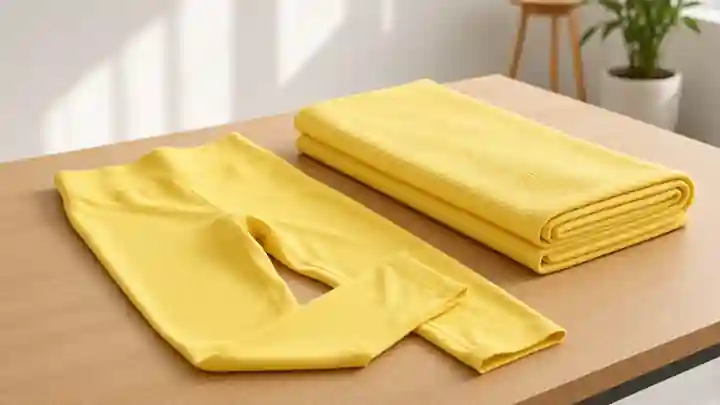
Tight, negative-ease bottoms need four-way stretch; structured trousers often do better with one-axis give plus a gusset and a proper cut.
Yoga and training Tight leggings have to follow hip flexion, knee bend, and a twist in the same motion. A two-way knit that only expands around the thigh will feel locked when the wearer drops into a squat. Commuter and travel pants sit for hours and then walk; four-way can feel more comfortable on a plane, which is why one-bag shoppers hunt for it.
Structured office trousers are a different brief. Brand-side commentary from performance-pant makers is blunt: four-way can feel “liberating” and still cost the secure drape people want at a desk. Two-way stretch plus a gusset is a legitimate spec when the silhouette must not look like sweatpants.
Browse the Sportswear & Yoga Fabric hub when you are ready to scan live knits. Leave hiking-shell DWR stories and yoga-fiber encyclopedias for other pages; this one owns bottoms stretch direction and mill fields.
Snap-Back and Fabric Growth Beat Hangtag Stretch
Fabric growth is leftover length after a stretch is removed, and it is the usual reason stretch pants look baggy at the knee or seat.
Education for stretch patterns puts it plainly: a cloth can stretch beautifully and still fail if it does not return. ASTM D2594 is one named method for knitted fabrics that stretch under a known load and then show growth after a known extension comes off. The same abstract warns that D2594 is not a shipment-acceptance method because labs disagree, so treat it as a conversation starter with the mill, not a trophy score on a hangtag.
Finished yoga pants already prove the spread. A Hong Kong Consumer Council test of 20 women’s models found length elongation from 78% to 177% and width elongation from 62% to 277% under the same 20N, five-cycle pull. Most models returned above 90% after 30 minutes. One wash series still moved elongation a lot. “Stretchy” on a listing does not lock those numbers.
From the field: Sewers and wearers keep repeating the same complaint: four-direction pants that loosen after a few sits, then stay loose after washing. One PatternReview maker refused 4-way stretch wovens for pants after a pair bagged within an hour on a known pattern. Ask for snap-back and growth, not a bigger stretch boast.
| Source of variance | What was measured | How to read it |
|---|---|---|
| Consumer Council yoga pants (20 models) | Length 78–177%; width 62–277% | Finished garments vary widely; copy the test setup, do not copy a SKU |
| Most of those models | Snap-back above 90% after 30 minutes | Return after sit-time matters as much as peak stretch |
| ASTM D2594 | Knit stretch under load; growth after extension | Method name for mill talk; not a Path① lab report |
| Source of variance | What was measured | How to read it |
|---|---|---|
| Consumer Council yoga pants (20 models) | Length 78–177%; width 62–277% | Finished garments vary widely; copy the test setup, do not copy a SKU |
| Most of those models | Snap-back above 90% after 30 minutes | Return after sit-time matters as much as peak stretch |
| ASTM D2594 | Knit stretch under load; growth after extension | Method name for mill talk; not a Path① lab report |
Knit Versus Woven Stretch for Bottoms
Weft knitting plus Nylon and Spandex is the usual body cloth for tight sports pants; stretch wovens are a different job even when both hangtags say four-way.
Looped knits extend because the structure itself is elastic. A small percentage of spandex then supplies snap-back. Many stretch denims and hiking trousers put spandex mainly in the filling, so they ease around the hip and keep length for a cleaner crease. Outdoor SERP SKUs in this query are mostly those wovens: nylon with a durable water-repellent finish, modest stretch, abrasion first.
Do not sample a 216 GSM hiking nylon when the tech pack is a squat-proof yoga tight. Do not sample a cotton-lycra suiting for a compression legging. Match construction to the garment, then argue about color.
What to Put on the Fabric Sheet Before You Sample
Write fiber content, finished width, GSM, knit or weave, both-direction stretch, and how fabric growth will be measured—then sample, wash, and sit-test before bulk.
If the mill only quotes “4-way,” ask for elongation on warp and weft at an agreed load or extension, plus growth after a set rest time. Name whether they use a knit method such as ASTM D2594 or a woven method such as ASTM D3107. Heat and fabric softener can dull spandex, so put care limits on the same sheet the factory will copy onto the care label.
For tight bottoms, also record opacity on a squat, seam stretch, and whether panels will be a different cloth. Warp-knit mesh belongs on ventilation zones, not as a silent substitute for the body knit.
Choose High-Stretch Sports Fabric for Tight Leggings
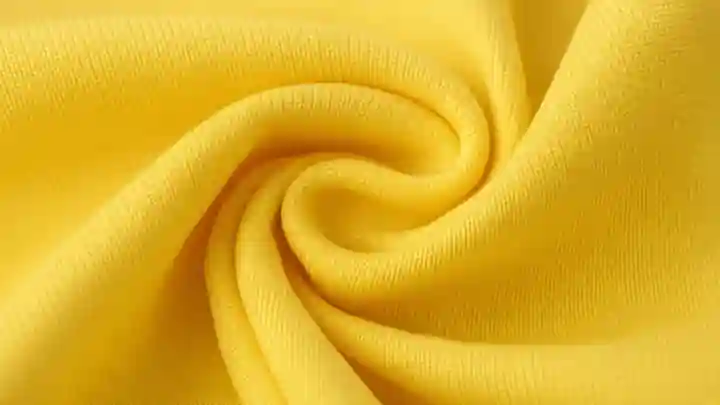
High-Stretch Sports Fabric is the published mill option when the brief is a nylon-spandex weft knit for Tight leggings and matching yoga tanks.
The live overview lists SKU SC221143, composition 80% Nylon and 20% Spandex, specification 152CM * 250GSM, Weft knitting, High Color Fastness, and applications Tight Leggings, Yoga Tank Tops. That is a body-knit spec, not a DWR hiking woven and not a mesh panel.

The photo on the product page is the mill’s published nylon-spandex knit, not a hiking-shell swatch.
| Published field | Path① value |
|---|---|
| Product name | High-Stretch Sports Stair Fabric |
| SKU | SC221143 |
| Composition | 80% Nylon, 20% Spandex |
| Specification | 152CM * 250GSM |
| Knitting type | Weft Knitting |
| Quality standard | High Color Fastness |
| Applications | Tight Leggings, Yoga Tank Tops, etc. |
Skip this SKU when you need a structured chino, an outdoor shell with water repellency, or published ASTM elongation numbers on the page—the product sheet does not list those scores. For open four-way panels, use the lateral nylon-spandex mesh fabric instead of swapping the body cloth.
When GSM, width, and composition match the tech pack, request a wash-and-wear sample before locking bulk. Sit in the sample. Wash it. Check the knee. That is the mill next step, not a quote form pretending to be an article section.
Tip: Consumer Council care notes for yoga pants say to skip fabric softeners and to avoid high-temperature washing, tumble drying, and ironing, because heat and residues work against stretch yarns.
FAQ
What is 4 way stretch fabric for pants?
It is cloth that extends and returns both around the body and along the length, so a pant can squat and sit without locking on one grain. Tight programs rely on that two-axis give plus snap-back.
What is the difference between 2-way and 4-way stretch?
Two-way stretch usually means one axis, often around the body. Four-way means both axes. Because vendors mix those words, specify warp and weft elongation on the mill sheet.
Is 4-way stretch fabric good for pants?
Yes for tight and high-movement bottoms. Structured trousers may feel more secure with two-way stretch, a gusset, and a sharper cut.
Why do stretch pants bag at the knees?
The cloth stretched and did not return—that leftover is fabric growth. More stretch on a hangtag will not fix a weak snap-back.
Do yoga pants need 4-way stretch?
Tight yoga and training tights almost always do, because poses move the hip and knee together. Relaxed walking trousers can live on two-way cloth.
What should I put on a mill sheet for bottoms?
Fiber %, width, GSM, knit or weave, both-direction stretch, growth method, end use, and care limits. Then sample and wash.
How should brands wash spandex pants?
Use mild detergent, skip softener, and keep heat low. High heat and softener residues are the usual shop-floor ways to kill snap-back.
Is a hiking stretch woven the same as a yoga body knit?
No. Hiking SKUs in this search are often nylon wovens with water-repellent finish and modest stretch. Yoga body knits are usually weft-knit nylon-spandex at a different hand and opacity job.
References
- Minerva Patterns. Stretch Fabrics Explained: Two-Way vs Four-Way Stretch. Direction literacy, snap-back, and stretch-gauge practice for negative-ease patterns.
- ASTM International. D2594/D2594M Standard Test Method for Stretch Properties of Knitted Fabrics Having Low Power. Knit stretch under load, fabric growth after extension, and the note that the method is not for commercial-shipment acceptance.
- Hong Kong Consumer Council. Yoga Pants Vary Vastly in Stretch and Quick Drying Performance. Finished-garment elongation spread, snap-back after rest, wash change, and care cautions.
- PatternReview community. Woven fabrics with 4-way stretch. Sewer reports of bagging on 4-way stretch woven pants and the insistence on quality snap-back.