



















































































































What 4 Way Stretch Cotton Jersey Fabric Actually Asks For
4 way stretch cotton jersey fabric is four buying lines written as one name. The lines are cotton fiber share, a named spandex share, a jersey stitch, and stretch that works on both axes.
A page that names a cotton-spandex twill has finished fiber, yarn, width, and weight. The stitch name and the both-axis stretch line are still open. Buyers who land on cotton fabrics are usually splitting that stack before they lock a roll.
Four different promises sit inside one fabric name
The name bundles cotton percentage, spandex, a jersey stitch, and both-axis stretch. Each promise can be true while the others are still blank.
Retail titles like to fuse them. A listing can say 4-way stretch, cotton, spandex, and jersey knit in the headline, then park the real details in a spec block.
The headline is a nickname. The spec block is the order.
Buyers feel this when a tee program, a yoga tight, and a work pant all get the same fabric phrase pasted into the email. The phrase sounds specific. It still leaves a mill free to send a jersey, an interlock, or a woven twill.
Think of the phrase as a four-row form that arrived with the rows already merged. Pull the rows apart before anyone quotes a price.
Fiber tells you what the yarn is. Construction tells you whether the cloth is a knit stitch or a weave. Stretch direction tells you which axes actually move.
That is why two mills can both say yes and still ship different cloth. One is selling cotton-spandex jersey by the yard.
Another is selling a cotton-spandex twill that never used the word jersey. Both answers fit parts of the phrase. Neither answer fits all of it.
| Line inside the phrase | What it actually names | What it does not name |
|---|---|---|
| Cotton | Fiber share by weight | Stitch, weave, or stretch axes |
| Spandex | A stretch fiber on a US label | Jersey, twill, or four-way |
| Jersey knit | A single-knit stitch with a different face and back | Fiber percentages or both-axis stretch |
| 4-way stretch | Useful give on width and length | Cotton content or a stitch name |
A cotton-spandex line only settles the fiber
It names cotton and spandex by weight. Stitch and stretch direction stay outside that sentence.
Under FTC cotton labeling guidance, fibers at or above 5% of product weight are listed by generic name and percentage.
That guidance gives an example written as 96% cotton, 4% spandex when spandex is present as a functional fiber.
Spandex is a fiber name, the way cotton is a fiber name. US labels use spandex when that fiber is in the goods.
Jersey loops do not add spandex by themselves, and a cotton share does not hide it. If the label lists cotton and spandex, the fiber story stops there.
The under-five listing rule is why a small working fiber can still appear by name. You need that rule when a program tee is supposed to hug and the last bulk felt different.
Yardage shops already treat blend ratios as different jobs. One education page lists 97/3 cotton-spandex as a lighter-stretch jersey family than 95/5, still as fiber math, not as a stitch proof.
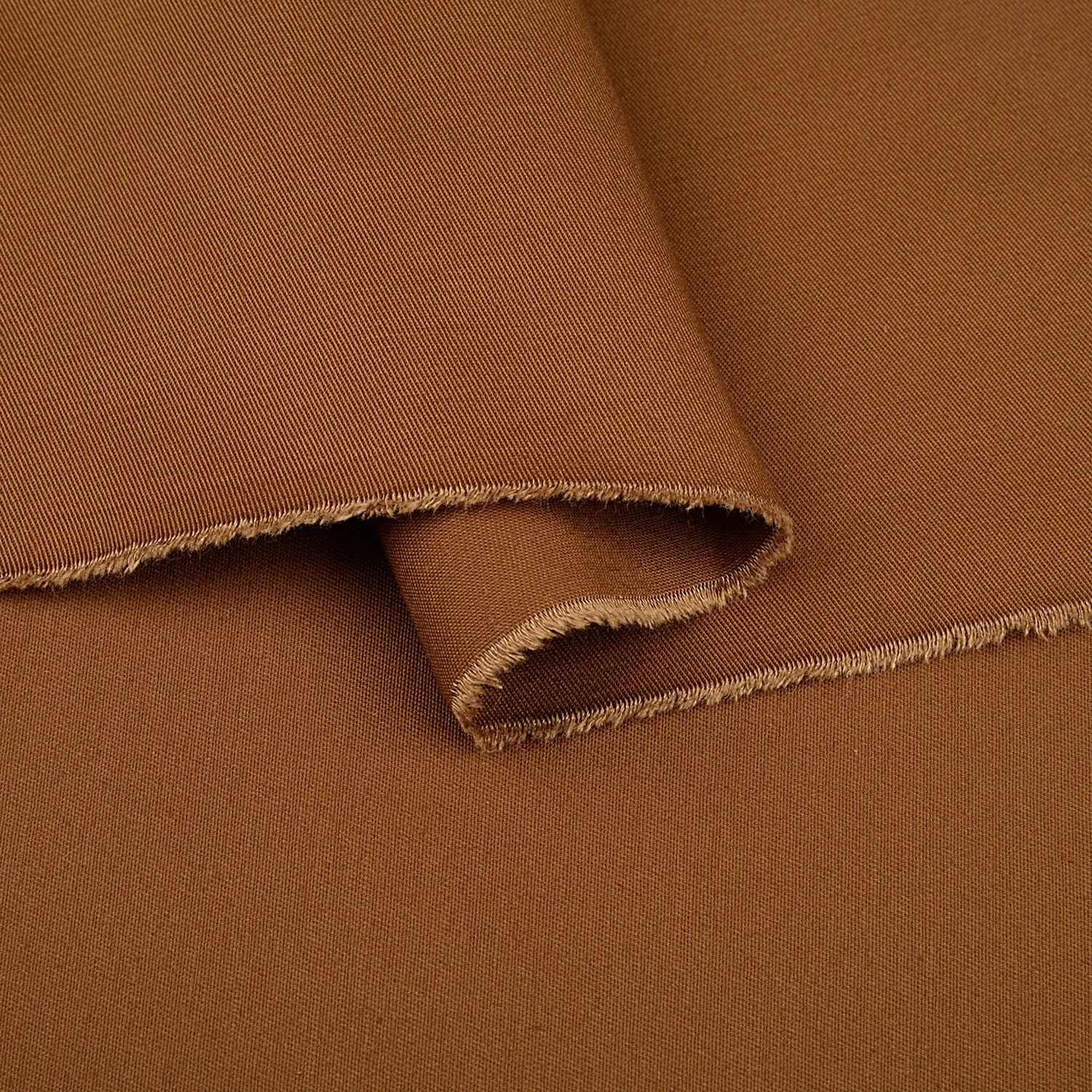
The published Cotton Spandex Twill Fabric states composition 97% cotton, 3% spandex. That sentence is the fiber line for this mill cloth. It is not a jersey sentence.
Jersey is a stitch, and its stretch is not automatically four-way
Jersey is the all-knit single stitch with a different face and back. CottonWorks jersey teaching describes more stretch across the width than along the length.
Jersey fabrics use the knit stitch across each course. The face shows columns of wales. The back shows rows of crowns.
Every course repeats that same knit stitch. Cut across the width, the cloth curls and runs, and it unravels from both ends.
Wales and crowns are how a buyer tells the jersey face from the back.
CottonWorks describes jersey width extensibility as approximately twice the length extensibility. That is a construction habit, not a mill test on a named roll.
Four-way stretch asks for useful give on both axes. A jersey can still be a one-axis comfort knit in practice.
Other types of cotton knit fabrics sit on the same CottonWorks page. Rib uses two needle beds. Interlock locks two rib structures together, so the faces look alike and the cloth is more stable.
Shops sell those types as separate cards: jersey, interlock, French terry, rib. A title that says jersey still needs the stitch named on the mill sheet.
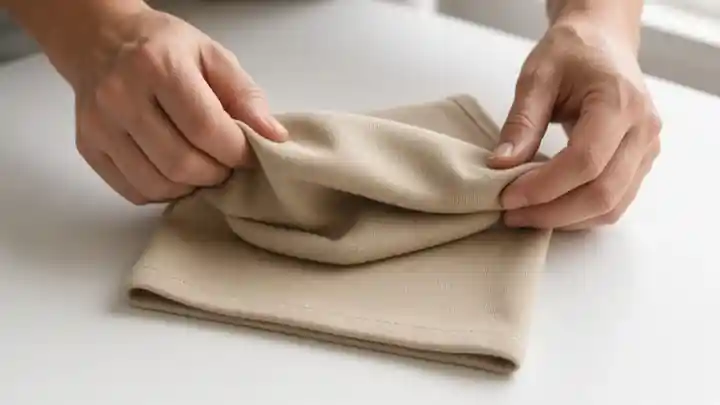
Mood’s cotton jersey collection even describes face ribs and stretch along the grain, without hanging the whole collection on a 4-way boast. Jersey and four-way are different sentences.
Four-way names both axes, and shops do not use the words the same way
Ask for stretch on width and length. Pattern companies and fabric shops often mean different things by two-way.
On PatternReview, a sewer asked whether a Vogue knit that called for two-way stretch would accept cotton-spandex sold as 4-way. One reply said the two words were the same thing.
Another reply said crossgrain-only knits are usually called 2-way, while both-grain knits are what retailers call 4-way. A saved beginner note split the language a third way: one-way as stretch without snap-back, two-way as crossgrain stretch with snap-back, four-way as both grains with snap-back.
From the field: Pattern sewers have argued for years that “2 way vs 4 way stretch fabric” is a wording fight, not a fabric family. Write both axes on the request instead of hoping the adjective matches the pattern envelope. (PatternReview thread)
A later comment on the same thread quoted Kwik Sew treating bidirectional stretch as two-way, “sometimes called four-way.” The same cloth can wear two hangtags.
A Reddit textiles comment pushed a fourth habit: people use 2-way and 4-way for wovens, while knits already stretch because they are loops. CottonWorks still treats jersey, rib, and interlock as different knits. The comment is a warning about slang, not a substitute for a stitch name.
Pull a marked length of cloth both ways on a table. Watch whether the length moves, and whether the cloth comes back. That table test is the 2-way versus 4-way check a title will not do for you.
Twill is a weave, and a machine slogan is not a jersey proof
Twill interlaces warp and weft. A generic knitting-machine sentence does not turn a named twill into jersey.
CottonWorks weaving teaching starts with two yarn sets. Warp yarns run along the length. Weft yarns, also called filling yarns, run along the width.
The three basic weave designs are plain, twill, and satin. Twill belongs to that woven family. Jersey belongs to the knit family.
Retail already keeps those families apart when it wants to. One wholesale homepage sells cotton-lycra jersey by the roll and, a few cards later, a cotton-lycra stripe twill with widthwise stretch called out on the twill.
Same fiber pair. Different construction. The jersey card is not the twill card.
A mill page can still print a stock sentence about imported warp knitting machines. That sentence also appears on woven product copy across the site. It is a brochure line, not a stitch diagram.
Read the product name first. If the name is Cotton Spandex Twill Fabric, the construction line is already a weave until someone writes jersey beside it.
A usable request lists fiber, construction, and both stretch axes apart
Ask fiber, stitch or weave name, both-axis stretch, end use, and weight as separate lines. Then the mill can answer without guessing which nickname you meant.
Write the fiber pair with percentages. Write jersey, interlock, rib, or twill as its own word. Write stretch on width and stretch on length as two measurements you will accept, not as a mood.
Add the garment. A tee, a tight, and a work trouser do not share one default cloth.
Add the mass and the width you can cut. Those numbers belong on their own rows so a title weight cannot drift away from the body copy.
A ranked shop page in this search still said 10 oz in the title while the live body called the same colorway a lighter ounce. Keep weight on the mill sheet. Do not harvest the shop’s ounce line.
If the pattern envelope says two-way and the shop says 4-way, copy both phrases into the email and then replace them with the two-axis measurements. That is how the wording fight ends.
A cotton-spandex twill still fits when jersey and four-way stay open
The mill has already published a named cotton-spandex twill with fiber, yarn, width, and weight on the overview table.
The page states Cotton Spandex Twill Fabric, 97% cotton, 3% spandex, yarn 32*16, 148 cm, and 255 g/m².
Cotton Spandex Twill Fabric sits in workwear and uniform fabric. The overview table is the spec, not the shopping headline from Google.
The same overview lists yarn count 32*16, width 148 cm, and weight 255 g/m². Use those figures as written. Do not convert them, and do not borrow a jersey GSM from a yardage shop.
| Published field | What the twill page states | What stays a separate ask |
|---|---|---|
| Product name | Cotton Spandex Twill Fabric | Jersey knit |
| Composition | 97% cotton, 3% spandex | Four-way stretch |
| Yarn count | 32*16 | A stitch diagram |
| Width | 148 cm | Cut-able yield on your marker |
| Weight | 255 g/m² | Shop ounce titles from other mills |
Skip this SKU when the tech pack is a cotton jersey tee with both-axis stretch written into the pattern. Keep it in play when the job is a cotton-majority stretch twill and jersey was never the construction.
Open the product page for fiber, yarn, width, and weight. Keep jersey and four-way as questions on the same request if those are still the garment’s needs.
FAQ
What is 4-way stretch jersey fabric?
It is a jersey knit that also stretches and returns on both the width and the length. Jersey is the stitch, and four-way is the stretch-direction claim.
CottonWorks already describes ordinary jersey as stretching more across the width than along the length, so the two phrases are not automatic partners.
Does Hobby Lobby have 4 way stretch fabric?
Store stock changes by week and by location, and a search result cannot inventory a retail shelf. Ask the shop for fiber, construction, and both stretch axes on the bolt you can touch. A mill request uses those same lines.
What are the downsides of jersey fabric?
CottonWorks notes that jersey curls and runs when cut across the width, and that it unravels from both ends. Edges that curl toward the face are a known jersey habit in yardage shops. Those habits are construction, not a grade of one mill roll.
What is the name for a 4-way stretch fabric?
Four-way is a stretch-direction label, not a fiber name and not a stitch name. Some pattern books call the same bidirectional cloth two-way. Name width and length instead of hunting for one official synonym.
Can I use a 2-way stretch fabric for a 4-way pattern?
Only if the cloth actually moves on both axes the pattern needs. The 2 way vs 4 way stretch fabric labels in shops are not a reliable map. Measure both directions on a swatch, then match the pattern’s ease.
How do you identify 2-way stretch fabric versus 4-way?
Mark a short length, pull it across the width, then pull it along the length, and watch the return. Crosswise-only give is the usual 2-way habit. Give on both axes is what most shops mean by 4-way, even when a pattern envelope says two-way.
Does 97% cotton 3% spandex mean the cloth is jersey?
No. That line is fiber content.
The published cloth that uses those percentages is named Cotton Spandex Twill Fabric. Jersey would be a separate construction sentence.
What should a buyer ask when a page states cotton-spandex twill, 148 cm, and 255 g/m²?
Confirm the fiber pair, the twill name, the yarn count, the width, and the weight. Then ask, as separate lines, whether the stitch is jersey and whether stretch-and-return exists on both axes for the garment you are cutting.
References
- U.S. FTC, Calling It Cotton: Labeling and Advertising Cotton Products (fiber listing, including the spandex example).
- CottonWorks learning hub, Single and Double Knits (jersey face, back, and width stretch habit).
- CottonWorks learning hub, Weaving Basics.
- PatternReview community, Selecting Knit Fabric: 2-way vs 4-way stretch.