



















































































































Antibacterial Fabric Wash: Care Question, Finish Claim, or Spec Card
Antibacterial fabric wash stacks a laundry product, a finish claim, and a cloth spec into one search. Google answers the first of those jobs, while a mill card can answer only the third.
A spray, a sanitizer, and a knit with a printed fiber line are not interchangeable objects. Antibacterial Performance Fabric is the knit in this discussion: a 75D polyester cloth whose overview stops at fiber, width, weight, and use.
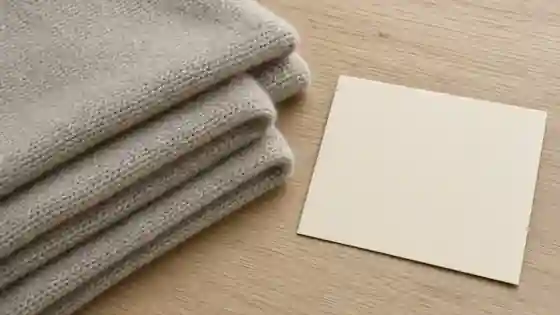
Google hears a laundry-product question
Google is answering with sprays and sanitizers, not with a knit spec.
On a live US query for the phrase, the Web results are a fabric spray, an Amazon shelf of 22 fl oz spray packs, a grocery card for the same spray, a Lysol laundry page, and a chemical maker’s roundup of detergents and rinses. The AI Overview describes an antibacterial clothes wash as a sanitizer additive used with regular detergent.
A laundry sanitizer is a rinse additive, and detergent is what lifts soil. The sanitizer is the extra bottle people argue about after the wash already looks clean.
| Reading of the phrase | What the person is shopping for | What actually answers it |
|---|---|---|
| Laundry product | A spray, a sanitizer, or a detergent | The laundry aisle |
| Finish claim | A treatment story on the cloth | A qualified claim, plus a test that names the cloth |
| Spec card | Fiber, width, weight, and end use | The printed overview |
From the field: A plush owner asked for “something like fabreeze that actually kills bacteria and sanatizes,” which is a spray request, not a mill spec (Wayback thread).
That request matches the result page. People want something that smells light and “kills bacteria,” and they are talking about a bottle.
A laundry-forum reader, looking at an antibacterial laundry additive, said sterilization in a lab meant an autoclave, not another bottle in the wash (Automatic Washer thread). The joke draws a hard line between a retail additive and a sterilization process.
None of those pages names a 75D yarn, a spandex share, or a roll width. They are useful if the email really is about how to wash antimicrobial fabric in a home machine, and they are the wrong attachment if the email is about a cloth order.
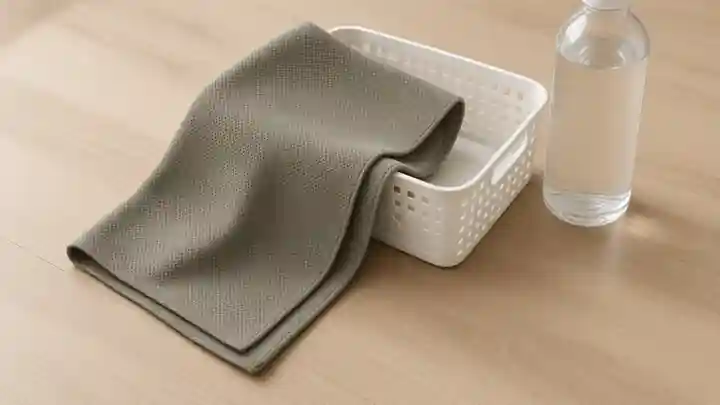
A finish claim is a separate sentence
A finish claim talks about the treatment. It does not name a home wash.
US EPA PR Notice 2000-1 treats a bare “antibacterial” claim as public-health-style wording when it implies protection against germs. The same notice treats a clearly qualified odor line, such as an antimicrobial agent used to control odors on the article itself, as a different category (PR Notice 2000-1).
That split is about labeling a treated article. It is not a lab sheet for any one knit, and it does not say this polyester cloth is registered or exempt.
What makes a fabric antimicrobial, in ordinary mill talk, is a treatment or a fiber story that someone is willing to tie to a named test. The title on a category tile is not that test.
How long does antimicrobial fabric last is a wash-and-retest question. An outside agency had to run that question on its own samples before it would talk about leftover effect.
In the Swedish Chemicals Agency set of training garments, socks, and dish-cloths, on average 60% of the measured antibacterial substances washed out after 10 washes, and 68% of the samples showed no antibacterial effect after those washes (Swedish Chemicals Agency report).
Those textiles were measured for triclosan, triclocarban, and silver, and the percentages belong to that set. They are not a silver reading, a cycle count, or a kill result for the 75D cloth.
A casual-wear buyer and a medical-use buyer can both want the word antibacterial on a storyboard. The word still does not tell either buyer how the cloth was washed in a lab, or whether it was washed at all.
Color wash-fastness is not a care label
That phrase, in the AATCC method, is about color change in a lab wash.
Colorfastness to laundering, in AATCC TM61, is an accelerated color test. AATCC TM61 treats color loss from five typical hand or home launderings as roughly the same job as one 45 min test (AATCC TM61 summary).
The method is about dye and surface change under detergent, abrasion, and optional chlorine. It is not an antibacterial method, and the public summary is not a grade for this roll.
Mill pages often drop “wash fastness” into a sentence that also praises color and UV behavior, next to a line about knitting machines. On this cloth, that sentence is shared boilerplate and does not state a home temperature, a detergent, or a number of cycles.
Copying it into a care box turns a color method into a pretend wash tag. The color question and the hygiene question can both matter, and they are still two different tests.
If a brand needs a color grade, the test method and the acceptance level have to be named on the order. A floating adjective will not survive a lab ticket.
A garment care label is a permanent instruction
A care label is sewn in and states a wash procedure. This overview does not.
Under the US Care Labeling Rule, a care label is a permanent tag that stays readable for the life of the product, and covered apparel has to carry a washing or drycleaning instruction with a reasonable basis (16 CFR Part 423).
On a covered garment care label, machine wash with no temperature stated means hot water up to 145 degrees F (63 degrees C) may be used.
That sentence is the meaning of silence on a finished garment tag. It is not a setting printed for this knit, and it is not permission to wash the roll at that heat.
Piece goods sold from a bolt for home sewing can also fall under the rule. A B2B overview that lists grams per square meter is not itself the tag. The tag, when it exists, belongs on the garment or the piece-goods sale, written from a basis the brand can stand behind.
People looking up how to wash antimicrobial fabric usually want cold, warm, or a sanitizer dose. Those answers live on detergent labels and on garment tags, and they do not appear in this cloth’s overview.
Spandex is the US name for the elastic filament in the blend. A hot wash that a cotton program can shrug off may still be the wrong guess for a polyester-spandex knit, which is why the temperature has to be earned on a tag rather than borrowed from a regulation’s definition of silence.
What this 75D cloth publishes about wash
The card prints fiber, width, weight, and use. It does not print a wash recipe.
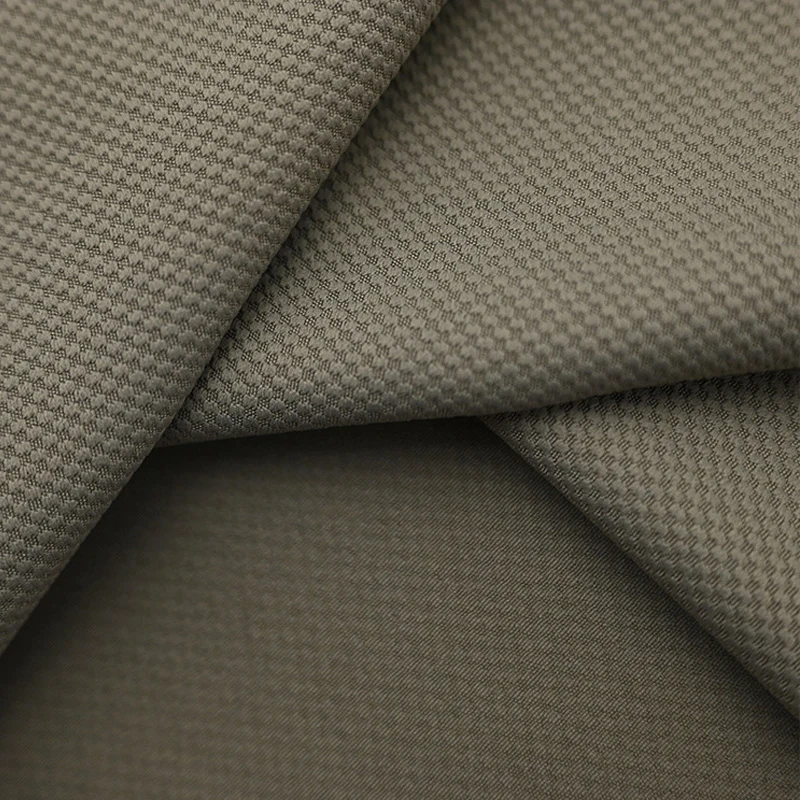
Antibacterial Performance Fabric is sold as a 75D polyester fabric with 92% polyester and 8% spandex, a width of 150 cm, and a weight of 155–160 g/m², for casual wear and medical use.
| Published line | What the overview states |
|---|---|
| Product name | 75D Polyester Fabric |
| Composition | 92% polyester, 8% spandex |
| Width | 150 cm |
| Weight | 155–160 g/m² |
| Application | Casual wear, medical use |
| Wash temperature | Not printed |
| Detergent or cycle count | Not printed |
Polyester is the bulk of the yarn, and spandex is the stretch share. Both numbers are construction facts, and neither number is a wash method.
Casual wear and medical use sit on the same application line. A scrub program and a weekend knit can share a fiber recipe and still need different care tags later, and the cloth page does not choose between them.
The same page also carries promotional lines about bacteria, odor, and pilling, plus the shared wash-fastness sentence. Those lines are not added here as performance results, and the orderable facts are the table.

A buyer who needs a roll in this weight band can take the width and the blend onto a purchase order today. A buyer who needs a home-wash sentence has to ask for it as its own line, because the card’s silence is not a care label’s silence.
Polyester-spandex is the material shelf if the next question is the blend family rather than the antibacterial word.
Fit this polyester-spandex cloth to the wash question
Open it when the program wants this polyester-spandex build, not when it wants a detergent.
Antibacterial Performance Fabric is the right next page when casual wear or medical use is the application, and when this 75D polyester-spandex build is the one you meant. The anti-bacterial fabric hub is the shelf if you still need to scan neighboring cloths.
Leave this page when the real request is a laundry sanitizer, a vinegar argument, or a kill rate after a stated number of washes. Those answers are not on the card, and borrowing them from a spray bottle would mislabel the roll.
If the wash method matters to the garment tag, put temperature, detergent limits, and any required test on the tech pack as separate fields. The cloth overview can travel with the order as the construction record, and it cannot travel as the care instruction.
FAQ
What is the best antibacterial clothes wash?
There is no best bottle hiding inside this cloth. The live results point at laundry sanitizers and fabric sprays, which are a different purchase from a polyester-spandex roll.
What is an antibacterial fabric detergent?
It is a detergent marketed to reduce bacteria while it cleans, though many similar products are rinse sanitizers and do not replace detergent. Neither object is printed on the 75D overview.
Is there a laundry detergent that sanitizes?
Some detergents are sold that way, and some sanitizers are a second step in the rinse. The split is a laundry-aisle choice and does not add a cycle count to this fabric.
What is the most antibacterial fabric?
No single fiber wins that title from the sources behind this page. An outside study had to wash its own treated textiles before it would talk about leftover effect, and this card does not publish a matching test.
What kills bacteria when washing clothes?
Detergent, heat, drying, and rinse sanitizers are the household answers people are offered. Which of those a garment can stand is a care-label question, and this overview does not pick one.
Does vinegar actually disinfect laundry?
Home commenters treat vinegar as a folk add-in, not as a standard. Nothing on the cloth card tells you to add vinegar, or tells you that vinegar replaces a wash tag.
Is laundry sanitizer the same as detergent?
Detergent removes soil, while a sanitizer is sold to act on microbes, often in the rinse. A sanitizer does not clean a load by itself.
References
- US EPA, PR Notice 2000-1, treated articles exemption
- Electronic Code of Federal Regulations, 16 CFR Part 423, Care Labeling Rule
- AATCC TM61, Colorfastness to Laundering: Accelerated, public summary
- Swedish Chemicals Agency, antibacterial treatment of clothes
- Wayback Machine copy of a Reddit request for a bacteria-killing fabric spray
- Automatic Washer forum thread on antibacterial laundry additives