



















































































































Best type of fabric for underwear starts with the fiber family
The best type of fabric for underwear is the fiber family that leads the label. Follow that family onto a knit card that already names underwear among its uses. Modal underwear fabric is the family on the card below, with cotton beside it and the other underwear fabric types kept as neighbors.
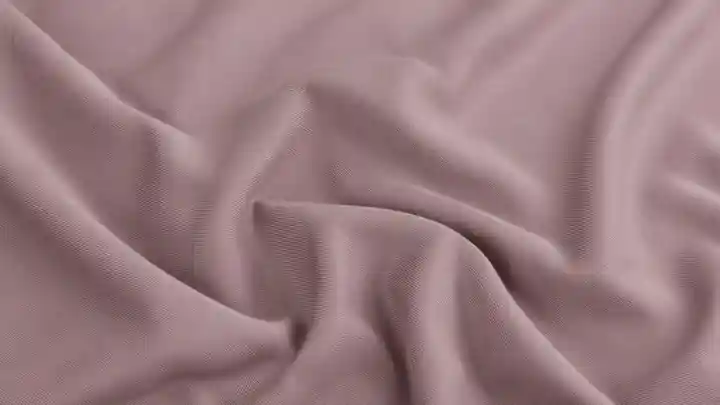
A type name is the fiber family on the label
A type name on the label is the fiber family buyers read.
A showroom question that starts with “best” is usually a question about that leading name. People say cotton, modal, or nylon before they talk about a pattern, a rise, or a color story. The type name is the family the content line puts first.
Clinics tell wearers to read the label, because a soft hand can still hide a different fiber. That habit belongs in a buying room too. Touch comes after the printed family, or the hand becomes a guess.
Underwear fabric types multiply once the leading name is clear. Cotton is the plant fiber most shoppers already know, modal is the regenerated-cellulose neighbor this card prints, and nylon shows up when the cloth is an open mesh.
The leading name is also the predominant fiber by weight on a proper content line. A second name can still appear when it does a job, which is why stretch shows up beside the main family. On this cloth the second name is spandex, the US English word for that stretch fiber.
Write the family in the same words the card uses. Modal on this card is the fiber name in the composition cell. A wood species is a story about how the fiber class is made, and this card leaves that story off the line.
Sample hands often arrive before the sheet does, so pass the sheet across the table anyway. The type name on the paper is what a later repeat order has to match.
A tee buyer and a brief buyer can share that first word, and they still need the rest of the line, because the type name alone leaves the yarn, the width, and the faces unset. Those lines come next, in the same order the card prints them.
Modal sits in regenerated cellulose, beside cotton
A careful buyer places modal inside regenerated cellulose right beside cotton fiber.
Rayon is a semi-synthetic fiber made from regenerated cellulose, and the encyclopedia places modal inside that rayon group. Cotton grows as a seed fiber and stays outside that group. The two families can share a drawer and still be different materials.
Shoppers meet modal as a softer cotton because the hand is smooth and the origin story mentions plants. The class name is still regenerated cellulose, so softness stays a hand and the family stays the line.
Modal is used with cotton or spandex in underwear, pajamas, and similar cloth. That pairing is why a modal knit so often carries a stretch fiber beside the main name. The stretch fiber on this card is spandex.
From the field: Wearers on a menswear forum say modal stays cooler on a workday while cotton can feel damp — and some still keep cotton for harder days.
That split is a wardrobe habit from the forum. A cooler desk day and a rough laundry day can ask for different families, and the card in front of you is the modal side of that split.
Brand blogs often crown one winner and stop, while the forum comments keep both families and change the day. A buyer who needs the cooler hand is already in the modal family, and a buyer who wants the familiar absorbent cotton hand is next door.
Regenerated cellulose is cellulose that has been dissolved and formed again into a fiber, and the encyclopedia ties that route to wood and related plant material for rayon as a class. This card prints the word modal and leaves the pulp species off the specification table.
When a meeting says “modal underwear fabric,” repeat the family and then the card. The phrase is the type and the card is the cloth, so the meeting stays with what the page actually prints.
Two faces on one cloth change what touches skin
Two finished faces on one knit change the cloth that touches skin.
Double-sided, on this cloth, means the knit is finished so both faces are usable cloth. The composition cell is still one line: modal and spandex together. Both faces belong to that same blend.
A pattern cutter cares which face is the outside because both faces are presentable. A brief can put either face toward skin when the hand of both faces is the cloth you bought. The card does not print a second composition for the reverse.
Nylon mesh sits in the next basket, off this line. Nylon is another fiber family, and mesh is an open construction used when air has to move, while a modal knit with two finished faces is the close, soft cloth.
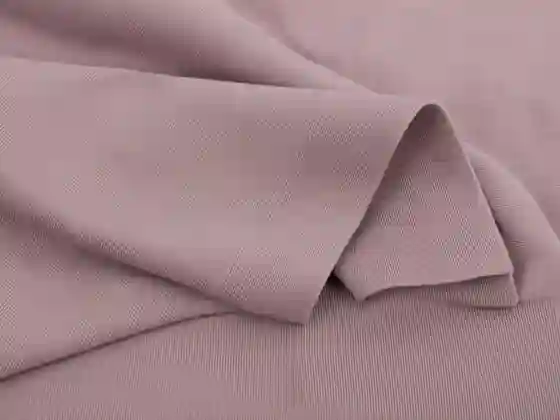
Hand feel still has to happen. The close view shows a continuous knit rather than an open hole. That is the touch the double-sided wording is pointing at: cloth against skin on either face, with stretch from the spandex in the same blend.
If a buyer asks whether the reverse is a different fiber, point at the single composition cell. One line covers the cloth. Double-sided tells you the construction has two faces, and those faces share that line.
Buyers sometimes ask about the muted shade. The card does not publish a Morandi color standard, a dye recipe, or a lab moisture figure. Stay with the faces, the family, and the uses that are actually printed.
A base layer can use the same faces. The side that meets a torso and the side that meets a brief are both this knit. That is the practical meaning of two finished faces on one cloth.
A base layer day and a brief day can share a knit
One knit can cover a base layer day and a brief day.
The application cell lists T-shirts, base layers, and underwear together. A morning base layer and an all-day brief can be cut from that same modal knit. The family does not change when the pattern changes.
Makers who sew underwear describe a modal blend as shiftier and thinner than a cotton jersey they use for the same job. That comment is a hand impression from a sewing forum. It tells you to expect a fluid knit, and it still sends you back to the card for the yarn and the weight.
A shared knit is a cutting decision: the tee panel, the base-layer panel, and the brief panel can come from one width. The type name stays modal, and the use changes with the pattern, which is why the application line names more than one garment.
Harder days remain a cotton conversation for some wearers. The forum split still stands. This page is for the day the buyer wants the modal knit, including a brief under trousers and a light base layer under a shirt.
Underwear fabric types still matter around the edges of that day. Pack the modal knit for the close hand, leave nylon mesh for the open, airy pair, and leave a heavier cotton jersey for the day someone in the forum still calls a hard day.
Yarn count belongs in this conversation before anyone rubs the cloth, because a finer yarn and a heavier yarn can share a type name and feel different on skin. The card prints a yarn-count class so the hand feel has a line to match later.
Width matters once two garments share the knit. A base layer and a brief laid on the same table need a cloth wide enough for both markers. The width line is on the card for that layout, beside the family and the uses.
This card prints modal, spandex, tees, and underwear
The printed card names modal, spandex, tees, and underwear in one place.
The cloth is Morandi Double-Sided Fabric, listed with the underwear and T-shirt fabric hub. The intro calls it soft, stretchy, double-sided, and breathable, and it names T-shirts, base layers, and underwear as the uses.
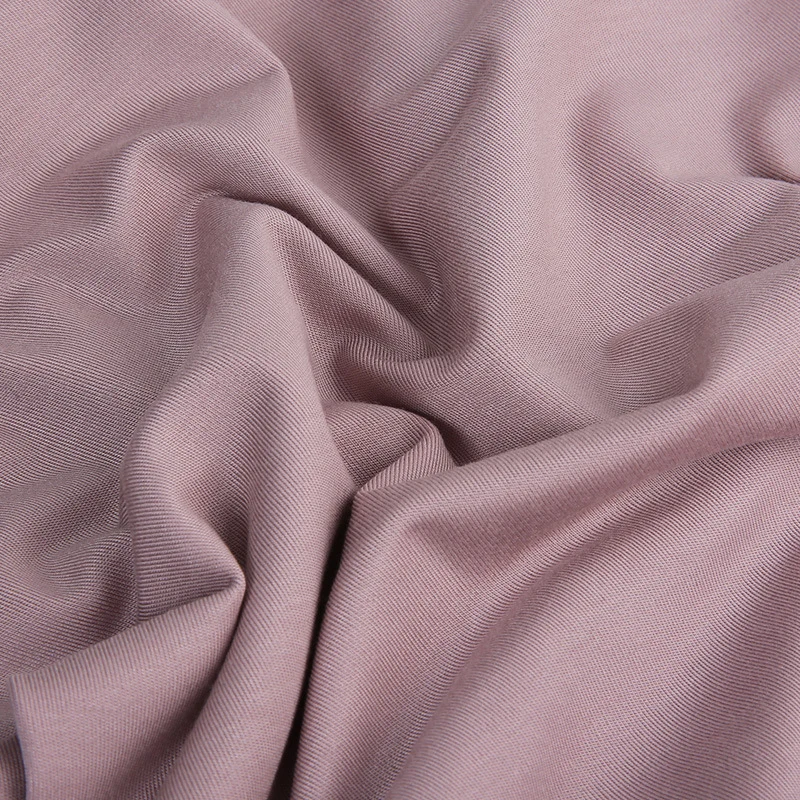
The lines below are the ones printed on that card.
| Item | What the card prints |
|---|---|
| Product name | Morandi Double-Sided Fabric |
| Weight | 210 g/m² |
| Yarn count | 60s |
| Width | 180 cm |
| Composition | 92% Modal, 8% Spandex |
| Application | T-shirts, Base Layers, Underwear |
The published card lists 92% modal and 8% spandex, yarn 60s, a width of 180 cm, and a weight of 210 g/m².
Read the composition as one blend, with modal leading and spandex as the stretch share beside it. The application words sit under that blend, so tees and underwear are uses of this cloth under the same family.
The product photograph is the cloth itself. Use it when the meeting needs the actual hand sample’s picture, and use the table when the meeting needs the lines. The hub is only the shelf where this card lives among other underwear and tee knits.
A buyer who needs open nylon mesh for a gym pair is in another family. This card stays the modal knit with two faces, spandex in the blend, and underwear on the use line.
How the type line goes onto a sample sheet
The type line moves from the fiber name onto the sample sheet.
Start the sheet with the family the label leads with. On this cloth that word is modal. Put spandex on the same composition line, because the card prints it as the stretch fiber beside modal.
Leave a column for the yarn-count class, because yarn count tells a buyer how fine the yarn is before a hand feel. The hand can confirm the sheet, and it should stay beside the printed class.
Leave a column for width and a column for weight, copied from the card when the sample is this cloth. Those columns keep a later repeat from drifting into a different knit that happens to feel soft.
Then write the uses in the words the card uses: T-shirts, base layers, and underwear. A sample that will be cut as a brief should still show the tee and the base layer, because the cloth was published for all three.
| Fiber family | Where it sits | What the buyer writes first |
|---|---|---|
| Modal | Regenerated cellulose, inside the rayon group | The fiber name modal |
| Cotton | Plant seed fiber beside that group | The fiber name cotton |
| Nylon | Synthetic family used for open mesh | The fiber name nylon |
| Spandex | Stretch fiber beside the leading name | The stretch share on the same line |
The sheet now has a type, a neighbor, and a job. Modal is the type, cotton is the familiar neighbor, nylon is the mesh neighbor, and spandex is the stretch share on the modal line.
Pass the sheet with the swatch. The person who touches the cloth later can see the family before they invent a new name for the hand. That is the whole movement: type name, then card, then sheet.
Where this modal knit product fits the type line
This published modal product fits a card that names underwear among uses.
Morandi Double-Sided Fabric is that product. The type line you just wrote is the line this cloth already prints. Open the card when the sample has to match a living specification, and use the hub when the next cloth on the shelf should stay in the same tee and underwear group.
The fit is specific. It fits a buyer who wants modal, spandex, two faces, and a knit already marked for tees, base layers, and underwear. It is the wrong basket for an open nylon mesh.
Keep the digit line on the card and on the sheet together. If a later note drops the yarn, the width, or the weight, the type name alone will leave this cloth unfinished.
FAQ
Why do shoppers treat modal as a softer cotton?
The hand is smooth, and the fiber class starts from plant cellulose, so the comparison feels natural. Modal still sits in regenerated cellulose, beside cotton, rather than inside the cotton family. Wearers who like the cooler hand are describing that smoothness, and some of them still keep cotton for harder days.
Does double-sided mean the same fiber on both faces?
On this card, yes in the practical sense that matters for buying. One composition line covers the cloth, and double-sided names the construction. Both faces are that modal and spandex knit.
Where does nylon mesh sit next to a modal knit?
Nylon mesh sits in the next family. Nylon is the fiber, mesh is the open construction, and the job is airflow for a gym or travel pair. The modal knit is the close, double-sided cloth for skin contact on a tee, a base layer, or a brief.
What does yarn count tell a buyer before a hand feel?
Yarn count names how fine the yarn is, so a buyer can see that class on the sheet before anyone rubs the swatch. The hand feel checks the sheet and stays beside the printed class.
Does this page list underwear as an application?
Yes. The application line on the Morandi card includes underwear, together with T-shirts and base layers. The use is printed on the same card as the modal and spandex composition.
Can one type name cover both tees and briefs?
Yes, when the card says so. The type name is modal, and the same knit is published for T-shirts, base layers, and underwear, so a tee day and a brief day can share that name and that cloth.