



















































































































Black and white print cotton fabric splits colorway from fiber
Black and white print cotton fabric stacks a colorway ask onto cotton print fabric. Shoppers type those words together, then expect one roll to answer fiber, process, and motif at once.
The useful move is to keep the colorway on its own line, keep cotton as the fiber line, and keep the print process as a third line. From there the path runs straight to a published cotton African wax card that already prints fiber, reactive print cotton process language, yarn, density, width, and weight.
Cotton fabrics is the hub for cotton grounds. The wax card below is the cloth proof for cotton plus reactive print when black and white still belongs on the sample sheet.

Black and white names a colorway, not a fiber
Black and white names the colorway line on a cotton print ask.
Retail titles love the stack. Hand-block shops put monochrome black and white beside cotton and a print technique in one headline. Collection pages can treat Black/White as a color filter across many grounds.
The words feel like a finished cloth name. They still leave fiber and process open.
FTC cotton labeling guidance treats cotton as a fiber name that must match the fiber in the goods. A hundred-percent cotton line settles the fiber story. It stays silent about whether the motif is floral, geometric, wax-family, or a strict two-tone layout.
Think of black and white as the paint you want on the print program. Cotton is the thread family. Print process is how that paint bonds to the cloth.
Merging those three lines in one search phrase is why two honest suppliers can both say yes and still send different rolls.
A quilting buyer and an apparel buyer may type the same stacked phrase. One cares about patchwork yards. The other cares about shirts and dresses.
The colorway words travel with both jobs. The job still has to be written beside the colorway.
| Phrase line | What it answers | What stays open |
|---|---|---|
| Black and white | Colorway / motif ask | Fiber and print process |
| Cotton | Fiber content | Colorway and process |
| Process or pattern family | Exact colorway on the roll |
When a title already sells the colorway, read the fiber bullet next. When the fiber bullet says cotton, read the process bullet after that. The order keeps the stacked phrase from pretending it is a single SKU nickname.
Cotton print and polyester print sit on different cards
Cotton print keeps the fiber on cotton; polyester print leaves that card.
The same black-and-white words show up on polyester-majority stripe cloths and on poly-cotton stretch knits. Shops still call those cards black and white. The fiber line has already left cotton.
A buyer who needs cotton hand feel, cotton breathability language, or a cotton reactive print process has to keep fiber on its own line. A polyester black-and-white uniform stripe can be the right cloth for a costume or a hard-wearing shirt program. It still sits on a different card from a hundred-percent cotton print base.
US fiber labeling expects the generic fiber names to match what is in the goods. If the label reads polyester and cotton together, the cloth is a blend story. If the label reads cotton alone at full content, the fiber story stops at cotton.
Colorway words do not rewrite that sentence.
Keep two short checks on the request. First, write cotton or polyester as the fiber line. Second, write black and white as the colorway line.
The print process comes third. That order stops a polyester stripe from answering a cotton print search by accident.
Apparel teams feel this when a swatch arrives crisp and shiny while the email still said cotton. The colorway matched. The fiber did not.
Separating the cards early saves a second sampling round.
Reactive print is the process line on this cotton cloth
Reactive print names how color bonds to cotton while motif stays open.
Cotton Incorporated’s print chemistry bulletin describes textile printing as a localized form of dyeing. Fiber reactive dyes react with cotton through covalent bonds. That is process language.
It tells you how the color attaches to cellulose. It leaves motif open. A reactive process row still leaves a two-tone black-and-white layout as a separate ask.
Hand-block cotton and Jaipur screen-print cotton are other process cards that also appear under black-and-white shopping titles. They can be excellent cloths for their own programs. They still answer a different process question from reactive print on a wax-family cotton card.
When a product overview says Reactive Print, read that row as the process line. Then ask whether the motif family is wax-style, floral, geometric, or a named colorway.
Process and motif share the print conversation. They are still two sentences on a careful request.
A developer who sees bright pattern photos sometimes assumes the process row already locked the palette. The process row locked how dye meets fiber. Palette and motif stay available for the sample sheet.
Reactive print on cotton is also why the same base can carry many colourways later. The chemistry supports cotton print programs. The colorway ask still has to be written in words the mill can print against.
African wax patterns travel wider than a two-tone ask
Wax-family patterns carry many colourways beyond any single two-tone shop filter.
Independent textile education on African wax / Ankara describes industrially printed cotton cloths made for African markets. Naming sometimes extends from true wax-resist cloth to roller-printed fancy cottons that imitate the look.
The pattern families are known for bold motifs and for travelling across many colourways. A two-tone black-and-white ask can sit inside that family. The family itself is wider than that ask.
Sewers talk about African wax print as cotton cloth in real projects. One sewing thread described a jumpsuit made from beautiful hundred-percent cotton African wax print fabric. That language ties the family to cotton.
It still leaves room for reds, blues, golds, and multicolour layouts on other rolls.
From the field: Buyers who source African wax often ask for samples before they trust a bulk story. The sample is where colorway words meet the cotton print base.
Shengchao’s published card for this package is a cotton African wax cloth with a reactive print process. It proves cotton plus reactive print. It leaves the words black and white off the SKU colorway line.
Treating the photo as a strict two-tone proof would invent a claim the overview never makes.
Leave glitter wax and blue-and-white block-print programs for other slots. The job here is the stacked search phrase and the cotton reactive wax card that answers fiber and process.
This product card prints cotton, yarn, density, width, and weight
The cotton African wax card prints fiber, process, and core construction fields.
Cotton African Wax Fabric sits under Printed Fabric with H1 Cotton African Wax Fabric. The overview names Reactive Print as the printing process and cotton as the composition. Those two lines already answer the fiber and process halves of the stacked search.
The published card lists 100% cotton, yarn 40s x 40s, density 72 x 60, a width of 46/47 inches, and a weight of 156 g/㎡.
| Item | Details |
|---|---|
| Printing Process | Reactive Print |
| Composition | 100% Cotton |
| Yarn Count | 40s x 40s |
| Density | 72 x 60 |
| Width | 46/47 inches |
| Weight | 156 g/㎡ |
Yarn count and density give a buyer construction language before a hand feel arrives. Width and weight give cutting and drape expectations for shirts, dresses, casual wear, and home textiles named on the live marketing lines.
Soft and breathable language on the page stays marketing voice. The table is the citeable field set for this package.
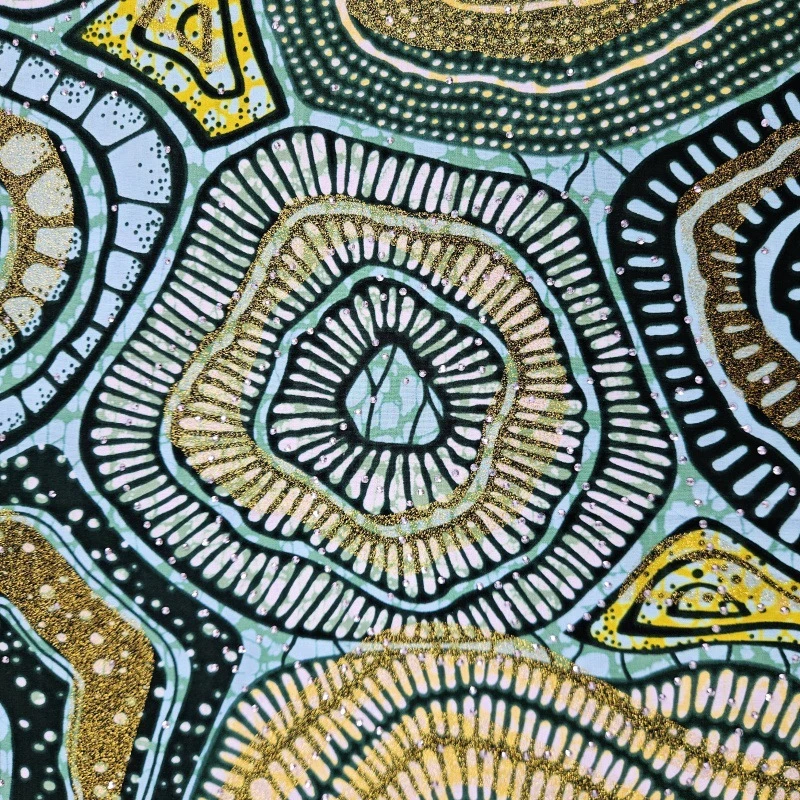
Hub readers who started on cotton fabrics can move from the cotton family into this printed cotton card without renaming the SKU as black and white. The colorway ask remains available beside the base.
Capacity slogans about machine counts and year counts appear on many product pages. They stay outside the claim set here. Fiber, process, yarn, density, width, and weight are the lines carried forward here.
How the print request goes onto a sample sheet
Colorway words land on the sample sheet beside the cotton print base.
Write the base first: cotton, reactive print, and the construction fields from the card. Write the colorway second: black and white, or any other palette the program needs. Write the motif family third if the program needs wax-style geometry, florals, or another layout language.
Community sourcing threads about African wax keep returning to samples. People worry about authenticity language and ask for a swatch before bulk. That habit fits this search.
Black and white is easy to type. It is harder to ship until someone sees the print on cotton.
A clean sample sheet also keeps polyester cards out of a cotton program. If the fiber line says cotton, a poly stripe fails early. If the process line says reactive print, a pigment-only story has to be discussed as a different process.
If the colorway line says black and white, the mill can answer with the matching print trial on the agreed base.
One cotton print base can carry many colourways across a season. That is why the page can prove cotton and reactive print while leaving black and white off the overview title. The stacked search brought you to the base.
The sample sheet finishes the colorway.
Keep end use on the sheet as well: shirt, dress, casual set, or home textile. End use leaves fiber on its own line. It helps the mill choose which hand feel to prioritize when several cotton print bases are available.
FAQ
Why do shoppers stack black and white onto a cotton print search?
Because retail titles already sell the stack. Colorway, cotton, and print sit in one nickname, so shoppers type the nickname into search and hope one card answers all three lines.
Does reactive print mean the cloth is already a two-tone design?
Reactive print names the dye-print process on cotton. Motif and colorway still need their own words on the request or sample sheet.
Where does a polyester black-and-white uniform print leave cotton?
It leaves the cotton fiber card. Polyester or poly-cotton black-and-white stripes can be useful cloths, yet they answer a different fiber line from a hundred-percent cotton reactive print base.
What do yarn count and density tell a buyer before a hand feel?
They describe how fine the yarns are and how packed the weave is on the published overview, so a buyer can compare construction language before the swatch arrives.
Does this page print the words black and white?
The published wax card prints cotton, reactive print, yarn, density, width, and weight. Black and white stays a colorway ask for the sample sheet rather than a SKU title line.
Can one cotton print base carry many colorways?
Yes. African wax and other cotton print families are built to carry many colourways on a shared cotton print base, which is why colorway words belong beside the base instead of inside the fiber row.
References
- Federal Trade Commission. Calling It Cotton: Labeling and Advertising Cotton Products.
- Cotton Incorporated. Chemistry of Fiber Reactive and Reactive/Disperse Dyes in the Printing Process (ISP 1015).
- Asian Textile Studies. Dutch Wax.
- Reddit r/sewing. Finally made something I like!.
- Reddit r/Alibaba. Is Alibaba a good place to buy original African wax fabric?.