



















































































































Blue and white block print fabric starts with the process
Blue and white block print fabric asks for a stamped colorway, and the cloth card under the printed-fabric heading is Acetate Jacquard Fabric. The name and the body describe jacquard. They leave the color pair off the page.
A block-print ask has landed on a woven motif. Rayon and viscose share one fiber cell, while acetate and polyester share the other, and the application list runs from qipao and sleepwear to coats. The path below follows that mismatch onto the card.
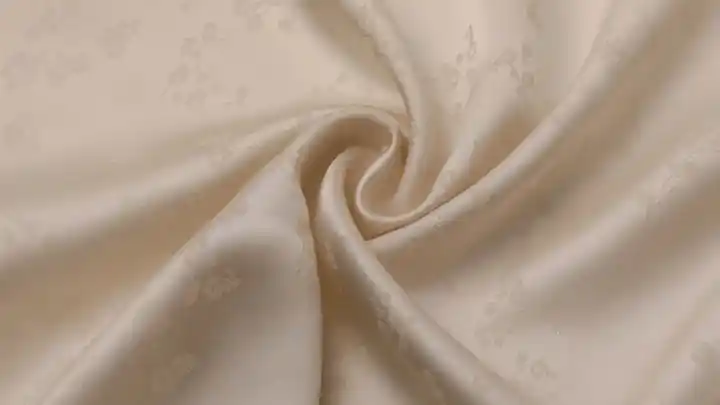
Block print is a surface process, not a woven motif
A carved block stamps the surface while a jacquard motif is woven.
Block print fabric gets its pattern from a tool pressed against the cloth. Wood and metal blocks put a pattern on cloth by printing or by resist dyeing.
The motif sits where the block touched. A second color usually needs a second block, and a slight shift between stamps is part of that hand work.
Jacquard pattern cloth is built another way. Punch cards raise chosen warp threads so the motif is woven into the cloth.
The weft passes over and under those threads, and the order of that interlacing is the pattern. You can follow the design in the structure even when no extra color has been stamped on top.
Shop pages for this search sell the stamp. Titles talk about hand-carved blocks, one color at a time, on cotton cambric or a cotton-linen blend.
That is useful for a dress or a curtain that truly needs a surface print. It does not tell you what to do with a card whose body says delicate jacquard patterns.
Hold the two processes apart before you read any fiber line. A stamp can be added to many grounds.
A jacquard motif is already in the weave when the cloth leaves the loom. This card names the woven kind.
It never names a block.
Buyers sometimes treat “printed fabric” as one bucket that includes every patterned cloth. The bucket is a filing habit.
The cloth still has a making method. If the method is a weave, the request that says block print is still open.
A later surface color could, in principle, sit on a woven ground. That would be a second making step, with its own blocks, dyes, and registration.
The page in front of you records the jacquard name and the jacquard patterns. It does not record a stamp.
Blue and white names a colorway the card never prints
Blue and white is a colorway request this published card never names.
Retail listings use the pair as a palette. One shop shows a blue motif on a white cotton cambric, printed with hand-carved blocks.
Another sells a white and blue Jaipuri floral, hand-stamped, and states cotton as the fiber. A third describes interlocking blue and white triangles from wooden blocks in Jaipur.
A fourth nods at delftware on a blue block-print cotton-linen cloth. Shop listings stack blue and white onto cotton block print fabric.
Those pages answer the colorway because they print it. They also answer a fiber, usually cotton, and a process, usually a hand block. A buyer who copies a title from that shelf will expect those three answers together.
This card’s photograph is a cream ground with a pale floral figure in the weave. There is no blue print and no white print to point at.
The product title is Acetate Jacquard Fabric. Searching the page text for the color pair comes up empty.
Quilters talk the same colorway in a different room. One maker wrote about collecting blue and white prints for a scrappy quilt.
That sentence is a palette habit. It does not name a block, and it does not describe this jacquard.
From the field: A sewer asked for lightweight cotton with colorful block prints for a dress, which is a surface-print cotton request beside this jacquard card. Indian block print cotton thread
The stacked search reads quickly, and it is also easy to mis-file. Blue and white carries the colorway job.
Block print names the stamp. The card answers a woven floral instead.
It answers a woven floral on an acetate jacquard name.
If a sample later arrives in blue and white, that sample is a new color story. It should be written on the request in those words. The published page will still say jacquard until someone changes the page.
Two fiber cells on one card cannot both lead the label
Both fiber cells stay on the card because they name different fibers.
Read them side by side, and refuse to let either cell erase the other. The composition cell says rayon and viscose.
The blend-ratio cell says acetate and polyester. The body paragraph agrees with the blend cell: acetate with polyester, plus a smooth hand and elegant drape.
Fiber names on a label have to match the fibers in the cloth. A covered label lists generic names and the share of each fiber by weight.
When two cells on one card name different families, a buyer cannot treat one line as a courtesy and the other as the truth. Both lines are on the same overview.
Rayon and viscose are a familiar pair of names for one regenerated-cellulose family. Seeing them together in a single cell is a naming habit.
Acetate is a different fiber. Polyester is a different fiber again.
The blend cell names a different pair from the composition cell.
| Question | Block print fabric | Jacquard pattern cloth |
|---|---|---|
| Where the motif lives | On the surface, from a stamp or a resist | Inside the weave, from raised warp threads |
| What a buyer can see | Color sitting where the block landed | A pattern that belongs to the structure |
| What this card shows | The page never names a block | The name Acetate Jacquard Fabric |
The table above is the process split. The fiber split is smaller and sharper.
Nobody on this page has published a sentence that reconciles rayon and viscose with acetate and polyester. Until that sentence exists, the honest reading is that the card is carrying two fiber stories.
A mill conversation can clear it. Ask which cell the invoice, the label, and the body should repeat.
Keep both cells in the note you send. Dropping the rayon line because the body sounds more luxurious, or dropping the acetate line because the composition cell looks simpler, invents a winner the page does not give you.
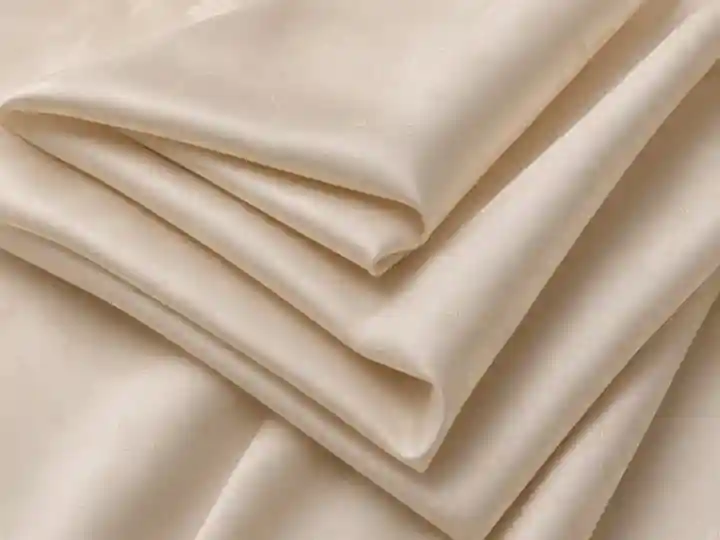
Qipao days and coat days do not share one hand
Sleepwear and coats ask for different hands, even on one application list.
The body describes a smooth hand, elegant drape, and delicate jacquard patterns. That language fits a qipao, a skirt, a sachet, or a shawl that wants the cloth to fall. Sleepwear sits in the same family when the wearer wants a smooth face against skin and a drape that does not stand away from the body.
Coats and cotton jackets sit at the other end of the same list. A coat cloth is asked to hold a shape, to meet a lining, and to live through a heavier garment.
Cotton jackets, as a phrase on this card, name a garment. They do not rename the fiber cells as cotton.
The fibers on the cells remain rayon, viscose, acetate, and polyester.
Sleepwear, skirts, sachets, and shawls share the application line with cotton jackets and coats. Sharing a list is not sharing a hand.
A cutter who takes the sleepwear end will look for drape and a delicate figure. A cutter who takes the coat end will look for body and a cloth that can be paired with a heavier shell or a structured jacket.
Delicate jacquard patterns read as a light figure. Elegant drape reads as a cloth that moves.
A coat day can still use a drapey cloth, as a lining or a shawl-weight layer. That use should be named as a layer rather than as the coat itself.
Qipao sewing makes the same distinction in a different garment. The outer qipao wants the floral figure to read at arm’s length and the drape to follow the body. A coat worn over that qipao is a second cloth, even when one supplier page mentioned both end uses.
If the program is sleepwear, write sleepwear on the request and keep the coat words off that line. If the program is outerwear, write coats or cotton jackets and say whether this jacquard is the shell, the lining, or only a shawl idea that rode along on the list.
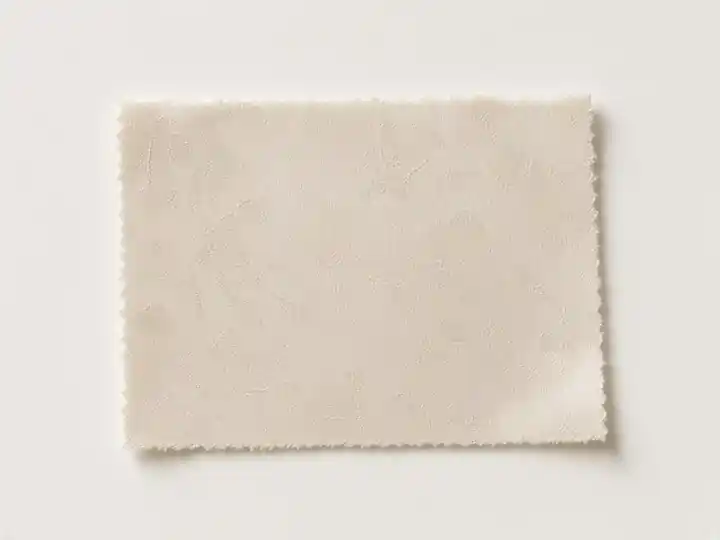
This card prints a blend, a width, and a jacquard name
The published name is jacquard, with blend, width, and weight beside it.
The published card lists a composition cell of 100% rayon / 100% viscose beside a blend ratio of 65% acetate and 35% polyester, a width of 145 cm, and a weight of 154 GSM.
| Item | Details |
|---|---|
| Product Name | Acetate Jacquard Fabric |
| Composition | 100% Rayon / 100% Viscose |
| Blend Ratio | 65% Acetate, 35% Polyester |
| Weight | 154 GSM |
| Width | 145 cm |
| Application | Qipao, Skirts, Sleepwear, Sachets, Cotton Jackets, Coats, Shawls |
The product name on the card is Acetate Jacquard Fabric. That name is the anchor for the link below.
The body repeats acetate with polyester, the smooth hand, the elegant drape, and the delicate jacquard patterns. The overview adds the composition cell that names rayon and viscose.
Read the table as the page prints it. The two fiber rows stay neighbors.
The card is filed with printed fabric. Filing explains why a block-print search can land here.
Filing does not change the product title. Open Acetate Jacquard Fabric when you want the live fields, the cream floral photograph, and the application list in the supplier’s own layout.
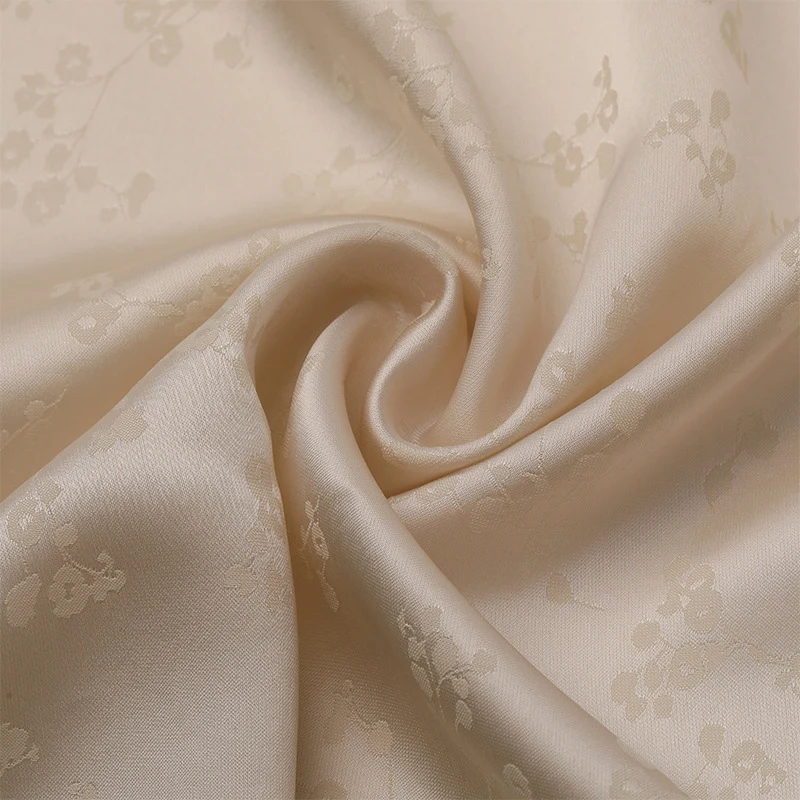
Use the page as a jacquard record. Quote the name, the two fiber cells, the width, the weight, and the garment list.
Leave blue and white on your own request until a sample or a revised page prints them. Leave the word block on that request for the same reason.
A buyer who only needed the woven floral, the drape, and the published width can stop on this card and still write the fiber question down. A buyer who needed a blue and white block print should keep shopping the process, because this record never supplies it.
What the block-print request should name
Name the process, the colorway, and the base cloth in the request.
Start with the process word you actually need. If the cloth must be stamped, write block print fabric, and say whether one block and one color are enough or whether the design needs several blocks. If the cloth must carry the figure in the weave, write jacquard pattern cloth and point at this card’s name.
Then write the colorway in words the page can fail. Blue and white is that pair.
Add the ground and the figure if you know them: white ground with a blue motif, or a blue ground with a white figure. The cream floral on this photograph is a third look.
Naming it cream, or naming it blue and white, should be a choice you make on purpose.
Then write the fiber story you are willing to cut. On this card, that means repeating both cells: rayon and viscose in the composition cell, acetate and polyester in the blend cell, and the body line that follows the blend.
Ask the mill which line the label will repeat. Do not strike one cell to make the email shorter.
End with the garment hand. Sleepwear, qipao, skirts, sachets, and shawls pull toward drape.
Coats and cotton jackets pull toward a heavier garment, and cotton jackets still do not mean the cloth is cotton. Pick the end of the list you are sewing.
A sample photo can travel with that note. Ask for the photograph of the colorway you named, not only the cream jacquard already published.
If the mill later prints a surface color onto this woven base, that step needs its own line: base cloth, then print process, then colors. The current page has the base and the woven figure.
It is silent on a later print.
Community wording is a check on your own sentence. Sewers looking for block prints talk about lightweight cotton and a dress.
Quilters collecting blue and white talk about a palette. Your sentence should be as plain as theirs, with the extra fiber cells this card forces into the open.
Keep the acetate jacquard product next to the open request
The acetate jacquard product stays open for the woven name, the two fiber cells, and the garment list. The block-print colorway stays on the request until a sample prints it.
Use the same live card already linked above. Quote Acetate Jacquard Fabric when the weave is the cloth in hand, and keep blue and white on the note when the stamp is the cloth you still need.
FAQ
Why do buyers stack blue and white onto a block-print search?
Shop titles already stack the color pair onto hand-block cotton, so the words travel as one nickname. The colorway and the stamp are still separate jobs, and this jacquard card answers neither of them.
Does a jacquard motif travel with a block-printed surface?
The motif in a jacquard is woven by raised warp threads. A block-printed surface is a stamp or a resist on the cloth. They meet only when a later making step adds the stamp, and this page does not record that step.
Which fiber cell should a buyer read first on this card?
Read them as a pair. The composition cell names rayon and viscose, and the blend cell names acetate and polyester, in line with the body. Neither cell has been retired on the page.
When does sleepwear leave a coat cloth behind?
Sleepwear follows the smooth hand and the elegant drape. A coat or a cotton jacket asks the cloth to serve a heavier garment. When the program is one of those end uses, the other end use comes off the request.
Does this page print the words blue and white?
The published name is Acetate Jacquard Fabric, and the body talks about jacquard patterns. The color pair is absent from the name, the body, and the overview.
Can one jacquard base carry a later print colorway?
A woven ground can receive a surface print in a later step. That step would name the process, the blocks or the print method, and the colors. This card stops at the jacquard name, the fiber cells, the width, the weight, and the garment list.