



















































































































Cotton print fabric by the bolt starts with the piece note
Cotton print fabric by the bolt asks for a long roll, while the card on the counter sells a cotton wax piece.
The walk starts with that mismatch. It ends on the piece note, after cotton, yarn count, density, width, and weight have been read in the order the card prints them.

A bolt is a roll, and this card names a piece
A bolt means a long roll, while this card names a piece.
Finished cloth is wound into rolls called bolts, and a buyer who says bolt is asking for that kind of roll.
Merchants still talk about cloth wound into a roll when the goods leave the loom and get stored for a later cut.
On this counter the object in hand is African Grand glitter Wax, and the selling unit written for it is a piece.
The wax fabric on this card is a six-yard piece, and a one-yard cut is a different line.
Someone asking for fabric by the piece is already closer to this card than someone asking for an unnamed roll.
A roll can be long, short, or simply unstated. Education pages treat that length as variable, so this card refuses to borrow a length it does not print.
Sales-agent support is printed beside the piece note. Factory-spot inventory can change, and the card asks for a word with customer service before an order goes through.
| Buyer word | What the card is doing |
|---|---|
| Bolt | Naming a long roll the buyer hopes to purchase |
| Piece | Naming the selling unit written on this card |
| Cotton wax print | Naming the cloth family in the description |
Hold the two words apart while the cloth is still folded. Bolt is the request. Piece is the answer this card is willing to give.
Cotton wax print still has to show cotton on the card
Cotton wax print on this card still has to read as cotton.
In the description, this cloth family is cotton wax print, and the composition line is where that family has to prove itself.
Read that line as a disclosure. Fiber content is what the cotton line is doing on this card.
Sometimes a title sounds like cotton and still hides another fiber. The line under the title is the place that has to say cotton in fiber language.
From the field: Sewers on a wax-print thread say to read the cotton line because a polyester blend can still look like a wax print. Source: Where is the African wax print fabric?
Forum talk already says it. A polyester blend can still look like a wax print, so the cotton line has to be read before the hand.
Buyers already sort wax prints by whether the cloth is cotton or a blend that only borrows the look.
That sorting happens in ordinary sewing talk, long before anyone agrees on a roll length.
African Grand glitter Wax keeps glitter in the name and cotton on the composition line.
Glitter rides along in the product name. It does not get a share, a coating story, or a second fiber line on the table.
If the cotton line were missing, the name would be doing too much work. The card does not leave that work to the name.
Read cotton first, then let the hand follow. The hand can confirm drape later. It cannot replace the fiber word.
Yarn and density sit under the hand before the length
Yarn count and density arrive as hand clues before any length talk.
The card prints yarn count as the pairing of yarns it shows, and density as how those yarns sit together in the cloth.
Read them as construction talk while the piece is still folded and the roll length is still unspoken.
Rubbing the fold already uses those lines, even when the eyes follow a moment later.
Finer yarn talk and closer density talk change how a print sits on the surface. They do not, by themselves, tell anyone how long the selling unit is.
Keep length for the piece note. Let yarn count and density finish their own job.
| Card line | What it tells you before a hand feel |
|---|---|
| Composition | Cotton, the fiber the card names |
| Yarn count | How the yarns are paired on the card |
| Density | How closely those yarns sit in the cloth |
| Width | The cloth width printed beside the weight |
| Weight | The cloth weight printed beside the width |
| Piece note | A six-yard piece, kept apart from a one-yard cut |
When the hand and the card disagree, stop and read the lines again. The card is the record. The hand checks that record and leaves the printed lines in place.
Width and weight belong in the same glance as yarn and density, because a cutter uses all four before deciding how the piece will be opened.
A garment cut and a resale piece do not share one length
A garment cut and a resale piece need different lengths on purpose.
A garment cutter opens the piece against a pattern. Sleeves, body, and a head wrap can share one cloth and still want the print to fall in different places.
That cutter cares where the repeat lands inside the six-yard piece. The piece note tells them the unit they can open. It does not draw the pattern.
A reseller often wants the piece to stay whole. The same six-yard piece is the unit they can pass on, still folded, still matching the note on the card.
Those two jobs can start from the same cotton wax print and still leave the counter with different plans.
One plan cuts. The other plan keeps the piece intact for a later buyer. Forcing both plans onto one imagined roll length makes the card say something it does not say.
If a later order needs more cloth than one piece, that is a new count of pieces, spoken with customer service, because factory-spot inventory can move.
A longer roll may exist somewhere upstream. This card is already at the piece. Treating the piece as a promise of that upstream roll writes a length the table never printed.
The garment cutter can still ask how the print repeats inside the piece. The reseller can still ask whether the next piece matches. Both questions stay inside the piece the card names.
This card prints cotton, width, weight, and a piece note
This card prints cotton, the width, the weight, and a piece note.
Lay the card flat and read only what is printed: cotton, yarn count, density, width, weight, a six-yard piece, sales-agent support, and a warning that factory-spot inventory can change.
The published card lists 100% cotton, yarn 24 x 24, density 96 x 96, a width of 115 cm, and a weight of 130 g/㎡.
That is the construction block. Around it, the sales notes keep the six-yard piece apart from a one-yard cut and ask for a check with customer service before ordering.
Nothing on that block names a bolt length. Nothing on it gives glitter a percentage. Nothing on it names a print method the table left off.
Width tells a cutter how far the cloth runs from selvedge to selvedge on this piece. Weight tells them how the cloth is likely to hang once it is open. Both are card facts, read before the scissors move.
The piece note then closes the sale unit. Six yards, as a piece. A one-yard cut stays a different request.
If the buyer still says bolt after those lines, the conversation has gone back to the first step. The card has not changed its answer.
What the bolt request should name
A bolt request should name the roll, the cloth, and the piece.
Say roll if a roll is truly what you want, and then ask whether any card in front of you prints that roll. This one does not.
Say cotton wax print if that is the cloth family. Say fabric by the piece if the piece note is the unit you can accept.
Name African Grand glitter Wax if this is the card you mean, so glitter stays attached to the name and cotton stays attached to the composition line.
Name the piece as six yards when you mean this card’s unit. Name a one-yard cut only when you mean that other line.
Add yarn count and density if the hand has to be anticipated before the cloth is unfolded. Add width and weight for the same reason.
Leave bolt length off the sentence unless some other document prints it. This page will not invent one to fill the silence.
The printed fabric group that holds this card is the printed fabric hub. The card itself is African Grand glitter Wax.
A clear request from this counter sounds like a cotton wax piece, with the construction lines and the six-yard note, not like a roll whose length nobody wrote down.
Sales-agent support carries the next piece count. It cannot turn the printed piece into a bolt the card never named.
The cotton wax product card that answers the piece request
The cotton wax product card answers with the piece a buyer orders.
The scene has been reading African Grand glitter Wax. It is cotton wax print, sold as a piece, with yarn count, density, width, weight, and the six-yard note on the same face.
Reach for it when the job lives inside that piece. A garment cut that fits the piece, or a resale piece that should stay whole, both have a home here.
Step past it when the job truly needs a mill roll with a length this card does not print. Another conversation has to supply that length. This card will not.
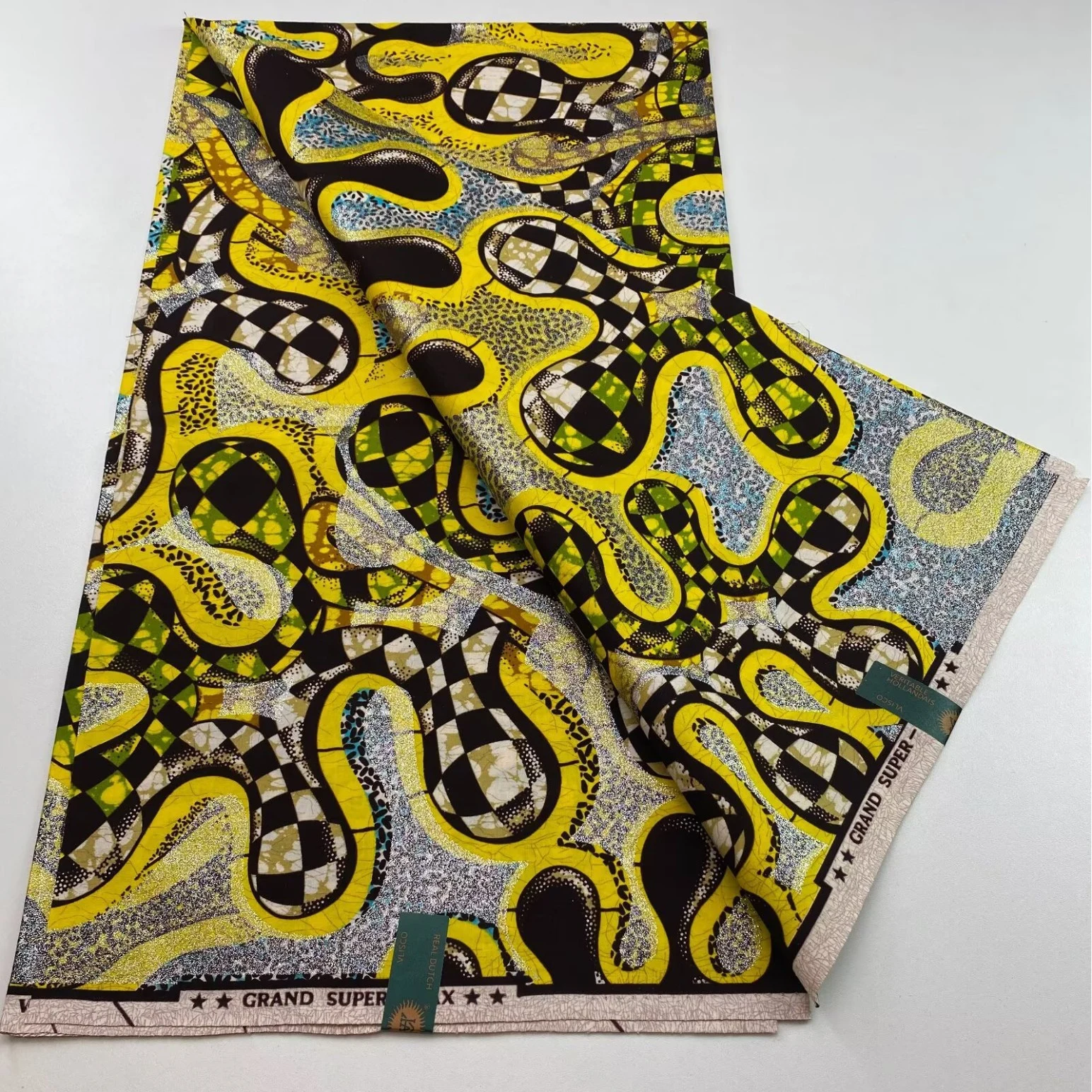
Open African Grand glitter Wax and read the piece note before you repeat the word bolt. The printed fabric hub is only the shelf. The card is the answer.
FAQ
Why do buyers say bolt when a wax seller says piece?
Buyers often learn the word bolt anywhere finished cloth is wound into a roll. A wax counter may still sell the cloth as a piece with its own note.
The two words grew up in different rooms. The buyer is naming storage and transport.
The card is naming the unit it will release. On this card, that unit is the six-yard piece.
Does a six-yard piece equal a full bolt?
A six-yard piece is the selling unit printed on this card. A full bolt is a roll, and the length of that roll is something this card leaves unprinted.
Education pages already treat bolt length as variable. Matching a six-yard piece to a full bolt would invent a length the table does not carry.
Where does glitter in the name leave the cotton line?
Glitter stays inside the name African Grand glitter Wax. The composition line remains cotton.
No glitter share is printed, and no second fiber is printed beside cotton. The name can keep its word. The cotton line still has to be read as fiber content.
What do yarn count and density tell a buyer before a hand feel?
Yarn count tells how the yarns are paired. Density tells how closely those yarns sit in the cloth.
Together they sketch the hand before the piece is opened. They do not set the selling length. The six-yard piece note does that job on its own line.
Does this page print the word bolt?
Yes. The page prints bolt because the search asks what that word means beside a piece card.
The card being described still names a piece. Printing the word here explains the request. Any bolt length stays off African Grand glitter Wax.
Can one cotton wax base be cut from a longer roll later?
Yes. A longer roll can be cut into pieces at another step. This card is already offering one piece, the six-yard unit in the note.
That later cut is a different job from the piece on the counter now. Inventory can change, so the next piece still needs a word with customer service.