



















































































































Eggshell recycled nylon stand collar coat starts as cloth
An eggshell recycled nylon stand collar coat is a finished garment, while the card beside that search is knit cloth for gym and activewear. The name bundles a color, a recycled nylon fabric story, and a stand collar, and the live card prints polyester and spandex for gym sets. Pulling those garment words off the printed cloth lines is the job in front of a buyer who pasted the coat name into a fabric site.
Shop cloth and a finished coat can share words in a query, yet a sample room still has to read the card that actually loaded. Eggshell, recycled nylon, and the stand collar each need a separate box before anyone treats the gym knit as the coat.
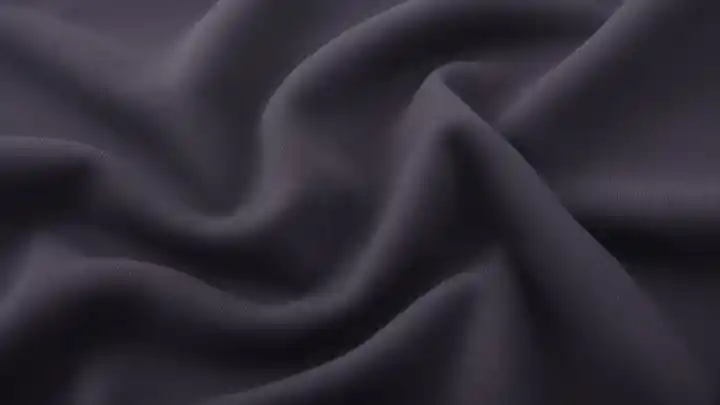
A coat name is a garment, and this card is cloth
The search names a finished coat while this card names knit cloth.
Finished coats sold under that name show a quilted shell, a stand collar, and a recycled nylon weave. A shopper who typed the full name was looking for that garment, with eggshell in the name and a collar that stands at the neck.
Returning knit cloth from a fabric site still happens when the query words overlap a cloth path that groups materials. The buyer who pasted the coat name into that site is now looking at gym knit, and the garment they typed has not become the cloth on the screen.
Knitted fabric is the fabric type a cloth card can print. A coat is the sewn garment. Those two jobs stay apart when the query sounds like one product.
For a newcomer, garment words describe something a person wears, and card lines describe fiber, width, weight, fabric type, and end use.
| Garment word | Where it belongs | Line on this knit card |
|---|---|---|
| Eggshell | Color on a finished coat, sometimes a lining name | No color name is printed |
| Recycled nylon | Fiber story on the coat cloth | Polyester and spandex |
| Stand collar | Pattern piece sewn at the neck | No collar line is printed |
| Finished coat | Garment a shopper can wear | Knitted fabric for gym sets and activewear |
Purchasers use that table before a sample is discussed. If the row they care about sits in the garment column, the knit card is the wrong object for that row. If the row they care about is fiber, width, weight, or gym end use, the card can be read in plain text.
Eggshell is a color the knit card never prints
Eggshell stays a garment color, and the knit card never prints it.
Some coat styles also place eggshell on a lining name. In a sample room, that word is a dye color, a shade someone expects to see on cloth or on a lining, and the room looks for it on the card that loaded.
The photo shows a dark knit surface, with no eggshell shade and no collar. Nothing in that frame renames the cloth as a pale coat color, and nothing in the frame shows a neckline piece.
A color name has to be printed, or it has to be agreed as a dye lot, before a cutter treats it as the shade. Silence on the card leaves eggshell on the coat name, where the shopper already put it.
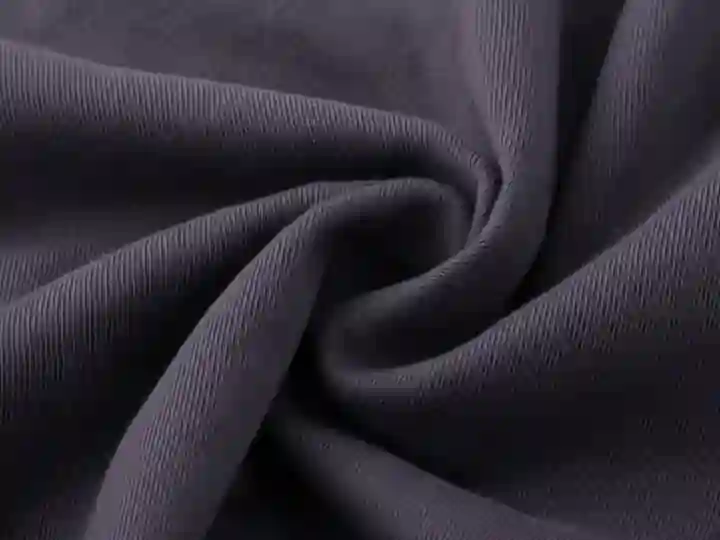
Hands on the knit still meet gym cloth. The surface can be handled, stretched in the hand, and compared with a gym set, and that handling still does not print a color name onto the specification table.
Marketing words around the title speak to comfort and a friendly hand. They do not supply a shade name, and they do not turn a dark knit photo into eggshell.
Recycled nylon and eco-friendly polyester are different asks
A recycled nylon fabric ask and eco-friendly polyester stay different cloth requests.
Polyester, nylon, and spandex are different generic names under the United States fiber-name rule. A generic fiber name is the shared legal name for a fiber family, the word a label uses for the fiber, such as polyester or nylon.
The rule hosted by Cornell keeps those names in separate paragraphs. Nylon is defined on its own as a long-chain synthetic polyamide.
Polyester is defined on its own, and spandex is defined on its own. A recycled story attached to nylon does not move polyester into the nylon paragraph.
Nylon and polyester are examples of different generic names. A NIST glossary entry gives rayon, nylon, and polyester as examples of generic names for manufactured fibers, drawn from the Textile Fiber Products Identification Act.
The glossary teaches the class of names and stays silent on this knit.
Nylon, polyester, and spandex are separately named fibers in a textile teaching unit. The Illinois textile unit lists them apart, with different trade-name examples and different end-use notes.
Spandex is taught there as the fiber used in sportswear and blends. That classroom split matches the buying split on this card: the composition line is polyester and spandex, and nylon is a different ask.
Marketing on the knit card calls the cloth eco-friendly, skin-friendly, moisture-wicking, breathable, and durable. Eco-friendly on a title is a marketing line.
It sits beside those other comfort words. It does not rename polyester as recycled nylon, and it does not print a recycled share.
A developer who asks for recycled nylon fabric and then reads eco-friendly polyester is holding two requests. The first request is a nylon fiber story, the kind wearers talk about when they name recycled nylon on a finished jacket shell.
The second request is a marketing word on a polyester and spandex gym knit. Keeping the two requests in two boxes stops the title from settling the fiber question.
Recycled nylon fabric, when it is truly the ask, has to be written as nylon. Eco-friendly polyester, when it is truly the ask, has to be written as polyester.
The coat name bundled the first ask. This card prints the second fiber.
A stand collar sits on a pattern, not on a fiber line
A stand collar belongs on a coat pattern, not on fiber text.
A stand collar is a collar drafted to stand at the neck on a coat pattern. In plain language, it is the upright collar on the coat, cut as a pattern piece. Stand collar coat fabric would be the cloth that piece is cut from, and that cloth still has to be named on its own line.
A stand-up collar is sewn onto a coat and can be re-attached as a turn-down collar. A museum object note records that collar as a coat part for cold weather, with its own object record.
The note places the collar on the garment. It does not place the collar on a fiber percentage.
Drafters treat a standing collar as a pattern piece finished on the coat. Community pattern talk treats that piece as the last part of the coat draft, and thicker cloth is discussed as something that can keep a tall stand soft but shapely.
Thickness here is cloth behavior under the pattern, separate from any fiber name printed on a card.
From the field: Sewers found the standing-collar instructions confusing at first on a coat view with a standing collar. Pattern Review
That field note is about a coat view. View B on that sewn coat has a standing collar. The confusion sat in the collar instructions, which is pattern work, and the cloth still had to be chosen before the collar piece was cut.
A pattern maker who asks what a stand collar needs before cloth is cut is asking for the pattern view, the collar height they intend, and the cloth hand they will cut. None of those three items is a fiber line.
The fiber line answers polyester, nylon, or spandex. The collar line answers how the neck edge is drafted.
Before a sample, the cloth sheet can name the fiber and the end use, and the pattern sheet can name the stand collar. Mixing those sheets makes the gym knit look like it owes someone a coat collar.
The knit owes the lines it prints. The collar owes the pattern.
This card prints polyester, spandex, width, and weight
The published card prints polyester, spandex, width, and weight in plain text.
A composition line is the fiber share printed on a cloth card. In plain language, it is the polyester and spandex line on this card. The published card lists 80% polyester and 20% spandex, a width of 152 cm, and a weight of 250 g/m².
The specification table names the cloth Eco-Friendly Abrasion-Resistant Apparel Fabric and lists the fabric type as knitted fabric. Width and weight sit on that same table as readable rows.
A purchaser who reads width, weight, and composition before ordering gym cloth is reading those rows, which describe cloth rather than a coat label.
Those rows live on SHENGCHAO Eco-Friendly Knitted Fabric. The anchor is the cloth card. The table under that name is the place the percentages, the width, and the weight are printed.
The application line names moisture-wicking, sportswear, gym sets, and activewear. An application line is the end uses named on the specification table. In plain language, it is gym sets, sportswear, and activewear on this card, with moisture-wicking named beside them.
A gym program can use that list as the end-use box. Moisture-wicking says what the marketing and the table both point at for comfort in motion.
Sportswear, gym sets, and activewear say where the knit is meant to be cut. An outer coat is absent from that list, so the coat remains a garment request sitting beside the card, outside the application row.
Reading order for a newcomer can stay short.
- Read the product name, Eco-Friendly Abrasion-Resistant Apparel Fabric, as the cloth name.
- Read polyester and spandex as the composition line, with the percentages in the sentence above.
- Read width and weight as the size of the cloth, separate from any coat measurement.
- Read knitted fabric as the fabric type.
- Read moisture-wicking, sportswear, gym sets, and activewear as the end uses.
That order keeps the coat name from filling empty boxes. Eggshell has no box on this table, and recycled nylon has no box on this table.
A stand collar has no box on this table. The boxes that exist are fiber, width, weight, fabric type, and gym end use.
What the coat request should name on a cloth sheet
A coat request should name fiber, color, collar pattern, and end use.
When the search was a finished coat, the cloth sheet still has to say which cloth is being ordered. The coat name is a bundle, and the sheet is a set of lines.
Writing the bundle into one cell hides which line the mill is supposed to match.
| Cloth-sheet line | What to write | Why the coat name is the wrong box |
|---|---|---|
| Fiber | Polyester and spandex for this card, or recycled nylon fabric when that is the real ask | The coat name and this card name different fibers |
| Color | Eggshell when a dye lot is the ask | This card prints no color name |
| Collar pattern | Stand collar on the coat pattern | This card has no collar line |
| End use | Gym sets, sportswear, and activewear, or an outer coat when the garment is the ask | The application line names gym cloth |
Fiber comes first because it changes the cloth. If the real ask is recycled nylon fabric, write nylon, and say that the nylon is recycled, on the fiber line. If the real ask is this gym knit, write polyester and spandex, and leave the recycled nylon words on the coat name where they started.
Color comes next because eggshell is a shade rather than fiber. Write eggshell only when a dye lot is actually being requested.
Leaving it blank is honest when the card prints no shade. Inventing a shade name to match the coat would put a color on cloth that never carried it.
Collar pattern comes third because a stand collar is cut on a pattern. Write the collar on the pattern sheet, with the view that stands at the neck.
Stand collar coat fabric can be named beside that view once the fiber line is already filled. The collar words do not replace the fiber words.
End use comes last because it tells the cutter what the cloth is for. Gym sets, sportswear, and activewear match the application line on this card.
An outer coat matches the original search, and it belongs on the garment line. Putting both into one cell makes a gym knit look like outerwear cloth it was never printed as.
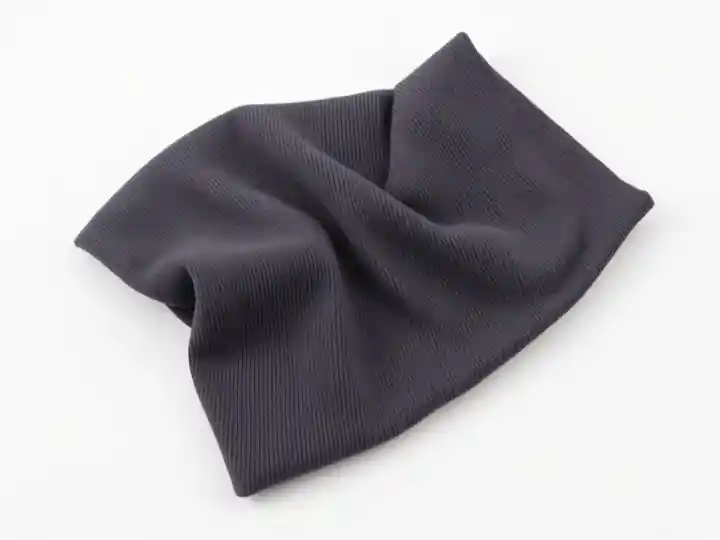
The sheet looks like a notebook beside the knit. The lines on the page are fiber, color, collar pattern, and end use. The knit in the corner is the cloth those lines have to describe, and the description has to match the printed card when this gym cloth is the cloth being ordered.
Handing that sheet to a sample room skips a retelling of the coat story. The room sees whether nylon was requested, whether eggshell was requested, whether a stand collar was drafted, and whether the end use is gym cloth or an outer coat.
Lines hold each answer. None of them hides inside the search phrase.
Which knit product fits this gym cloth card
SHENGCHAO Eco-Friendly Knitted Fabric is the live card for this gym cloth.
The card that matches the printed gym end uses is SHENGCHAO Eco-Friendly Knitted Fabric. It sits on the recycled materials fabric hub as knit cloth for gym sets, sportswear, and activewear.
The hub is the path a coat search can meet. The card is the object with the table.
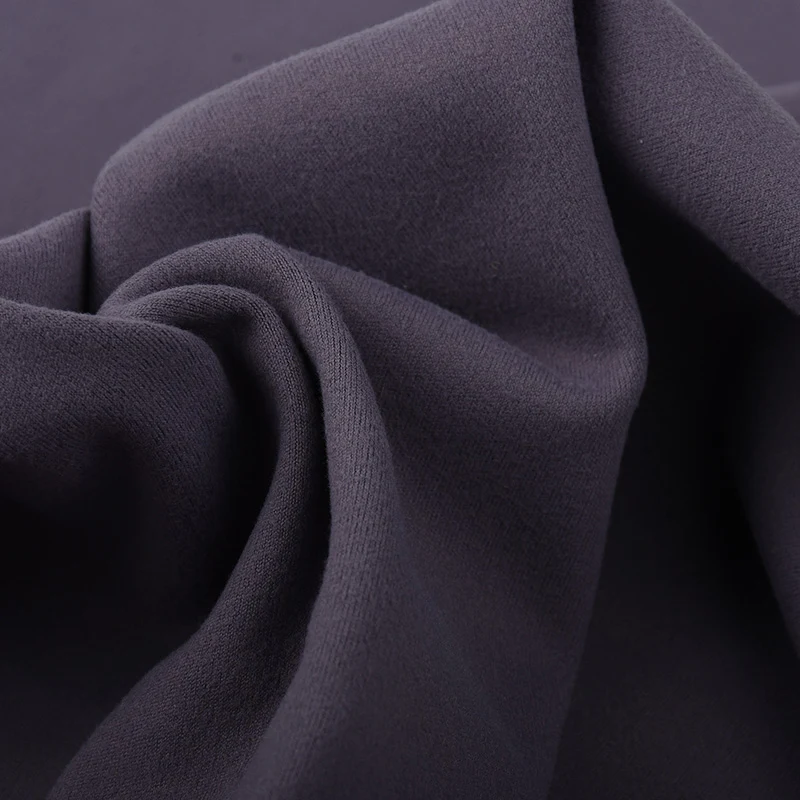
What this cloth is: a knitted apparel cloth sold under that product name, with the table name Eco-Friendly Abrasion-Resistant Apparel Fabric. Who it is for: teams cutting moisture-wicking sportswear, gym sets, and activewear. What it does: it offers the polyester and spandex composition, the width, and the weight printed on the card, with marketing that calls the hand eco-friendly, skin-friendly, moisture-wicking, breathable, and durable.
Buyers meet a real limit here. A buyer who needs a finished coat, an eggshell dye lot, or recycled nylon cloth will not get those lines from this card.
The card remains the right read when the order is gym knit with the printed composition. It is the wrong read when the order is the coat itself.
Read the card lines, then the hub, then the cloth-sheet names above. Fiber, color, collar pattern, and end use stay written as separate lines.
The knit photo shows the cloth, and the table shows the fibers and the gym uses. The coat name stays the garment that started the search.
FAQ
Why does a coat search land on a fabric card?
The coat name can travel along a recycled-materials path and meet knit cloth that lives on that path. The hub groups cloth, and the card that loads is gym knit with polyester and spandex.
The finished coat remains the garment the shopper typed, and the card remains the cloth the table describes.
Does eco-friendly on a title mean recycled nylon?
Eco-friendly on this title is a marketing line, grouped with skin-friendly, moisture-wicking, breathable, and durable. Recycled nylon is a separate generic-fiber ask.
The composition line still names polyester and spandex, so the marketing word leaves a nylon request untouched.
Where does a gym knit leave an outer coat?
The application line names moisture-wicking, sportswear, gym sets, and activewear. An outer coat sits outside those printed end uses, on the garment side of the original search. Gym cloth can still be ordered from the card for the uses the line actually names.
What does a stand collar ask from cloth before a sample?
It asks that the pattern view be named, including the upright collar at the neck, and that the cloth be named before that piece is cut. Collar instructions on a sewn coat view have confused sewers at the start, so the pattern and the cloth hand both belong on the sheet before a sample is cut. The fiber line still answers polyester and spandex when this card is the cloth.
Does this page print nylon in the composition?
Nylon is absent from the composition line. The line prints polyester and spandex. A recycled nylon request has to be written as its own fiber line if that is the cloth someone still needs.
Which end uses does the application line actually name?
It names moisture-wicking, sportswear, gym sets, and activewear. Those uses are the printed application line for this gym knit. An outer coat, an eggshell dye lot, and a stand collar are not written on that line.