



















































































































Top dyed vs yarn dyed starts on the polyester card
top dyed vs yarn dyed is a timing question about when color is applied, and the polyester card beside it names fiber, width, and weight. The walk moves from those two timings to the printed cells, then to the product page that holds them. A later shade conversation stays outside the cells.
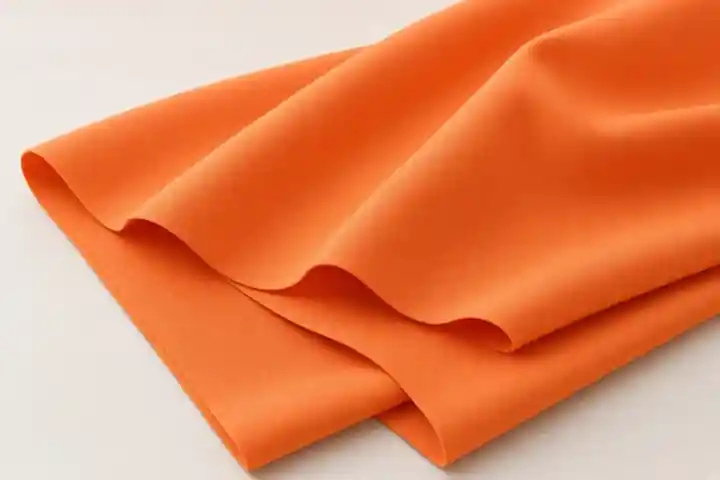
Two dye timings meet a card that names neither
Two timings name a moment, and this card names the cloth itself.
Buyers meet the two words while they are still talking about color, long before anyone handles a roll. Top dye points at color on fiber before that fiber is spun. Yarn dye points at color on yarn before that yarn becomes cloth.
A live overview on the same search put both stages before weaving or knitting. That overview described a combed rope and a dyed yarn package. It never opened this polyester card, so the card still has to be read on its own.
Piece dyeing sits later, after cloth already exists. Cornell mill notes describe greige goods taking color at that later moment, and they describe yarn-dyed cloth as cloth built from yarns that already carry color. The polyester card on this page names neither of those moments.
| Timing word | Moment it names | What this card prints |
|---|---|---|
| Top dye | Color before spinning | No timing word |
| Yarn dye | Color on yarn before the cloth is built | No timing word |
| Piece dyeing | Color after the cloth exists | No timing word |
Holding the two words next to that empty timing column keeps the decision honest. The words can still be useful in a shade meeting. They simply are not cells on this card.
Top dye and yarn dye are timing words, not fiber words
These timing words mark a stage, and polyester marks the fiber name.
Wool-education notes place top dye on fiber in top form, before blending and spinning. The same notes place yarn dye after the fiber has been spun. University extension teaching adds the same ladder in plain classroom language: fiber, yarn, cloth, or a finished good.
A sliver is the combed rope those notes call top. Dye at that rope is still a timing choice.
The rope’s color leaves the fiber name untouched. Polyester remains polyester whether the color arrives then, later on the yarn, or later still on the cloth.
Federal fiber-label guidance asks for generic fiber names and their share by weight. That label job is about content.
The guidance stays silent on whether a mill colored a sliver, a yarn package, or a roll. Reading polyester as a dye timing mixes two different jobs.
Dyed polyester fabric is the fair everyday name for cloth in this category when the fiber is polyester and the category says dyed. Yarn dye timing belongs in the request only when the buyer means color on the yarn before the cloth is built. The card can be polyester and still leave that timing unprinted.
From the field: A sewing-forum buyer said yarn dyed means the yarn is dyed before knitting, instead of coloring the whole cloth afterward — source: sewing forum discussion.
Down jackets and windbreakers share one polyester cloth
Down jackets and windbreakers share the same application line on this card.
The application line names two outerwear uses and stops there. Down jackets sit beside windbreakers as garments that can be cut from the same listed cloth. The line does not split the roll into two dye routes.
A windbreaker program and a down-jacket program can share fiber, width, and weight while their shade talks diverge. One office may want color locked on yarn.
Another office may want color on finished cloth. The shared line still prints both garments on one row.
Shoppers sometimes hear yarn dyed as a compliment, the way a clothing forum treated patterned flannel. That compliment is a habit of speech.
The windbreaker row carries no extra cell for that habit. The down-jacket row carries none either.
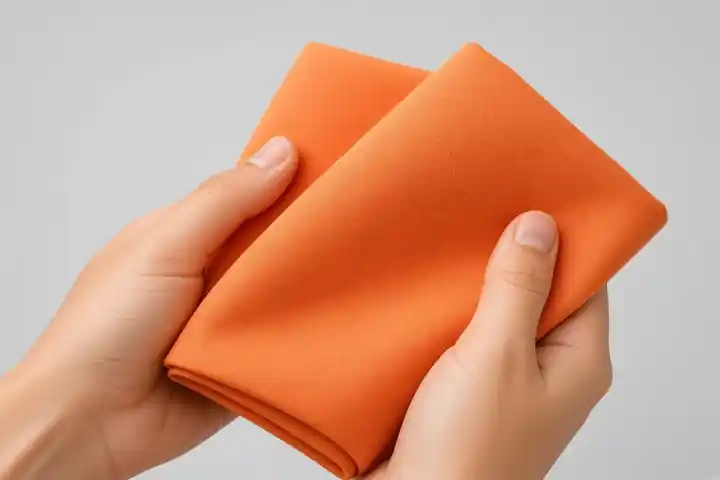
Reading the application line first answers a practical question about end use. The named garments are down jackets and windbreakers, and the timing beside them stays unprinted.
This card prints polyester, width, and weight
The printed cells name polyester, width, and weight, then skip dye timing.
The published card lists 100% polyester, a width of 150 cm, and a weight of 143 g/m².
Those three readings are the composition cell, the width cell, and the weight cell. Width tells a buyer how the roll is listed before anyone judges hand feel.
Weight tells how the cloth is listed on the same row. Neither cell chooses a dye moment.
| Printed cell | What a buyer can read |
|---|---|
| Composition | Polyester |
| Width | The listed roll width |
| Weight | The listed cloth weight |
| Application | Down jackets and windbreakers |
A page sentence near the table says the fabric is dyed. That sentence stays a sentence.
The sentence is left as wording about dye, without turning it into a method, a fastness grade, or a UV rating. The windbreaker use also lacks a water-pressure figure on the card, so none is added here.
Buyers who need a hand feel still have to handle cloth. The width cell can be read while the sample is still in transit.
The weight cell does the same job for mass per area. Both stay useful even when the shade meeting is booked for another day.
What a dye-timing request should name
A timing request should name the stage the buyer wants colored first.
Say top dye if the color should meet fiber before spinning. Say yarn dye if the color should meet yarn before the cloth is built.
Say piece dyeing if the color should meet cloth that already exists. Each phrase names a moment.
The card prints none of those phrases, so the request has to carry the phrase. A buyer who only says dyed cloth has repeated the category.
The category is true and still incomplete for a timing decision. The forum habit of treating yarn dyed as finer cloth is a separate opinion, and that opinion leaves the blank cell empty.
Pattern work is the usual reason yarn dye timing shows up in a request. Stripes, checks, and plaids need yarns that already hold different colors. A solid shade can be discussed later, on cloth, without pretending the card already chose that route.
Write the stage in the same note as the shade name. A note that says only the shade leaves the mill free to hear three different moments. A note that says the stage leaves the printed cells alone and still tells the dyer what was asked.

The polyester product for a dyed-cloth order
This polyester cloth is the product page for a dyed-cloth order today.
The order lands on SHENGCHAO polyester fabric. That page is where the table lives, inside the dyed fabric category.
Opening the page shows the same composition, width, weight, and application line the sections above have been reading. The category shelf and the product table stay one click apart.
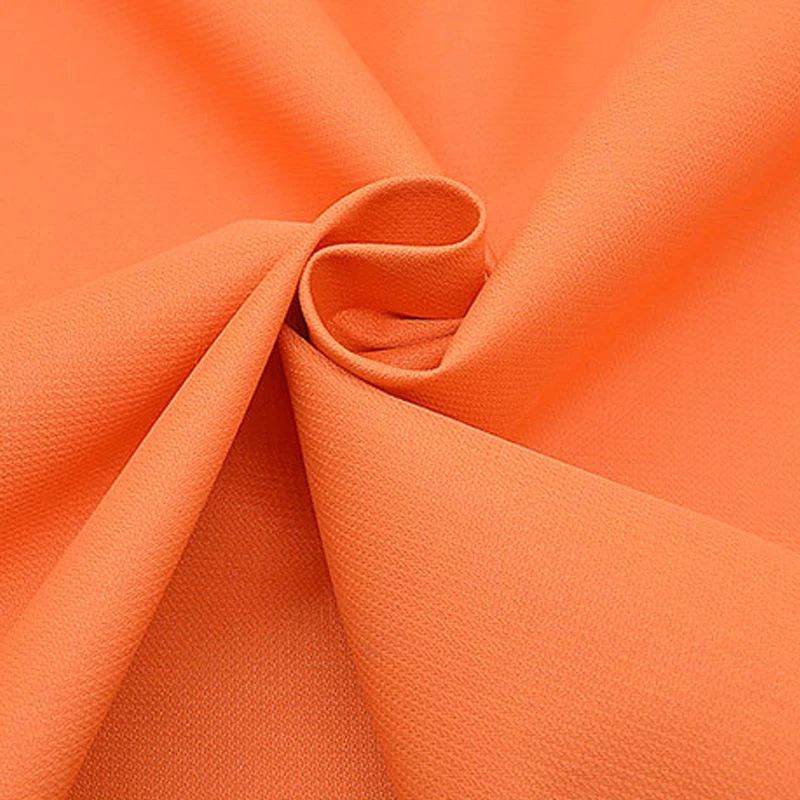
Dyed fabric, as a category, collects cloth the site files as dyed. It does not type a timing into the table. A buyer can stand in that category, open this product, and still need to say top dye, yarn dye, or piece dyeing in the shade note.
Use this product when the order matches the printed fiber and the two named end uses. If the order needs a written dye class, a fastness grade, or a water-pressure figure, those items are outside this card. The page can still be the cloth reference while that other paperwork is handled elsewhere.
The anchor text on the product link is the cloth name a buyer can say aloud. The hub link is the category shelf. Together they keep the dyed-cloth order attached to a real page instead of to a floating timing slogan.
Where a later shade talk leaves the printed cells
A later shade talk leaves the printed cells exactly as they stand.
Once shade names arrive, a designer may still be comparing two blues while production asks which moment gets the color.
The conversation runs long. The talk leaves the composition cell, the width cell, and the weight cell unchanged.
Polyester takes color by routes that differ from absorbent fibers, which is why a classroom text flags it as a fiber that may need a special dye path. That warning is about fiber behavior.
The warning still withholds a timing from this card. The card remains a polyester card.
When the shade talk ends, the useful record has two parts. One part is the stage the buyer named.
The other part is the cells that were already printed. Mixing those parts is how a timing word gets mistaken for a fiber word, and how a category gets mistaken for a method.
Leave the cells in the note as readings, and leave the stage in the note as a request. The product page can be opened again later and it will still show the same table. The timing, if it was agreed, lives in the request that sat beside the table, not inside a cell the table never had.
A calm close is a reread of fiber, width, weight, down jackets, and windbreakers. Then comes the stage, written by the buyer, if the buyer has one.
The two timings remain available as words. The card remains the card.
FAQ
Why do buyers ask about top dyed versus yarn dyed?
Buyers ask because they are trying to name when color was applied. Forum language treats yarn dyed as color on yarn before knitting, set against color on the whole cloth afterward.
Does a dyed-fabric category mean the table prints a dye timing?
The category files the cloth with other dyed cloth. The table still prints polyester, width, weight, and the two end uses, with the timing left unprinted.
Where does a windbreaker use leave a yarn-dye program?
The windbreaker use sits on the application line beside down jackets. A yarn-dye program starts only when the request names that stage.
What does width tell a buyer before a hand feel?
Width is the roll measurement printed on the card, so it can be read while a sample is still traveling. Hand feel waits for cloth in the hand.
Does this page print a dye class?
This page prints the fiber, the width, the weight, and the named end uses. A dye class is absent from the table and from the category shelf.
Which end uses does the application line actually name?
The application line names down jackets and windbreakers. It names no third garment and no dye timing.