



















































































































Best fabric for school uniforms starts with card literacy
The best fabric for school uniforms is the cloth that fits the garment’s wash and structure job when a published mill card is readable — not a single fiber crowned number one. Search results push poly-cotton, polyester, and cotton stories; makers argue about twill and gabardine; a printed school program still needs composition, yarn count, fabric weight, and print style on one card before yardage is booked.
This page walks that literacy path for school uniform fabric, then lands on a polyester spandex school fabric print card as a worked example. It stays beside workwear definition pages and cotton-knit school cards without rewriting them.
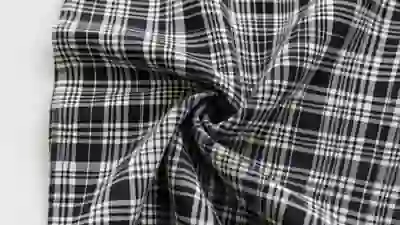
What best fabric for school uniforms really means
Best means fit to the garment job and a readable mill card.
Buyers type “best” because catalogs and search snippets reward a short winner. School programs rarely share one winner across shirts, skirts, track layers, and printed stretch pieces. A shirt that must feel soft against skin asks different questions than a printed stretch top that must keep color after weekly laundry.
Treat “best” as a screening word. Ask which garment role fails first — collar curl, pleat collapse, print fade, or stretch bag-out — then open a mill card that speaks to that failure. That habit keeps school uniform fabric shopping from collapsing into a fiber slogan.
Procurement inboxes still want a blend ratio in the first reply. Give the ratio after the garment role and the wash method. The ratio without the role is a guess dressed as confidence.
Poly-cotton, polyester, and cotton stories buyers meet first
Search results push blends and polyester before any one card.
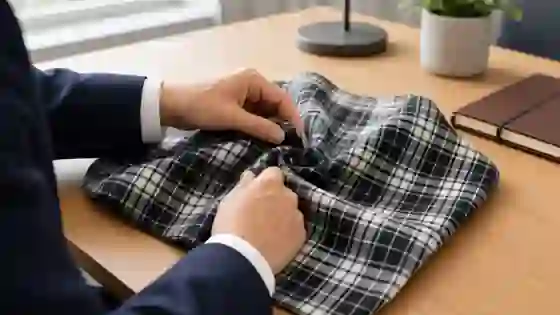
A poly-cotton blend shows up first in many school and general-uniform guides because it mixes cotton’s softer hand with polyester’s wash and wrinkle behavior. Pure cotton stories promise breathability and soft touch, then warn about wrinkling, shrinkage, and slower drying. Pure polyester stories promise abrasion resistance, quick drying, and color hold, then concede a less breathable hand for some wearers.
Those stories are useful maps. They are weak purchase orders.
A map without a card still leaves yarn count, fabric weight, and print style unnamed. Buyers who stop at the map keep arguing fiber religion while the mill waits for fields it can cut and dye against.
Keep the map beside the card. Use poly-cotton language when the brief is a soft shirt program. Use polyester language when the brief is hard laundry and shape hold.
Use cotton language when skin feel leads and laundry can stay gentle. Then demand a printed row for composition before the sample ships.
| Fiber story buyers meet | What it usually promises | What still must appear on a card |
|---|---|---|
| Poly-cotton blend | Softer hand plus wash durability | Exact blend %, construction, weight |
| Polyester | Shape hold, wrinkle resistance, color retention | Yarn story, weight, print/dye notes |
| Cotton | Soft touch and moisture comfort | Finish, shrink behavior, care limits |
When structure talk points to twill or gabardine
Crisp pleats and woven suiting sit in a different lane than stretch print.
Makers who sew structured school looks often reach for twill or gabardine because those weaves can hold a sharp pleat and read as “uniform” from a distance. Community threads about school-style costumes repeat the same preference: woven cloth, not an overly stretchy knit, when the silhouette must stay crisp.
That preference is a structure lane. It is not a veto on every stretch program.
A printed stretch school piece that must move with PE class or daily bend asks for spandex in the blend for recovery. The literacy move is to name the silhouette first.
Pleated woven bottoms and stretch print tops can share a campus dress code and still need different cards.
When a supplier answers “best fabric for school uniforms” with only gabardine, ask which garment. When the answer is only stretch jersey, ask the same question. Structure talk without garment role is another slogan.
How to read a printed school uniform mill card
Composition, yarn, weight, and wording cells unlock the sample.
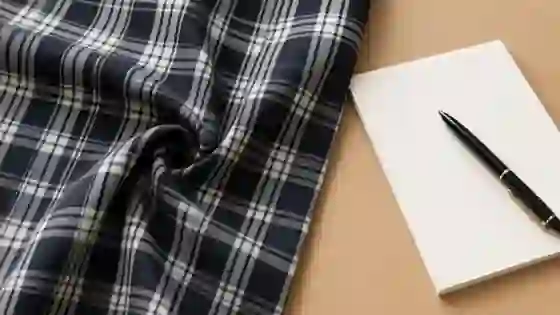
A useful school mill card is a short table, not a brochure paragraph. Read composition first, then yarn count, then fabric weight, then print style, then any Quality Standard wording. Those fields tell a cutter and a dyer what they are actually holding.
On the published Printed school uniform fabric card, the fields line up for a stretch print program. The published card lists 95% polyester and 5% spandex, a yarn count of 75D polyester with 20-30D spandex, and a weight of 280G.
Print style on that card reads black and white print, and the dyeing and finishing process cell reads dyeing. The Quality Standard cell prints the page wording “Anti-pilling, Non-fading 31888.”
Quote that string as card text. Treat it as page wording, not as a third-party certificate seal.
Abrasion resistance belongs to lab methods such as rotary-platform textile guides; a marketing cell is a different class of evidence.
| Card field | What to capture in the sample note |
|---|---|
| Composition | Fiber names and percentages as printed |
| Yarn count | Denier band for polyester and spandex |
| Fabric weight | Printed weight for the program |
| Print style | Motif and color story the campus needs |
| Quality Standard | Exact page wording only |
Wash, stains, and what polyester programs should expect
High polyester can hold color and shape while stain talk stays honest.
Polyester apparel education often highlights machine washing, wrinkle resistance, and long wear. School laundry programs lean on those traits when uniforms rotate through weekly washes. Color retention and shape hold are why polyester and poly-cotton stories keep winning search snippets.
From the field: Knitters who love cotton still complain that pure cotton “stretches out and gets all saggy,” while replies point to a small elastic share that “makes the yarn keep it’s shape.” School stretch print cards use the same idea when a little spandex sits beside polyester. — source: Cotton that won’t stretch? (KnittingHelp Forum)
Stain talk from other community threads still belongs in the sample note for lunchrooms and art class. Put stain-prone zones and wash chemistry beside any polyester-led choice.
Pretreat visible marks, follow the garment wash label, and skip inventing a campus chemical protocol the card never claimed. When parents complain about oily stains, the program response is process plus cloth choice.
Spandex at a small share is there for stretch recovery, not for stain magic. Keep stretch claims tied to the printed 5% spandex line on the card you are sampling.
Choose this printed school uniform fabric for stretch print programs
The printed 95/5 poly/spandex card fits stretch print school programs.

Choose Printed school uniform fabric when the brief is a school stretch print lane: polyester-led durability, a small spandex share for movement, black-and-white print, and a published weight you can put in a sample note.
Browse the wider school uniform fabric hub after the card read if the program needs neighboring constructions.
Skip this card when the brief is woven non-stretch suiting only, or when the buyer needs a cotton-knit school card instead. Occupational workwear with flame or arc clothing classes belongs on other pages and other cards.
Write the sample note with garment role, wash method, stain concern, and the printed fields above. That note is the practical end of “best fabric for school uniforms” for this product family.
FAQ
Is there one best fabric for school uniforms?
No single fiber wins every school garment. Best means matching the garment role and wash job to a readable mill card.
Is poly-cotton always better than polyester for school uniforms?
No. A poly-cotton blend often leads soft-shirt briefs, while polyester-led cards can fit hard laundry and print programs. Compare the card fields to the garment, not the slogan.
What does 95% polyester and 5% spandex mean on a school card?
It means polyester carries most of the cloth story while a small spandex share adds stretch recovery. Read yarn count and fabric weight on the same card before you treat the blend as a finished answer.
Why do some makers prefer gabardine or twill for school looks?
They want woven structure and crisp pleats. That lane differs from stretch print programs that need spandex recovery.
Does “Anti-pilling, Non-fading 31888” mean a third-party certificate?
No. On this product it is Quality Standard page wording. Abrasion resistance and other lab classes need their own methods and reports when a program requires them.
How is this different from workwear uniform fabric or cotton knit school cards?
Workwear uniform explainers cover occupational cloth classes. Cotton knit school cards sit in a knit comfort lane. This page owns printed poly/spandex school-card literacy for the “best fabric” ask.
Do stains matter more on high-polyester school cloth?
Community buyers sometimes say school stains are harder on polyester. Keep stain pretreatment and wash notes beside any polyester-led choice.
Should school programs always avoid stretch fabric?
No. Avoid stretch when the silhouette must stay rigid and woven. Choose a printed stretch card when movement and print recovery are part of the garment brief.