



















































































































Colorfastness to Perspiration: Reports and Apparel Buying Checks
Colorfastness to perspiration describes how a coloured textile changes shade or transfers colour under a specified simulated sweat exposure. For apparel buyers, the useful evidence is a complete report for the proposed colour and material, with colour change and staining assessed separately. A wash-fastness result does not answer the same question. Agree the required method, identify whether acid or alkaline conditions are included, and inspect relevant garment components before approving bulk fabric. This guide explains how to prepare that request, read the results without overstating them, and connect testing with swimwear and close-to-skin apparel development.
Identify the colour problem before ordering a test
A dark mark on a pale lining, a changed panel colour and a roughened surface can look like one general quality problem in a customer photograph. They need separate descriptions. Ask whether the concern is a change in the original textile or colour appearing on something else. Record where the mark occurs, which side of the fabric is exposed and whether the material was worn, washed or stored before it was noticed.
Keep an unused comparison from the same lot. Photograph the affected area and the reference under consistent lighting. If a complaint concerns contact between two colours, retain both components rather than sending only the darker one. Do not conclude that perspiration caused a mark simply because it appeared in activewear. The investigation should consider the actual exposure and the distinction between friction, washing and simulated sweat.
Check what the requested method actually covers
The published AATCC TM15 scope and principle concern acid perspiration. The specimen is assessed for colour change, while contacting materials are assessed for transfer. This matters because a purchasing brief that asks for both acid and alkaline results cannot be satisfied merely by writing TM15 beside one number. Confirm the selected standard and its conditions with the laboratory.
Where ISO 105-E04 or another customer method is specified, send the complete requirement and edition for review. Avoid treating methods as interchangeable based on their general subject. The National Textile University colourfastness service list separates perspiration from light, rubbing and washing tests. Use that separation when constructing the approval plan: each required exposure needs its own appropriate evidence, rather than a single generic colourfastness certificate.
Read colour change and adjacent staining independently
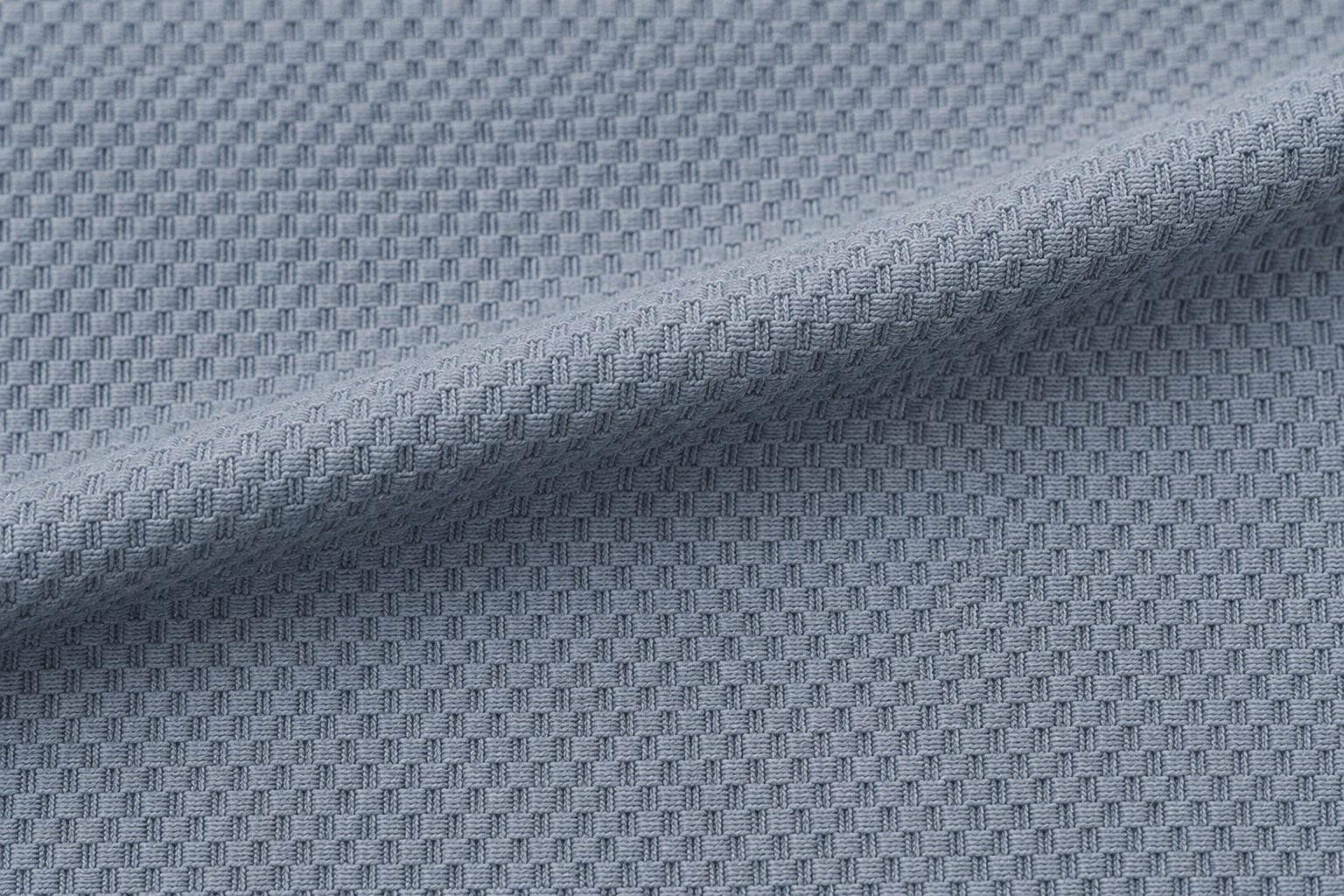
Colour change asks what happened to the tested material’s original appearance. Staining asks what colour moved onto the contacting material evaluated in the test. A strong-looking specimen can still produce an unacceptable transfer result for a particular application. Conversely, limited transfer does not establish that the original shade remains acceptable. Request the result labels and the assessment basis so that these two findings stay separate in the approval record.
Do not merge all adjacent components into a convenient average unless the agreed method and buyer requirement support that reporting approach. Ask the laboratory to explain an unclear abbreviation or a borderline grade before forwarding a pass statement. A cropped screenshot can hide the sample identity, exposure or assessment information that makes the number useful. Retain the complete report alongside the colour reference approved by the customer.
Build a traceable report checklist
| Record | Question for the buyer or laboratory | Approval use |
|---|---|---|
| Material and lot | Does the specimen match the proposed bulk material? | Connect the evidence to the order |
| Colour and finish | Is this the actual shade and final finishing state? | Avoid extending a result to untested variants |
| Method and edition | Which exposure and assessment are required? | Compare like conditions |
| Colour change | What happened to the specimen itself? | Assess retention of the approved appearance |
| Staining | What happened to each assessed contacting material? | Review transfer risk separately |
| Garment combination | Which trims and contrasting panels need further checks? | Connect fabric evidence with the assembly |
This is a purchasing checklist, not a list of universal pass grades. Agree acceptance criteria with the customer before testing. If two suppliers quote different methods, request clarification before comparing their ratings. A report may be perfectly valid for its stated purpose while failing to answer the conditions in your development brief.
Start with the exact product reference
Shengchao’s nylon-spandex swimwear fabric reference provides a starting point for a material enquiry. Ask for a representative sample, available colour information and any relevant test evidence for the proposed order. Product photographs identify a visible material; they do not measure perspiration fastness. Do not attach an assumed rating to a fabric because it looks dense, soft or suitable for sports.
The swimwear fabric types guide helps establish the wider development brief. Pool exposure, stretch, opacity, colour retention and garment construction remain separate requirements. A perspiration report can support one decision within that brief, but it does not establish chlorine resistance or prove that every component in a swimsuit will perform acceptably together.
Choose representative colours and sample states
A colour collection should have an agreed testing plan. Do not assume that one shade represents every dye formulation or printed colour in the range. Identify the actual development or production lot, and record whether the sample has already undergone washing or another treatment. If the buyer needs before-and-after-care evidence, agree the preparation and retain a matching untreated comparison.
Ask the laboratory how much material it needs and how specimens should be identified. Small decorative swatches may not support the selected test and repeat work. Keep markings away from assessment areas. When a supplier changes the finishing route, colour recipe or material reference, review whether the original report still applies instead of automatically copying the approval from an earlier order.
Review dark-to-light garment combinations
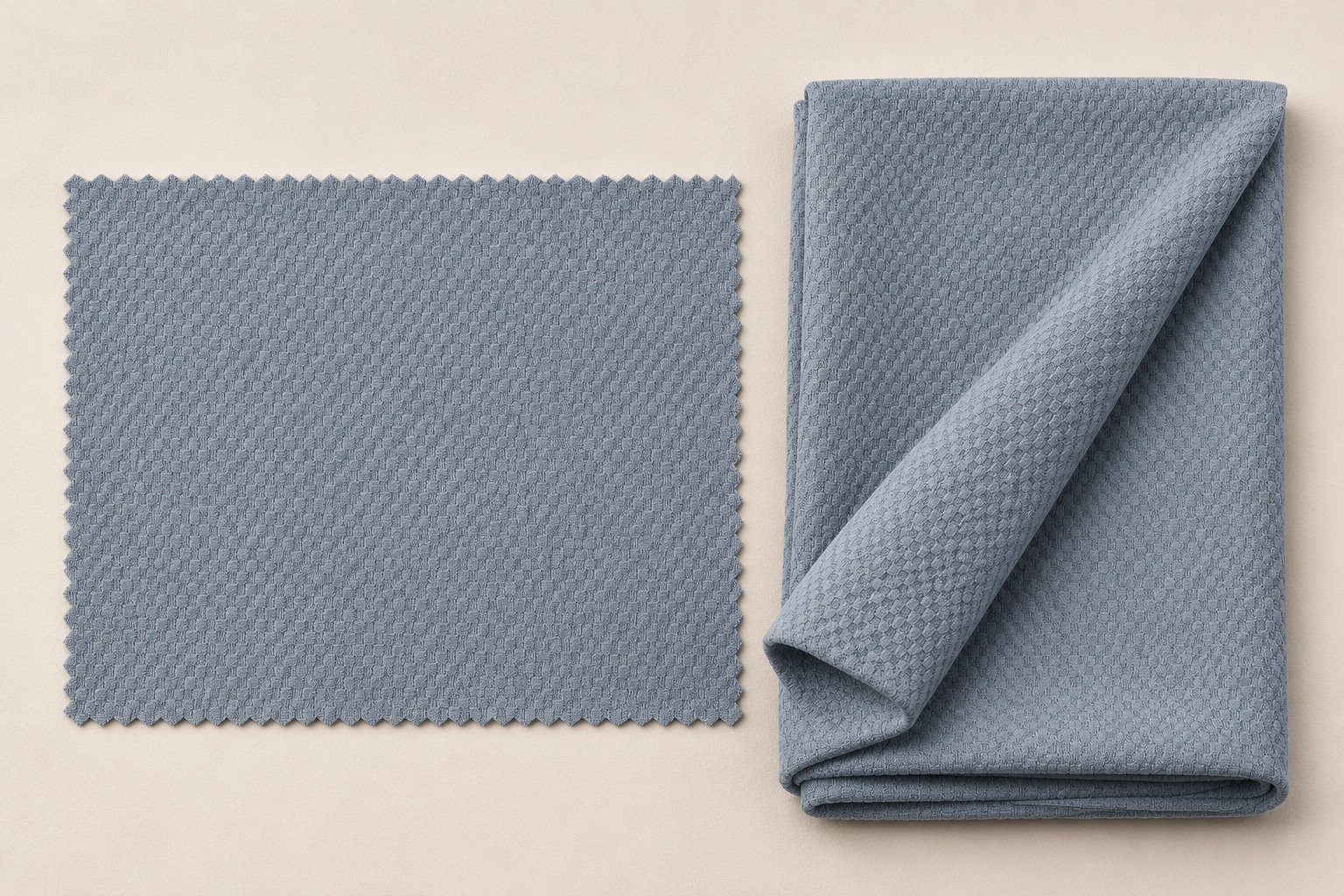
Make the proposed garment with its real panels, lining, elastic, thread and decorative components. Identify points where contrasting colours remain in close contact during use or care. Ask the laboratory or development team whether additional combination checks are needed beyond the standard adjacent materials in the fabric test. A component trial should have an agreed purpose and documented conditions.
Keep its results separate from the formal method report. An informal sample comparison is useful for discovering a problem, but it should not be presented as a standardized result. If a pale section changes, record its location, the materials touching it and the handling history. That evidence helps decide whether to investigate a particular shade, a component combination or another exposure.
Keep complementary fastness requirements separate
The washing colourfastness guide addresses laundering exposure. Use it when the care process is part of the complaint or purchasing requirement. A perspiration result should not be used to close a washing issue, and an accelerated washing statement should not be substituted for the required sweat assessment. Keep each report linked to the question it actually tests.
Similarly, the dry and wet rubbing fastness guide concerns colour transfer under friction. A garment can face several exposures during its life, so review the complete brief instead of searching for one reassuring number. Any claim about the finished apparel should be supported by the relevant material and assembly evidence, not by a general description such as premium colour.
Write a practical enquiry and handle changes
For example, a buyer approving a dark main panel with a pale insert should identify both references in the enquiry. Request the required fabric-level perspiration assessment and discuss whether a separate component combination check is appropriate. Keep the original colour-change and staining results rather than replacing them with the garment observation. If the pale insert changes, preserve the tested assembly and compare its history with the original requirement. This creates a focused investigation without assuming that every shade in the collection or every later order has the same behaviour.
A clear enquiry names the garment application, product reference, colour, finishing state, lot and required standard. Attach the customer criteria, list the separate outcomes to report and identify contrasting components. Ask the laboratory to flag missing information before it starts. Record who can authorize changes to the test request so that a convenient alternative is not silently accepted as equivalent.
After approval, retain the report, specimen reference and decision together. If a later lot produces a different observation, compare sample identity and conditions first. Preserve the affected material and ask for a focused investigation. Release should follow the agreed resolution and any required garment checks. A new report should close the specific finding; it should not erase the history needed to understand it.
Watch a textile colourfastness lesson
Vidya-mitra’s INFLIBNET lesson discusses surface properties and different colourfastness exposures, including perspiration. It provides educational context for keeping these assessments separate. Use the current agreed standard and a qualified laboratory for the actual test; the lesson is not evidence for a particular Shengchao product.
Frequently asked questions
Does washing fastness prove perspiration fastness?
No. They assess different exposures. Request the perspiration method required by the customer and keep its results separate from laundering evidence.
Does AATCC TM15 cover both acid and alkaline sweat?
Its published scope concerns acid perspiration. Confirm the required conditions and standard with the laboratory when the buying brief asks for additional exposures.
Can one tested colour represent the whole collection?
Only where an agreed sampling plan supports that decision. Keep the tested shade, lot and finishing state traceable rather than assuming coverage.
Can the report guarantee that no garment will ever stain?
No. It describes the tested material under stated conditions. Components, care and real use need their own relevant development checks.