








































Colorfastness to Water Spotting: Print and Report Checks
Colorfastness to water spotting measures how a textile’s colour responds to local contact with water under a defined test method. It matters when a small splash leaves a visible mark on a dress, decorative panel or other appearance-sensitive product. It is a different question from colour transfer during prolonged wet contact, resistance to washing, or water repellency. For a useful buying decision, identify the exact colourway and finish, agree a spotting method with the laboratory, and keep the tested sample beside the report. A water-spotting result does not establish whether a mark can be cleaned away.
Define the complaint before choosing a test
A customer saying that fabric has a water mark may be describing several observations: a temporary darker area while wet, a visible boundary after drying, a changed print colour, or residue from the liquid itself. Record what was seen and when. Do not label every mark as dye bleeding before the material and the exposure have been examined.
Ask whether the liquid was clean water, a beverage, perspiration, cleaning fluid or an unknown mixture. Note whether the fabric was flat, stretched, pressed or touching another material. These details help the laboratory and supplier decide what additional investigation is useful. They do not turn a customer photograph into a standard laboratory result.
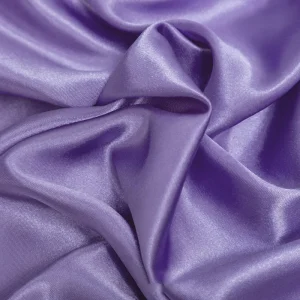
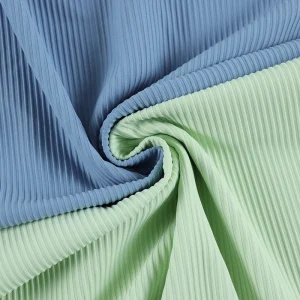
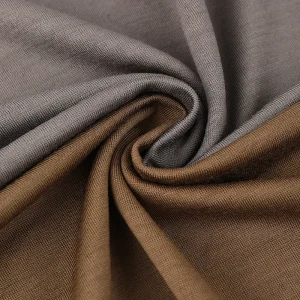
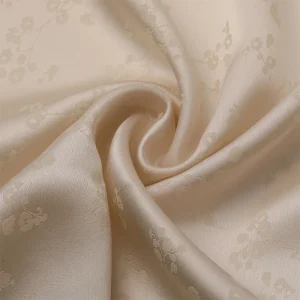
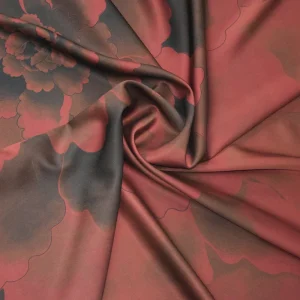
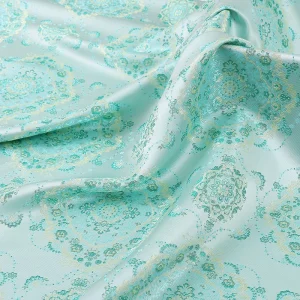
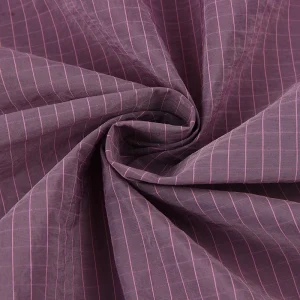
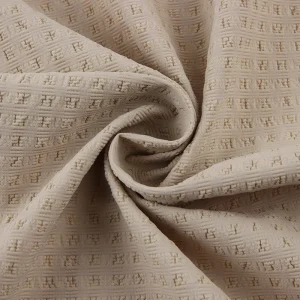
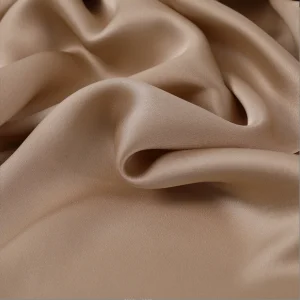
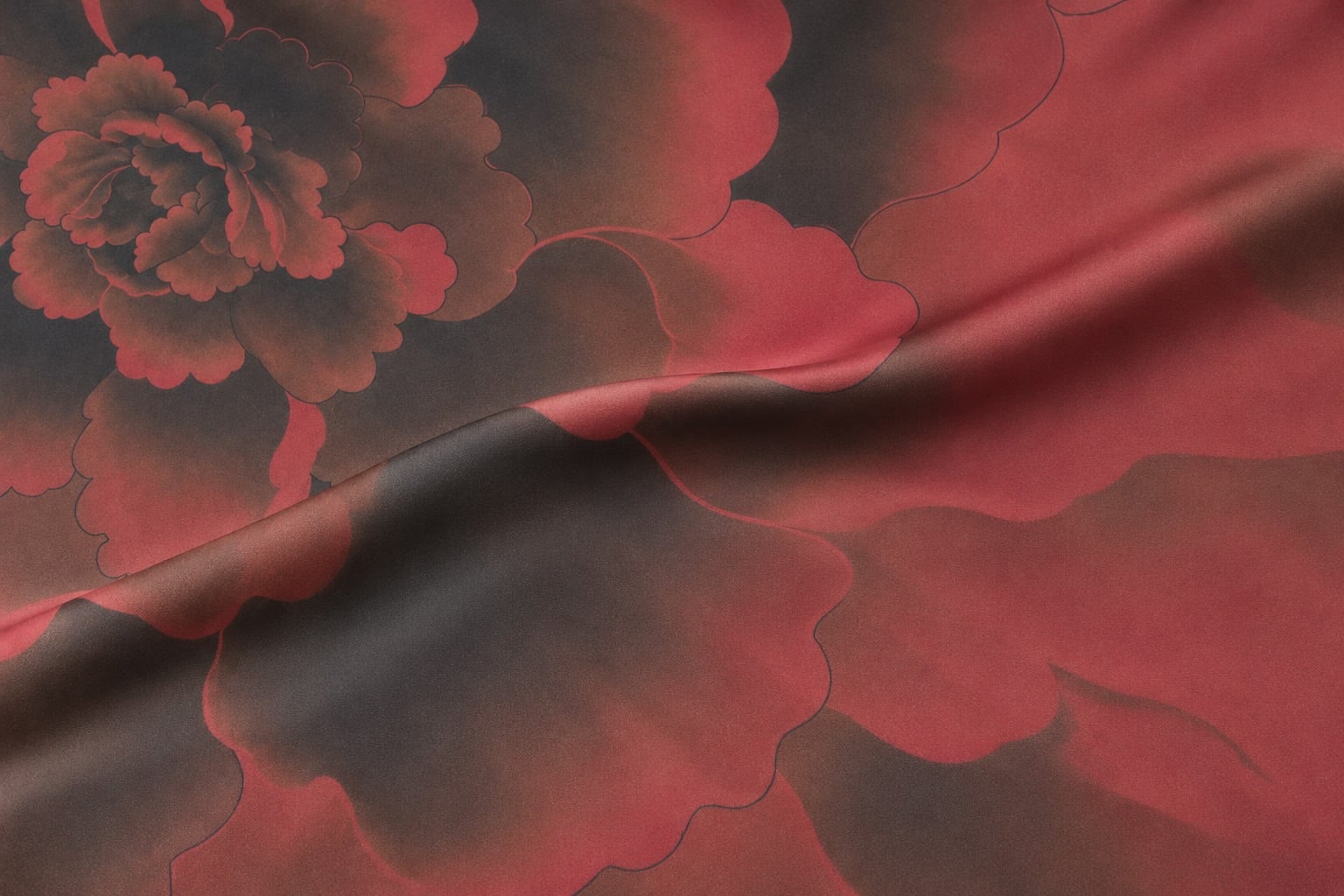
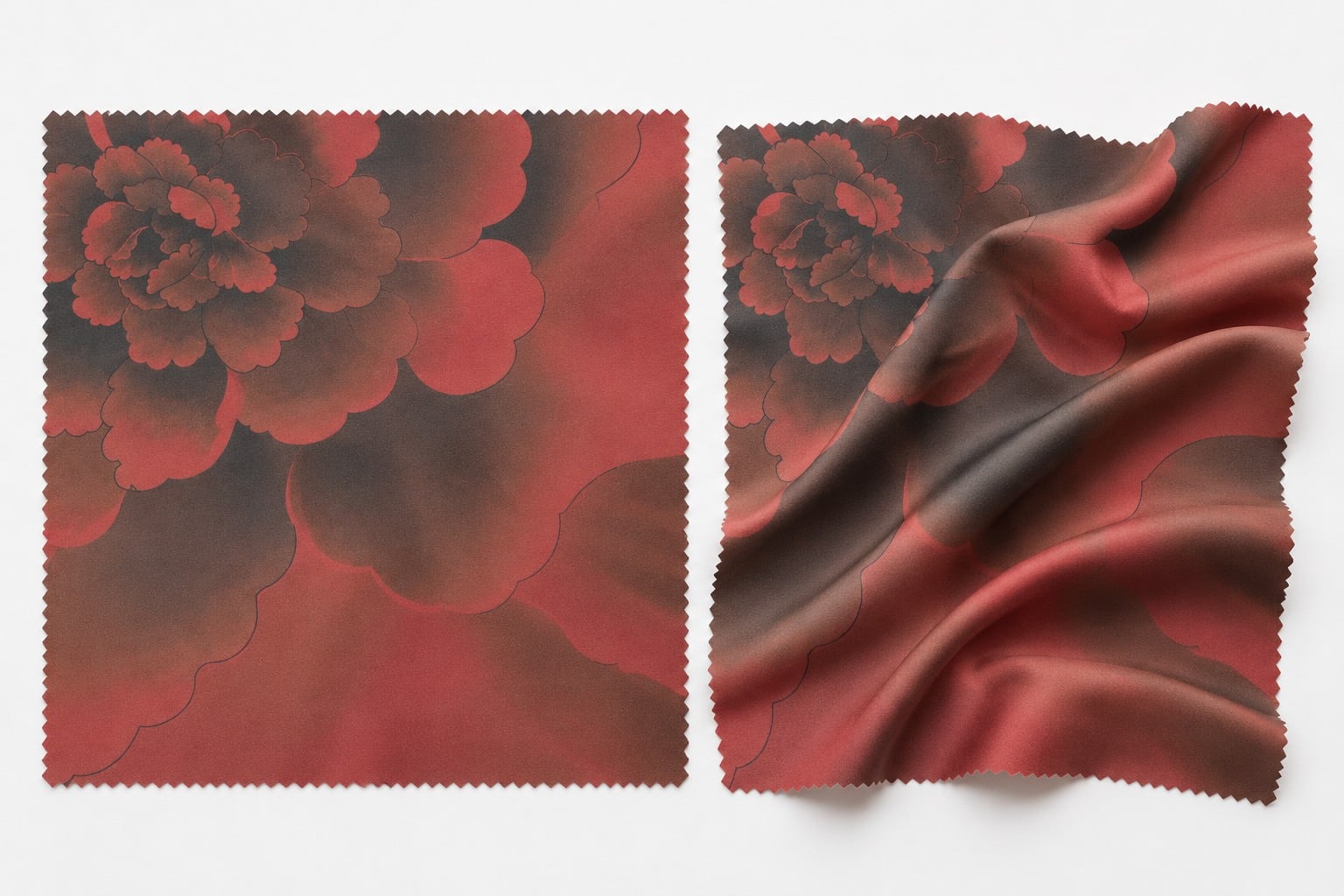
For a decorative apparel reference, Shengchao’s patterned silk fabric illustrates why both motifs and background areas deserve attention. The product photograph identifies the appearance being discussed; it does not demonstrate spotting performance. Confirm the current construction, composition and finish with the supplier before approving a colourway or making a care claim.
Understand what the published methods cover
ISO 105-E07:2010 addresses textile colourfastness to spotting by water. The ISO catalogue records that the edition was confirmed in 2026. That identifies a relevant method for the discussion, but the catalogue summary is not the full laboratory procedure. Request the report’s actual edition and any deviations instead of assuming that the title alone makes two tests equivalent.
The public scope of AATCC TM104-2025 covers water spotting of dyed, printed and otherwise coloured textile fabrics. It also notes that white materials can change colour and that the method does not determine whether discoloration is removable. Therefore, a claim that a mark will wash out needs separate supporting evidence.
These references support test selection, not an automatic pass threshold for every fabric. The buyer should agree acceptance criteria that reflect the intended appearance and care route. Avoid describing a method number as a certification or implying that a sample has passed simply because its report lists the standard.
Keep spotting separate from other water-related questions
| Question | Evidence to request | What it cannot prove |
|---|---|---|
| Local water mark | Spotting report | Cleaning success |
| Wet-contact transfer | Water-fastness report | Local mark appearance |
| Wash response | Agreed wash test | Every spill outcome |
| Surface wetting | Repellency test | Colour stability |
| Customer complaint | Sample and exposure record | Standard compliance alone |
This decision table separates purchasing questions; the laboratory must select and perform the applicable procedures. A fabric can need more than one test when the intended use creates several different risks. Keep each result and requirement in a separate field so that one acceptable result cannot conceal a missing check.
The colourfastness-to-water report guide addresses a complementary wet-exposure question. Use it when reviewing the broader test plan, while keeping water spotting as the main subject of this approval. Likewise, the washing-fastness guide helps define care-related testing without treating laundering and a local splash as the same exposure.
Sample the actual print and colour combination
A large motif can include several visibly different colours within one repeat. Provide enough fabric for the laboratory to locate representative areas, and identify which colours and transitions are important to the finished design. A small sample cut entirely from a plain background may not represent the appearance risk of the full printed article.
Link each submission to the article code, colourway, production lot and finishing route. Include a clear untested reference and agree how it will be retained. If the fabric is supplied in multiple shades, ask whether the sampling plan covers every shade or only selected examples. Record the coverage honestly; one successful colourway does not establish results for an entire collection.
For positioned prints, preserve enough information to reconnect the laboratory sample to the repeat. A simple marked layout or photograph can show the sampled region without writing directly across a test area. Keep approval material separate from cutting-room remnants that may already have been pressed, stained or handled with unknown products.
Read the result with its observation conditions
Check the report for method, edition, specimen identification, preparation, assessment conditions and any observations required by that procedure. Confirm whether the laboratory is describing a wet appearance, a dried appearance or another specified stage. Do not copy one grade into the buying sheet while losing the heading that explains what was assessed.
Keep the original numerical result, any explanatory notes and the laboratory’s pass statement, if one is provided. Then compare them with the agreed purchase requirement. A report that only says satisfactory may leave the team unable to revisit a disagreement. Ask for the underlying report fields rather than inventing more precision than the test provides.
Photographs are useful for locating a mark, but colour judgments from different cameras and screens can disagree. Use photographs as supporting records alongside the actual specimen and the defined assessment. If two teams disagree, ask them to review the same retained material under an agreed viewing arrangement before changing a grade.
Investigate a visible mark without promising a remedy
Protect the complaint sample first. Record the affected area, the reported exposure and any cleaning already attempted. Keep an unaffected piece from the same material where available. Repeated rubbing, steaming or application of household chemicals can change the evidence and create additional damage, so any investigation treatment should be agreed and documented.
Ask the laboratory which checks can distinguish the observed problem from other appearance changes. A standard water-spotting result may be useful, but an unknown customer liquid can require a separate practical assessment. Label that assessment with its actual conditions. Do not present a custom spill simulation as an unmodified ISO or AATCC test.
If a supplier proposes a finish adjustment or a revised care route, request a fresh comparison on identified samples. Check both the original concern and any important product attributes affected by the change, such as handle or print appearance. Approval should attach to the revised material, rather than carrying forward a certificate for the previous finishing route.
Learn how colourfastness assessment is framed
The Vidya-mitra lesson below introduces evaluation of colourfastness and provides background for reading a colour-assessment report. It is a general educational lesson, not a demonstration that this particular patterned fabric meets ISO 105-E07 or AATCC TM104. The written method and laboratory report remain the basis for the agreed spotting decision.

Put the approval into the purchasing record
Build the spotting requirement into the fabric quality checks before shipment. Include article and colourway identity, intended use, applicable method, required reporting stages, acceptance criteria and retained-sample arrangements. State whether the order needs laboratory results, appearance approval or both, and identify who can approve a deviation.
For a new collection, separate development screening from bulk release. Screening can reveal which colour combinations need closer attention, but production approval should use material traceable to the supply being accepted. If several lots are combined into one delivery, decide in advance whether a combined sample provides enough information or masks differences that matter.
A useful supplier enquiry describes the garment or decorative application, print repeat, colour range, finish, expected care and complaint risk. Ask for relevant existing evidence and a sample suitable for the agreed test. Do not ask only for “good colourfastness,” because that phrase does not identify water spotting, a method, a limit or the material to which the answer applies.
Before closing the approval, check that the signed colour reference and the laboratory sample refer to the same revision. If a print file, dye recipe or finishing instruction changes afterward, ask which evidence needs renewal. Keep an explicit revision history so the production team can distinguish a cosmetic design change from a change that may affect the approved material.
Frequently asked questions
Is water spotting the same as colourfastness to water?
No. Spotting focuses on local water contact and associated colour change under its method. Broader wet-contact fastness is a different assessment. Choose the test that answers the actual product concern.
Can white fabric need a water-spotting test?
Yes. The published AATCC TM104 scope notes that white textiles can also show colour change, including yellowing. Agree the relevant assessment with the laboratory for the submitted material.
Does a spotting result show whether cleaning will remove a mark?
No. AATCC explicitly separates that question from the method’s scope. Any cleaning claim needs its own agreed evaluation and suitable care guidance for the finished product.
Can one tested print colour approve every colourway?
It should not be assumed to do so. Identify exactly which colours, lots and finishes were assessed, then agree whether additional samples are needed for the planned collection.