



















































































































Colorfastness to Hot Pressing: Uniform Report Checks
Colorfastness to hot pressing describes how a textile’s colour resists change and transfer during a defined pressing exposure. A useful report identifies the method, temperature, time, pressure and whether the specimen was dry, damp or wet. It does not establish every aspect of ironing suitability, and it cannot be inferred from a washing-fastness result. Uniform buyers should relate the chosen exposure to the intended manufacturing or care process, then review a representative finished sample. Keep colour change and staining results separate, and agree acceptance requirements before testing rather than selecting a favourable condition afterwards.
Describe the pressing process behind the question
A supplier needs to know whether the concern arises during garment making, finishing or the proposed consumer care route. Describe the relevant assembly and intended process without inventing a temperature from the fibre name. A fabric may be part of a layered construction with trims, interlinings or contrasting components. State which materials will contact it and ask the responsible specialist to select an appropriate evaluation.
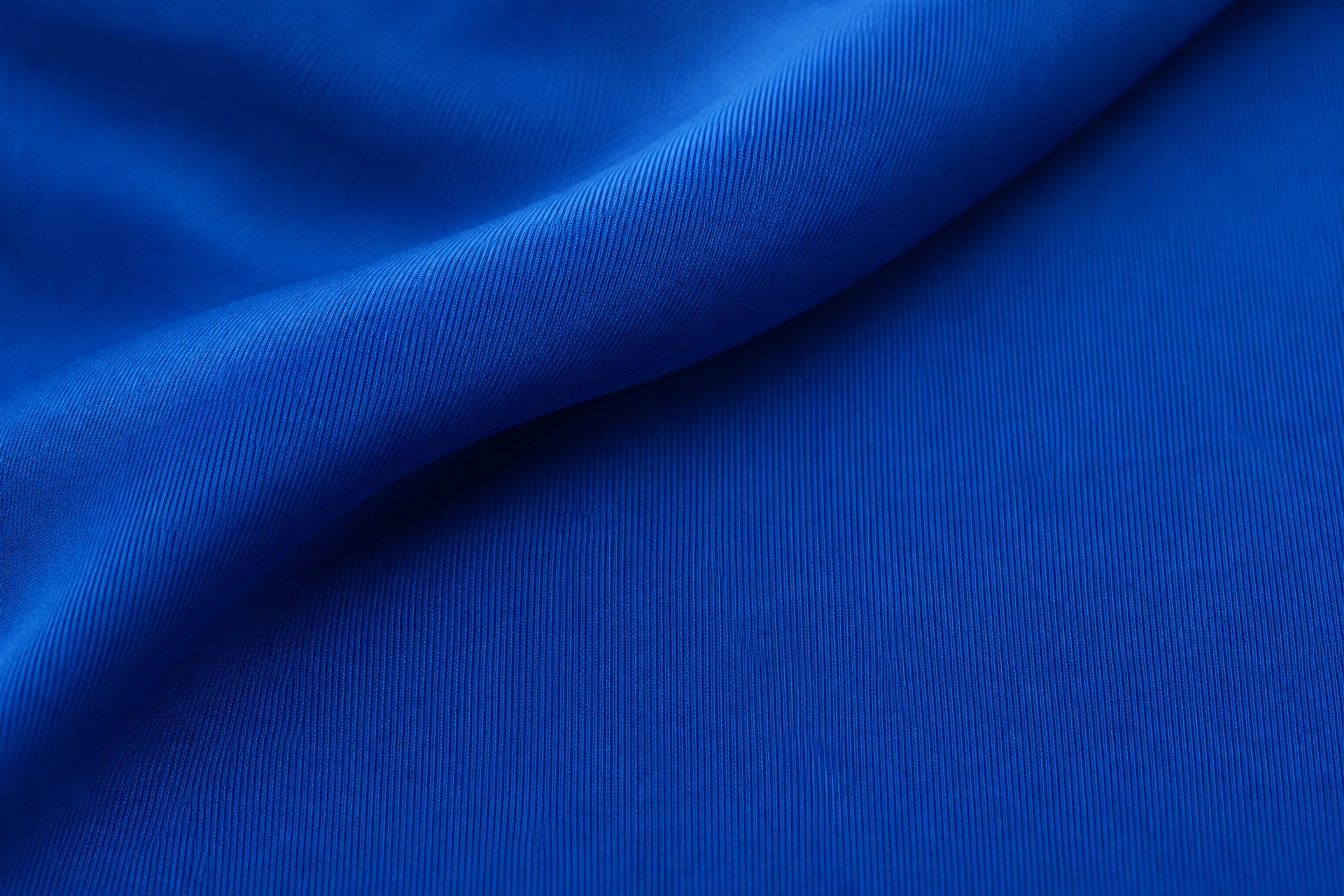
Shengchao’s school uniform fabric provides a relevant product starting point. Its blue reference photograph identifies the appearance used here; it is not evidence of heat resistance or a verified printing process. Confirm the current sample specification, colour and finish. The school-uniform fabric selection guide places this test within a broader buying brief.
Use the current method and its actual scope
ISO 105-X11:2026 addresses colour resistance to ironing and hot-cylinder processing, with dry, damp or wet pressing selected according to end use. The current public listing replaces the earlier 1994 edition. When a report cites an older edition, do not silently rewrite it as a newer test: ask the laboratory what was performed and whether the evidence meets the purchase requirement.
AATCC TM133 also addresses colour change and colour transfer under hot pressing, and distinguishes dry, damp and wet exposures. It describes defined heating conditions rather than a freehand household-iron demonstration. The full applicable procedure governs laboratory execution. This article does not prescribe temperatures or claim that different standards produce interchangeable results.
Ask for the exact method and edition in the quotation to the laboratory. If the buyer’s specification requires a particular route, communicate that requirement before sending specimens. A report on a different heat exposure may still help development, but it should not be presented as having satisfied a named requirement without the responsible team’s documented assessment.
Read colour change and transfer separately
Colour change concerns the appearance of the tested specimen compared with its appropriate reference. Colour transfer concerns staining of the adjacent material used in the procedure. A fabric can raise different concerns in those two observations. Request the individual reported outcomes rather than accepting a single unlabeled grade that might represent only one of them.
When reading the report, locate the assessment conditions and any timing requirements specified by the method. Ask the laboratory to explain unfamiliar notation instead of assuming that every higher or lower number has the same meaning. Keep the original report available, especially if a purchasing summary reduces several observations to a single pass statement.
| Evidence field | Question for the report | Buying implication |
|---|---|---|
| Dry, damp or wet exposure | Which condition was actually evaluated? | Relate the result to the intended process |
| Heating conditions | Are temperature, duration and loading identified? | A result belongs to that defined exposure |
| Colour change | What happened to the specimen’s colour? | Review appearance against the requirement |
| Staining | What transfer occurred to the specified adjacent material? | Consider relevant contacting components separately |
| Sample identity | Does reference, colour and finish match the candidate? | Avoid applying unrelated evidence to the order |
The table is a report-reading checklist informed by the two standards’ published scopes. It is not a substitute test method and contains no universal pass grade. Agree the required observations and acceptance criteria with the laboratory and buyer before testing, including any application-specific assembly work that falls outside the selected colourfastness procedure.
Prepare representative colours and components
Identify the actual colour and finish being purchased. A report for another shade should not automatically be treated as representative. Ask the supplier how the proposed sampling plan covers the colour range, and let the responsible team decide whether additional specimens are needed. Keep that reasoning with the approval file rather than relying on an undocumented statement that all colours behave alike.
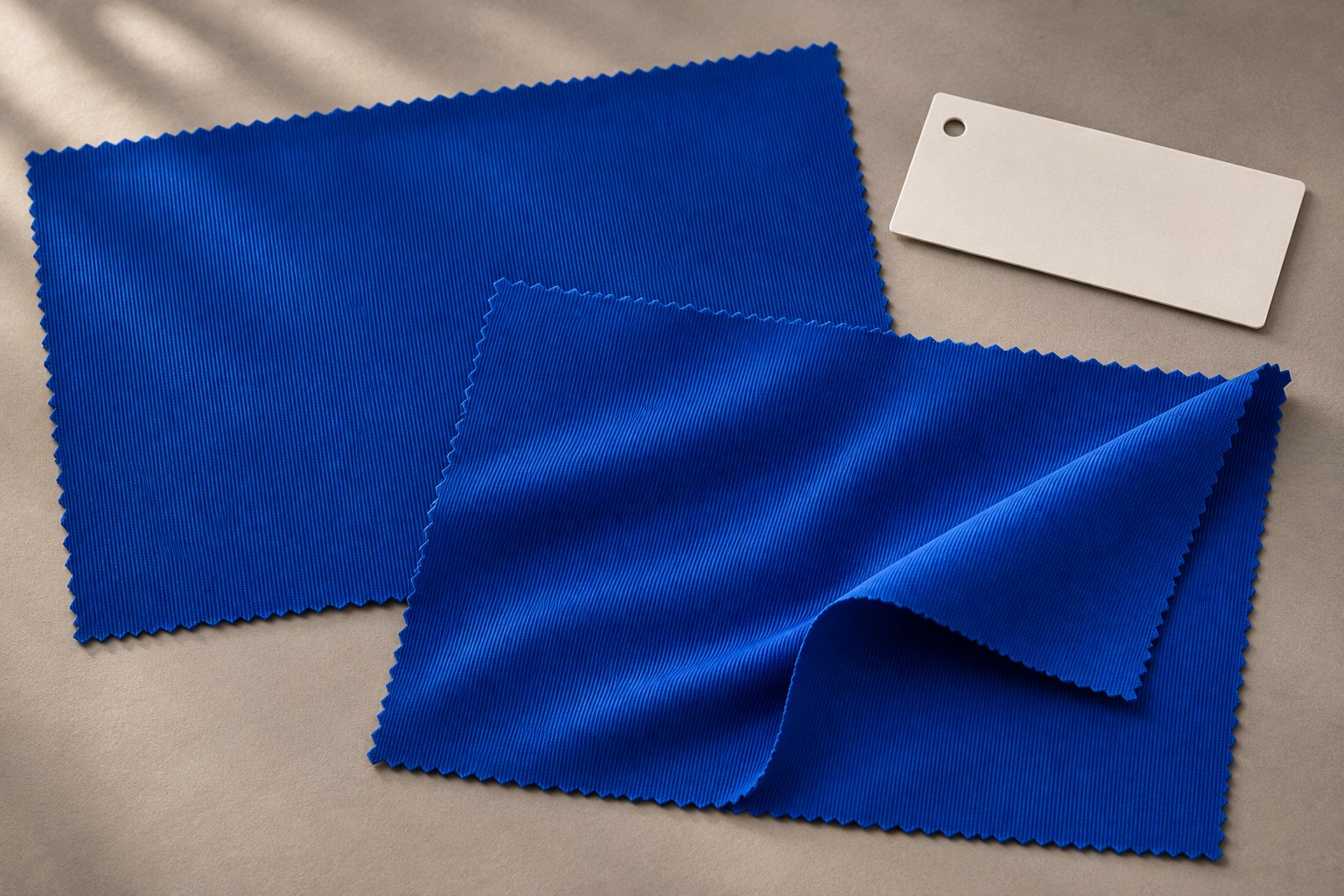
Where a uniform combines contrasting panels, describe that combination to the laboratory and garment team. The standard adjacent material in a test and the actual commercial trim serve different purposes. Do not replace the prescribed material without recording a deliberate modification. If an additional assembly trial is useful, label it separately so its results are not mistaken for the standard test.
Send a finished cutting from the relevant development or production route, clearly identifying its stage. Retain an unexposed control from the same sample where practical. If a finish changes after testing, review whether the previous evidence remains applicable. A visually similar replacement is not automatically the same tested material.
Check appearance and assembly beyond colourfastness
A colourfastness report addresses its defined colour observations. It is not a full approval of dimensional stability, surface shine, bonding, handle or the complete garment care instruction. List the additional outcomes that matter to the uniform and assign suitable checks. This prevents a pass for colour from becoming an unsupported claim that every part of the assembly tolerates the proposed pressing process.
For an assembly trial, use the intended layers and relevant components. Record the process conditions and who performed the work. Compare exposed and unexposed references under consistent viewing conditions, and keep observations specific. If an unexpected mark appears, identify its location and nature instead of labelling every appearance difference as dye failure.
The washing colourfastness guide addresses a different exposure. The crease-recovery article examines recovery after folding. These complement a uniform approval programme, but neither substitutes for hot-pressing colourfastness, and a heat-related colour result does not establish wrinkle recovery.
Investigate a failed or ambiguous result
First check that the sample and exposure match the agreed brief. Confirm the method, condition and reported observation. A missing condition or unreadable report should trigger clarification, not an invented interpretation. If the result is valid but unacceptable, ask the supplier for a specific revised candidate and identify which changes were made before retesting.
Avoid adjusting the process merely until a specimen looks acceptable and then reporting that as an unchanged standard pass. Development trials can help locate a workable approach, but record their conditions honestly and confirm compatibility with the finished product. The buyer and technical team should decide whether a proposed change is suitable before it becomes part of production or care information.
When two reports disagree, compare specimen identity and test conditions before arranging another test. Retain both original records and ask the laboratories to explain any procedural differences. A new representative sampling plan is more useful than choosing the preferred grade from incompatible evidence. Keep unresolved questions visible in the purchase record.
Further learning and bulk approval
The Vidya-mitra lecture below accompanies INFLIBNET’s educational material on colourfastness evaluation. It provides general background on assessing colour behaviour. Use the named hot-pressing method for the actual test; the lecture does not certify the blue fabric shown here or demonstrate every exposure in the buying brief.
Before bulk approval, confirm reference, colour, finish, method and edition, pressing condition and separate colour-change and staining outcomes. Add any assembly observations and the final proposed care route. Identify the person responsible for acceptance and keep the approved physical sample available to the making team. This connects the result to a specific material and process.
At delivery, compare lot identification and finish state with the accepted record. If a material or process change is proposed, review it before relying on earlier reports. Keep revised documents dated so future readers can see which evidence belongs to which version. A clear approval trail helps avoid transferring an old pass to an untested replacement.
When ordering several delivery lots, specify how later lots will be connected to the initial approval. Ask for identification that distinguishes development yardage from production fabric, and agree when a changed dyeing or finishing route requires review. A report file should make that relationship easy to find without relying on a salesperson remembering an earlier conversation.
Keep commercial wording proportional to the evidence. A result at one defined pressing condition supports a statement about that condition and sample. Broader claims about all ironing settings, every shade or lifetime performance need additional support. Review the final wording alongside the report before it appears in a specification or customer-facing description.
Frequently asked questions
Does washing fastness prove hot-pressing fastness?
No. They represent different exposures. Obtain the relevant hot-pressing evidence when the intended process requires it.
Are dry, damp and wet pressing results interchangeable?
No. Identify the condition actually tested and relate it to the intended use with the laboratory.
Does a colourfastness pass approve all ironing effects?
No. Other appearance, dimensional and assembly requirements need their own appropriate checks.
Can a report for another shade cover my order?
Only with a justified sampling decision by the responsible team. Do not assume that unrelated colour evidence represents the selected shade and finish.