



















































































































Fabric Fibre Composition Testing: Wool and Blend Report Checks
Fabric fibre composition testing identifies the fibres in a textile and, where required, measures their proportions using methods appropriate to the mixture. A buyer should request identification and percentage analysis as separate questions, then check which specimen, preparation and reporting basis the laboratory used. A wool-like handle or a supplier’s product name cannot establish fibre content. For a declared merino material, confirm exactly what the requested analysis can demonstrate before treating its report as evidence for the whole commercial description.
This guide explains how to prepare a useful enquiry and review its scope. It is not a chemical-testing recipe, a label-compliance decision or a test report for the grey and brown fabrics pictured. The images illustrate sample handling and material appearance; they do not show analysed specimens or microscopic results.
Separate identification from percentage analysis
A qualitative question asks which fibres are present. A quantitative question asks how much of each identified component is present under the selected method. “Test the composition” can mean either, so a quotation should state both the required result and the proposed approach. Otherwise a buyer may receive a fibre-identification statement when the purchase specification actually requires blend percentages.
The National Textile University fibre-testing list distinguishes qualitative fibre analysis using AATCC 20 from quantitative chemical analysis using the ISO 1833 series. This is a useful starting distinction for the enquiry, not a reason to assume every mixture can be analysed with one interchangeable procedure.
Send the expected composition as declared information while asking the laboratory to explain how it will investigate an unexpected fibre. Do not describe a declared percentage as an already verified result. If the laboratory offers only screening, identify that limitation in the approval record before deciding whether further analysis is necessary.
Choose a method for the actual mixture
The ISO 1833 name describes a series rather than one universal solvent procedure. The laboratory needs information about the suspected components and the material form to choose an applicable route. A result that names only a broad family of methods should prompt a request for the relevant part, edition and any additional identification work.
The FTMC textile-testing service description lists different approaches for two-fibre and more complex mixtures, and separately identifies microscopic analysis of animal fibres. Its range illustrates why a blend percentage enquiry and an animal-fibre identification enquiry should be specified carefully rather than collapsed into one vague “wool test.”
Ask whether coatings, finishes or other non-fibrous material affect preparation and reporting. Let the laboratory decide which treatment is appropriate and how any limitations should be expressed. Do not subtract an assumed finish percentage from a report or change its denominator in a purchasing spreadsheet without an agreed technical basis.
| Buyer question | Request | Check in report |
|---|---|---|
| Which fibres occur? | Qualitative identification | Identified types and limitations |
| What proportions occur? | Suitable quantitative analysis | Method and percentage basis |
| What does “merino” mean here? | Claim-specific evidence review | Scope beyond generic wool content |
| Does bulk match the sample? | Traceable lot sampling | Specimen identity and coverage |
This decision table organises an enquiry. It supplies no universal acceptance tolerance or instruction for performing the tests. Agree the requirement and decision process before submitting material.
Keep the product declaration and evidence separate
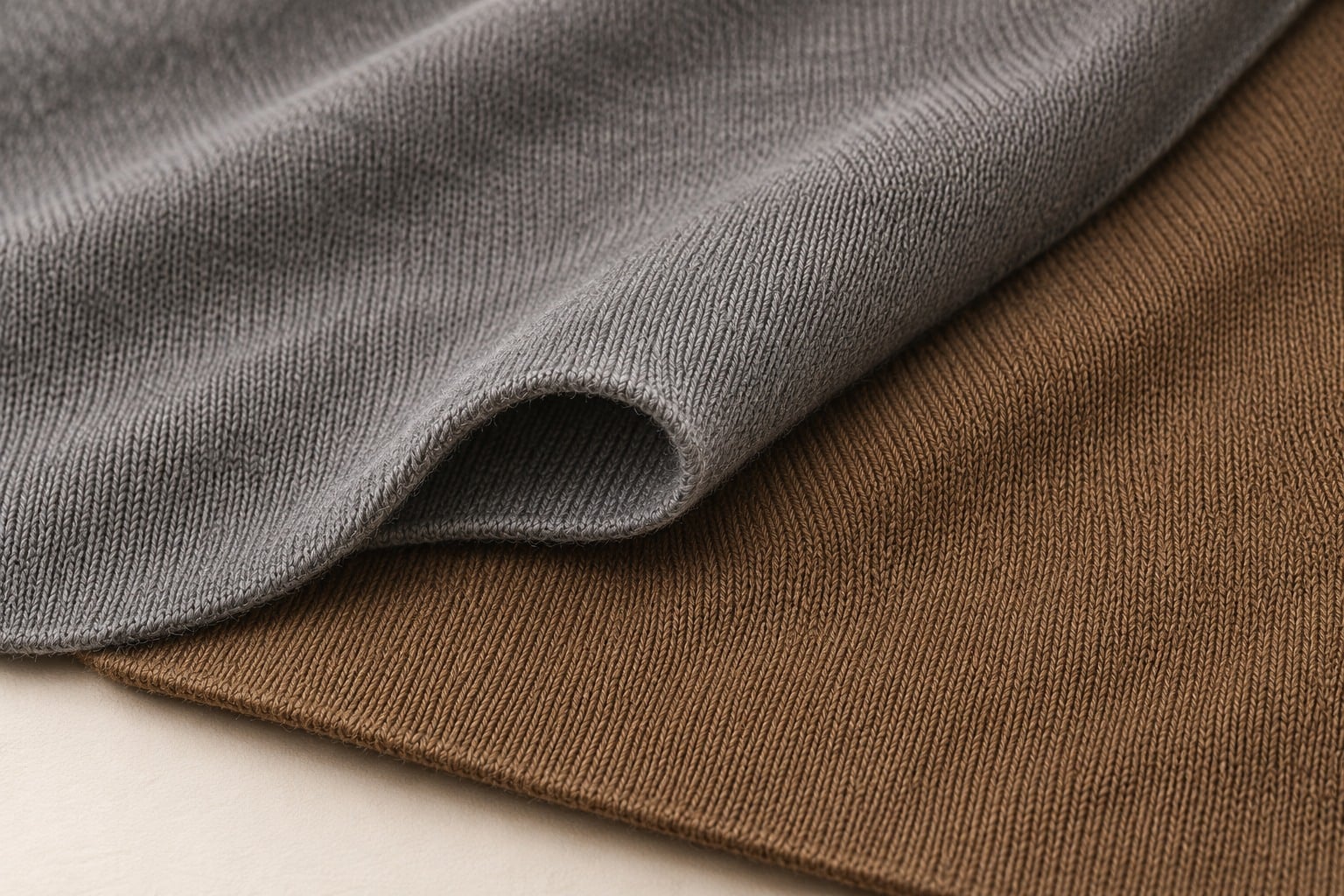
Shengchao’s merino wool fabric product page is a relevant sampling reference. The photograph shows fine knitted grey and warm brown cloth with a soft surface. The commercial page declares merino wool, but the visible stitch structure and handle are not independent proof of composition, sheep breed, origin, certification or environmental performance.
Request a current physical sample, the exact item reference and the current supplier specification. Keep the supplier declaration alongside the report rather than replacing one with the other. If a laboratory report establishes wool content, ask what additional evidence is needed for any more specific sourcing or marketing claim. Avoid presenting a generic wool result as proof of every word in a product title.
Use the broader fabric quality checks before shipment as the parent approval checklist. Composition is one property within that programme. It does not demonstrate strength, care behaviour, colour durability or comfort, even when the stated content is confirmed.
Submit representative material with a clear identity
A small unlabelled swatch may be enough to start a conversation, but it is a weak basis for a bulk approval. Ask the laboratory how much material it requires and how it should be selected. Record supplier item, colour, finish, lot, roll and selection position where relevant. Attach the same specimen code to the submission form and the retained reference.
For a fabric with distinct yarn systems or visibly different components, explain the construction and ask how sampling will represent it. A test cut from one decorative area may not represent a whole patterned material. Conversely, mixing unrelated components together may answer a different question from the one needed for a particular fabric panel.
Decide whether the enquiry concerns the fabric alone or a finished assembly. Garments may contain shell, lining, sewing thread, elastic, trims and coatings. An analysis of one panel should not quietly become a statement about every component. A component map makes the intended scope understandable to the laboratory and to colleagues reading the report later.
Read percentages with their reporting basis
When the report arrives, check the method and specimen code before looking at the largest number. Confirm the reported fibre names, preparation notes and stated basis for percentages. If the result differs from the declaration, ask the laboratory whether uncertainty, rounding, sample preparation or a genuine material difference needs consideration. Do not choose the explanation that is most convenient without evidence.
A displayed total is not enough to establish comparability between two laboratories. Verify that both reports address the same material version and analytical question. Ask for clarification when one document names a generic fibre group while another uses a more specific description. Similar-looking tables can contain results with different scopes.
For approval near an agreed limit, establish the decision rule with the customer and laboratory. A purchasing team should not invent an extra percentage allowance after seeing the result. Keep any acceptance tolerance and its source visible in the specification, and seek specialist advice where the intended market’s labelling requirements are involved.
Do not use touch or a photograph as the final test
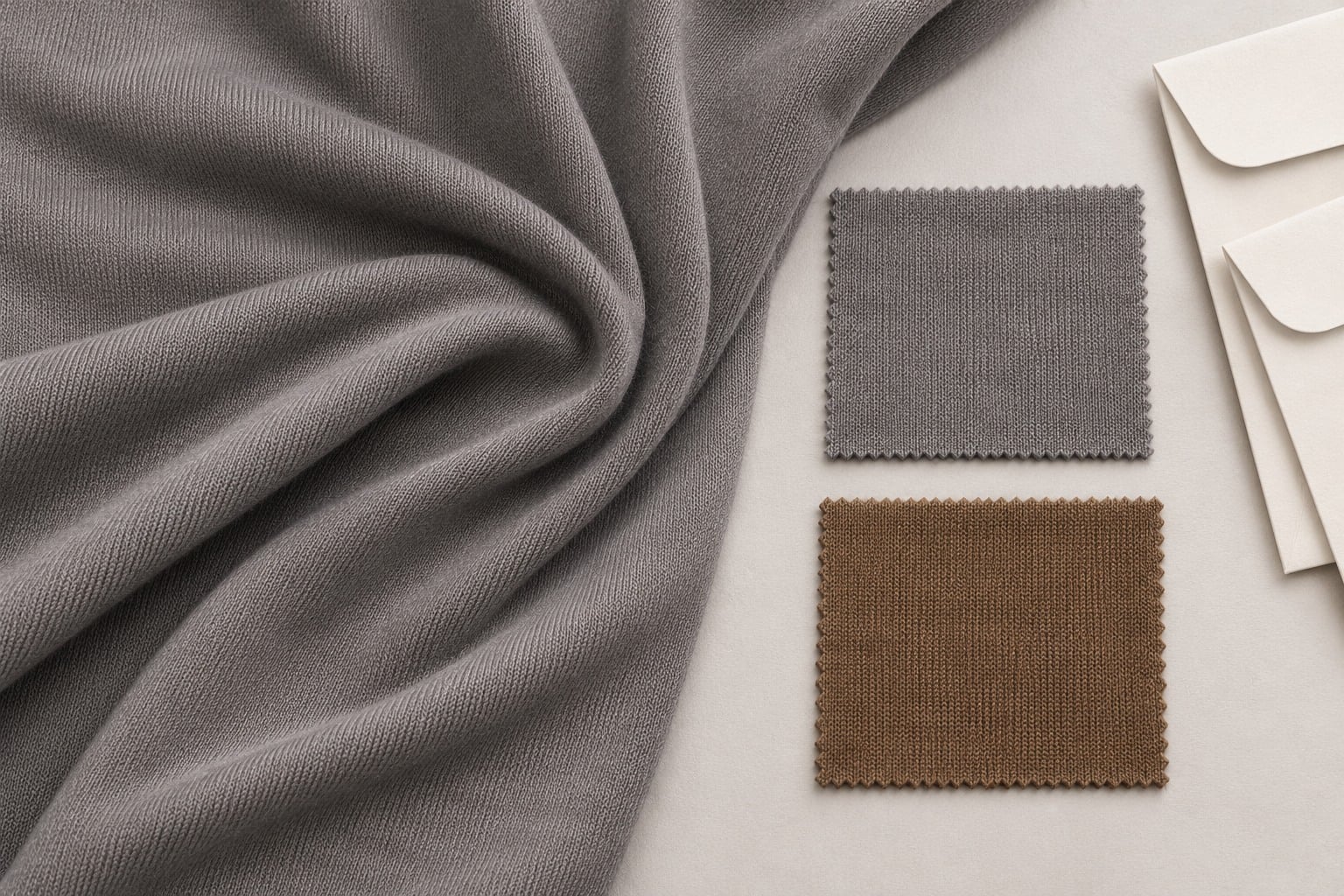
Handle and surface appearance can help identify the sample being discussed. They can also guide a development conversation about warmth, drape or softness. They do not provide a measured blend ratio. A smooth grey sample and a brown one may look related while differing in yarn, finish or composition, so retain their individual identities.
Likewise, a quick informal burn demonstration cannot replace a documented analysis for a complex blend. This article does not recommend handling laboratory solvents or performing uncontrolled flame tests. Request professional testing suited to the material and the commercial question, with appropriate safety controls managed by the testing facility.
Keep performance investigations separate. The related fabric pilling-resistance guide explains surface ball formation, while the fabric shrinkage guide addresses dimensional behaviour after a specified treatment. Neither result can be calculated reliably from a fibre-content declaration alone.
Resolve a mismatch before expanding the order
If the declared and measured compositions disagree, first confirm that the report belongs to the right sample. Compare item codes, retained pieces, supplier documents and the submission record. Check whether a development change was made between the sample and bulk versions. A familiar commercial name can conceal a revised blend unless version control is explicit.
Next, discuss the analytical scope with the laboratory and the material history with the supplier. Agree whether further identification, a new representative sample or a repeat analysis is appropriate. Preserve the original report and document the reason for any replacement. Repeatedly submitting material until one favourable result appears does not explain the mismatch.
For bulk release, state exactly which lots and material versions the approval covers. If a revised blend is commercially acceptable, update the specification and relevant downstream decisions openly. A composition change may require reviewing care, performance and customer-facing information even when the new material feels similar.
Watch an educational introduction to fibre identification
EMMRC at the English and Foreign Languages University, Hyderabad, provides the following lesson on identifying textile fibres. It offers background for understanding why evidence and method selection matter. It is not a certificate for the illustrated product, and it does not replace the laboratory’s method-specific instructions or report.
A practical enquiry could read: “Please confirm the suitable qualitative and quantitative composition analyses for this declared wool fabric. Identify the exact method, specimen requirements, preparation and percentage-reporting basis. Keep any limitations for the merino claim explicit. We will provide a traceable current sample and need the report linked to its item, colour and lot before bulk approval.”
Frequently asked questions
Does fibre identification automatically give blend percentages?
No. Identification and quantitative analysis answer different questions. Specify both when the purchasing requirement needs fibre types and proportions.
Can a wool-content result prove every merino claim?
Do not assume so. Ask what the analysis establishes and what separate evidence is needed for more specific breed, sourcing or certification statements.
Can a photograph confirm a fabric is pure wool?
No. A photograph records appearance. It cannot establish a fibre percentage or replace appropriate testing of a representative physical specimen.
Does confirmed composition guarantee washing performance?
No. Composition does not prove dimensional stability or other care properties. Request separate assessments for the intended care and use conditions.