



















































































































Best Moisture Wicking Fabric for Apparel Programs
The best moisture wicking fabric is a shortlist, not a single trophy fiber: engineered polyester for most high-sweat tops and mid-layers, nylon-spandex when stretch and abrasion lead, and merino when multi-day odor matters more than the fastest dry time.
If you are comparing the best moisture wicking material options—or searching for the best fabric for moisture wicking on a mill sheet—the next sections cover what moisture wicking fabrics actually do, fiber-by-job picks, knit construction, what belongs on the mill sheet, and one live polyester knit for tops and mid-layers.
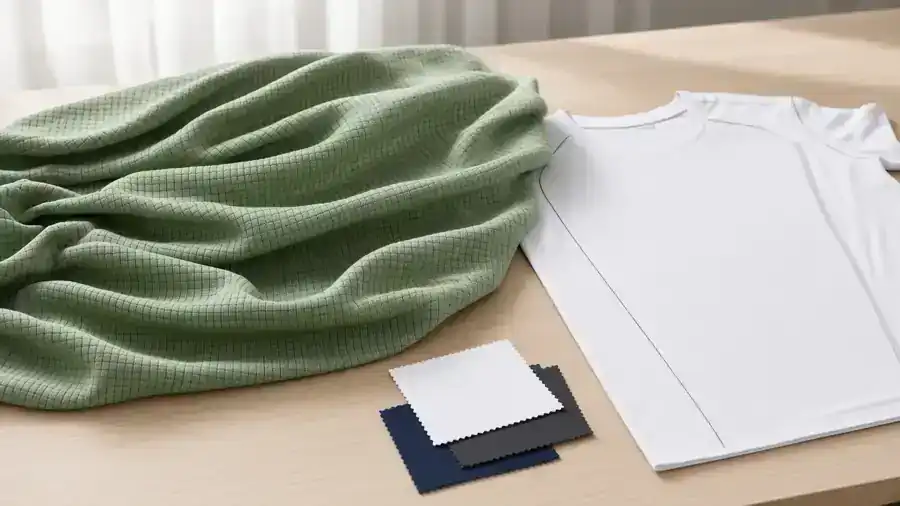
What “Best” Means for Moisture-Wicking Fabric
“Best” here means the fiber–knit pair that matches the sweat job—not the hangtag that won last season’s marketing brief.
Consumer sewing and activewear guides often crown polyester, nylon, or merino in isolation. Apparel developers need a shortlist tied to the garment. A running tee that must feel dry mid-session is not the same program as a multi-day hiking base layer that must still smell acceptable on day three.
| Program intent | Fiber family to shortlist first | What the buyer is buying |
|---|---|---|
| High-sweat tops / gym / run tees | Engineered polyester | Fast surface transport and quick dry |
| Stretch bottoms, bras, abrasion zones | Nylon with spandex | Soft stretch, recovery, toughness |
| Multi-day outdoor / travel base | Merino or merino blends | Odor control and temperature comfort |
| Cotton hand with better moisture control | Treated / engineered cotton systems | Familiar hand with managed absorbency |
Browse the Moisture Wicking Fabric hub when you are ready to scan live knits. Leave deep outdoor-activity itineraries for a dedicated outdoor shortlist page; this article owns the buyer shortlist and mill literacy.
Wicking, Absorbency, and Breathability Are Not the Same Job
Wicking moves liquid sweat along or through a textile by capillary action so it can spread and evaporate; absorbency is how much water a fiber holds; breathability is mostly about moisture as vapor.
Industry testing education defines wicking as liquid movement by capillary action along or through a material. ACS ChemMatters education explains the same idea with moisture regain: cotton sits near about 8.5%, polyester near about 0.4%, and nylon near about 4%. A fiber that soaks up water like a sponge can feel wet long after a low-regain synthetic has already moved liquid to the face for evaporation.
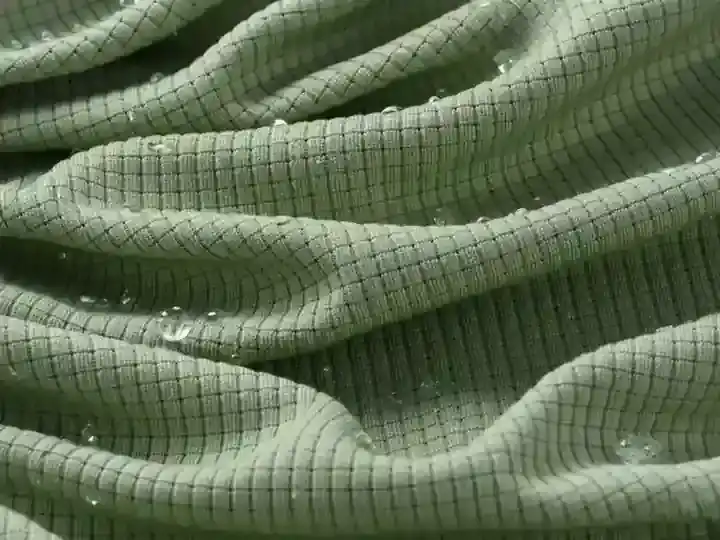
Breathability is a different test job. Community lab practice from apparel brands that verify claims puts it plainly: breathability looks at moisture as vapor, while wicking looks at liquid. A mesh can breathe well and still wick poorly if the yarn and finish never create usable capillary paths.
| Fiber (literacy values) | Typical moisture regain | Practical reading for sweaty apparel |
|---|---|---|
| Polyester | ~0.4% | Holds little water; favors surface transport when engineered |
| Nylon | ~4% | Slightly more hydrophilic than polyester; common in stretch knits |
| Cotton | ~8.5% | Absorbs and holds; untreated cotton is a poor “wicking” default |
| Wool | ~16% | Holds vapor inside the fiber; comfort story differs from polyester dry-speed |
That is why “what are moisture wicking fabrics” is not answered by naming cotton alone. Untreated cotton is great at absorbing sweat and slow to dry. Treated cotton programs exist when a brand insists on cotton hand with engineered channels—but those are specific yarn systems, not every jersey on the shelf.
Fiber Shortlist: Polyester, Nylon-Spandex, Merino, and Treated Cotton
For most high-intensity tops, engineered polyester is the first shortlist pick because low moisture regain and capillary-friendly yarns move sweat to the face for evaporation.
Fiber education for profiled polyester describes grooves or channels that act like gutters, spreading liquid so it evaporates faster. Wear-trial summaries also show that open mesh constructions can keep the skin microclimate drier than dense cotton—even when a cellulosic knit sometimes surprises on comfort. Construction still matters; “polyester” on a label is not a free pass.
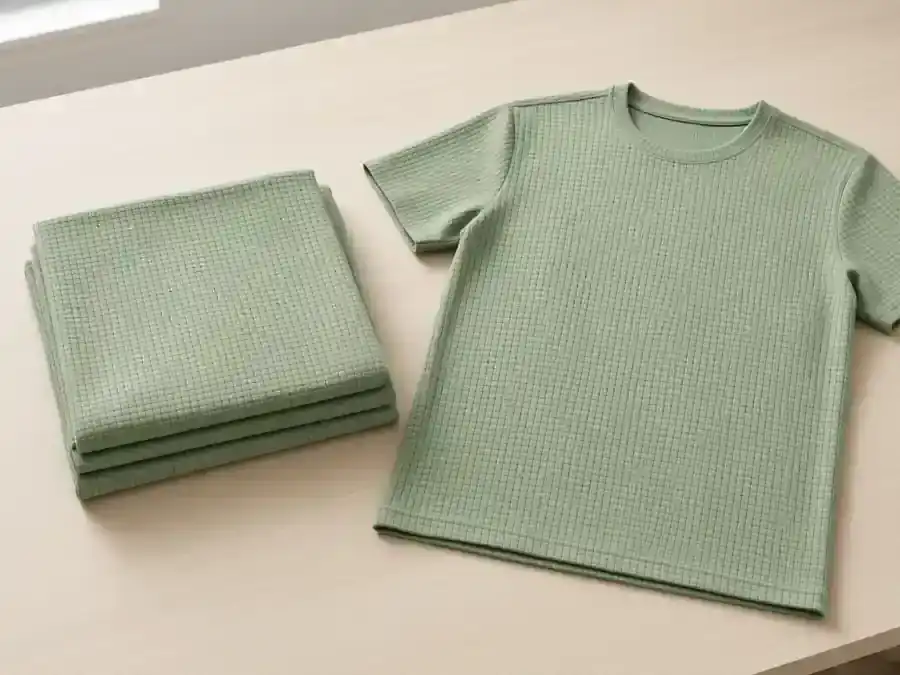
Nylon with spandex earns the next slot when stretch, recovery, and abrasion dominate—leggings, sports bras, and fitted training bottoms. Nylon absorbs a little more moisture than polyester, which is why many buyers describe it as slightly softer against skin, while spandex supplies the snap-back polyester alone does not.
Merino wool earns a short slot when multi-day odor matters more than the fastest dry time, and when Odour / odor control is the sell ahead of Quick-dry speed. It manages moisture by absorbing vapor into the fiber rather than racing liquid to the surface the way engineered polyester does. Keep deep outdoor layering and trail itineraries for the outdoor-activities sibling page.
Treated cotton systems (yarn engineering that pairs repellent and absorbent yarns) belong only when the brief requires a cotton hand and a moisture story. They are not a substitute for specifying untreated cotton as “wicking” without that engineering.
Important: Polyester can feel drier during exercise and still smell worse afterward than cotton — Sweat Explained evidence review. Controlled odor studies summarized in independent evidence reviews found polyester shirts rated less pleasant after indoor cycling, with odor-linked bacteria enriched on the synthetic shirts. Plan laundry, antimicrobial finishes, or a merino tier when freshness after wear is a sell—not only dry-hand mid-workout.
Knit Construction and Finishes That Change Wicking Results
Yarn shape, knit openness, and bi-component structures often change wicking more than swapping one generic fiber name on the label.
ACS education notes that noncircular yarn cross-sections create micropores for capillary travel. Brand technical pages describe bi-component knits that use different yarn surfaces as a siphon from skin side to face. Fine fibers and open meshes expose more area for evaporation; dense, closed knits can trap vapor even when the polymer is polyester.
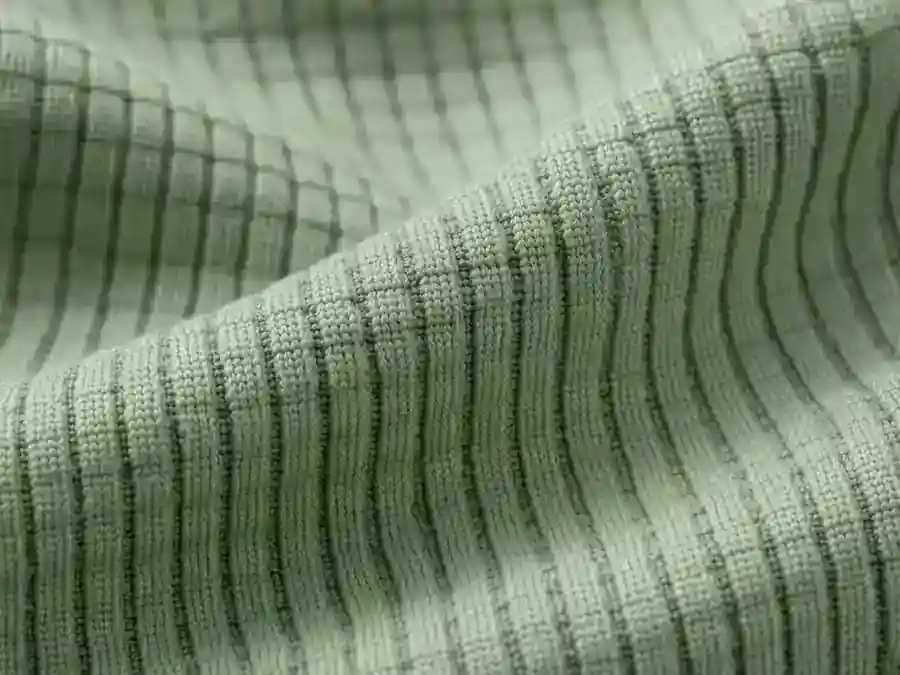
Finishes and care also move the needle. Hydrophilic coatings and durable moisture-management finishes can help—but fabric softener residues can coat fibers and blunt wicking. If a sample feels “dead” after the first laundry cycle with softener, the brief failed before the mill did.
Community hikers make the same construction point in plain language: polyester is not automatically wicking; some constructions dry fast when wet, while dense plastic-like builds can still trap sweat under the garment. Spec the knit, not only the polymer.
What to Put on the Fabric Sheet Before You Sample
Ask for composition, finished weight, width, conversion, application, published durability grades, and how moisture movement is verified—before you argue about hangtag poetry.
A useful mill sheet for moisture programs usually includes:
- Fiber content with generic names and percentages (US English: spandex, not elastane)
- Finished weight (g/m²) and usable width
- Conversion notes such as meters per kilogram when you buy by weight
- End-use callout (tops, mid-layer, bottoms, lining)
- Any published shrinkage, pilling, or color-fastness grades the mill will stand behind
- How wicking or moisture management is checked (method name and lab report on request—not a marketing adjective alone)
Industry labs commonly cite methods such as AATCC vertical/horizontal wicking approaches when brands need claim substantiation. Do not invent a score you have not seen. Ask for the report that matches the claim you intend to print.
Choose Moisture-Wicking Polyester Fabric for Tops and Mid-Layers
When the program is a polyester moisture-wicking top or mid-layer and you need published mill parameters, start with Shengchao’s Moisture-Wicking Polyester Fabric.
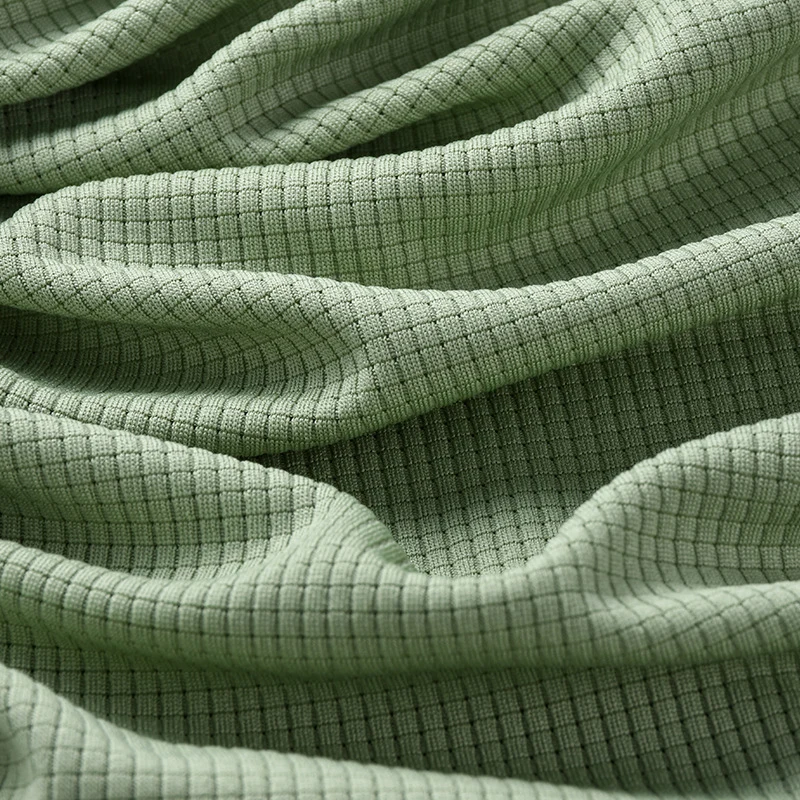
The live overview publishes the parameters below for this tops and mid-layer moisture-wicking polyester knit.
| Item | Published details |
|---|---|
| Composition | 100% Polyester |
| Application | Tops / Mid-layer |
| Function | Moisture-wicking |
| Weight | 160 g/m² |
| Width | 180 cm |
| Conversion | 1 kg = 3.5 m |
| On-page durability notes | Shrinkage ≤6%; anti-pilling ≥grade 3; color fastness ≥grade 3 |
That sheet matches the polyester tops/mid-layer fork in the shortlist above. It does not publish stretch percentage, branded fiber licenses, or AATCC wicking grades on the product page—confirm those separately if your brand hangtag requires them.
For a related polyester sweat-wicking option in the same family, see 100% Polyester Sweat Wicking Fabric DiOSM Cotton. When you are ready to align GSM and width to a tech pack, contact Shengchao with the garment end use and target weight.
Care and Sampling Notes That Protect Wicking Performance
Wash samples the way the garment will be washed, skip fabric softener, and judge dry-hand after laundry—not only off the roll.
Fiber-brand care notes for moisture-wicking polyester routinely warn that softeners can coat channels and reduce wicking efficiency. Use a mild detergent, wash inside out when prints matter, and air-dry or use low heat. Compare two washes before you lock a bulk program: one “clean” cycle and one with the softener your factory might use by habit.
Tip: If a sample loses its dry-hand after softener, treat that as a process failure in the laundry brief, not as proof that polyester “does not wick” — COOLMAX care notes.
Sampling should also include a real sweat scenario for the target climate. High humidity limits evaporative cooling even when liquid transport looks good on a bench test. Match the fabric to the job, then confirm with wash and wear checks on the actual silhouette.
FAQ
What is the best moisture wicking fabric for sweaty workouts?
For most high-sweat tops, engineered polyester with an open or profiled knit is the first shortlist pick. Confirm yarn and construction, not only the word polyester on the label.
Is cotton moisture-wicking?
Untreated cotton usually absorbs and holds moisture rather than moving it like a performance polyester knit. Treated cotton systems can improve moisture management when the yarn engineering is real and documented.
What is the difference between breathable and moisture-wicking?
Breathability is mainly about moisture as vapor. Moisture-wicking is about liquid sweat moving by capillary action along or through the fabric. A garment can be strong at one and weak at the other.
Does polyester always wick moisture?
No. Polyester’s low moisture regain helps, but wicking still depends on yarn shape, knit structure, finish, and wash history. Dense constructions can still feel clammy.
Does moisture-wicking fabric keep you cool?
It helps sweat evaporate, which supports cooling when humidity and airflow allow. In very humid air, evaporation slows, so the fabric may feel less soggy than cotton without feeling “air-conditioned.”
Merino vs polyester — which should I specify?
Choose polyester when fastest dry and high-output sessions lead the brief. Choose merino when multi-day odor and temperature comfort outweigh dry speed. Save trail-layering depth for the outdoor-activities guide.
How should brands wash moisture-wicking garments?
Use mild detergent, skip fabric softener, and prefer cold or warm cycles with low-heat or air dry. Softener residues can blunt wicking channels.
What specs should I request on a mill sheet?
Ask for composition, finished GSM, width, conversion, end-use, published durability grades, and the method used to verify moisture movement. Match those fields to the garment tech pack before bulk.
References
- Brian Rohrig (for ChemMatters). Don’t Sweat It: How Moisture-Wicking Fabrics Keep You Cool and Dry. ACS inChemistry. October 2022. Moisture regain literacy and capillary action.
- James Heal. Applications Insight: The Fundamentals of Wicking. AATCC wicking definition, cotton misconception, and preferred low-regain fibers.
- Sweat Explained Editorial Team. Moisture-Wicking Fabrics: What the Research Shows. Independent synthesis of regain physics, wear-trial construction effects, and polyester–cotton odor trade-off.
- Outdoors Stack Exchange. Why not use a cotton base layer?. Community answers distinguishing cotton absorbency from capillary wicking in base-layer use.