



















































































































Best Moisture-Wicking Fabrics for Outdoor Activities: Hike vs Run
The best moisture-wicking fabrics for outdoor activities are engineered polyester when a hot hike or trail run is a sweat job, and merino when you need next-to-skin comfort across nights without a washer.
That fork also decides what are moisture wicking shirts in a real kit: a fast-drying polyester tee for high-output days, a merino base when odor and stop-start weather lead, and untreated cotton only when you can treat the day like a dry stroll. The sections below map hike, run, and layering jobs, then weather versus sweat, then one published summer polyester tee knit.
Match Fabric to the Outdoor Job, Not a Trophy Fiber
Best outdoor wicking fabric is the one that matches sweat, weather, and trip length, not a single trophy fiber on a hangtag.
A generic mill ranking already lives on Best Moisture Wicking Fabric for Apparel Programs. This page owns the outdoor itinerary: day hike, trail run, layering in wind, and the night you cannot wash.
If you are specifying knits rather than buying a finished tee, start from the Moisture Wicking Fabric hub after you lock the job below.
How Wicking, Absorbency, and Evaporation Behave on Trail
Wicking moves liquid by capillary action along or through the knit; absorbency is how much the fiber holds; cooling still needs evaporation once sweat reaches air.
A cotton tee can feel thirsty because cellulose holds water. That is absorbency, not a capillary pump. James Heal’s lab education calls cotton a common wicking misconception: it stays wet and dries slowly, which is the opposite of what a sweaty climb needs.
Polyester sits at the other end of regain: it holds little water, so liquid can sit on yarn surfaces and spread if the knit is built for it. Nylon sits in between. Merino wool takes moisture vapor into the fiber and releases it more slowly, which is why it can feel less clammy in stop-start weather even when it is not the fastest to hang-dry.
Typical moisture regain values used in fiber literacy are about 0.4% for polyester, about 4% for nylon, about 8.5% for cotton, and about 16% for wool.
| Fiber (literacy) | Typical moisture regain | Outdoor reading |
|---|---|---|
| Polyester | ~0.4% | Favors surface transport and faster dry when the knit is open |
| Nylon | ~4% | Slightly more water in the fiber; common in stretch bottoms and shells |
| Cotton | ~8.5% | Holds liquid; slow dry; poor cold-wet base |
| Wool (incl. merino) | ~16% | Buffers vapor; odor story differs from polyester dry speed |
Does moisture wicking keep you cool? Only when sweat can evaporate.
ACS education is blunt: sweating itself does not cool you; evaporation does. In still, humid air the same polyester shirt can feel less soggy than cotton without feeling air-conditioned.
Outdoor Activity Shortlist: Hike, Run, and Layering
Polyester for high-output heat; merino for multi-day odor; nylon with spandex where stretch and abrasion lead.
Think about the day, not the marketing adjective. A three-hour climb with a pack and a washer at the trailhead is a different job from a Wednesday night trail run and a different job again from a three-day ridge where nobody is doing laundry.
| Outdoor job | First shortlist | Why it fits |
|---|---|---|
| Hot day hike, same-day wash | Engineered polyester base layer | Fast dry, durable under a pack, odor is a laundry problem |
| Trail run or high-output aerobic day | Lightweight polyester shirt | Dry time and abrasion beat merino’s odor bonus |
| Multi-day backpack, scarce laundry | Merino or merino-nylon base | Odor control and stop-start comfort |
| Stretch tights, bras, pack-rub zones | Nylon with spandex | Stretch and toughness; spandex is the snap, not a solo wicking fiber |
| Layered cold start, hard climb, windy rest | Wicking base + mid-layer + shell layer | Base moves sweat; mid insulates; shell blocks wind/rain |
A hiking stack that shows up again and again in outdoor fabric guides is a merino or synthetic base, a synthetic mid-layer, and a nylon shell. Swap the base to polyester when the climb is a furnace and you will wash tonight.
Spandex belongs in the stretch pieces, not as an all-spandex next-to-skin story. ACS notes its wicking is only moderate; it almost always rides with nylon or polyester.

Merino Versus Polyester When You Are Actually Outside
Polyester when dry time and abrasion lead; merino when odor and stop-start cold lead.
Polyester is hydrophobic enough to stay light when you are pouring sweat on a sunny grade. Hiking writers who live in both fibers send polyester to running and short treks because it is cheaper, tougher, and faster to dry, then send merino to multi-day hiking because it does not stink after a second night.
Merino’s outdoor advantage is not a claim that wool beats every fleece. Woolmark describes the fiber absorbing moisture vapour and odour molecules before they become noticeable. That is why a merino base can still be the smarter shirt when you will sleep in camp clothes or share a tent.
On a cold pass with rest stops, merino’s buffering matters more than peak dry speed. On a hot, fast-packing day, shedding liquid to evaporate is the more useful trick. Blends exist because pack straps chew holes in fine merino; a little nylon is a durability patch, not a reason to pretend the shirt is still a merino odor story if the merino share is a garnish.
Weather Versus Sweat: Cotton, Chill, and Humidity
Untreated cotton is a poor trail base when weather can drop; wet fabric after you stop can chill.
Is moisture wicking good for cold weather? Yes, as a base-layer job, because you still sweat on the climb.
The failure mode is a soaked shirt that meets wind at the overlook. James Heal flags that pooled sweat in cold hiking can trigger a post-exercise chill once output falls.
Community hikers still quote “cotton kills” for a reason. Cotton likes moisture, clings, and dries slowly.
Outdoors Stack Exchange answers draw a clean line: soaking up water is not wicking. Capillary fabrics move liquid off skin toward air; cotton hangs onto it. The same thread notes salty wet cotton under pack straps on a long day.
Desert heat with no weather surprise is the exception people argue about, not a license to wear a soaked cotton tee into an evening storm. If a delay can put you static in wind, the base layer has to keep working after you stop moving.
High humidity is a different squeeze. Evaporation slows, so a thin, open polyester shirt that dries in moving air usually beats a heavier merino piece that feels comfortable when merely damp but takes forever to actually dry. Keep airflow: regular fit, vent the shell, and do not trap a wet cotton layer under a zipped rain jacket.
Important: Cotton soaks and captures liquid instead of moving it by capillary action, which is a bad surprise when weather drops after a sweaty climb — Why not use a cotton base layer?
Knit Construction Beats a Hangtag on Trail
Polyester is not automatically wicking; yarn shape and knit openness change the result.
Hikers on public threads put it in plain language: plastic fibers dry fast when wet on the surface, yet a dense, bag-like knit can still trap vapor against skin. Wicking is a mechanical path. ACS describes noncircular yarns that leave micropores; branded bi-component knits use two yarn surfaces as a siphon from skin side to face.
A hang-dry test on hiking shirts made the same point from the other direction. A merino-nylon blend in a porous knit finished in the same window as a tighter all-polyester tee.
Fiber still matters. Construction can close or open the gap.
If two mill quotes both say polyester, ask how the knit is built, how open it is, and whether anyone poured fabric softener on the sample. Softener coats channels. A common care note on wicking synthetics is wash cold, use mild detergent, and skip fabric softener.
Choose a Summer Polyester Tee Knit for High-Output Outdoor Days
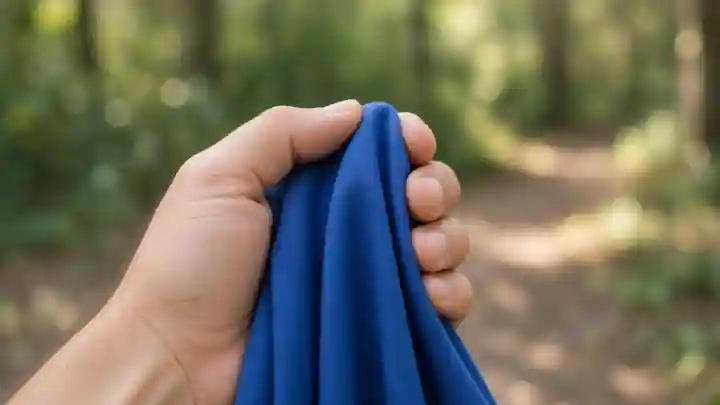
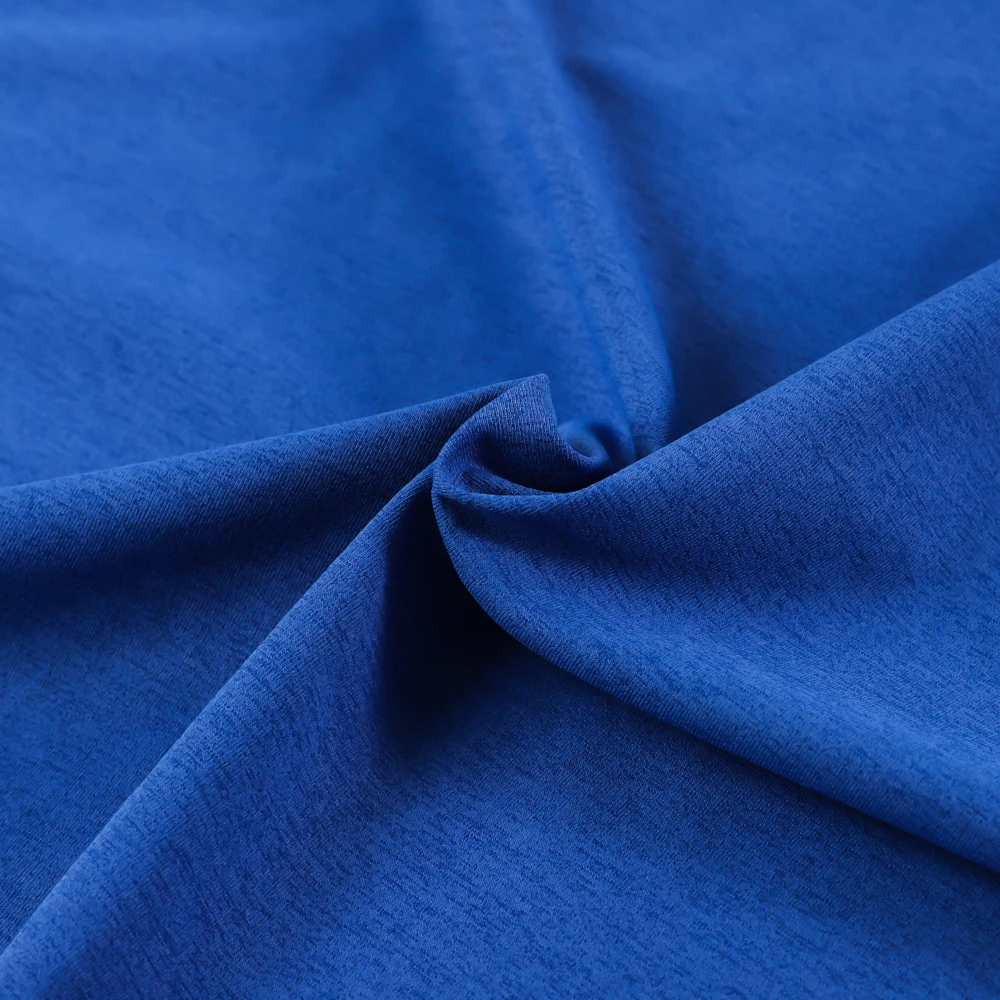
The mill knit that matches a hot outdoor tee job here is an all-polyester, cotton-feel sweat-wicking jersey published for summer sports T-shirts, gym clothes, casual wear, and loungewear.
The published overview lists 100% polyester fiber (100% T), width 160cm, and weight 150g.
That sheet is a summer high-output shirt fork, not a merino backpacking base and not the sibling’s tops/mid-layer polyester SKU. The page also notes a cotton-feel process and high elasticity, which is why it can sit in a trail-running or gym-to-trail tee program when you want polyester dry-time with a less plastic hand.
Do not hang unpublished UPF, hydrostatic, or hiking lab grades on it. If your brand hangtag needs those numbers, ask for a report; do not invent one.
When the program is a stretch bottom or a waterproof shell, this tee knit is the wrong next click. When the program is a summer sports T-shirt that should move sweat and wash easily, start with Shengchao cotton-feel polyester sweat-wicking fabric.
If GSM and width need to line up with a tech pack, contact Shengchao with the garment end use. That is a spec conversation, not a quote form stuffed into this page.
FAQ
What are the best moisture-wicking fabrics for hiking?
For most hot day hikes with laundry at the end, engineered polyester is the first shortlist. Choose merino or a merino-nylon blend when the hike is multi-day and odor matters more than the fastest dry.
Is merino or polyester better for outdoor activities?
Polyester wins when sweat volume, dry time, and abrasion lead. Merino wins when you will wear the same base for days or stop and start in cold, wet weather.
Is cotton moisture-wicking enough for trail use?
Untreated cotton absorbs and holds sweat. That can be merely uncomfortable in hot, dry, short outings and a real problem if you get delayed in wind or rain.
Does polyester always wick moisture?
No. Low regain helps, but wicking still depends on yarn shape, knit openness, finish, and laundry. A dense knit can feel clammy even if the polymer is polyester.
Is moisture wicking good for cold weather?
Yes, because you still sweat on the climb. A wicking base plus a mid-layer and shell is the usual stack; a soaked cotton shirt under a shell is the usual failure.
Does moisture-wicking fabric keep you cool?
It helps only when sweat can evaporate. In high humidity, the shirt may feel less heavy than cotton without feeling cold.
What should I wear in high humidity on trail?
Lean toward a thin, open polyester shirt and airflow. Merino can stay comfortable when merely damp, but it is slower to actually dry in humid air.
How should I wash moisture-wicking outdoor shirts?
Use mild detergent, skip fabric softener, and prefer low heat or a line. Softener residues can coat the channels that move sweat.
References
- Don’t Sweat It: How Moisture-Wicking Fabrics Keep You Cool and Dry — ACS inChemistry / ChemMatters fiber literacy.
- Applications Insight: The Fundamentals of Wicking — independent lab education on capillary wicking and cotton.
- Wool fibre facts and benefits — merino vapour buffering and odor.
- Why not use a cotton base layer? — community answers on absorbency versus capillary wicking.