



















































































































Colorfastness to Water: Reports and Patterned Fabric Approval
Colorfastness to water evaluates whether a textile changes colour or stains adjacent material after a defined exposure to water. It is a colour assessment, not a waterproofness test, and it does not replace washing, perspiration or swimming-pool testing. Apparel buyers should request the method, sample identity, colour-change result and individual staining results together. For patterned fabric, make sure the submitted sample represents the relevant colours and finished condition. Use the evidence to approve a specific material and colourway; neither a bright product photograph nor a satisfactory result from another colour proves that the proposed bulk lot meets the buyer’s requirement.
Define the exposure in the product brief
Start by describing the concern. A coloured panel may remain wet beside a pale trim, or the buyer may be investigating unexpected transfer during handling. Record the actual material combination and the conditions reported. Do not assume every wet-colour complaint has the same cause. A clear brief lets the laboratory distinguish a water-fastness question from one involving detergent, friction, perspiration or another exposure that needs separate assessment.
Keep any customer requirement with the enquiry. Name the specified test and acceptance criteria where they exist, and ask for clarification where they do not. A test method explains an assessment; it does not automatically set the pass level for every garment. Agree how colour change and staining will be judged before the sample is tested, then preserve that agreement with the report.
Understand the scope of water fastness
DIN’s overview of ISO 105-E01:2013 describes controlled water immersion with adjacent fabric, pressure exposure and separate assessment of the specimen and adjacent material. The result applies to that defined process. It should not be described as proof that a garment can withstand every wet-use situation. Ask the laboratory to apply the complete current method required by the buyer rather than copying conditions from an informal online demonstration.
The public summary of AATCC TM107 identifies distilled or deionized water because tap-water composition varies. It also distinguishes change in the coloured specimen from staining on the multifibre adjacent fabric. Keep those two outcomes visible in the report. A brief purchasing note saying only “water test passed” loses information needed to compare materials or investigate a complaint.
Read colour change and staining separately
Colour change concerns the appearance of the tested textile itself. Staining concerns colour transferred to the adjacent material used in the assessment. These are different release questions. Ask for the laboratory’s complete result breakdown and applicable evaluation procedure, rather than accepting a single number copied into an email. Check which adjacent fibres were assessed and whether the buyer’s requirement calls for individual results.
| Report item | What to review | Action if unclear |
|---|---|---|
| Sample identity | Product, lot and colourway | Match it to the bulk proposal |
| Colour change | Result for the tested material | Request the evaluation details |
| Staining | Results for the adjacent material | Obtain the individual breakdown |
| Test method | Edition and stated departures | Confirm the buyer’s requirement |
| Finished condition | Treatment history of the sample | Submit representative material |
This checklist organizes a report review and supplies no universal pass grade. Apply the actual customer specification and discuss missing fields with the laboratory. Retain the full report even when a purchasing system only allows a short status entry, so later reviewers can see what the original decision covered.
Choose a representative patterned sample
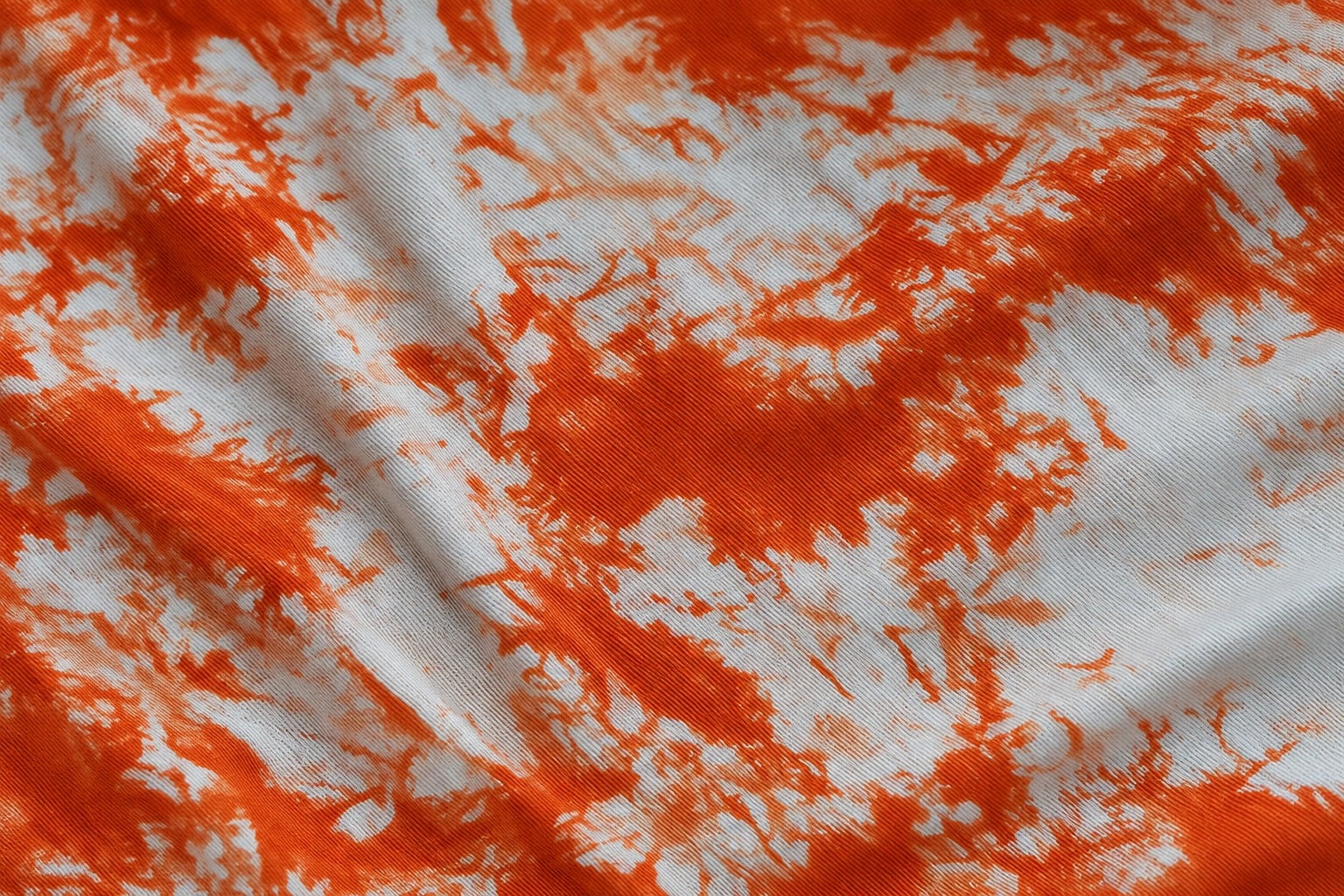
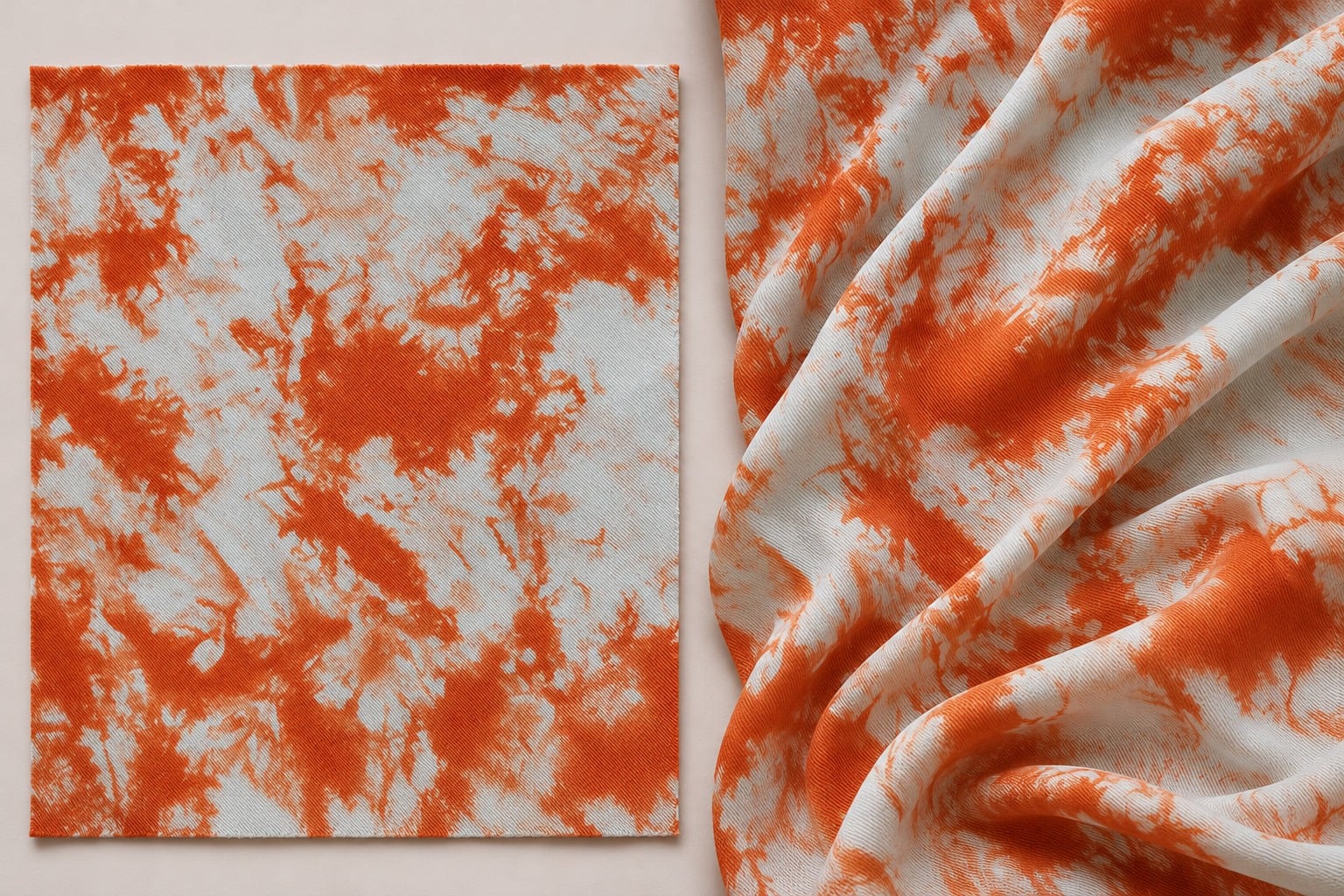
Shengchao’s orange-and-pale patterned fabric reference offers a concrete sampling starting point. Its irregular contrasting areas make sample placement worth discussing. Confirm the current fibre declaration, coloration process and finishing details with the supplier; the product name and visible pattern alone do not establish those details or any fastness result. Identify the actual material sent to the laboratory rather than relying only on the catalogue image.
For a pattern containing several colours, ask how the submitted length should represent the design. A small convenient pale corner may not address the buyer’s concern about a strongly coloured area. Supply sufficient material and preserve a matching untested reference. If the design or coloration changes between development and production, review whether the original evidence still represents the proposed bulk fabric.
Use the broader material context carefully
The printed cotton sourcing overview helps organize material discussions, but a construction label does not establish water fastness. Confirm whether the selected product’s actual structure fits the intended garment and the supplier’s current declaration. Where catalogue wording and visible construction leave uncertainty, resolve it through a physical sample and supplier confirmation instead of inventing a technical explanation.
Keep the same caution when comparing fibre blends. A composition statement can identify a material family, while fastness evidence concerns a particular coloured and finished sample. Do not transfer a result automatically to every blend, print or colour in a collection. Ask which variations require their own evidence and record the buyer’s sampling rationale so that the scope of approval remains clear.
Keep water fastness separate from other tests
The washing colourfastness guide addresses an exposure involving the specified laundering process. A water-immersion result cannot stand in for that report. If the product will be washed, retain both requirements where relevant and compare each result with its own acceptance criteria. Avoid combining unlike methods into a single informal ranking such as “best colour quality.”
The perspiration fastness guide covers another distinct exposure. Similarly, a water-fastness result does not establish resistance to seawater, pool chemicals or wet rubbing. Describe the intended use and ask the laboratory which additional evaluations apply. The objective is a relevant evidence set, not the largest possible collection of unrelated tests.
Review contrasting trims and assemblies
A standard adjacent fabric provides a controlled assessment, while an actual garment includes its own trims, lining and seams. If the purchasing concern involves a particular contrast combination, discuss an additional product-specific comparison with the laboratory. Identify the materials and arrangement clearly. Keep its results separate from a standard test unless the procedure and reporting justify describing it as that method.
Prepare a representative assembly when development observations require one. Record the orientation, contact surfaces and treatment history. Do not improvise a wet sample trial and present it as certified evidence. Practical screening can help identify a problem for investigation, but the release record should distinguish what was observed from what a traceable laboratory report actually establishes.
Check sample history before approving bulk
Identify whether the material was tested as received, after a defined wash or after another treatment. Preserve the finishing state and any supplied care instructions. If a sample has been rinsed or otherwise handled before submission, tell the laboratory. A result on a specially prepared development swatch should not silently become evidence for untreated production material with a different history.
When comparing lots, keep the product reference, colourway and manufacturing change record together. Ask the supplier to explain any alteration to the coloured or finished material. If a result is unsatisfactory, retain the affected sample and investigate before accepting a replacement. An unexplained new report from another lot does not resolve what happened to the original material.
Write a useful laboratory request
The request should identify the fabric, colourway, lot, proposed use, applicable method and customer requirement. Explain whether the concern involves change in the fabric, transfer to a pale component or both. Ask for the full breakdown of results, the evaluation method and any departures from the requested procedure. Include a contact who can clarify the requirement before testing begins.
Attach the relevant product and trim references rather than a general marketing sheet. Ask the laboratory how much material it requires and how patterned areas should be represented. Record who selected the sample and retain the matching reference. This gives the purchasing team a useful chain from a proposed production material to the evidence used for approval.
For repeat orders, keep the approved colour and construction alongside the report, and define when evidence needs to be refreshed. Review changes in pattern, supplier process or finish before relying on an older result. When a complaint arrives, compare the affected material with that retained record and request a focused investigation. This is more useful than asserting that a past water-fastness result guarantees every future garment.
Keep approval conditional when the sample identity is incomplete. Ask the supplier to connect the report with the offered lot and resolve discrepancies before shipment. A clear open-item record helps the next reviewer understand which evidence is accepted and which purchasing decision still needs supporting information.
Watch how colourfastness is evaluated
Vidya-mitra’s educational lesson explains the evaluation of colourfastness. It supports the distinction between colour change and staining and helps buyers understand why evaluation records matter. Use the applicable written method for water-fastness testing; the lesson does not replace a laboratory procedure or establish the pass requirement for the proposed fabric.
Frequently asked questions
Does colourfastness to water mean waterproof?
No. It assesses colour behaviour after a defined water exposure. Water penetration and surface wetting are different questions.
Can this replace a washing-fastness report?
No. Laundering is a different exposure. Apply the tests required by the intended use and the buyer’s specification.
Why request both colour change and staining?
One concerns the tested fabric’s appearance; the other concerns transfer to adjacent material. A complete review needs the relevant results separately.
Does one colourway approve the whole collection?
Not automatically. Agree representative sampling and evidence requirements for the actual colours, patterns and finishing states proposed for production.