



















































































































Types of moisture wicking fabric starts on the quick-dry card
Types of moisture wicking fabric is a family question, and the walk ends on one quick-dry cloth card. Search pages name polyester mesh, merino, and cotton blends. This card prints fiber, width, and weight.

Someone who typed the family query is usually trying to park one cloth inside a longer list. Ranking pages lead with performance words, while this quick-dry card prints composition, width, and weight. Read the family first, then sit with the cells this card actually shows.
Two performance words meet a card that names neither a wicking type
Two performance labels meet one cloth card that leaves types unnamed.
Moisture-wicking search pages often open with a type list. Polyester mesh, merino, and cotton blends show up as separate rows on those lists. One product table does none of that sorting work.
The quick-dry card on this site answers one cloth job. It prints a product name cell, a composition cell, a width cell, a weight cell, and an application cell. A borrowed type catalog has no extra row waiting beside those cells.
When a teammate treats the card as if it were the whole family, ask which cell they mean. A type catalog would need many rows. The printed story here is one composition line plus two planning cells.
Extension clothing sheets already talk about polyester, merino, cotton blends, and mesh constructions. Science pages add capillary action as the reason liquid can climb a yarn. That family language lives in education pages, and it stays larger than this quick-dry table.
Cotton Incorporated still places cotton on a family list when treated cotton yarns sit beside absorbent cotton yarns. Those constructions belong to the list. They do not become extra rows on this card.
Moisture-wicking in the search and quick-dry on the card
Moisture-wicking search wording and the quick-dry card title stay neighboring buyer labels.
Moisture-wicking cloth is the plain name buyers type when they want liquid to leave the skin and sit on the cloth face. Spandex is the stretch fiber those buyers expect beside a base fiber. Quick-Dry Fabric Material is the title on the orderable card, and that title names a dry job rather than a wicking type.
Education pages often keep moisture-wicking and quick-dry as neighboring hangtag words. That pairing helps a buyer hear the search wording. It does not rewrite the product title into a type label.
| Search wording | Card wording | What the buyer should hear |
|---|---|---|
| moisture-wicking cloth | Quick-Dry Fabric Material | family language versus one quick-dry title |
| wicking family | quick-dry polyester cloth | the walk ends on one cloth |
| type names | polyester and spandex cells | fibers and planning cells, without type labels |
Matching only the search string makes the card look like a miss. The card answered with a quick-dry title and a fiber line. If the team still needs both phrases, park the search wording in a note and copy the composition in the card’s own words.
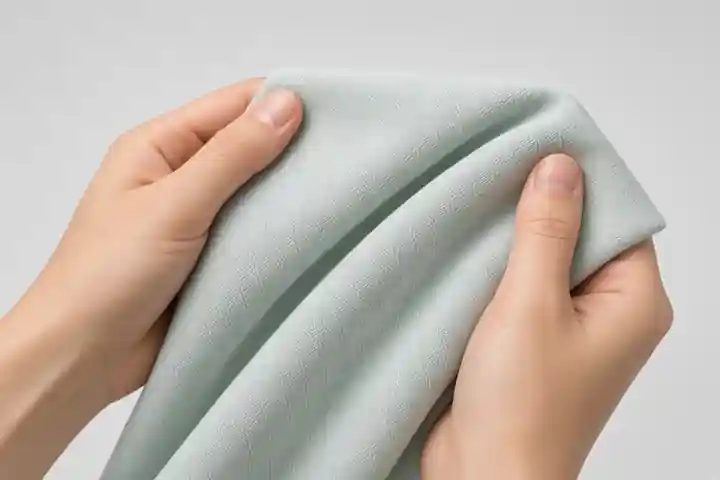
Quick-dry in the title is a sales tone for the outdoor and sportswear program. Moisture-wicking in the search is family language from education pages and supplier explainers. Leave them as neighboring labels rather than as synonyms that overwrite each other.
Polyester and spandex still have to show width and weight
Polyester and spandex still arrive with a printed width and weight.
A United States fiber label still names generic fibers and the share each fiber carries by weight. Spandex is the generic name this page uses for the stretch fiber beside polyester. On this mill row, width and weight sit beside that fiber line as their own printed cells.
Width is the cuttable distance across the cloth. In everyday talk, it is the goods width on the table before anyone cuts a panel.
Weight is the mass for a square of cloth. In everyday talk, it is how heavy a stack feels before anyone judges drape by hand.
Outdoor buyers on community threads name merino and polyester as common next-to-skin types, and they ask for a weight before they trust the cloth. They also say fabric texture sits beside the fiber type. That ask is a buying scenario, and it still leaves a wicking-rate column off this card.
Stretch in a title tells you the cloth is meant to move. Width and weight stay silent in that title. A cutter still needs those two cells, because an adjective cannot plan a cut.
This quick-dry card prints polyester, spandex, width, and weight
This quick-dry card prints polyester, spandex, width, and weight in one row.
The published card lists 95% polyester and 5% spandex, a width of 145 cm, and a weight of 70 g/m².
Polyester is the larger share, and spandex is the stretch share under the United States name. Width gives the goods width, and weight gives the mass for a square of cloth.
Stop there. The card leaves a wicking type and a wicking rate off those cells.
The same product sits in the Moisture Wicking Fabric hub, where other wicking-family cloths are browsed by category. Category browsing is the hub shelf. Come back to this table when the order needs the printed line rather than a hub name.
| Field | What the quick-dry card prints |
|---|---|
| Product Name | Polyester Spandex Sun-Protective Cooling Fabric |
| Composition | polyester and spandex shares |
| Width | printed goods width |
| Weight | printed square weight |
| Application | Tops, Casual Wear, Workwear, Fashion, Sportswear, Outdoor Clothing |
Composition is where the fiber shares live. The printed sentence carries those shares in full. The product-name cell appears once in this table as printed, and it does not add a sun-score beside the fiber line.
Copy the printed sentence into the working sheet exactly when the order must match this card. Paraphrases tend to drop width or weight, or they invent a type word the table never printed.
What a wicking-family request should name
A wicking-family request should name the cloth job plus printed cells.
A bare family word travels badly between teams. One person means a quick-dry polyester cloth, another means a merino base layer, and another means a cotton blend. Write the job on the request, because a lone family label cannot pick among those uses.
Name the job, then name the cells you already accept. Say you want this polyester and spandex line, this width, and this weight, for a named cloth use. That sentence can be checked against the table, while a lonely family phrase cannot.
From the field: Outdoor buyers still name merino and polyester before they will trust a next-to-skin cloth, and they still ask for weight — base-layer moisture talk.
If the job is a cloth order rather than a closet debate, keep the request on fields. Job, polyester, spandex, width, and weight are enough to tell a mill which page you mean. Type adjectives can wait until someone has the cloth in hand.
PAA-style questions about which fabric wicks most, or whether cotton belongs on the list, are broader than this card. Answer them as family talk from education pages. Then return to the cells that this quick-dry card actually takes.
A useful request carries the cloth job, the polyester and spandex line, the width, and the weight. Leave a wicking type off unless a later sheet prints one.
The quick-dry product for a cloth order
The orderable product for this cloth order is the quick-dry card.
The orderable page is Quick-Dry Fabric Material. Open it when the family question has been reduced to the printed line. The anchor text matches the product title so the quick-dry words stay attached to the same card you just read.
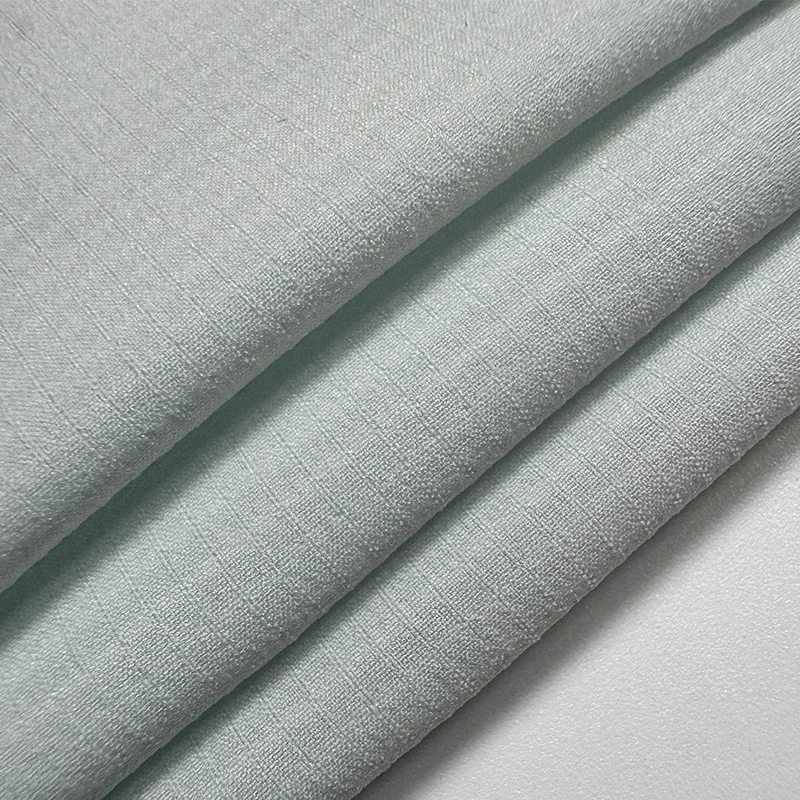
Use that page for a cloth order that can live with a polyester spandex knit, the printed width, and the printed weight. Skip it when the program needs a merino base layer, a cotton-family order, or a polyester mesh panel, because those jobs sit outside this quick-dry card.
The photo on the product is the cloth as sold. Treat it as a visual of the goods, and keep the table as the field list. If the photo and the printed row drift apart, keep the table on the order line and treat the photo as a later visual question.
A hub visit is useful before or after that open, and it shows that moisture-wicking fabric is a category. The product breadcrumb is Polyester-Spandex, and that shelf stays on the product side. Return to the product URL when the purchase line must name this title.
Write the order in the card’s words, and put spandex where the cell says spandex. Keep moisture-wicking search wording in the internal note if a teammate searched that way. Do not let the search wording overwrite the cell.
Where a later sweat talk leaves the printed cells
A later sweat talk leaves the printed cells before hands start.
Weight tells a buyer the square mass before anyone touches the cloth. Two people can match that planning cell, while smoothness, coolness, or cling stay outside it. Those words come from fingers on a cut, after the label is already known.
A forum buyer sorting next-to-skin cloths named merino and polyester as the usual pair, and called cotton poor because it feels wet and dries slowly. Another reply said synthetic baselayers are mostly polyester, sometimes with spandex, and that fabric weight and texture matter beside the fiber type.
That exchange is a warning about timing. A correct fiber line can still fail a finger test, and these quick-dry cells never store that later disappointment.

Plan the hand as its own step. Copy the printed sentence into a notebook, then feel the sample against that sentence. If the hand fails, the failure is news about the sample in the room, and it does not rewrite the cells or mint a wicking type the page withheld.
Keep dry-time talk and sun-score talk out of the order until a source actually prints them for this cloth. Keep sun-protective wording as a product-name cell word only, without turning it into a separate printed number.
If the hand passes, the order still sits on polyester, spandex, width, and weight. If the hand fails, write the finger finding in a separate note and leave the table alone. The family question ends for the person who needed the cells, and it stays open for the person who needed a feel those cells never stored.
FAQ
Why do buyers ask about types of moisture wicking fabric?
Buyers ask because search pages present a family of wicking cloths, and community posts name merino and polyester plus a weight. The quick-dry card answers with printed fields inside that larger family.
Does a quick-dry title mean the table prints a wicking type?
The quick-dry card prints polyester, spandex, width, and weight. A wicking type is absent from the table.
Where does a sun-protective product name leave a wicking list?
The name Polyester Spandex Sun-Protective Cooling Fabric names one card. A wicking list would need many fiber-pair rows, and those rows stay off this page.
What does width tell a buyer before a hand feel?
Width names the goods width on the card so two buyers can match the same cut plan. It does not predict how the cloth will feel in the hand.
Does this page print a wicking rate?
The table prints polyester, spandex, width, and weight. A wicking rate is absent from those cells.
Which fields does the table actually name?
The table names Product Name, Composition, Width, Weight, and Application. Composition is where polyester and spandex are printed.
References
- Threading Your Way Through the Labeling Requirements Under the Textile and Wool Acts
- TransDRY Technology Moisture Wicking, Cotton Incorporated
- Don’t Sweat It: How Moisture-Wicking Fabrics Keep You Cool and Dry
- Moisture Management – The base layer, and next to skin.
- Base layer materials that are NOT wool?