



















































































































What Is 4-Way Stretch Fabric Used For in Garment Programs?
What is 4-way stretch fabric used for in apparel programs? It is used for garments that must stretch across the width and along the length — then spring back — so close-fit pieces can bend, squat, and reach without fighting the cloth. This article maps the garment jobs for multidirectional stretch, contrasts them with everyday 2-way stretch, shows when more stretch is overkill, and walks one published nylon-spandex yoga card without inventing a direction-count rating the card does not print.

What 4-Way Stretch Means for Garment Movement
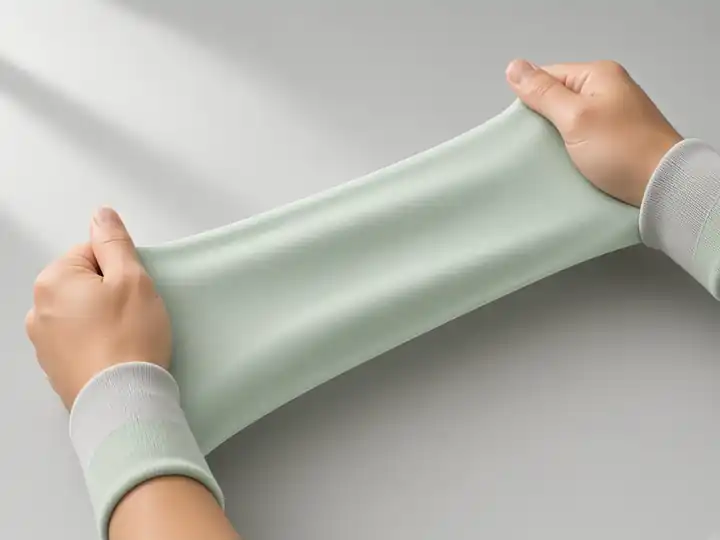
4-way stretch means the cloth extends across the width and along the length, then recovers — the language buyers use for multidirectional movement.
In plain terms, you can pull the fabric side to side and top to bottom, and it should return toward its original size instead of staying bagged. Encyclopedia and fabric primers describe 2-way stretch as mainly one axis (often selvage to selvage) and 4-way stretch as both crosswise and lengthwise.
That naming confuses people because “2-way” sounds like two directions. In practice it usually means one principal axis of meaningful stretch.
“4-way” names both axes. Community threads regularly unpack the same confusion: leggings that must move in every plane need both axes; pants that only need knee give may only need one.
Spandex (also branded as Lycra in some markets) is the common elastomeric filament blended into nylon or polyester knits to deliver that give-and-return behavior. The fiber name alone does not print a 4-way rating on a mill card. Recovery / shape retention is the buyer phrase for that snap-back expectation after stretch.
Garment Jobs That Need Stretch in Both Directions
The programs that need both axes are close-fit pieces that bend joints while hugging the body — not every soft knit top.
Use this scan when a developer asks what 4-way stretch fabric applications belong on the sampling list:
| Garment job | Why both axes matter | Typical cloth conversation |
|---|---|---|
| Yoga pants / leggings | Width stretch around the body; length stretch through hip and knee | Nylon- or polyester-spandex knits with recovery talk |
| Sports bras / fitted training tops | Contour fit that still allows reach and twist | Support + stretch balance |
| Swimwear (close-fit) | Wet fit that still flexes at joints | Nylon-spandex swim knits (finish/chlorine specs are separate) |
| Dance / gymnastics | Extreme joint range without bagging | High-stretch performance knits |
| Compression / support layers | Pressure plus joint mobility | Heavier or higher-power stretch knits |
| Travel / comfort stretch casual | Sit, reach, and pack without binding | Lighter stretch programs — confirm axis need |
Independent fabric education sources repeatedly put performance leggings, yoga wear, compression garments, swimwear, dance, and fitted active tops in the 4-way camp. Outdoor explainers add hiking pants and base layers when the garment must squat and reach.
Tip: More stretch is not automatically better — stretchy jacket pockets can bounce a phone, and some compression programs want a firmer hold (Advnture on 4-way stretch).
Why Yoga, Leggings, and Training Wear Lead Demand
Yoga pants and leggings need width stretch around the body and length stretch through hips and knees without staying bagged. Yoga / leggings programs are the clearest everyday example of garment jobs for multidirectional stretch.
Sewing education sources put it bluntly: for tighter fitting clothes like leggings and sportswear, 4-way stretch is essential because the fabric must stretch around the legs and up and down through the knee joint. A T-shirt-style knit that mostly stretches sideways can feel fine as a casual top and still fail a deep squat in a close-fit bottom.
That is why 4-way stretch fabric applications cluster so heavily around yoga sets, training tights, cycling shorts, and fitted performance tops. Brand education pages and yardage guides list the same family of garments because the body motion is three-dimensional.
Opacity, support, and wash durability still matter. Those are construction and finishing conversations layered on top of axis literacy — not substitutes for it.
Swim, Dance, Compression, and Other Fitted Layers
Swimwear, dancewear, and compression layers also rely on multidirectional give so seams and panels track the body.
Close-fit swimsuits and rash guards need cloth that hugs wet or dry and still flexes at the shoulder and hip. Dance leotards and costume shells need the same joint freedom under dynamic choreography. Compression sleeves and support garments need pressure that moves with joints instead of fighting them.
Polyester-spandex blends show up often in printed activewear. Nylon-spandex blends are common when a smooth, abrasion-resistant hand is the priority for bottoms and dance shells. Either family can be built as multidirectional stretch knits; the end-use finish package still has to match the program.
Four-way stretch also appears outside knits — for example in Stretch woven / denim 4-way programs that place stretch yarns in warp and weft. That is a different construction family from a weft-knit yoga card. Keep the conversation honest: “4-way” names the axes, not a single SKU recipe.
When 2-Way Stretch — or Less Stretch — Is Enough
Everyday tops, many skirts, and some outer layers can use primarily one-axis stretch; more stretch is not always better.
2-way stretch fabrics are widely used where comfort give around the body is enough and the garment does not need deep joint travel in a skin-tight silhouette. Dresses, casual tops, some uniforms, and looser skirts often live here.
Outdoor writers also warn that stretch clothing can lose shape sooner than non-stretch outerwear in some use cases, and that taut gear (packs, tents, certain shells) may not want stretch at all.
Skip the premium multidirectional ask when the pattern or tech pack never requires it. Paying for both-axis performance you will not use only raises cost.
When the card stays silent on direction, pull a marked width, then a marked length, and watch whether the cloth returns — the same habit sewists use when comparing stretch percentage in both directions.
How to Read a Stretch Card Without Inventing a 4-Way Label
Treat fiber percentages as ingredients. A card that lists nylon and spandex still may not print a direction count — ask for elongation data when the program requires it.
Start with the published fields that actually appear. Read composition, knit type, yarn count, width, and weight together.
Those fields describe what was published. They do not automatically certify a 4-way rating, a stretch percentage, or a recovery percentage unless those numbers appear.
Community sewists measuring for patterns that demand high stretch in both directions use a ruler test on both axes and watch recovery so the cloth does not stay wavy. That is buyer literacy, not a substitute for mill test reports when a brand program needs formal elongation data.
Choose This Nylon-Spandex Yoga Knit for Close-Fit Programs
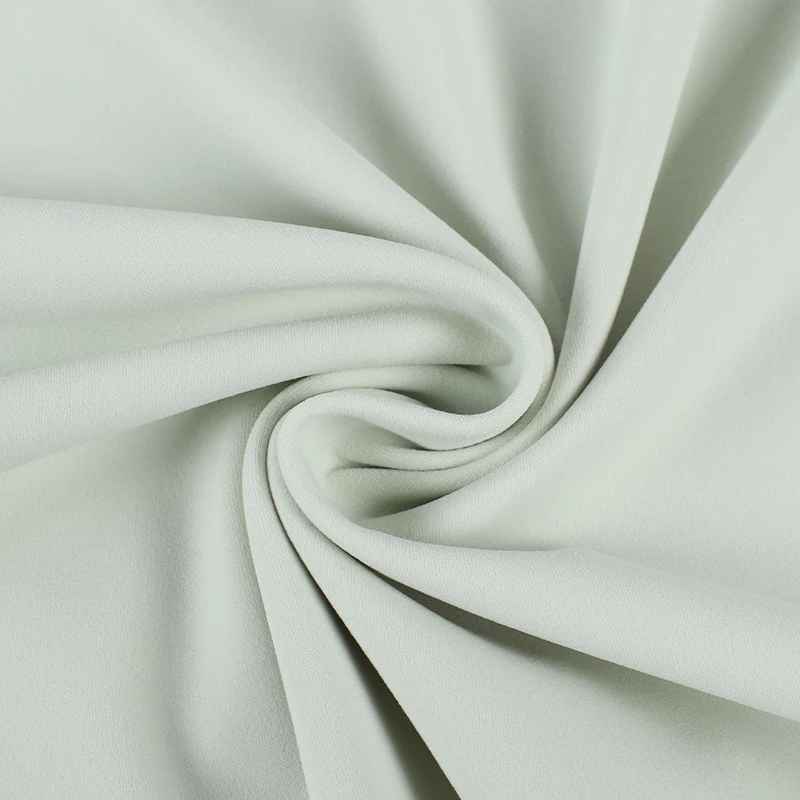
One published Shengchao yoga card lists nylon and spandex in a weft knit construction with published yarn count, width, and weight for yoga and activewear marketing uses.
When a close-fit yoga or training program needs a concrete nylon-spandex reference, open the nylon-spandex yoga lycra fabric card under the Sportswear & Yoga Fabric hub.
The published card lists 75% nylon and 25% spandex, a weft knit, a yarn count of 40D, a width of 160 cm, and a weight of 230 g/m².
The page also markets yoga, sportswear, leggings, and activewear uses and lists alternate names Yoga Fabric and Lycra Fabric. It does not print a 4-way direction count, stretch %, or recovery %. Use the published cells as the sampling baseline, then request elongation and recovery data if your tech pack requires them.
| Published field | Value on card |
|---|---|
| Composition | 75% Nylon, 25% Spandex |
| Knit type | Weft Knit |
| Yarn count | 40D |
| Width | 160 cm |
| Weight | 230 g/m² |
| Finishing | Dyed |
Skip this card when you need a woven stretch-denim construction, a printed direction-count certificate on the product page before sampling, or chlorine/UPF claims this listing does not publish.
FAQ
What is the difference between 2-way and 4-way stretch fabrics?
2-way stretch usually means meaningful stretch on one primary axis, often across the width. 4-way stretch means the cloth stretches across the width and along the length and is expected to recover in both.
Everyday tops may live on 2-way. Close-fit leggings and many sports pieces need 4-way.
What is 4-way stretch fabric used for?
It is used for garments that must move with the body in more than one plane — yoga pants, leggings, fitted training tops, swimwear, dancewear, compression layers, and some travel or comfort stretch casual pieces.
Is 4-way stretch always better than 2-way?
No. It is better when the garment job needs both axes.
Extra stretch can bag pockets, cost more, or reduce the structure you want in outer layers. Match the program first.
How can you tell if a fabric is 2-way or 4-way stretch?
Pull a marked section across the width, then along the length. If both directions stretch meaningfully and return, apparel language usually calls it 4-way. Labels vary, so the hand check still matters.
Why do yoga pants and leggings usually need 4-way stretch?
Because they wrap the body and flex through hips and knees. Width-only stretch can feel fine standing still and still fight a squat or fold.
Can swimwear use 4-way stretch fabric?
Yes for many close-fit swimsuits and rash guards. Chlorine resistance, UV claims, and lining packages are separate specifications — do not assume them from stretch direction alone.
Does a fabric card that lists nylon and spandex automatically mean 4-way stretch?
No. Composition lists ingredients.
Ask for direction and elongation data when the program requires a documented 4-way claim. A yoga card can still be a strong close-fit candidate without printing that label.
How do sewists check stretch percentage for a 4-way pattern?
Mark a short length on a ruler, stretch it until resistance, and compare to the original. Repeat in the other direction.
Also watch recovery so the cloth returns cleanly. Treat the result as a sample check, not a mill certificate.
References
- Stretch fabric — Wikipedia
- What is Stretch? — The Sewing Directory
- Understanding Stretch Fabric — TVF
- What is 4-way stretch fabric in outdoor gear? — Advnture
- What Is 4 Way Stretch Fabric? — Silver Bobbin
- LYCRA® XFIT Fabric Technology — The LYCRA Company
- Why is stretch fabric called “2-Way” and “4-Way”? — r/answers (Wayback)