



















































































































Water-Resistant Fabric Types Apparel Teams Actually Sample
The short answer to which types of water resistant fabric apparel teams actually sample is this: tightly woven synthetics, face finishes that make water bead (often called durable water repellent (DWR)), and dense or waxed naturals that shed splash and short drizzle.
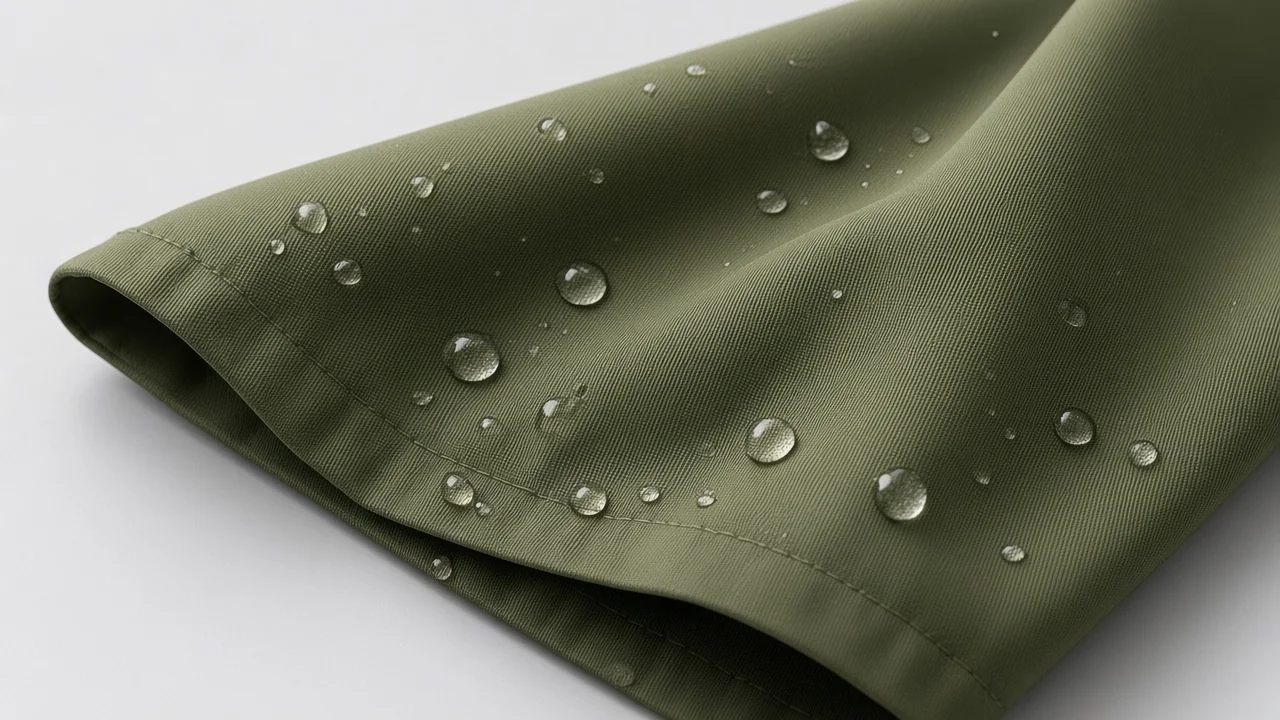
Those classes are not the same job as coated, laminated, or membrane waterproof barriers. Below: the type map for water resistant fabric and DWR fabric finishes, the boundary classes people misfile as “resistant,” how face checks differ from penetration talk, and a published nylon water-repellent finish option when the brief is light-rain jackets.
What Types of Water Resistant Fabric Mean for Apparel Teams
WR types are construction and finish classes for splash and short drizzle — not a promise that water cannot get through under pressure.
When buyers ask for types of water resistant fabric, they are usually sorting RFQ language, not shopping a tarp aisle. A water-resistant type slows wetting. Drops sit up or run off for a while.
If rain lasts, if water pools in a fold, or if someone leans hard on a wet seat, the same cloth can darken and pass moisture. That is why this page stays on the resistant side of the cluster.
For the label split itself — water-resistant vs water-repellent vs waterproof — see what fabrics are water resistant. For hydrostatic / water column reading and lightweight barrier shells, see lightweight waterproof fabric. Browse Shengchao’s waterproof fabric hub when you are ready to move across that line on purpose.
Core Types: Tight Synthetics, DWR Faces, and Dense or Waxed Naturals
Three WR families cover most apparel RFQs before any coating enters the brief.
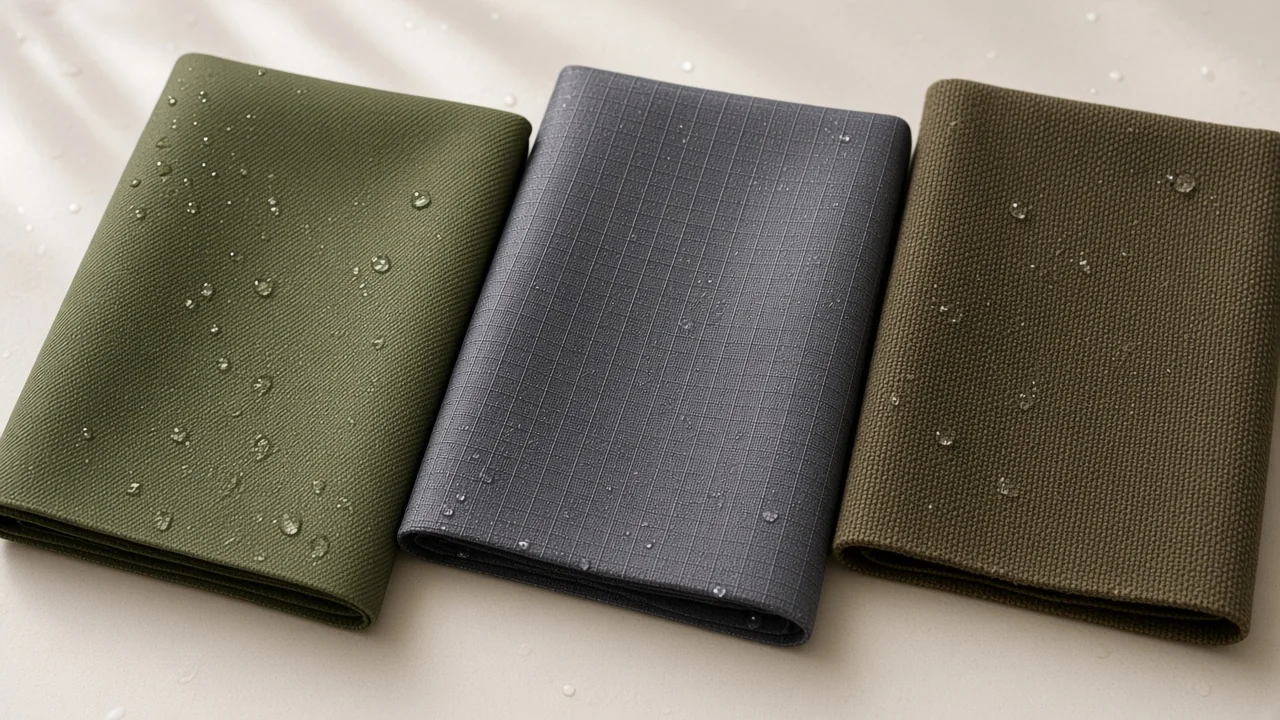
Tight-weave polyester and nylon
Tight weave construction gives splash a harder path through yarn gaps. Polyester and nylon are common because the fibers themselves do not drink water the way open cotton does.
Ripstop grids add tear control on light shells. A polyester or nylon label is a fiber story, not a barrier certificate. Apparel jacket shell buyer teams still need to name the finish and the end use on the RFQ.
DWR-treated faces (water-repellent finishes)
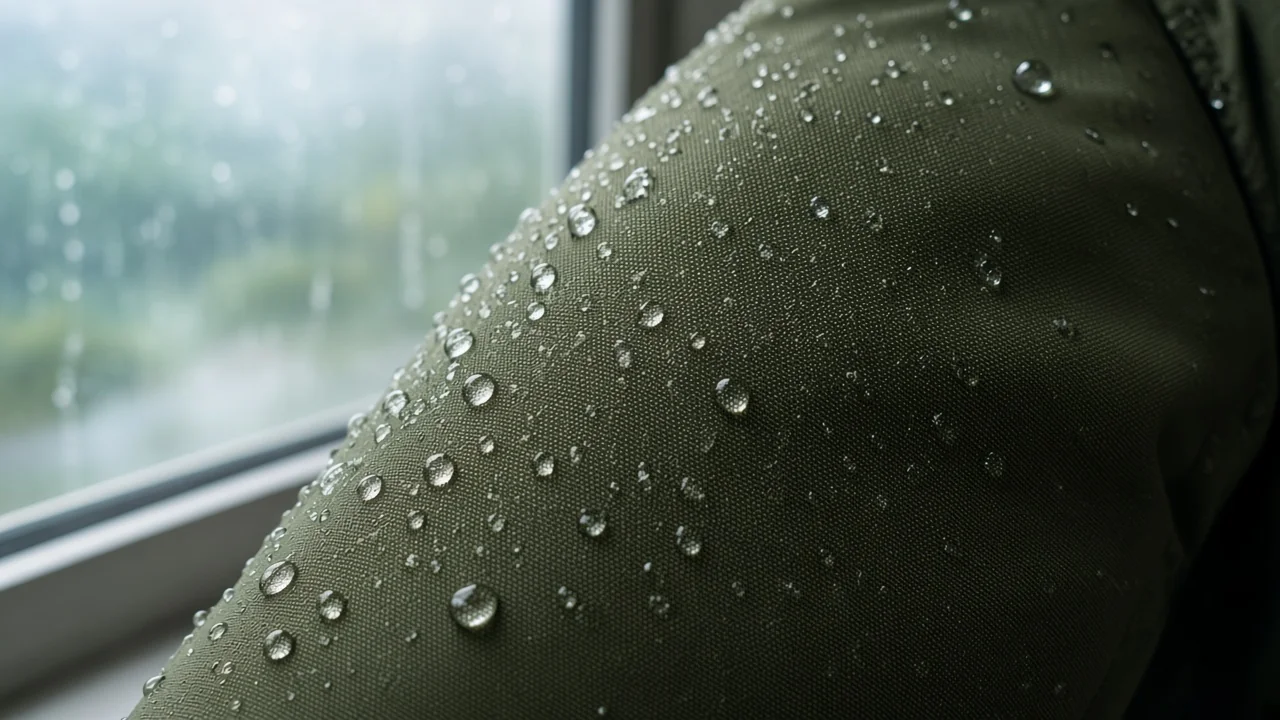
A durable water-repellent finish lowers how eagerly the face grabs droplets, so water beads and rolls. Outdoor softshells and many fashion “rain” jackets live here.
The finish is temporary in the real world: abrasion, washing, and dirt can weaken beading until the face wets out. On a laminated waterproof shell, a worn DWR can leave the outside looking soaked even when the membrane still blocks liquid — that is a face story, not proof that the barrier failed.
Dense or waxed naturals
Tight cotton canvas, waxed cotton, and some dense wools with wool / lanolin oils can shed a short shower. Waxed cloth is a treated special case: the wax helps, and it may need renewing over time.
Soft, open merino or untreated shirting cotton is not a reliable water-resistant type for apparel sampling language, even when a marketing line waves at “natural resistance.”
| WR type | What is doing the work | Typical apparel use | Common limit |
|---|---|---|---|
| Tight polyester / nylon | Dense construction + hydrophobic fiber | Commuter shells, fashion outdoor jackets | Prolonged rain or pressure contact |
| DWR face finish | Surface chemistry that beads water | Softshells, light-rain outer layers | Wet-out after wear/wash; not a membrane |
| Dense or waxed naturals | Tight weave and/or wax/oils | Waxed field jackets, heritage looks | Wax wear; hours of rain still soak |
Boundary Types Often Mislabeled as Water-Resistant
PU, PVC, PUL, and membranes are waterproof classes — useful to name, wrong to call WR-only.
Retail and DIY lists often dump every wet-looking textile into one “water resistant” bucket. For sampling, keep the boundary clear:
- Polyurethane (PU) coating or similar coatings put a polymer film on a face. That is a barrier construction, not a light beading finish.
- PUL / PVC and vinyl-coated cloths block liquid for covers, bags, and heavy outdoor panels. They are not shower-proof shirting.
- PUL (polyurethane laminate) bonds a thin PU film to a textile. Makers treat it as waterproof for wet bags and similar programs.
- Membrane / ePTFE laminates (including waterproof-breathable stacks) aim to block liquid water while moving some vapor. They sit in the waterproof-breathable lane, usually with a seam plan on finished rainwear.
Name these so they do not sneak onto a water-resistant-only RFQ. When your brief truly needs that barrier lane — weight, stretch, hydrostatic method talk — use the lightweight waterproof fabric guide instead of stretching a WR type past its job.
Match Water-Resistant Fabric Types to End-Use Scenarios
Match type to splash, mist, or pressure contact — not to marketing synonyms.
| End-use scenario | WR type that usually fits | Switch toward waterproof when… |
|---|---|---|
| City commute jacket, short drizzle | Tight polyester/nylon + DWR | Wearer sits in wet seats for long stretches or rides for hours in rain |
| Fashion outdoor shell, mist and splash | DWR face on synthetic | Brand promises storm-level dryness in copy |
| Heritage waxed look | Waxed cotton | Multi-day wet trail use without wax maintenance |
| Softshell mobility in damp air | DWR softshell-style face | Full taped-seam rainwear requirement |
| Pack panel / wet bag / cover | Not a WR-only type — use coated/PUL classes | Barrier is the job from day one |
A flight or baseball jacket that only needs to look dry after a short shower can live on a nylon water-repellent face. The same silhouette sold as all-day trail rainwear should not.
How Face Finishes Are Checked Without Confusing Waterproof Ratings
Spray-style checks score face wetting; they are not hydrostatic penetration ratings.
AATCC TM22 spray test methods spray water onto a taut specimen and score the wetted pattern against a standard chart. The method describes resistance to wetting — how dry the face stays looking — and is especially useful for water-repellent finishes.
It is not a substitute for asking how much water pressure the cloth held before liquid came through. Hydrostatic / water column methods belong to the waterproof conversation.
If a mill sheet only says “water resistant” with no method name, treat the phrase as unfinished until someone names what was run and which face was tested. This article does not invent spray grades or water-column figures for any Shengchao SKU.
When Water-Resistant Types Are the Wrong Spec
Prolonged rain, pooling, or sealed-seam rainwear need waterproof construction.
From the field: Outdoor users draw a hard line between a face finish and a barrier. In one widely cited camping discussion, people put it plainly: the membrane is waterproof; the DWR-treated shell face is water-resistant — and DWR “will repel water for a time, then wet out eventually.” That is user language for a spec switch, not a lab certificate on any one mill’s cloth.
Switch away from water-resistant-only types when:
- Rain will last for hours, not minutes.
- Water will sit in folds, pack straps, or seat contact.
- The finished garment must stay dry at stitch lines — sewing creates holes, so barrier programs need tape, weld, or another join method the mill supports.
Open weaves, untreated silk, and loose cotton soak quickly. They are not water-resistant types in any useful sampling sense.
Select Water-Repellent Nylon for Light-Rain Jackets
Use the published 70D nylon twill with a light-rain water-repellent finish — no invented grades.
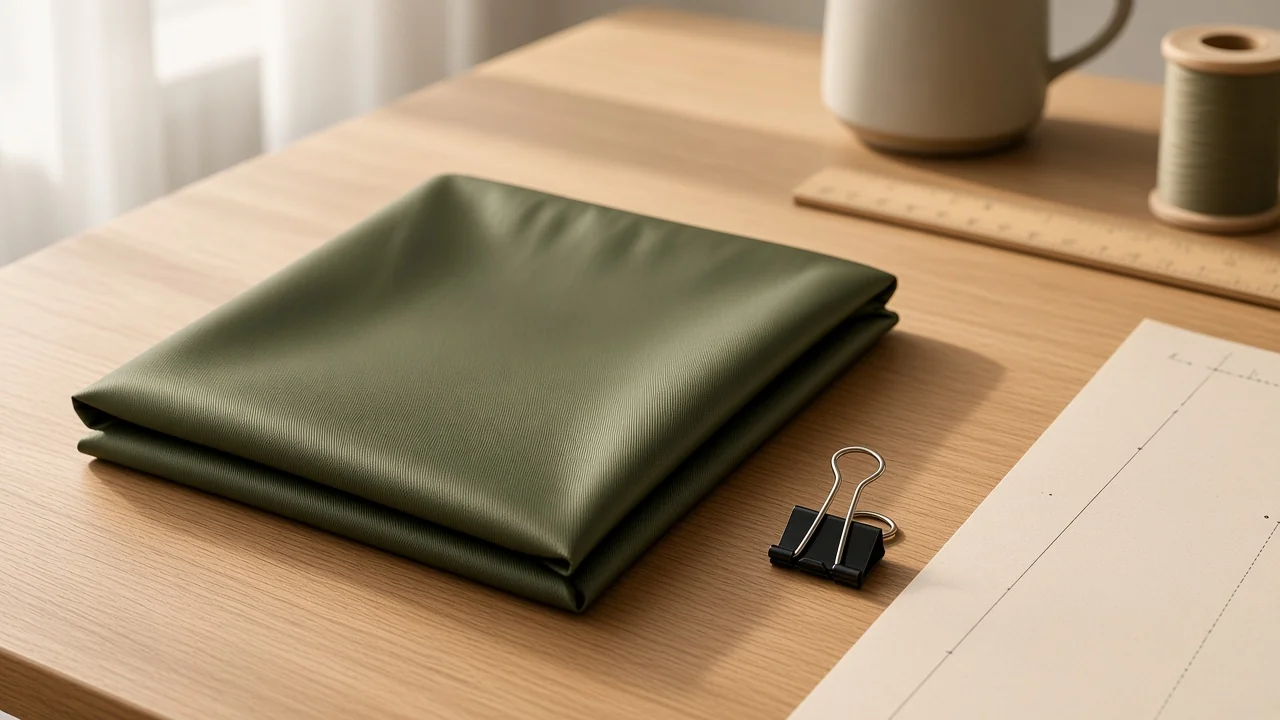
When the type you need is nylon with a water-repellent face for jackets that only see light rain and splash, Shengchao’s water-repellent material for jackets matches that job on the live product page.
The cloth is published as a 70D nylon twill for flight jackets, baseball jackets, and similar shells. Marketing on the page points to a water-repellent finish for light rain and splashes, with a breathable handfeel and abrasion-minded twill structure — not a hydrostatic storm rating.
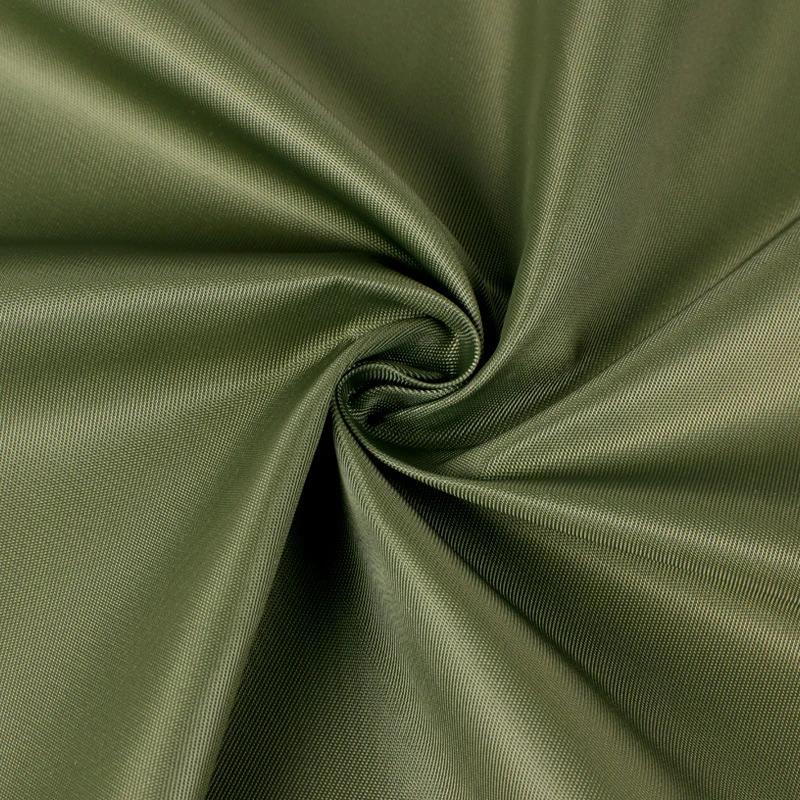
Published specs for this water-repellent nylon jacket cloth follow.
| Item | Published detail |
|---|---|
| Product name | 70D Nylon Twill |
| Composition | 100% Nylon |
| Yarn count | 70D × 70D |
| Density | 272T |
| Weight | 118 g/m² |
| Width | 145 cm |
| Applications listed | Flight jackets, baseball jackets, and similar |
| Stated finish job | Water-repellent finish for light rain and splashes |
The live page does not publish a spray grade or a hydrostatic value. Do not invent one in the tech pack.
If you need stretch waterproof nylon-spandex, a coated barrier, or a documented water-column method, this SKU is the wrong shortlist item — return to the waterproof fabric hub or the lightweight waterproof guide. Sample conversation can go through Contact Us once both sides have the end use and the published sheet in view.
FAQ
What are the main types of water resistant fabric?
Tight-weave polyester and nylon, DWR-treated faces, and dense or waxed naturals. They shed splash and short drizzle. Coatings, PUL, PVC, and membranes belong in the waterproof class, even when retail labels blur the words.
Is DWR the same as waterproof fabric?
No. DWR is a face finish that helps water bead. Waterproof constructions use a coating, laminate, or membrane intended to resist liquid under pressure, usually with a seam plan on finished rainwear.
Which fabric is most water resistant?
There is no single winner. Dense synthetics with a healthy water-repellent face often perform best for light-rain apparel.
“Most resistant” still fails the wrong weather. Match type to end use instead of chasing a universal ranking.
Which fabric is fully waterproof?
No common fiber name is fully waterproof by itself. Barrier programs usually mean coated or laminated constructions such as vinyl, PUL, coated nylon or polyester, or membrane stacks — and seams still decide whether the finished item leaks.
How is water resistance checked without confusing it with waterproof ratings?
Ask whether the lab ran a face-wetting / water-repellency spray method (such as the AATCC TM22 family) or a hydrostatic penetration method.
Spray scores how the face wets. Hydrostatic scores pressure. Do not treat one number as the other.
When should a buyer switch from water-resistant types to waterproof construction?
Switch when rain will last, water may pool, or stitch lines must stay sealed. A beading face finish is not that specification.
What nylon water-repellent option fits light-rain jackets on Shengchao’s catalog?
The live water-repellent material for jackets lists the same published nylon twill details and a water-repellent finish for light rain and splashes. It does not list a spray or hydrostatic grade.
Is polyester water resistant or waterproof?
Standard polyester can be water-resistant when the weave is tight and/or a water-repellent finish is present. Waterproof polyester usually means a coating or laminate was added. Fiber content alone does not settle the question.
References
- Waterproof fabric (Wikipedia) — coatings, laminates, membranes, and DWR wet-out context.
- AATCC TM22 Water Repellency: Spray Test (method summary) — face wetting / finish efficacy scope.
- Testing Different Types of Water Resistant Fabrics (Fabric UK) — qualitative WR types, pressure/seam caveats.
- r/CampingGear: DWR vs membrane (community discussion) — user language that DWR is water-resistant, not waterproof; wet-out over time. (If live Reddit returns ≥400 for bots, parent may swap to a Wayback capture at publish.)