



















































































































Fabric Pilling Resistance: Test Reports and Buying Checks
Fabric pilling resistance describes how well a textile retains a clean surface when rubbing causes loose fibres to gather into small balls. Buyers should compare the test method, exposure stage, preparation and appearance grade together. A grade without those conditions cannot tell you whether a brushed legging fabric will perform like a smooth uniform knit. The practical buying decision is to approve both the initial hand feel and the surface after a defined test, then connect that approval to the exact bulk article and colour.
This guide explains how to write that requirement, read a report and investigate a disappointing sample without turning a laboratory rating into an unsupported lifetime promise.
Separate pilling, fuzzing and abrasion
A pill is a compact cluster of entangled fibres attached to the fabric. Fuzzing describes the raised, loose surface fibres that can appear before distinct balls develop. A brushed surface may intentionally have a soft raised character from the start, so the original sample matters when deciding whether later change is objectionable. Photographing only the tested specimen hides that comparison. Keep an untouched control beside the exposed sample and examine them under the same viewing conditions.
Abrasion resistance asks a different question about wear under a specified rubbing action. A fabric may retain its strength while its appearance becomes unacceptable. Conversely, a surface that sheds its loose fibres can look less pilled while other damage progresses. For the underlying construction distinction, see our guide to knit and woven fabrics. Neither construction label alone supplies a pilling rating.
Choose a method before choosing a grade
ISO 12945-2 addresses surface pilling, fuzzing and matting using a modified Martindale method. Its identification should appear in the test request and report. Other methods create different movement and contact conditions. Substituting one apparatus for another because both reports contain the word pilling can create an unfair comparison. Ask the laboratory to explain the applicable method for the fabric and the customer’s specification before specimens are prepared.
The NEN description of this method confirms that these surface changes are the evaluation target. A buyer still needs an agreed exposure stage and acceptance requirement. Those commercial decisions should reflect the garment’s use and the customer’s quality expectations. Do not assume that a publicly quoted grade for upholstery, a different knit or a different test duration automatically belongs in a sportswear order.
Record any preparation such as washing before testing. A finished fabric tested as received and the same article tested after care are two different evidence points. They can both be useful, but they should occupy separate lines. If the specification asks for performance after care, an initial-state report does not close the requirement. Ask for the care procedure, number of treatments and specimen identity rather than accepting a handwritten statement that the fabric was washed.
Build a report that supports a purchase decision
| Report field | What the buyer checks | Action if missing |
|---|---|---|
| Article and lot | Report matches the proposed bulk fabric | Request traceable identification |
| Method and edition | Same procedure is used for comparisons | Ask the lab to confirm suitability |
| Preparation | As received or defined care treatment | Separate the two conditions |
| Exposure stage | Grade is tied to a stated test stage | Do not compare isolated grades |
| Surface and direction | Relevant face of the fabric was tested | Clarify face identification |
| Appearance record | Control and exposed specimens are retained | Request comparable photographs |
This is a purchasing checklist, not a reproduction of the standard’s operating procedure. The laboratory should follow its authorized method, while the buyer checks whether the evidence answers the actual order requirement. Retain the report alongside the approved physical sample, because a file name alone cannot establish that a later roll has the same construction and finish.
Why a softer surface needs its own approval
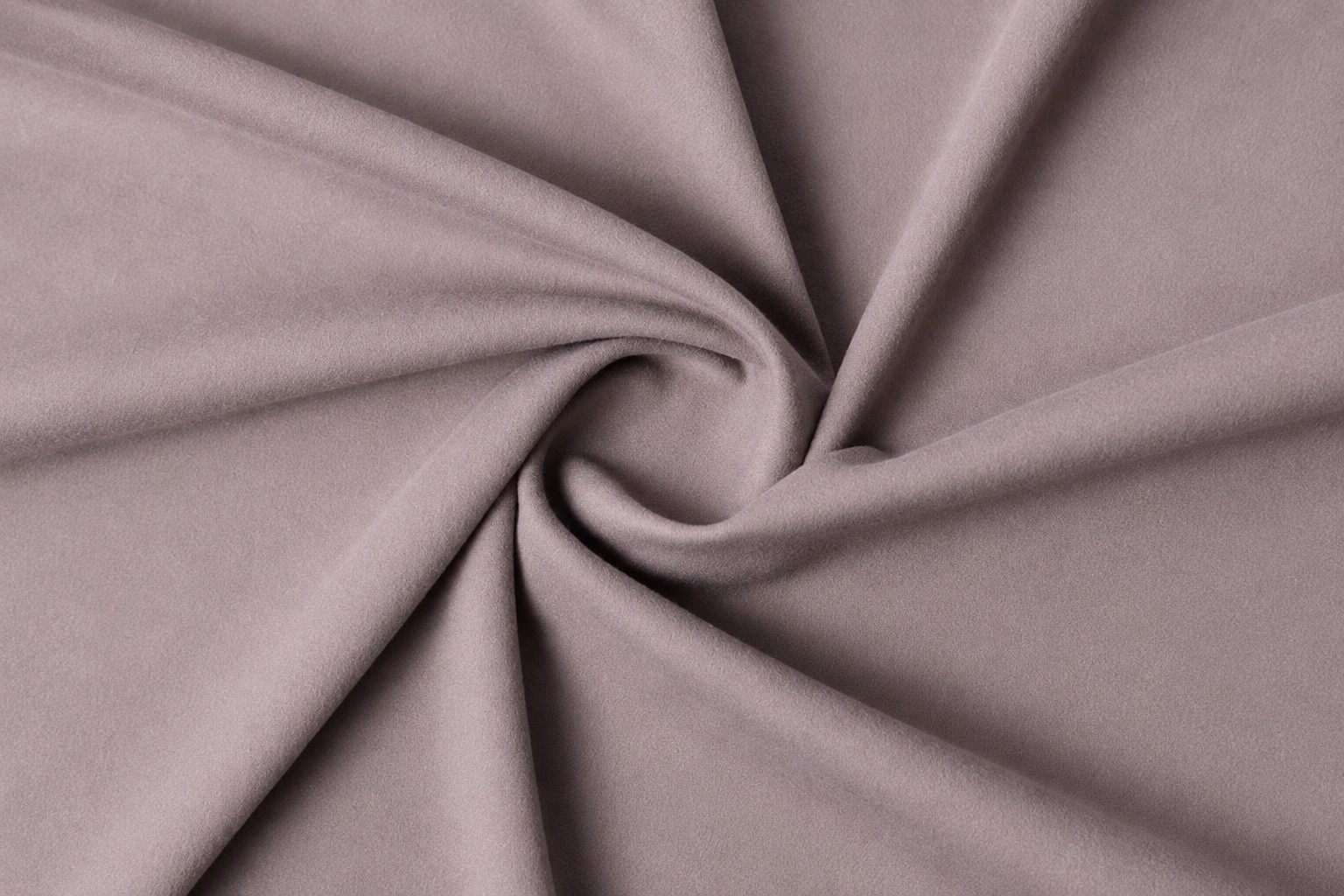
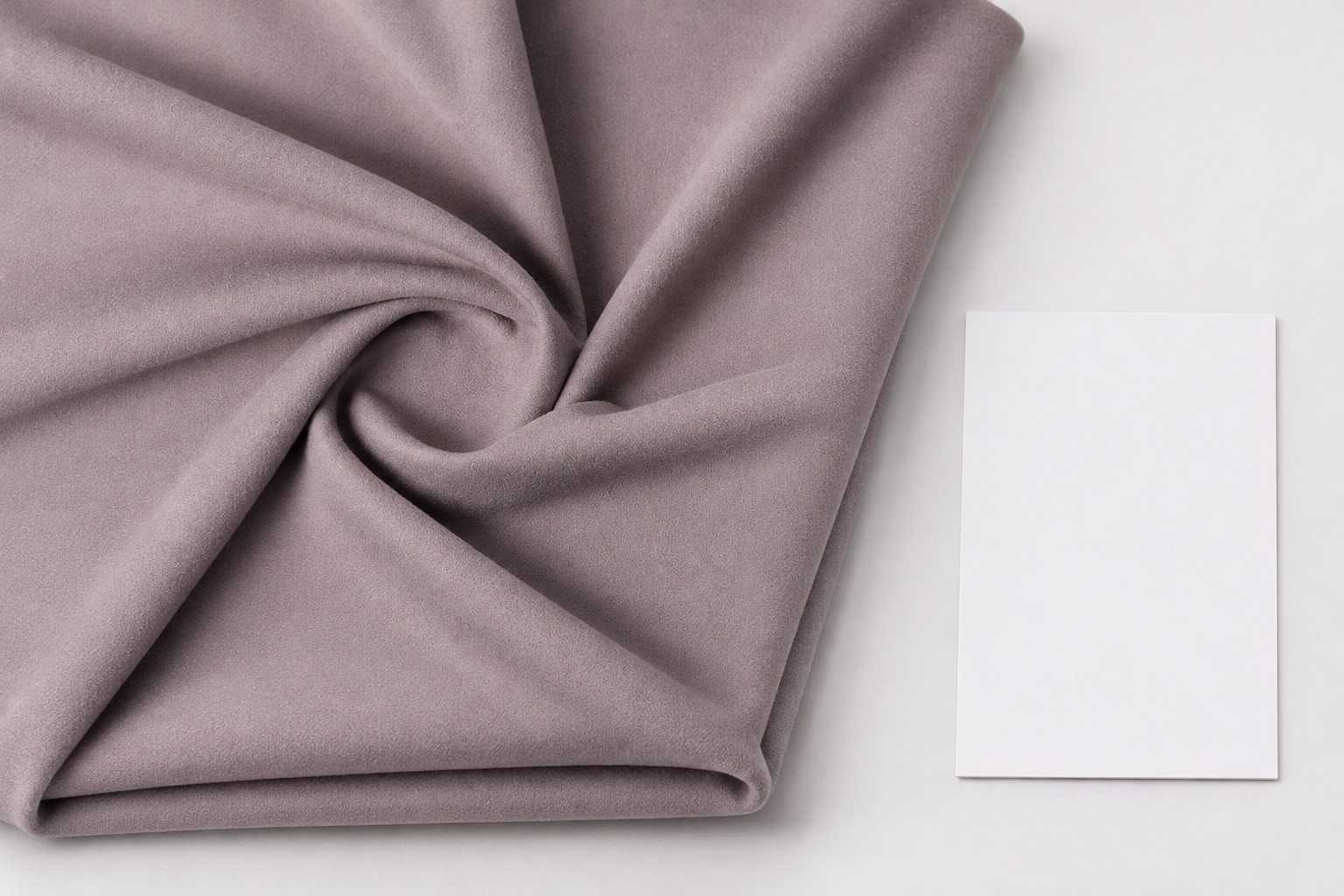
Our nylon-spandex double-sided brushed fabric provides a relevant sampling example: its visible character is a fine, soft raised surface. The product photograph establishes appearance, not a pilling result. Request an article-specific report and evaluate the approved brushing level on the supplied swatch. Do not describe a photograph as anti-pilling evidence or infer a grade from fibre composition.
Design teams often approve hand feel first, then ask purchasing to obtain maximum surface durability at the same price. Those aims need to be discussed on the same sample. If the supplier changes brushing, yarn or finishing to improve appearance retention, check whether the new version still delivers the required softness, shade and movement. An improvement in one property does not automatically authorize a change to the approved fabric.
A two-sided fabric also needs clear face identification. The inside and outside can encounter different contact surfaces in a garment. Specify which face receives the appearance requirement and whether both are relevant. Label controls before sending them out. A test carried out on an unspecified face may be technically well executed yet fail to resolve the buyer’s question about the visible garment exterior.
Use garment observations to target the next test
Record where a wear sample changes: inner thigh, waistband, underarm, bag contact or a broad front panel. These observations help separate a localized contact issue from a general surface change. Photograph the position on the garment and retain a flat fabric control from the same lot. Avoid rubbing a swatch by hand and calling that action a standardized pass or fail; pressure, contact surface and duration are uncontrolled.
When two candidates look different after a trial, check whether their reports used the same conditions before concluding that one fibre family is superior. Also compare article weight, surface finish and construction. The question is which complete fabric meets the intended program, rather than which raw-material name wins in every situation. Our fabric GSM explanation helps keep weight identification separate from a durability guarantee.
Movement can influence what the wearer notices, but an appearance test does not replace stretch evaluation. Tight panels and overstretched areas need their own review. Use the separate stretch and recovery checks when developing fitted apparel. Keep those results alongside pilling records instead of treating successful recovery as proof that a surface will remain unchanged.
Handle a borderline or failed result
First confirm specimen identity, method, preparation and exposure stage. A mismatch in any of these fields can explain an apparent disagreement without proving a production defect. Ask the laboratory to clarify the record and retain the original tested specimens. Do not request repeated tests until one result happens to meet the target; that approach hides uncertainty and makes the final approval difficult to defend.
If the result is confirmed, discuss a controlled revised sample. Give the revision its own code and identify what changed. Compare appearance, hand feel and other required properties before approving it. A finishing adjustment should be evaluated as a new candidate, not silently substituted into the original order. Where the buyer accepts a concession, document the exact article, lot and limitation so the concession cannot be reused for unrelated deliveries.
For bulk production, define how samples will represent rolls and lots before shipment. A development swatch is not automatically representative of every future batch. Agree who selects specimens, how they are sealed and where retained controls are stored. This gives both parties a practical way to investigate later disagreement. It also prevents a general promotional report from being used indefinitely after material or processing changes.
Watch a university explanation of pilling evaluation
NPTEL IIT Delhi’s lesson on pilling and abrasion explains the evaluation context. It is educational background, not a test certificate for the products shown here. Use it to understand why a method and endpoint must accompany an appearance assessment.
Keep an agreed appearance reference
Choose who has authority to approve appearance before bulk production begins. The laboratory can report an assessment, while the customer decides whether the documented result satisfies the program. Store the approved control in a labelled protective sleeve and keep the corresponding report number with it. If a later shipment looks different, compare it with that control before discussing a change to the acceptance requirement. This prevents a development sample, a revised sample and a bulk sample from gradually being treated as one interchangeable reference. Each approval should say exactly which material it covers.
Questions to resolve before ordering
Does a high pilling grade guarantee a garment lifetime?
No. It describes performance under stated laboratory conditions. Actual wear, care and contact vary. State the tested requirement accurately and support the garment program with relevant trials instead of converting test exposure into months or years of use.
Can brushed fabric be approved by touching it?
Touch is useful for initial hand feel, but it cannot establish appearance after rubbing. Approve the starting surface and the tested surface separately, using the same article and clear specimen records.
Should every colour use the same old report?
Ask the laboratory and customer to define coverage. Identify which colours and finishing routes the report represents. When processing or article details differ, do not assume an older report covers the change.
What should a sampling request contain?
Include garment use, article code, required face, intended care, method, exposure stage, acceptance requirement and retained-control arrangement. Request missing evidence explicitly. That produces a sample approval the mill, laboratory and apparel team can all understand.