



















































































































Fabric Drape: Lining Selection and Garment Approval Checks
Fabric drape is the way a textile hangs, folds and conforms under its own weight. It matters when a lining must follow a garment smoothly rather than hold it away from the body or pull the outer layer into an unwanted shape. Buyers should compare representative samples under consistent conditions, review any measured drape results with their test geometry, and then check the shell and lining together in a garment. Fabric weight, softness and shine alone cannot establish drape. The right choice is the one that supports the intended silhouette, movement and care requirements, rather than the sample with an isolated attractive number.
Describe the silhouette before asking for better drape
Better drape can mean different things to different teams. A softly falling skirt, a clean tailored jacket and a lightly structured blouse do not need identical folds. Describe the desired appearance in concrete terms: how close the lining should sit to the shell, whether the hem should move freely, and where unwanted bulk or ridges would be visible. Keep an approved physical garment or fabric reference where possible.
Ask the designer and garment maker to separate drape from other preferences such as a cool touch, a slippery surface or a particular lustre. Those qualities may influence material selection, but they are not direct measurements of hanging shape. A clear appearance brief reduces the risk that the supplier optimizes hand feel while the finished garment still hangs differently from the intended design.
Why weight and softness do not tell the whole story
Fabric drape involves the interaction of weight and mechanical behaviour, including resistance to bending and shearing. Research recorded by the University of Leeds on garment drape behaviour examines relationships between garment appearance and measurable properties. Its findings support using more than a weight label when discussing how a material will hang; they do not provide a universal prediction for every lining.
Two fabrics with similar mass per unit area may form different folds. Their construction, finishing state and directional behaviour may differ, and the garment introduces further constraints. Conversely, a lighter material is not automatically the more fluid option in every comparison. Check the actual finished sample instead of ranking all polyester, viscose or other materials by fibre name alone.
Understand what a drape coefficient can describe
A common drape assessment supports a circular specimen on a smaller horizontal disc and evaluates its projected outline. In the supported-disc approach, the reported coefficient describes the projected area relative to the specimen and support areas under the stated calculation. Ask the laboratory to identify the method, dimensions, calculation convention, face, conditioning and repeats before comparing results.
A larger remaining projected area generally represents a sample that stays more spread out in that setup, while a smaller one represents more collapse around the support. The interpretation applies within the same defined procedure. Do not compare numbers from different specimen sizes, supports or modified coefficients as though they were necessarily the same property on the same scale.
The Hong Kong Polytechnic University study of woven fabrics with seams considers how seams affect drape behaviour. This is a useful reminder that a loose circular fabric specimen does not contain the same constraints as a sewn garment. Use a laboratory result to inform development, then verify the actual assembly.
Compare lining samples with a repeatable setup
| Control in the comparison | What to keep consistent | What to record |
|---|---|---|
| Sample identity | Known construction and finishing state | Reference, colour, lot and source |
| Sample geometry | Same shape, dimensions and support | Size and support arrangement |
| Orientation | Agreed direction and face | Direction marks and exposed face |
| Condition | Comparable relaxation and care state | As received or specified pre-treatment |
| Observation | Same viewing position and lighting | Outline, fold shape and visible asymmetry |
| Garment trial | Same shell, pattern and assembly details | Changes in silhouette, movement and hem behaviour |
This is a development comparison plan, not a substitute for a named standard or a claim of laboratory accuracy. A quick tabletop comparison can help shortlist materials if its limits are clear. Do not label a casual photograph with a formal drape coefficient or imply that an uncalibrated visual check produced a certified result.
Start with a verified lining reference
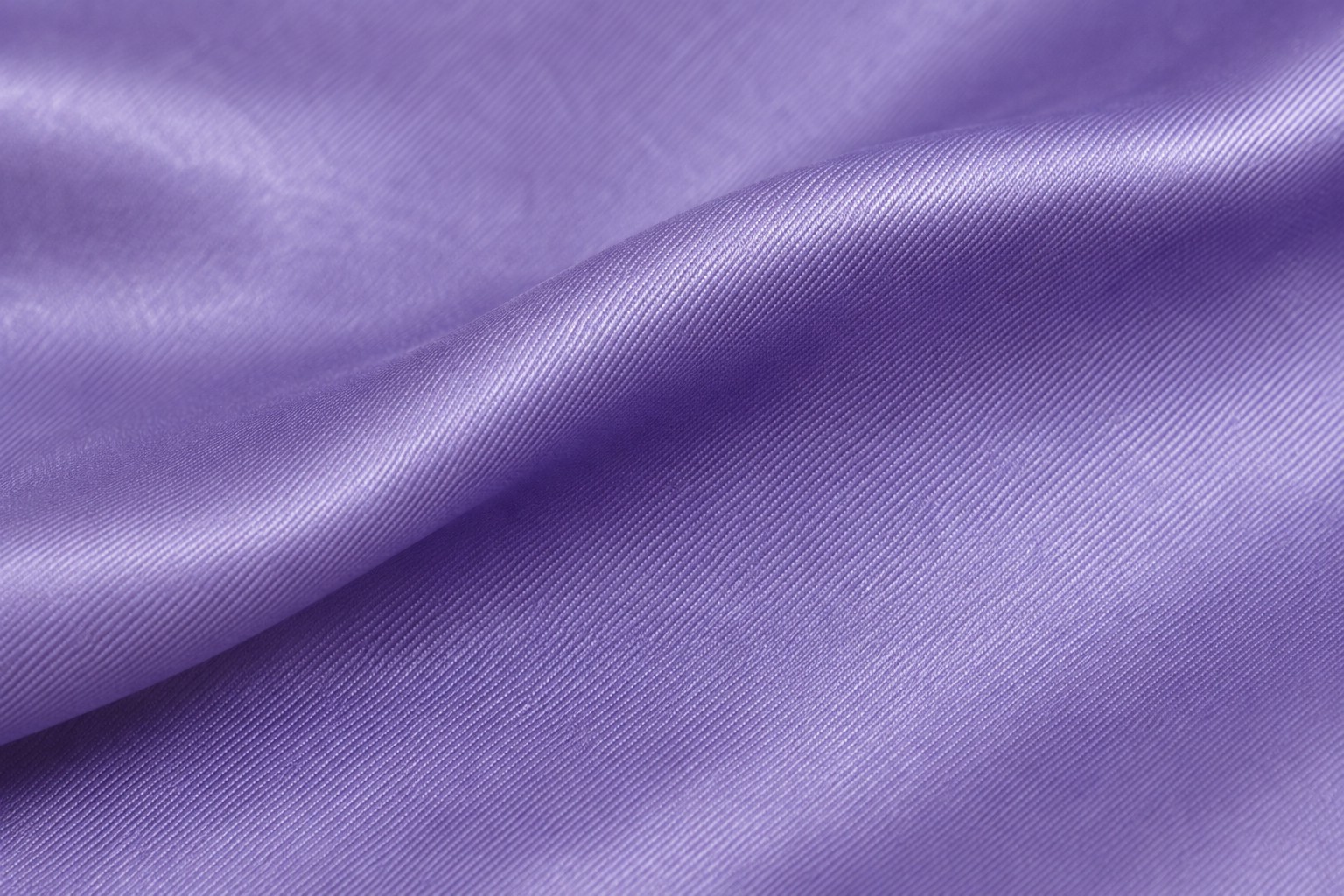
Shengchao’s fashion fabric lining page identifies a polyester twill lining reference. Its visible fine weave and lustrous surface are useful for discussing the intended material appearance. They do not establish a measured drape value or prove that the lining will suit every dress, blouse or jacket. Request a physical sample in the proposed finishing state.
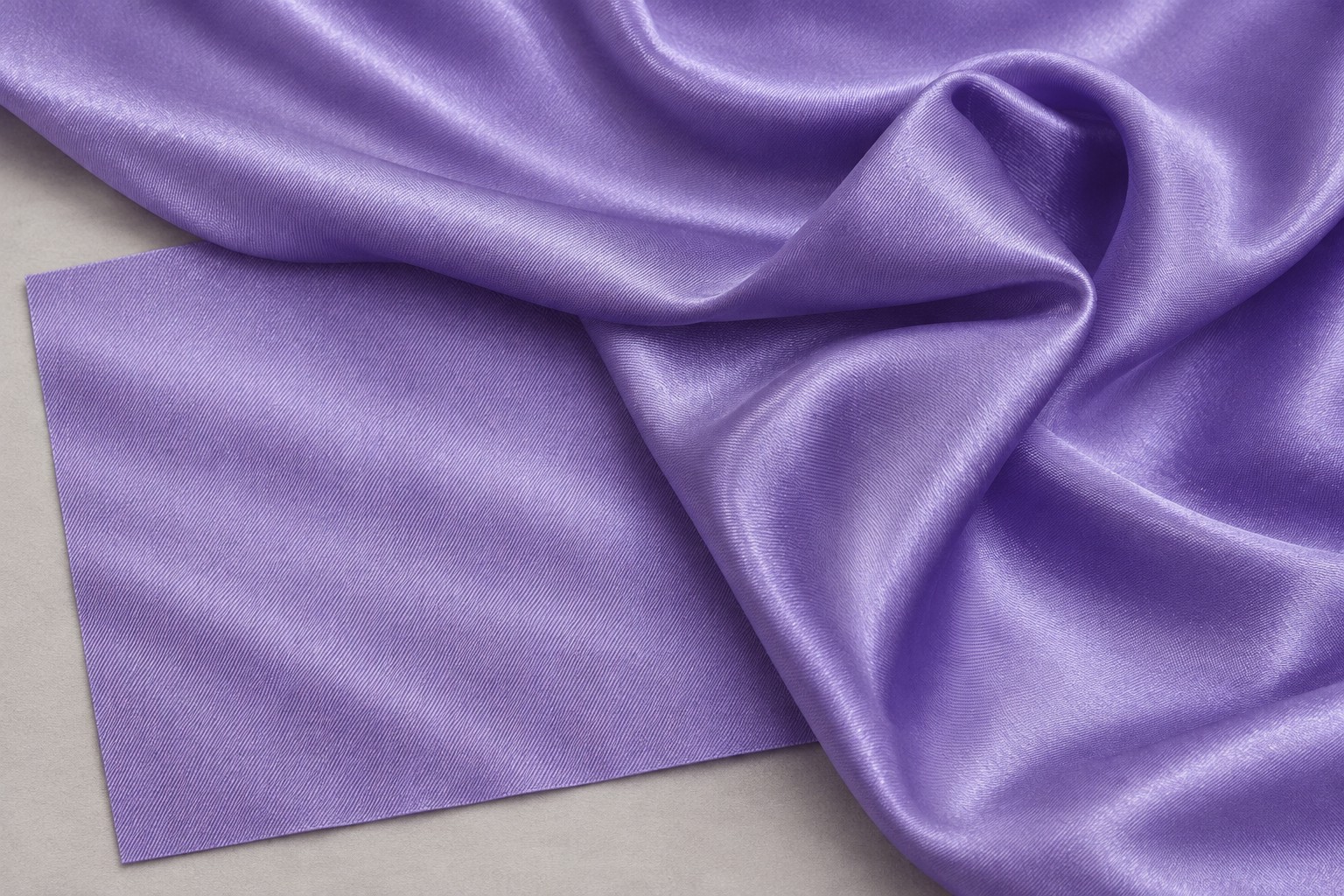
Evaluate it alongside the selected shell and an approved reference, rather than choosing from photographs alone. Folded studio images depend on arrangement and lighting. A dramatic fabric swirl can make a sample look fluid, while a tight fold can make another look structured. Neither establishes how the material will move when a full garment panel is constrained by seams, attachments and body shape.
For the wider selection decision, consult the lining fabric types guide. Use fibre, construction and intended function to organize candidates, then assess the specific samples. The lining needs to support the garment’s complete brief, including care, assembly and comfort, as well as its hanging appearance.
Assess the shell and lining as a pair
A lining is not suspended independently once it is inside a garment. Its attachment points, pattern dimensions and relationship to the outer shell influence what the wearer sees. Make a representative assembly with the intended seam allowances, hem arrangement and attachment positions. Check the garment at rest and during the movements that matter to the design, such as walking, sitting or reaching.
Look for pulling, twisting, localized bulk, folds showing through the shell and a lining hem that does not sit as intended. Investigate the cause before rejecting the material. A pattern or attachment issue can resemble a fabric problem. Comparing the same lining in an adjusted assembly can help the development team distinguish material behaviour from the way the garment was made.
Keep drape, stretch and support functions distinct
A lining that bends easily is not necessarily stretchy, and a stretch lining does not automatically provide the required silhouette. Check whether the garment needs extension and recovery in addition to a certain hanging shape. Do not substitute a soft non-stretch sample into a fitted design solely because it feels pleasant in the hand. Its movement requirements need their own evaluation.
Similarly, a lining and an interfacing serve different purposes. The lining versus interfacing comparison explains the functional distinction. If a design needs support in selected areas, specify that construction deliberately. Adding support materials changes the assembly being assessed, so recheck its appearance rather than assuming that the original loose lining sample predicts the finished result.
Recheck appearance after the intended care process
Record whether the sample is being compared as received or after the proposed care treatment. Evaluate the relevant finished garment state, since finishing and care may alter how layers interact. Use the same agreed process for comparison samples, and let the garment maker and laboratory determine the appropriate procedure. Avoid exposing a material to arbitrary heat or chemicals simply to create an informal stress test.
Dimensional differences between shell and lining can affect appearance even if the original drape comparison was acceptable. The polyester versus viscose lining guide offers a complementary material-selection discussion. Confirm care compatibility on the actual selected pair rather than assigning a universal advantage to one fibre category. Keep any measured dimensional results separate from the drape observations.
Make the approval record useful for repeat orders
Retain the approved fabric and garment references with sample identity, finishing state and date of approval. Save consistent front, side and movement observations where practical. If formal drape measurements were used, keep the full report and procedure details. A purchasing note that only says soft and flowing is difficult to reproduce when a later batch is reviewed by a different team.
Agree which changes require renewed sampling: a different construction, finish, weight target or lining supplier can affect the comparison. Do not treat an old approval as transferable without checking scope. When bulk material appears different, compare it with the retained reference in the same setup before escalating. This helps distinguish a material difference from a change in presentation or garment assembly.
Watch an introduction to low-stress fabric mechanics
NPTEL IIT Delhi’s Evaluation of Textile Materials course includes lecture 39 on low-stress mechanical properties. It provides educational background for understanding bending and related behaviour behind fabric handle and drape. The lesson supports the concepts discussed here; it does not supply test results for any Shengchao lining.
Frequently asked questions
Does a lower fabric weight always mean better drape?
No. Weight interacts with construction and mechanical behaviour. Compare representative finished samples and decide what hanging shape suits the garment.
Can two drape coefficients be compared directly?
Only after checking the method, specimen and support geometry, calculation convention, sample condition and reporting basis. Different procedures can produce numbers that are not directly comparable.
Can a fabric photo prove how a lining will hang?
No. Arrangement and lighting influence the photograph. Use physical samples, consistent comparisons and a representative shell-and-lining assembly.
Why check a sewn sample after measuring loose fabric?
Seams, attachments, pattern dimensions and the outer shell constrain the lining. A garment trial shows whether the selected combination produces the intended silhouette and movement.