



















































































































Fabric Thickness Measurement: Pressure, GSM and Sample Checks
Fabric thickness measurement determines the distance between a textile’s faces under a defined measuring pressure. The pressure is essential: a soft, compressible fabric can produce different readings when pressed differently. Thickness is also separate from fabric weight in grams per square metre, so one cannot be calculated reliably from the other without additional information. For buyers comparing brushed, knitted or layered materials, request the method, pressure, sample condition and reported units with the result. Use a representative finished sample, then check whether its bulk and handling suit the intended product rather than approving it from a folded photograph.
Decide why the thickness value matters
A material may need to pass through a sewing operation, fit a layered construction, feel sufficiently substantial or match an approved reference. Each purpose calls for a clear development question. Write down where thickness affects the product before asking for a number. This helps the supplier and laboratory identify whether a standard comparison, a product-specific requirement or an additional assembly trial is needed.
Keep visual bulk and measured thickness separate in the brief. A tightly folded photograph may look thick because several layers are stacked, while a strongly lit surface can make a thin material look substantial. Request the actual single-layer sample and a traceable result. If the requirement concerns an assembled item, identify its layers and construction rather than assuming a fabric-level figure describes the whole product.
Record pressure beside every thickness result
The ASTM D1777-26 thickness standard explains that textile thickness depends on applied pressure. A result without that condition is therefore incomplete for comparison. ISO 5084:1996 likewise concerns measurement under specified pressure and states exclusions, including coated fabrics and nonwovens. Confirm applicability rather than selecting a method from its title alone.
Ask the laboratory to identify the required presser-foot arrangement, measuring conditions and relevant material-specific method. Do not supply an improvised pressure or call a handheld reading equivalent to a controlled report. A quick internal check can be useful for screening, but its limitations should remain visible. Formal approval requires conditions that the buyer and supplier can reproduce and relate to the selected requirement.
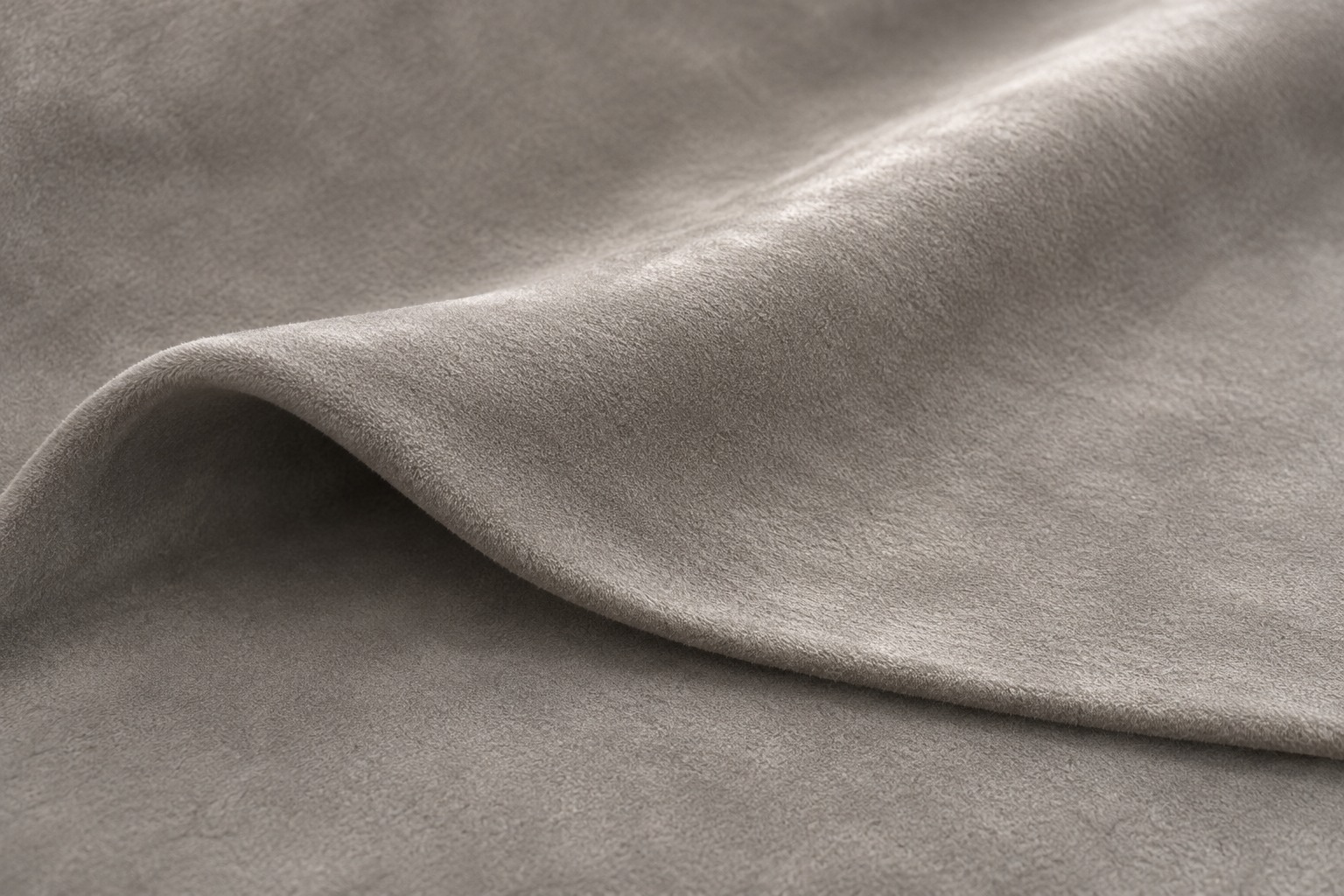
Distinguish thickness, GSM and compressibility
GSM describes mass per unit area; thickness describes a dimension under the stated measurement conditions. Two materials can have the same mass per area while distributing it differently through yarn size, structure, finish or surface pile. Do not use a GSM specification as proof that a proposed replacement has the same bulk. Request both values where both matter and compare the physical samples.
Compressibility adds another question: how does the material respond when loaded? A thickness result taken at one pressure does not fully describe that response. If the application depends on cushioning or compression behaviour, discuss the appropriate additional evaluation with the laboratory. Keep the resulting measurements separate rather than presenting one convenient thickness value as a complete description of fabric handle.
| Property or record | What it tells the buyer | What else to ask |
|---|---|---|
| Thickness | Dimension under stated conditions | Method, pressure and units |
| GSM | Mass per unit area | Whether bulk also meets the brief |
| Compression response | Behaviour under the chosen loading assessment | Relevant test and loading conditions |
| Surface finish | Identity of the proposed finishing state | Whether the tested sample includes it |
| Layer assembly | Which materials were measured together | Whether the production assembly matches |
| Variation | How the reported specimens differ | Sampling plan and acceptance agreement |
This table is a guide to separate measurements. It does not supply a conversion or a universal acceptable range. Agree the relevant requirement for the product and material with the buyer, then request evidence in the same format from each supplier.
Inspect the actual finished fabric
Shengchao’s double-sided fabric product reference offers a starting point for a sampling discussion. Its visible soft grey surface is useful for identifying the sample to request. Confirm the current construction, fibre declaration and finishing details with the supplier before approval; neither a product name nor a photograph establishes a measured thickness or compression result.
The knit and woven construction overview provides broader context for comparing structures. Use that context to organize the material options, then assess their finished samples. Do not assume that all knitted fabrics are thicker than woven fabrics or that a soft-looking material necessarily provides more useful bulk in the intended assembly.
Prepare and identify representative specimens
Record the product reference, colour, lot, finishing state and sample source before testing. Ask the laboratory how much fabric it requires and how it should be delivered. Keep the material clean and avoid creases, stretching or handling that could change the assessment area. Where the surface has a face and reverse, identify them using a convention that does not interfere with measurement.
Retain a matching physical comparison. If the sample has already been washed, pressed or otherwise treated, record that history instead of describing it as as-received material. When the development question concerns a treatment effect, plan matching before-and-after specimens and keep their preparation comparable. A result is only useful for purchasing when its connection to the proposed production material is clear.
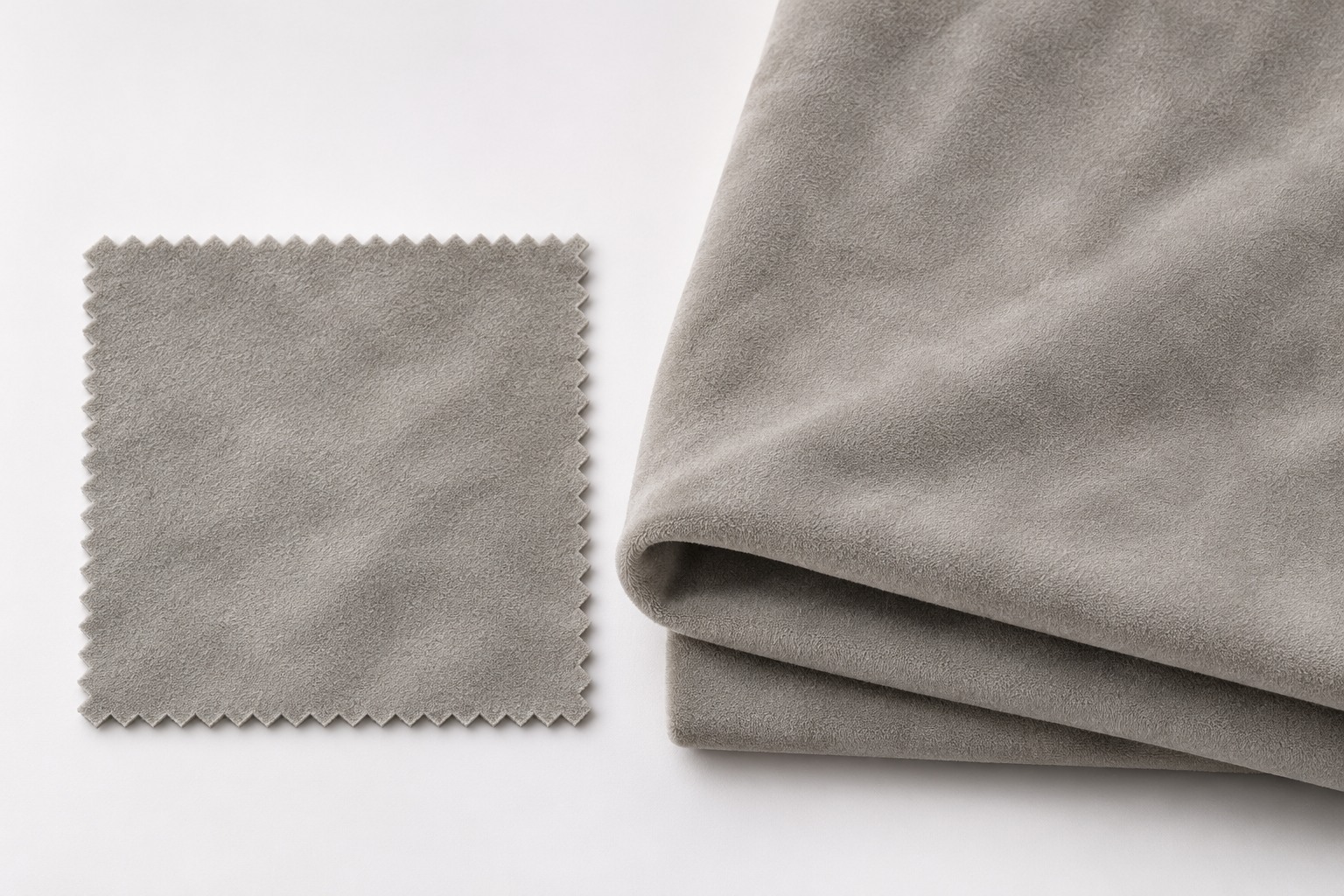
Discuss sampling and variability before testing
A single convenient point may not represent a textured or variable fabric. Let the selected method and agreed sampling plan determine the measurements rather than choosing the fullest-looking fold or the thinnest edge. Ask how the laboratory will report individual observations and the summary result. Identify any unusual surface areas or construction features that require attention.
If the report gives a range, retain it with the average instead of copying only the most favourable number. Discuss how the buyer will handle variation and uncertainty before release. Do not invent a tolerance after seeing the result. Where the material must meet a product-specific limit, identify its source and explain whether it applies to the fabric, a seam area or an assembled component.
Compare reports with matching conditions
Check the method edition, pressure, sample preparation, units and layer count before ranking supplier results. A more compressed measurement should not automatically be described as a thinner material. If one report omits an important condition, obtain clarification or a suitable repeat assessment. Keep the original result and the clarification together so the purchasing comparison remains auditable.
When laboratories disagree, first establish that the specimens represent the same lot and finishing state. Ask the laboratories to review their instructions and measurement arrangements. A controlled comparison on retained material may resolve the difference more effectively than repeatedly measuring unrelated swatches. Record the agreed interpretation and any additional evidence needed before the buyer approves bulk production.
Connect thickness with handling and construction
The fabric GSM guide explains the separate mass-per-area specification. Keep it beside thickness when both influence cost, handling or product consistency. A replacement that matches weight can still feel different or behave differently at a folded edge. Review those observations with the pattern and production teams using actual samples.
The fabric drape guide addresses hanging and folding behaviour. Thickness alone does not establish drape. Where the product needs a particular silhouette or layered appearance, make the relevant sample assembly and inspect it. Avoid approving an entire construction from one physical property while ignoring stiffness, stretch, surface condition or the interaction between layers.
Verify the proposed production use
Prepare a representative sample with the intended number of layers, seam details and finishing process. Check the points where accumulated bulk matters, such as folded edges or joins, without assigning an unsupported numerical threshold. Record any handling difficulty and the conditions under which it occurs. If the material is changed to improve processing, reassess the complete product requirement.
Keep development observations separate from standardized test values. A sewing trial can show a practical assembly issue, while a thickness report supports a defined measurement comparison. Both can be useful when their scope is clear. Do not label a casual trial as a laboratory result, or treat a favourable laboratory number as proof that every machine setting and construction detail will work.
Write a useful request for repeat orders
A clear enquiry identifies the sample, lot, finishing state, intended use, required method and measurement conditions. Attach the approved material reference and the customer’s acceptance requirement. Ask the laboratory to flag missing information before testing. For layered products, state whether the order concerns component thickness or the combined assembly, and preserve that distinction in the purchase record.
For later orders, compare the material against the same approved reference and conditions. Review whether a change in yarn, construction or finishing affects the earlier evidence. If a discrepancy appears, retain the affected lot and request a focused comparison. The objective is consistent product development, not a collection of unrelated numbers that happen to share the same unit.
Watch how knitted fabric properties are assessed
Vidya-mitra’s INFLIBNET lesson on knitted fabric testing includes fabric thickness among physical assessments. It provides educational context for controlled measurement and sample identity. Use the current applicable method for the actual laboratory work rather than treating the lesson’s examples as a production specification.
Frequently asked questions
Can thickness be calculated directly from GSM?
Not reliably from GSM alone. Structure, material and finish affect how mass is distributed; request a measured thickness under specified conditions.
Why must measuring pressure be stated?
Textiles can compress under load. Different pressures can produce different apparent thicknesses, making an unstated condition unsuitable for comparison.
Is ISO 5084 suitable for every textile material?
No. Its public scope has exclusions. Confirm the method’s applicability to the specific material with the laboratory.
Does one thickness result describe fabric handle?
No. Drape, stiffness, compression, stretch and surface properties may need separate checks for the intended product.