



















































































































Best Fabric for Bikinis When Cups, Straps, and Bottoms Must Recover
The best fabric for bikinis is a four-way stretch nylon-spandex or polyester-spandex knit, chosen by whether the two-piece lives on the beach or in a chlorinated pool. Nylon-spandex is the usual fashion-bikini hand, while polyester-spandex is the usual pool and print body. Later sections cover two-piece recovery, wet opacity, care, and a mill knit whose published table is polyester, not nylon.
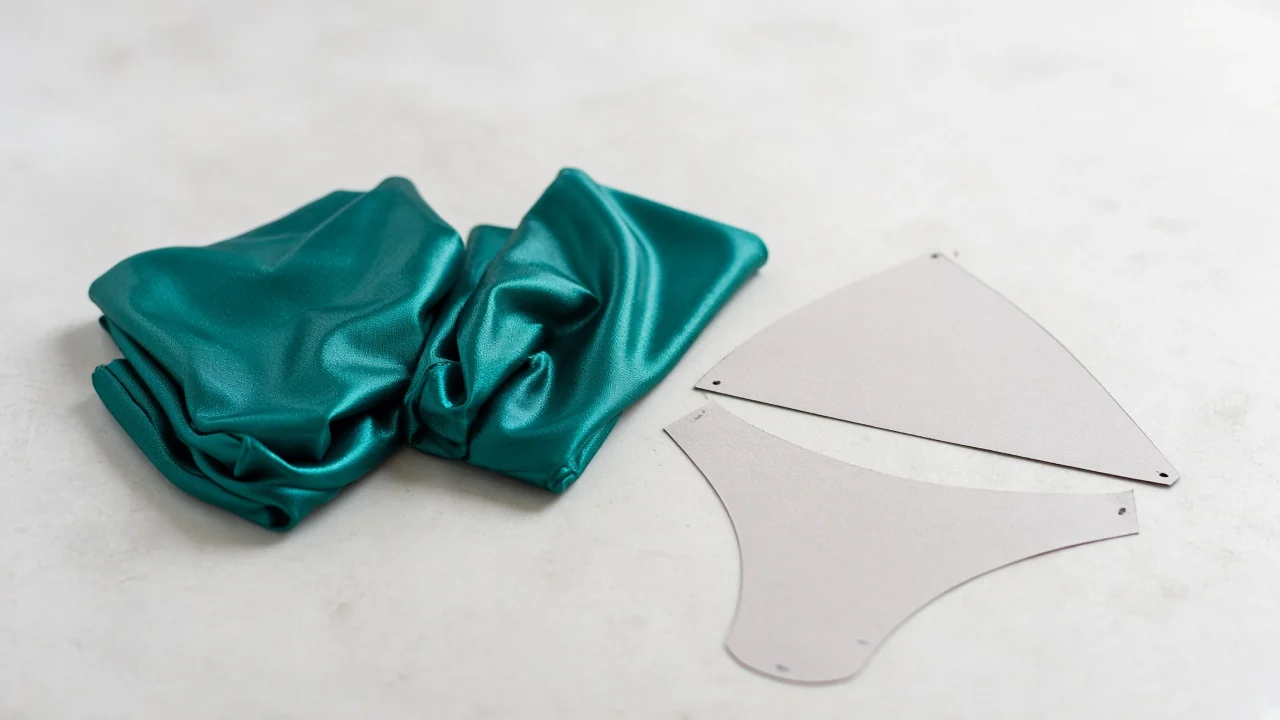
What Best Means on a Two-Piece Bikini Program
Best, for bikini fabric, means the knit still covers and snaps back after the top and bottom have been worn as separate garments.
A two-piece has no long torso to hide a weak rebound. Cups, straps, and high-cut legs take the stretch load. A fiber name on a hangtag does not replace that recovery check.
Bikini pattern work often uses negative ease, so the paper is drafted smaller than the body and the knit is expected to close the gap. If a sample was graded on a livelier stretch than the bulk roll, cups gap and legs cut in. Lock the stretch on the actual bikini fabric before you grade.
For a wider swimwear-fabric map that is not two-piece-specific, see What Fabric for Swimwear. Composition names sit on What Fabric Are Swimsuits Made Out Of. One-piece bathing-suit shortlists stay on Best Fabric for Bathing Suits.
Nylon-Spandex Versus Polyester-Spandex for Bikini Programs
Nylon-spandex is the beach and fashion default; polyester-spandex is the pool and print default.
Nylon (polyamide) is the soft, drapey bikini fabric most resort lines want next to skin. Polyester is the workhorse when chlorine, bright prints, and color hold sit higher than a buttery hand. Both need spandex, or the two-piece will not hug and return.
Trade sheets often talk about nylon-spandex near 80/20 or 82/18, and about polyester-spandex with a lower stretch share. Those percentages are other mills’ habits, not a Shengchao spec. Swatch the recovery on the roll you will cut.
| Program job | Nylon-spandex | Polyester-spandex |
|---|---|---|
| Beach and resort hand | Soft drape, fashion sheen | Slightly firmer, more technical |
| Frequent chlorinated pool | Ordinary grades age faster | Stronger color and shape story |
| Sublimated or high-contrast print | Can blur or fade earlier | Usually the print body |
| Two-piece recovery demand | Excellent when the knit is well built | Very good; prove snap-back on straps |
A triangle set sold for a beach club week can start on nylon-spandex. A printed sport bikini that will sit in hotel and municipal pools should start on polyester-spandex, then confirm lining and recovery on the actual GSM.
Swimwear fabric buyers still ask for nylon spandex fabric when they want that fashion hand. Write the end use as bikini or two-piece on the brief so the mill does not ship a dry-land stretch jersey.
Why Bikini Cups, Straps, and High-Cut Legs Lose Recovery First
Small panels and skinny straps fail first because they are asked to stretch farther, more often, than a long one-piece body.
Spandex is the polyurethane stretch filament that snaps a knit back after a sit, a dive, or a pull-on. Chlorine is an oxidant. A University of Rhode Island textiles interview with former AATCC president Martin Bide puts that chemistry next to dyes and the spandex in bathing suits, and notes that multi-color and print fade shows earlier than a solid.
From the field: Pool swimmers who wear tankinis, bike shorts, and other separates describe the elastic going “sproingy” and the pieces turning saggy in about three months on cheap stretch goods (r/Swimming archive). Replies on that thread point people to polyester or polyester-and-PBT labels, and they accept a less clingy hand in exchange for a longer pool season.
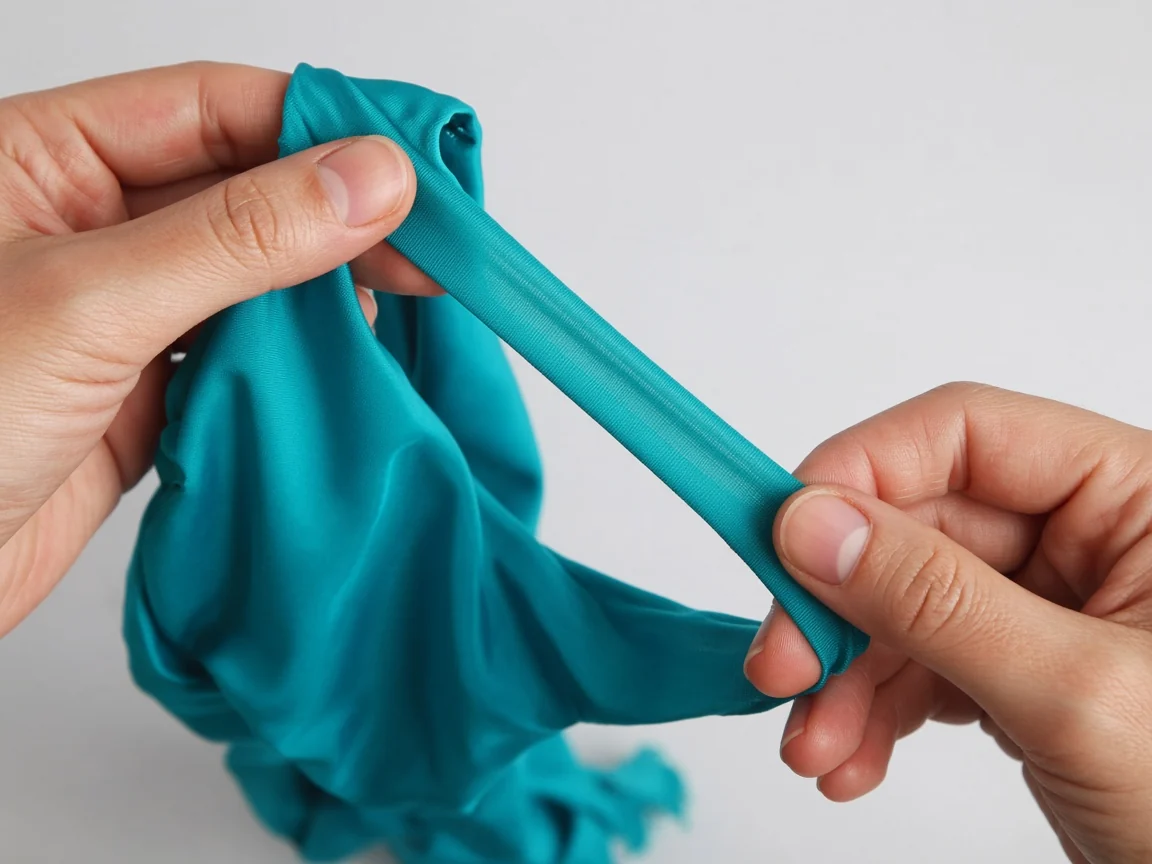
Four-way stretch is what lets a cup and a high-cut leg move together. If the knit only stretches one way, seams torque and the bottom rides. Pull a strap-shaped strip on both axes and watch whether it returns, not only whether it extends.
Weight, Lining, and Wet Opacity on Small Bikini Panels
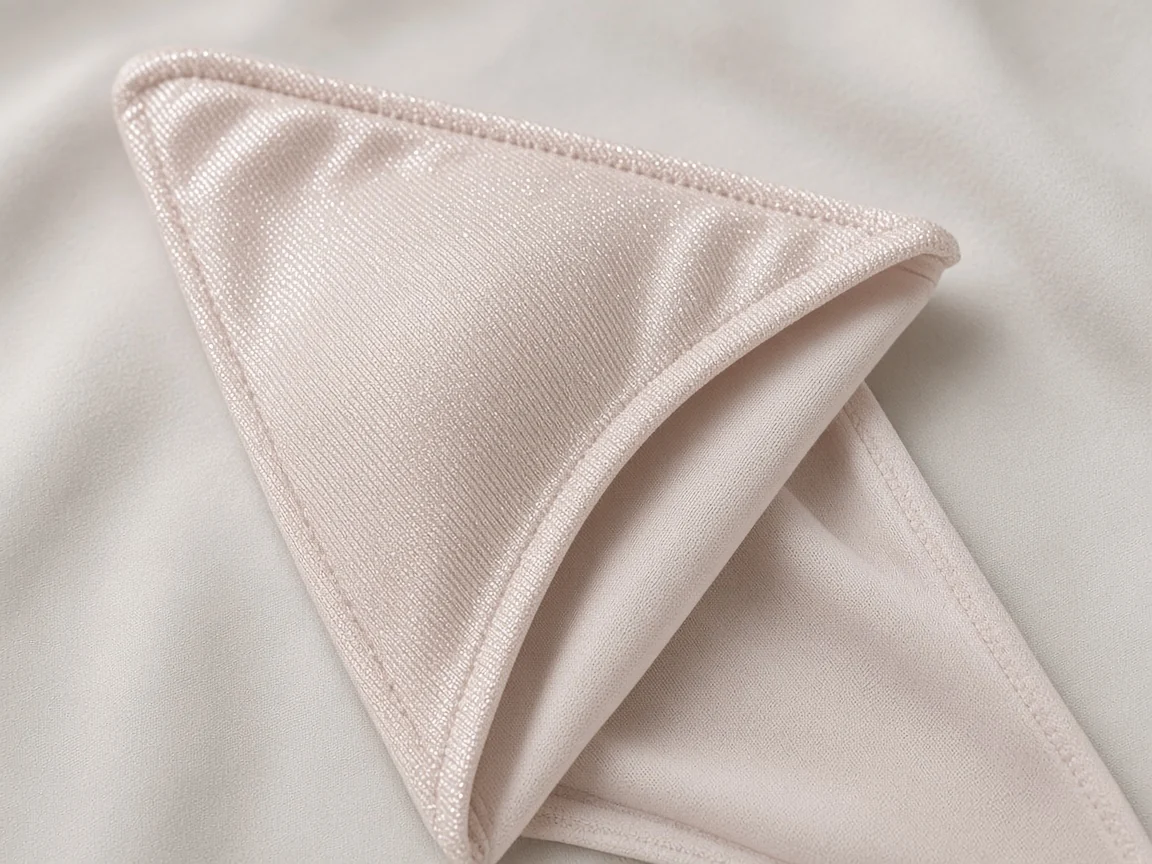
Wet opacity on a bikini is a small-panel problem: a pale triangle has nowhere to hide once water and stretch thin the knit.
GSM is grams per square meter, the usual weight proxy. Fashion swim talk often sits around 180–200 g/m²; a 150 g/m² knit can feel like lingerie. That band is trade language. It does not authorize unpublished mill numbers.
Swim lining is a swim-grade inner knit or mesh under the shell. Sewists who build suits still specify lining plus swim elastic, not cotton-wrapped lingerie elastic that soaks and dies in chlorine. Line pale triangles, white, and any thin strap-adjacent cup even when the outer knit feels dense in the hand.
| Two-piece zone | What to ask |
|---|---|
| Pale triangle cup | Swim lining; stretch the wet swatch |
| High-cut bottom | Recovery at the leg; lining if the knit goes sheer |
| Skinny strap / tie | Four-way stretch and snap-back on a narrow cut |
| Printed sport top | Polyester-spandex body plus lining if the print is light |
Care That Actually Changes a Bikini Knit’s Life
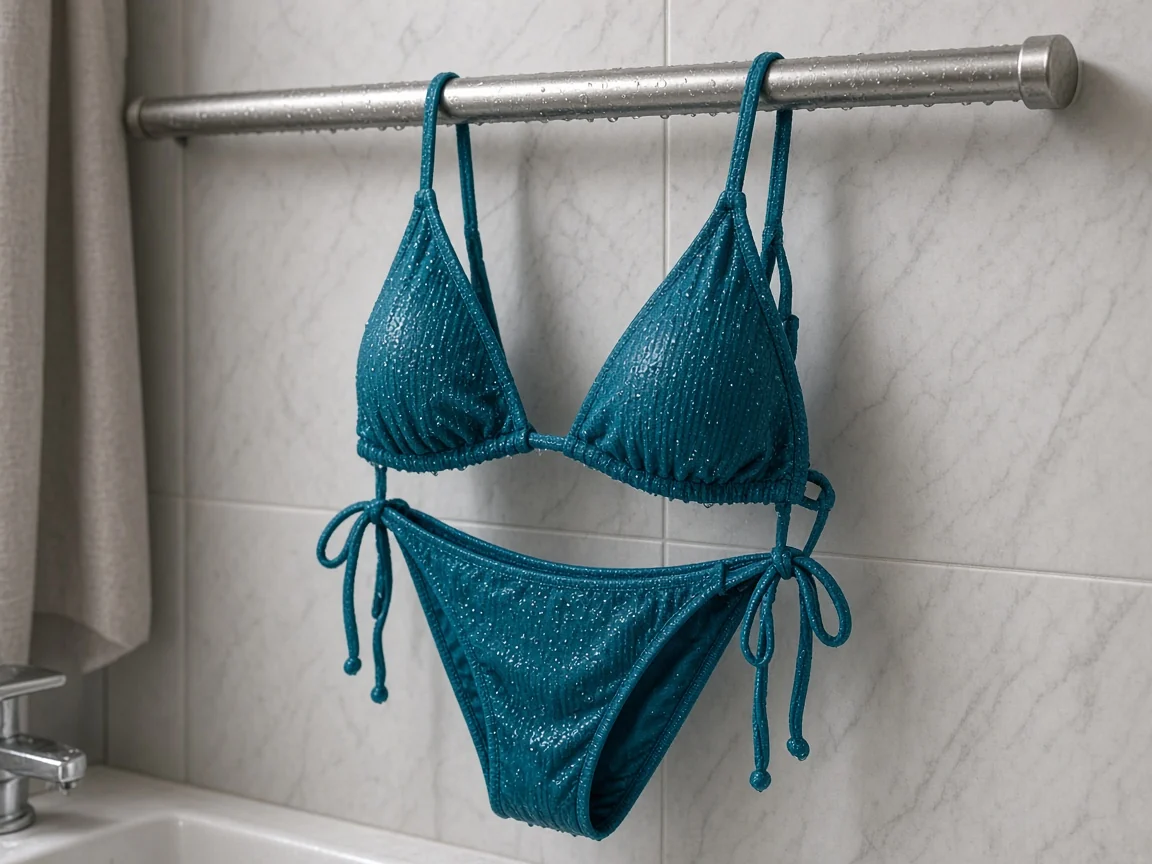
Cool rinse, no wring, and no dryer change how long the spandex in a bikini knit keeps its snap.
US pools are not a mild soak. CDC Healthy Swimming tells home operators to hold pH 7.0–7.8 and a chlorine concentration of at least 1 ppm in pools, at least 2 ppm when cyanuric acid or stabilized products are used, and at least 3 ppm in hot tubs. That is disinfection chemistry, not a fabric-hour rating, but it is the water a pool two-piece actually meets.
Bide’s lab note still applies: swimwear is under constant assault from light, salt, sand, and chemicals, so nobody should expect a suit to last for years. Heat from a dryer or a hot tub often finishes the stretch fiber after chlorine has already started the work. Rinse in cool fresh water before the knit dries on the body. Press water out. Dry flat in shade.
Choose Lycra Swimwear Fabric for Pool and Print Two-Pieces
Lycra Swimwear Fabric is the mill next step when the two-piece brief is polyester-spandex for pool or print, not a luxury nylon-hand beach-only capsule.
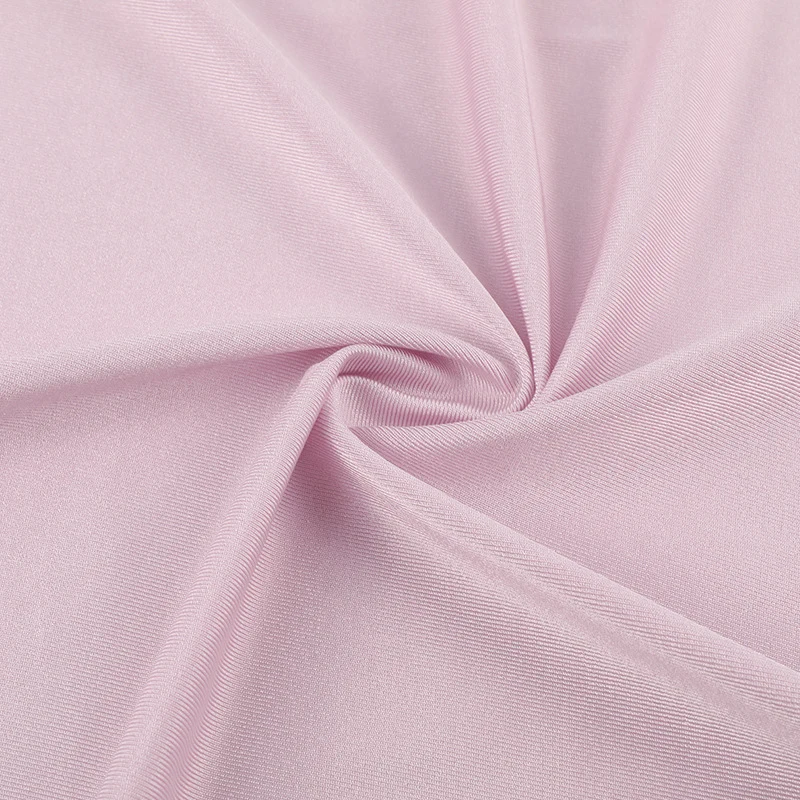
The live specification table lists 88% polyester, 12% spandex. The same table lists 180G. Width is published as 150cm. The page also states sun-resistant, moisture-wicking, and quick-drying language on a glossy polyester knit.
The product title uses Lycra. The table is polyester. Do not order this SKU as if it were an 80/20 nylon fashion brief. Twelve percent spandex is a published stretch share; prove recovery on cups and legs with a swatch before you grade a skimpy pattern.
Skip this SKU when the line must feel like a documented nylon-majority bikini fabric, or when the tech pack demands chlorine-hour lab numbers this product page does not publish. Browse other knits on the swimwear and bikini fabric hub, or contact Shengchao only after composition, GSM, and end use are already written down.
FAQ
What is the best fabric for bikinis?
A four-way stretch nylon-spandex or polyester-spandex knit. Choose nylon-spandex for beach and fashion hand. Choose polyester-spandex when the two-piece will live in chlorinated pools or carry a sublimated print.
Is nylon or polyester better for a two-piece?
Neither wins every brief. Nylon is softer and drapes more. Polyester usually keeps color and shape longer in pool programs. The better pick is the one that matches the wear environment and still recovers on cups and legs.
Is 100% polyester good for a bikini?
Plain polyester without a stretch fiber is a poor bikini body. It can be durable in water, but it will not hug or rebound. Swim two-pieces almost always blend polyester or nylon with a double-digit share of spandex.
Why do bikini tops and bottoms sag in the pool first?
Cups, straps, and high-cut legs are small, high-stretch parts. Chlorine oxidizes spandex, and heat plus wringing finish the job. Pool users of separates often notice sag sooner than people who wear a long one-piece.
Do two-piece styles need lining even around 180G?
Often yes on pale or thin triangles. Weight in the 180G fashion band does not guarantee wet opacity on a small panel. Add swim lining where the swatch goes sheer when wet and stretched.
What chlorine level are pool bikinis swimming in?
CDC guidance for home pools is at least 1 ppm chlorine, at least 2 ppm with stabilizer, and at least 3 ppm in hot tubs, with pH 7.0–7.8. That is why a pool two-piece is a chemistry problem as well as a fashion problem.
How should a bikini knit be rinsed so spandex lasts longer?
Rinse in cool fresh water soon after the swim. Press, do not wring. Dry flat in shade. Keep the dryer and hot-tub heat off the stretch fiber.
When is Lycra Swimwear Fabric the right mill pick?
When you want the published polyester-spandex 88/12 knit at 180G and 150cm for a pool-facing or printed two-piece. It is the wrong first pick for a nylon-hand luxury beach brief.
References
- Martin Bide, University of Rhode Island — Summertime: A true test for textiles
- CDC Healthy Swimming — Home pool and hot tub water treatment and testing
- r/Swimming community discussion (Wayback archive) — “Chlorine resistant” bathing suits: Are they worth it?
Humanizer audit: PASS
Second self-pass: no new facts added; no claim IDs in reader prose; problem-led two-piece voice kept; invented hotel anecdotes omitted.