



















































































































Fabric Air Permeability: Units, Pressure and Buying Checks
Fabric air permeability describes how much air passes through a defined fabric area under a stated pressure difference. Buyers must read the result together with the test method, pressure, units, specimen condition and tested assembly. It is a useful material property, but it is not interchangeable with moisture wicking, water-vapour resistance or overall garment comfort. A visible mesh structure suggests a reason to investigate airflow; it does not supply a measured value.
This guide explains how to compare reports, avoid unit mistakes and prepare a sampling request for sportswear mesh or layered apparel. The aim is to approve the actual material under a common test basis rather than purchase a vague breathable label.
Read the property before reading the number
ISO 9237 describes determination of fabric permeability to air and applies across a range of permeable textiles. ASTM D737 likewise addresses textile air permeability. Their public descriptions help identify the property, but a buyer still needs the complete test conditions and an appropriate laboratory procedure to interpret a particular result.
The pressure difference drives air through the specimen. A result without that condition is incomplete for comparison. If one supplier gives a number at one pressure and another uses a different pressure, converting units alone does not make the two measurements equivalent. Ask for testing on the agreed basis or a technically justified comparison instead of choosing the larger number automatically.
The tested area and specimen arrangement also belong in the report. An open structure can be sensitive to how the sample is mounted or which local area is selected. The laboratory should apply the authorized method and identify any deviation. A casual blowing demonstration may show that air can pass, but it cannot establish a contractual permeability result.
Keep airflow separate from moisture and comfort
Air permeability concerns movement of air through the material under the test conditions. Moisture wicking concerns liquid movement, while water-vapour measurements address another transport process. These properties can all be relevant to apparel, but none should silently replace the others. A buyer asking for cooling comfort should first define the garment use and determine which evidence is needed for that use.
Our sportswear fabric overview provides the broader material-selection context. For an airflow requirement, narrow the discussion to a defined article and test basis. If the design also needs sweat management, use the separate wicking versus quick-dry explanation to prepare that part of the brief. Keep the resulting approvals in separate fields.
Overall comfort also depends on garment construction, fit, layers and the environment. A high airflow value is not automatically the correct target for every panel. A ventilating back section and a wind-exposed front can have different design needs. The apparel team should set the intended function before deciding whether more or less permeability is desirable.
Check units without losing the test conditions
Reports may express airflow per unit area in different units. Keep the original result and units in the comparison sheet, then add any converted value as a separate field. Never overwrite the original. The conversion must be dimensionally correct, and the pressure difference must remain visible beside both values. This makes the comparison easier to audit when another team reviews it later.
As a unit illustration only, 1 litre per square metre per second corresponds to a superficial velocity of 1 millimetre per second: a litre is 0.001 cubic metre, and dividing by one square metre leaves 0.001 metre. This arithmetic does not describe a Shengchao product or an acceptance limit. It also does not account for a change in pressure or specimen state.
| Report field | Question to resolve | Comparison rule |
|---|---|---|
| Method | Which procedure and edition? | Confirm a common basis |
| Pressure difference | At what pressure was flow measured? | Do not hide differing pressures |
| Units | Volume flow per area or equivalent velocity? | Preserve original and converted values |
| Specimen condition | Initial, cared for or otherwise prepared? | Keep conditions separate |
| Assembly | Single layer or actual combination? | Match the intended application |
| Article identity | Which lot, finish and face? | Link the report to the delivery |
The table describes information needed to interpret a report. It does not reproduce method settings or prescribe a universal minimum airflow. Agree the commercial requirement with the customer and laboratory before testing, especially when the garment has several panels with different functions.
Use a real mesh article as the sample reference
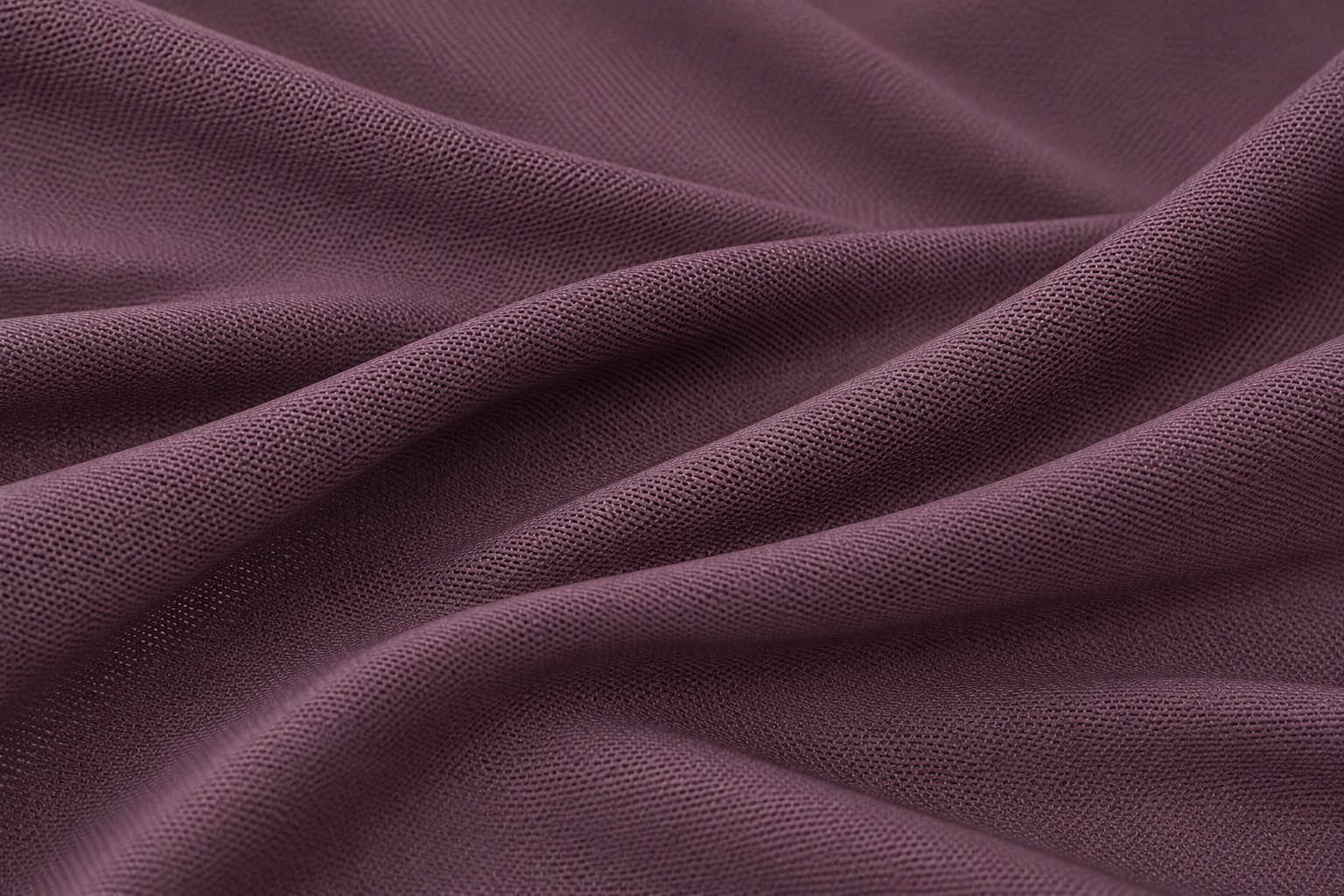
Shengchao’s nylon-spandex mesh fabric provides a relevant material for sportswear sampling. Its product image shows a fine regular mesh, and the public specification identifies nylon and spandex. The picture does not establish an airflow rate. Request a current article-specific report and a physical swatch before attaching a numerical breathability statement to the product.
Review the physical mesh sample at its supplied scale. Identify the face, relaxed condition and article code before selecting specimens. Use photographs to communicate surface character, then rely on the tested specimen for performance. A visually open fabric and a measured high-permeability fabric are related ideas, but they are not the same kind of evidence; the report must identify which actual material was evaluated.
For a fitted sports garment, also identify whether the test is intended to describe a relaxed specimen or another specified condition. Do not stretch a swatch during a sales demonstration and compare it with a report for an unstretched sample. Any nonstandard condition should be agreed and clearly labelled so the result does not appear to be an unmodified standard test.

Evaluate the actual layered combination
A garment may place mesh over another fabric, add a lining or introduce printed areas. A single-layer report does not automatically establish airflow through that complete assembly. Ask the laboratory which configuration should be tested to answer the intended question. Record the order and orientation of layers so the arrangement can be reproduced.
Do not add or average individual layer values to predict an assembly result. That shortcut ignores how the layers interact and how the test is configured. If the customer needs assembly evidence, request it directly. Separate component reports can still help development, but they should be labelled as component information rather than presented as a measurement of the finished panel.
Finishing can also change the basis of comparison. A development sample tested before a later production treatment may not represent the delivered material. Record the approved finish and request confirmation of report coverage. If the route changes, discuss renewed evaluation with the customer and laboratory. The useful approval follows the complete article rather than a familiar fibre label.
Connect airflow with the rest of the specification
Air permeability should sit beside weight, width, appearance and movement requirements. Improving airflow at the expense of another essential property may not produce an acceptable garment. Our fabric GSM guide helps identify the weight requirement without treating weight as a universal quality score. Compare the complete shortlist against the actual program rather than ranking one property in isolation.
For trial garments, note which panels use each article and preserve component codes. If wear feedback differs from the laboratory ranking, investigate fit, layering and use conditions before dismissing the data. The lab result may be valid while the garment question is broader. Good records allow the development team to understand that difference without inventing a new performance claim.
Resolve missing or inconsistent data
If a supplier provides only a number, request the missing report fields first. If the result is near an agreed acceptance boundary, ask the laboratory how the sampling and reporting should support the decision. Do not select a favourable isolated value from several measurements while ignoring the method’s required treatment of results.
For repeat orders, define the coverage of existing evidence. Identify changes to construction, finishing or sourcing that would require a fresh review. Retain an approved control and connect it to the report. This lets a future buyer distinguish an unchanged repeat from a new article that happens to use the same commercial name.
Watch a university lesson on clothing heat transfer
NPTEL IIT Delhi’s lesson explains clothing comfort in the context of thermal transmission. It helps place airflow within the wider garment problem; it is not an air-permeability test procedure or a certificate for the mesh shown here.

Example wording for an airflow inquiry
Ask for an article-specific air-permeability report stating method, pressure difference, units and specimen condition. Identify whether the question concerns one material or a layered panel. If only development data are available, ask which production version they represent and who will confirm coverage for the order. This wording prevents a quotation from substituting a general breathable description for the specific measurement the apparel team needs. Keep any missing field visible until the laboratory or supplier resolves it.
Frequently asked questions
Can different pressure results be compared after unit conversion?
Not directly. Unit conversion does not remove the difference in test pressure. Obtain results on a common basis or a justified technical comparison.
Does mesh appearance prove an airflow value?
No. The photograph shows structure, while a report establishes performance under identified conditions.
Can individual layer values predict a finished panel?
Do not assume so. Request testing of the relevant assembly when that is the customer’s requirement.
Does higher permeability always mean better comfort?
No. The correct target depends on garment function, fit, layering and use conditions. Define the intended function before approving the value.