



















































































































Fabric Bending Stiffness: Reports and Suiting Sample Checks
Fabric bending stiffness describes how strongly a textile resists being bent under defined conditions. For apparel buyers, it helps distinguish a fabric that supports a structured shape from one that folds easily, but it does not replace a garment trial. A useful report identifies the method, fabric direction, preparation and finishing state rather than giving an isolated number. Before approving a replacement suiting fabric, compare representative finished samples against the agreed reference and check the intended garment assembly. Neither a heavy appearance nor a fibre blend printed on a product page establishes the material’s bending performance.
Start with the garment decision
Specify what the material needs to do: support a jacket front, form a clean trouser line or fold comfortably at a cuff. These are different development questions. Record the construction, lining and any planned support material before commissioning a test. A stiffer cloth is not automatically better; the required balance depends on the silhouette and the wearer’s movement. Ask the pattern team which areas deserve particular attention and retain an approved physical sample.
Give the supplier observations that can be investigated. For example, a replacement may collapse at an edge that previously held its shape, or a folded area may feel too resistant. Photograph the same garment position and identify the affected material lot. Those observations help define a comparison, but they should remain separate from a standardized measurement. Avoid translating an informal description such as “firm hand” into an invented laboratory limit.
Understand what the laboratory measures
The public scope of ASTM D1388-23 distinguishes a measured bending length from a calculated flexural rigidity. It provides cantilever and heart-loop procedures and notes that these procedures generally suit woven fabrics better than knits. Ask the laboratory which option fits the material and the purchasing requirement. The complete method governs specimen preparation and calculation; a public summary is not a substitute for its instructions.
A cantilever assessment allows a strip to bend under its own weight as it extends from support. The result concerns that arrangement, not every possible bend in a garment. Keep the test option with the reported value when comparing quotations. If the buyer’s requirement names one procedure, do not silently replace it with another simply because the laboratory has different equipment available.
Separate stiffness from weight and thickness
Mass per area, measured thickness and bending behaviour answer different questions. Weight helps define how much material is present per unit area; thickness describes a dimension under a stated pressure. Neither specification alone proves that two cloths bend alike. A finished material can look substantial in a folded image while behaving quite differently when cut into a garment panel. Request the properties that the development decision actually requires.
| Record | Purchasing use | Follow-up question |
|---|---|---|
| Bending assessment | Compare resistance to folding | Which option and direction? |
| Mass per area | Identify the weight specification | Does the report match the tested lot? |
| Thickness | Review bulk at joins | What measuring pressure was used? |
| Finishing state | Identify the supplied condition | Was the final treatment included? |
| Garment trial | Check practical shape and movement | Were the intended layers assembled? |
This is a decision checklist, not a conversion table. It gives no universal stiffness target. Agree acceptance with the buyer using a suitable method and an approved product reference. Where several properties matter, record them separately so a favourable weight value cannot conceal an unresolved handling problem.
Check a real suiting sample
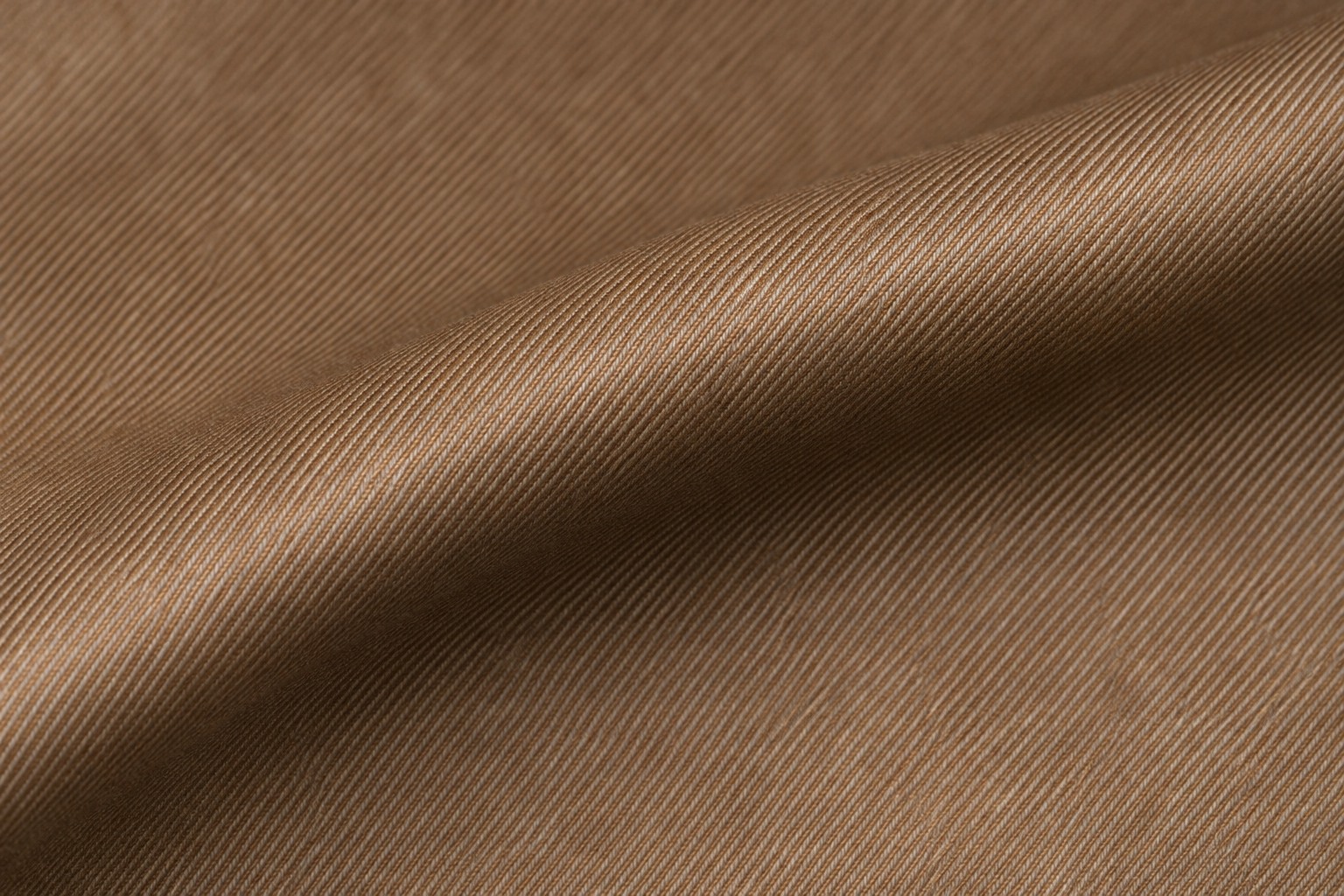
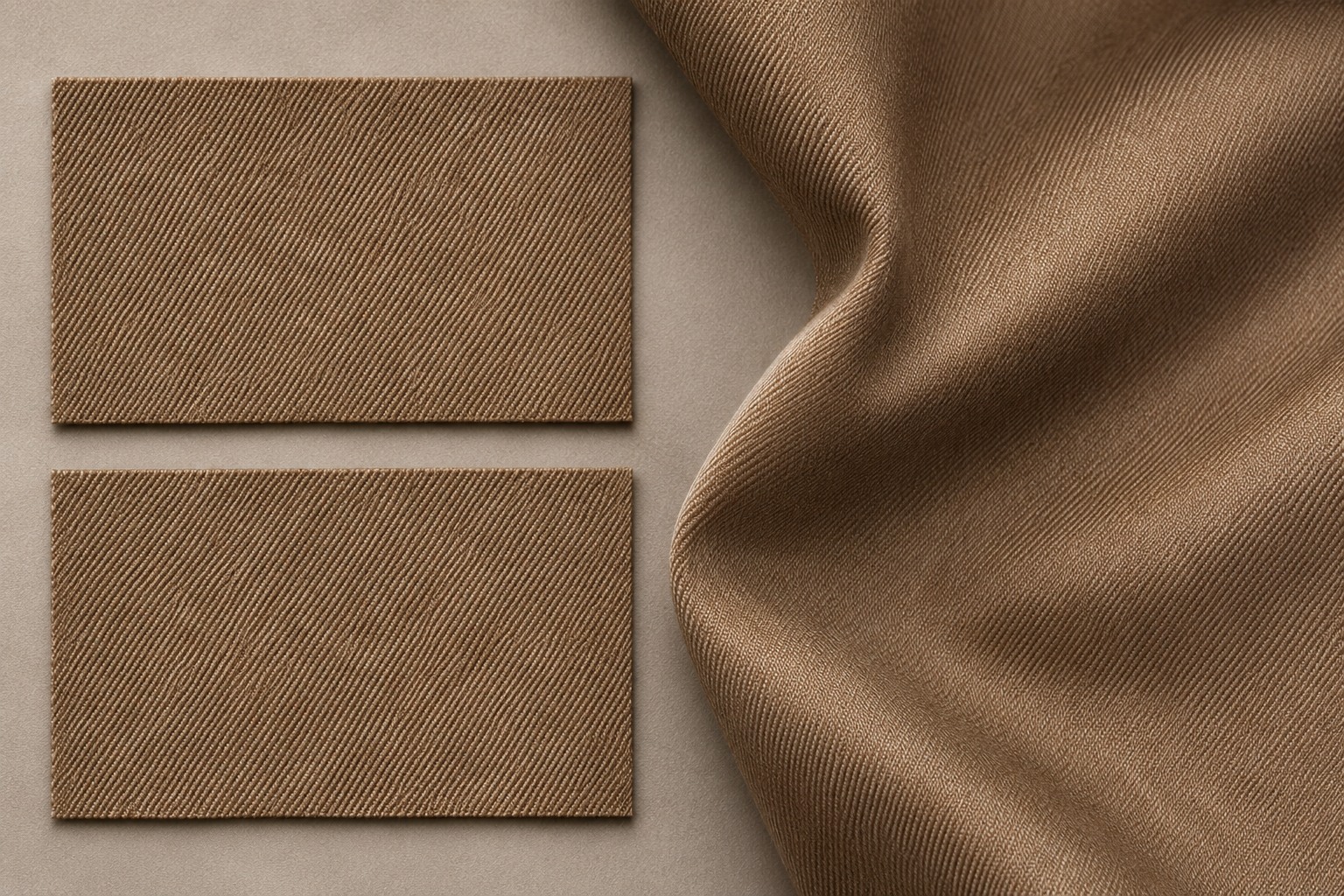
Shengchao’s polyester-rayon twill suiting reference provides a specific starting point for sampling. The visible brown diagonal weave helps identify the material under discussion. Confirm its current composition, construction and finishing details with the supplier; the photograph supplies no stiffness measurement. Request a representative finished length rather than approving performance from a product image or assuming a blend guarantees a particular hand.
Use the knit and woven fabric overview to organize construction choices before the comparison. Keep that broad classification separate from the specific sample result. If a proposed substitute changes construction as well as blend, tell the laboratory and pattern team. A comparison between unlike structures may still be useful, but its purpose and limits should be clear in the development record.
Keep direction and orientation traceable
A university study of textile bending rigidity reports differences between fabric directions, sides and operator groups in its sample set. That finding supports careful specimen identification and training; it does not establish the performance of Shengchao products. Ask the laboratory to preserve directional and face identification in the report rather than reducing every observation to one unexplained average.
Send enough material for the selected procedure and sampling plan. Identify the face, reverse and production direction without placing markings in assessment areas. Keep a matching retained sample and record the lot and colour. If the direction is uncertain, ask for clarification before cutting. An ambiguous orientation makes a later repeat comparison harder to interpret, especially when the garment panels are cut in a particular direction.
Record storage and finishing history
ASTM’s public guidance notes that storage can affect stiffness and that specimen curling or twisting can influence measurement. Discuss those issues with the laboratory when the material arrives. Keep the transport condition, treatment history and any visible distortion in the sample record. Do not straighten or press a specimen casually and then describe it as unchanged as-received material.
If the development question concerns washing, pressing or another treatment, arrange a defined before-and-after comparison. Use the applicable care conditions and identify each sample’s history. Keep any treatment trial distinct from the baseline test. A favourable result on untreated cloth should not be presented as proof of performance after finishing, and a treated sample should not be compared to a different lot without explaining the difference.
Read the report before ranking suppliers
Check the sample identity, method edition, option, directions, preparation and units before comparing numbers. Ask whether the report contains individual observations, a summary and any departures from the method. If an essential field is missing, obtain clarification rather than assigning a purchasing rank. Keep the original report and the clarification together so the approval decision can be reconstructed later.
When two laboratories disagree, establish whether they received comparable specimens before drawing conclusions about supplier quality. Discuss the assessment arrangements and any curling, handling or conditioning issues. Arrange a controlled comparison when needed and agree how the results will be interpreted. Do not choose whichever report produces the preferred outcome while leaving the disagreement unresolved.
Connect bending with the complete handle
The fabric drape guide considers hanging and folding in the intended application. A bending assessment informs that discussion but does not describe the whole garment silhouette. Review the shell, lining and support materials together. Note whether a fold, seam or layered edge changes the practical impression, and give the pattern team the actual material rather than only a spreadsheet of values.
Keep the fabric GSM explanation beside the purchasing specification when weight also matters. Matching GSM alone does not settle a stiffness concern. Similarly, a smoother surface does not prove easier bending. Use separate observations for surface feel, bulk and resistance to folding, then identify which difference affects the approved design.
Turn the findings into a sampling brief
A useful enquiry names the proposed material, colour, lot, finished condition and intended garment. Attach the approved reference and explain the practical concern. State the required assessment or ask the laboratory to recommend an applicable approach. Specify how directional results should be identified and who will review the garment trial. This avoids ordering an isolated test with no connection to a release decision.
Before bulk approval, assemble the intended layers and review relevant edges and seams. Record any pattern or processing changes made to accommodate the new material. If those changes are substantial, reassess the product rather than assuming the initial sample approval still covers it. Preserve the agreed reference, laboratory evidence and practical observations together for repeat orders and any later investigation.
For repeat orders, identify who may approve a change in finishing and which evidence must be refreshed. Compare new lots with the retained reference under the same agreed conditions. If a sample feels different, describe the location and handling situation before requesting another test. A focused investigation is more useful than accumulating unrelated measurements. Keep unresolved observations visible in the release record and define the next comparison needed to close them. This makes the sampling process usable for both the purchasing team and the people preparing the garment.
Watch a neutral demonstration
Vidya-mitra’s educational lesson demonstrates textile bending-stiffness testing. Use it to understand the purpose of a controlled arrangement and consistent handling. Follow the current applicable method for actual laboratory work; a demonstration does not establish an acceptance limit or replace a traceable report.
Frequently asked questions
Is a heavier fabric always stiffer?
No. Weight alone does not establish bending behaviour. Compare representative finished samples using a suitable method and keep construction and treatment details with the result.
Does bending stiffness measure the whole fabric hand?
No. Surface feel, compression, stretch and other handling properties may require separate checks for the intended garment.
Should warp and weft results be kept separate?
Preserve the directions required by the selected method and purchasing brief. An unexplained combined value may hide a relevant directional difference.
Can a product photograph prove stiffness?
No. A photograph helps identify the sample and visible structure. It does not replace controlled measurement or a representative garment trial.