










Fabric Snagging Resistance: Methods and Activewear Buying Checks
Fabric snagging resistance describes how well a textile resists pulled yarn loops and related surface distortion when it catches on a rough or pointed object. It is an appearance and serviceability concern that needs its own assessment: a good pilling result or a high abrasion cycle count does not establish that a fabric will resist snags. For activewear buyers, the useful question is whether the approved construction and finish remain acceptable under an agreed snagging method and realistic garment use. Start with a traceable sample, choose a suitable laboratory method, and review the actual damaged appearance before setting a purchasing requirement.
Recognize a snag before choosing the test
A snag starts with a localized catch. A protruding yarn loop may sit above the surface, or yarn displacement may create a longer distorted line around the contact point. The effect can be conspicuous even when there is no open hole. Do not classify every fuzzy patch as snagging: surface fuzz, detached fibres, pills, rubbed areas and pulled loops describe different observations and may require different investigations.
Photograph the affected area at a normal viewing distance and close up, then identify the face, fabric direction and garment location. Record whether the issue appeared during cutting, sewing, packing, first wear or later care. A loop found before sewing may have a different cause from a repeated mark next to a rough zipper edge. This simple distinction helps avoid ordering an irrelevant test or blaming a fibre name without evidence.
Understand what a mace snagging report represents
The Centexbel explanation of snagging resistance describes tubular specimens on rotating cylinders, contacted by a spiked ball, with the resulting surface assessed visually. Its guidance also highlights the importance of direction. The practical implication is that a report needs the method, specimen orientation and evaluation basis alongside the rating; a bare number is incomplete.
Ask the laboratory which method is suitable for the actual construction, including any brushed surface, open structure, coating or unusual stiffness. Confirm the edition in the purchase specification. A method selected for a compact apparel fabric should not automatically be applied to every mesh or heavy material. Do not invent a conversion between instruments or call two results equivalent merely because both use a visual grading scale.
A further limitation appears in ASTM D3939/D3939M’s published significance and use: poor precision between laboratories makes the method unsatisfactory for acceptance testing of commercial shipments. It remains useful for development comparisons and manufacturing quality control. Do not turn a mace rating into a stand-alone shipment-release guarantee; agree an appropriate acceptance approach and resolve laboratory differences with qualified technical support.
Separate snagging, pilling, abrasion and rupture
These properties can matter in the same garment, but they answer different questions. The NC State physical testing laboratory lists mace and bean bag snagging methods separately among its testing capabilities. A buying brief should similarly identify each relevant property instead of using one broad statement such as durable fabric.
| Observation or question | Assessment to discuss | Decision it supports |
|---|---|---|
| Individual pulled loops or yarn distortion | A snagging method suitable for the construction | Acceptability of localized surface damage |
| Small entangled fibre balls | Pilling assessment with agreed exposure | Retention of a neat surface appearance |
| Wear from repeated rubbing | Abrasion assessment with a defined endpoint | Resistance to the specified rubbing exposure |
| Fabric rupture under multidirectional pressure | Bursting strength where applicable | Resistance to that form of mechanical failure |
| A mark beside a garment attachment | Garment inspection and a relevant fabric test | Whether construction details contribute to damage |
This is a decision guide, not a set of interchangeable test results or universal pass limits. For a complementary surface evaluation, use the fabric pilling resistance guide. Keep its findings separate in the approval record so that an acceptable pilling result cannot accidentally close an unresolved snagging issue.
Choose the actual product and surface to approve
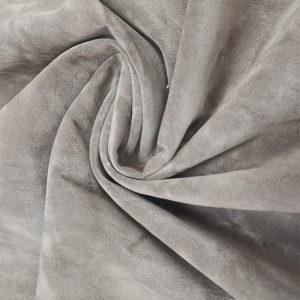
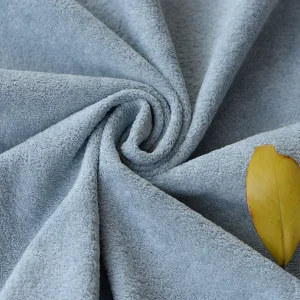
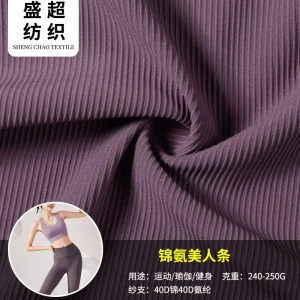
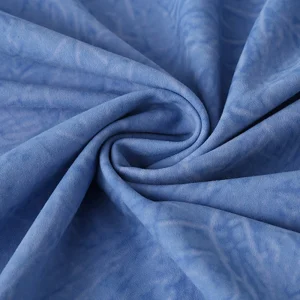
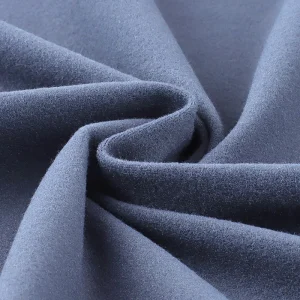
Shengchao’s nylon-spandex double-sided brushed fabric is a relevant starting point for a soft activewear development. Its product information identifies the material and intended yoga or sportswear use. That information does not establish a snagging grade. Request a representative sample and the applicable evidence for the exact finish and colour being considered.
Brushing changes the surface presented to the wearer and to surrounding objects. Inspect both intended garment faces rather than assuming that two sides behave identically. Note the direction of the surface, any raised fibres and the condition after the proposed care process. A smooth hand, a soft finish or a dense appearance cannot by itself prove snag resistance, and a photograph cannot replace a controlled evaluation.
Use the broader sportswear fabric overview to establish the garment’s overall requirements before narrowing the snagging specification. Close-fitting yoga wear, a loose outer layer and a bag lining may encounter different contact points. Define the end use first; then decide how surface appearance, extension, opacity, care and snagging should be balanced in the sample approval.
Prepare samples that can be traced back to production
Identify the style, colour, lot, finish and sample source before the material reaches the laboratory. Mark the face and directions using an agreed convention that does not contaminate the test area. Preserve an untested comparison sample. Ask the laboratory for its required quantity and preparation instructions rather than cutting arbitrary small swatches that cannot support the selected method.
State whether the material is to be tested as received, after care, or in both states. If a before-and-after comparison is needed, document the care conditions and use comparable material. Do not compare an untreated development swatch against an unrelated washed bulk shade and attribute every difference to washing. A result only becomes useful for production approval when the sample identity and treatment history are clear.
Evaluate the damage as well as the headline rating
Request photographs that show the assessed specimens, the assessment conditions and the result for each required orientation. Look for protruding loops, extended distortion and how visible the damage is against the surrounding surface. A close-up can help identify the defect, while a consistent normal viewing distance helps the development team discuss whether it would be noticeable in the intended garment.
Agree how individual specimen results will be reported and how any variation will be handled. An average can conceal a direction or specimen that performs differently. When two laboratories disagree, first check the method edition, exposure, sample preparation, face, direction and visual reference. Repeat testing on an agreed retained sample may be more useful than arguing about two numbers whose conditions were never aligned.
Connect laboratory findings with garment contact points
Review fasteners, pocket openings, bag straps, seating surfaces and other likely sources of rough contact during a controlled garment trial. Include packaging and handling if damage appears before wear. The purpose is to discover relevant interactions, not to claim that a short trial reproduces every consumer’s experience. Record where each mark forms and compare it with the laboratory damage before deciding on a change.
A garment issue may require a construction adjustment as well as a material decision. Covering a rough attachment, changing its position or revising a seam detail may address a localized contact problem. Any fabric or finish change should be resampled and reassessed for the properties it may affect. Do not add an unverified chemical treatment solely because an informal hook-and-pull demonstration looked persuasive.
Set an acceptance agreement before bulk ordering
There is no single snagging requirement suitable for every textile product. Establish the test method, edition, exposure, face, orientation, pre-treatment and reporting format with the buyer and laboratory. Set the acceptance criterion against the intended use and agreed reference specimens. If a customer or retailer supplies a requirement, identify its version and scope rather than transferring an unrelated upholstery or garment limit.
Keep snagging approval alongside the other required development decisions. For stretch garments, the fabric stretch and recovery guide addresses a separate question: how the material extends and returns under specified conditions. A sample should meet the complete agreed brief. Improving one surface property is not sufficient if fit, handle or another required characteristic becomes unacceptable.
Handle an unexpected bulk result without losing traceability
If a bulk specimen differs from the approved reference, keep both samples and pause the affected approval decision while the conditions are checked. Compare the material identity, finishing history and test instructions before proposing a replacement. Ask whether the difference is repeatable on another representative specimen, and have the laboratory explain any reported variation. Record the agreed response, the responsible person and the evidence needed for release. This keeps the decision tied to the affected material rather than extending one observation to unrelated colours or lots. Resume approval only when the agreed requirement and any necessary garment checks have been addressed.
Watch an educational comparison of surface properties
The Vidya-mitra lesson linked from the INFLIBNET textile manufacturing and testing course discusses surface response and colour fastness, including snagging. It offers educational context for distinguishing damage mechanisms. Use the agreed laboratory standard for the actual test procedure and approval decision.
Frequently asked questions
Does a good abrasion result prove snag resistance?
No. Abrasion and snagging involve different actions and assessments. Request a relevant snagging evaluation when pulled loops or yarn distortion are part of the risk.
Can a soft brushed fabric be approved from its appearance?
No. Appearance helps identify the sample and finish, but it cannot establish a performance rating. Evaluate representative material under the agreed method and care conditions.
Should both directions and both faces be considered?
Discuss direction and face with the laboratory and garment developer. Test the orientations and exposed faces relevant to the selected method and intended use, and record them clearly.
What should a snagging enquiry include?
Include the garment use, exact material reference, colour and finish, sample condition, relevant customer requirement, proposed care process and photographs of the damage of concern.