



















































































































Fabric Spray Test: Ratings and Outdoor Fabric Buying Checks
A fabric spray test evaluates resistance to surface wetting under controlled conditions. It helps buyers compare water-repellent finishes, but it does not establish how much water pressure a fabric withstands or how long a finished jacket keeps its wearer dry. Read a spray rating with its named method, sample identity and preparation history. For an outdoor apparel order, agree both the initial requirement and any requirement after specified care. Then verify the proposed production material, rather than accepting a photograph of beading water as a substitute for a traceable laboratory report.
Define the buying question before ordering a test
Start with the intended use. A lightweight shell, a casual jacket and a protective garment may need different evidence. Write down whether the development question concerns surface wetting, penetration through the material, or performance of the complete garment. Asking simply for a waterproof certificate can produce an impressive-looking number that answers the wrong question.
Separate the fabric requirement from the garment requirement in the enquiry. A surface treatment does not describe seams, zips, openings or the interaction between layers. Where the order includes a claim about the finished garment, ask the responsible technical team which additional evaluations support that claim. Keep the scope of each report visible in the approval record.
Understand what the spray method observes
AATCC’s illustrated water repellency guide describes controlled spraying onto a mounted specimen and comparison of the resulting wetting pattern with a reference chart. Its purpose is surface assessment. The guide is educational; the laboratory should use the agreed current method and edition for the actual order.
Do not assign a formal rating from an informal spray bottle demonstration. Mounting, water delivery and evaluation conditions belong to the method. An office observation may help identify an obvious concern, but record it as screening and send representative material for the required assessment. Avoid reporting a casual observation in the same column as a standardized result.
Keep surface repellency separate from water penetration
ISO 4920:2012 concerns surface wetting and explicitly excludes prediction of rain penetration resistance. A spray result therefore cannot be converted into a hydrostatic pressure value. Nor can the two values be ranked together as if they were alternative units for one property.
Use the broader waterproof and water-resistant fabric guide to organize the different development questions. If the specification concerns water crossing the material under pressure, request a suitable penetration assessment. If it concerns visible surface wetting, retain a spray requirement. If both matter, keep both requirements and results in the purchasing file.
Read the rating alongside its conditions
| Record | Buyer’s check | Action if missing |
|---|---|---|
| Named method | Edition and rating system are clear | Request the complete reference |
| Sample identity | Product, colour and lot match the order | Obtain traceability before approval |
| Finishing state | Tested treatment represents production | Confirm the finishing instruction |
| Care history | Preparation and cycle count are identified | Ask for the actual procedure |
| Individual results | Variation remains visible | Request specimen-level findings |
| Acceptance basis | Customer requirement was agreed beforehand | Resolve the brief before release |
This is a purchasing checklist, not a rating conversion chart. Preserve the rating system printed on the report. If different suppliers use different methods, ask the laboratory whether a meaningful comparison is possible and what additional testing is needed. Do not silently relabel numbers to make a comparison table appear consistent.
Identify the actual outdoor fabric sample
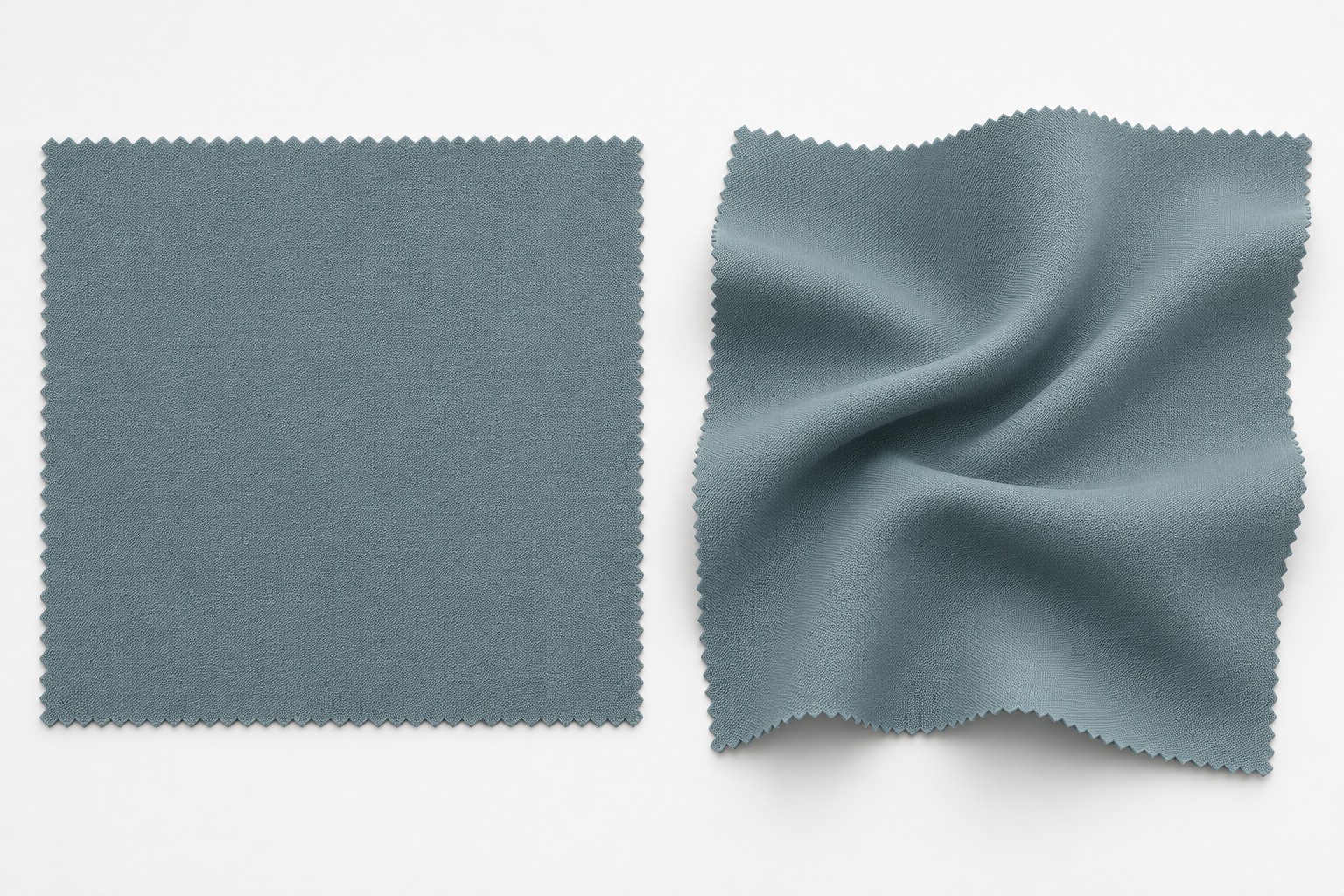
Shengchao’s 70D nylon-spandex jacket fabric provides a concrete starting point for an outdoor material enquiry. Request a current finished swatch and confirm its product reference, construction and finish. The product name and the images identify an option to discuss; they do not establish an independently verified spray rating for the lot being purchased.
Ask whether the sample supplied for testing has the same finishing route as the intended bulk order. Record any proposed change rather than assuming a similar colour means equivalent treatment. Retain a matching reference swatch with the report. This makes later conversations about appearance or wetting behaviour more precise than comparing unrelated photographs.
Plan before-and-after-care evidence
FILK’s ISO 4920 testing explanation explains that comparative testing can assess treatment durability after washing. For procurement, specify the care procedure and number of cycles before testing begins. An initial result alone does not answer an after-care requirement.
Keep as-received and treated specimens clearly identified. Ask the laboratory to record washing, drying and any additional preparation relevant to the agreed instruction. If the customer’s intended care differs from the procedure used in an old report, request clarification. Do not advertise an arbitrary number of washes from evidence that contains no corresponding preparation history.
Choose representative material for approval
Agree how samples will be selected from production. A specially prepared development swatch may be useful for design, but it should not be assumed to represent every colour and finishing lot. Identify the production conditions that must remain consistent and decide when a change requires renewed evidence. The sampling agreement should reflect the order’s actual scope.
Protect sample identity during transport and handling. Use labels outside the assessment area and provide the laboratory with the face side and any relevant preparation instructions. Tell the laboratory about earlier washing or treatment. If sample history is uncertain, replace the specimen with material whose origin can be demonstrated instead of inventing an as-received description.
Investigate unexpected differences methodically
If results differ between laboratories, compare the method references, specimens and preparation records first. Ask whether the same lot and finishing state were evaluated. An apparent disagreement may reflect different material or different instructions. Preserve both reports and the explanation, rather than discarding the less favourable result without investigating it.
When a production lot differs from the approved sample, isolate the purchasing question: is the finish inconsistent, is sample identity wrong, or is the comparison incomplete? Ask the supplier and laboratory for a focused review on retained material. A repeat test should resolve a defined uncertainty. Repeatedly testing unrelated swatches until a favourable result appears does not establish consistency.
Connect spray evidence with the rest of the brief
The hydrostatic head guide explains a separate water-penetration measurement. Keep that report beside spray evidence when both are required, with each result labelled by its own method and units. A favourable surface rating should not replace missing penetration evidence in a jacket specification.
The water vapour resistance guide addresses another distinct property. Breathability, water penetration and surface wetting answer different questions. Review their relevance together with the intended construction, but approve each against its own agreed requirement. Avoid creating one unsupported overall performance score from unrelated test results.
Check the report before approving a lot
Read beyond the headline grade. Confirm that the report names the client sample reference and that this reference appears in the supplier’s dispatch record. Ask who selected the material and whether it came from the actual production lot. If the report describes a development code, obtain a documented link to the commercial product instead of assuming that the two names refer to identical material.
Review deviations and comments with the laboratory. A result accompanied by a qualification may still provide useful information, but the qualification must travel with the number. If the customer needs conformity to a particular requirement, ask whether the report supports that decision and what limitations apply. Keep a clear record of who accepted the evidence, which order it covers and which issues remain open. This is particularly useful when several colourways or finishing trials share similar names, because a single misplaced report can otherwise appear to approve an entire range.
Write a repeatable purchase requirement
A useful order names the material and finishing state, the required spray method, the initial acceptance condition and the specified care condition. Attach the approved reference and identify who will review results. Ask the laboratory to flag incomplete instructions before testing. This prevents a late argument about what a bare number was intended to mean.
For repeat orders, link the new lot to the earlier approval and review changes in processing or supply. Keep the report, sample selection record and acceptance decision together. If a discrepancy remains unresolved, record the open issue and obtain the missing evidence before release. Traceable approval is more valuable than collecting many reports with uncertain connections to production.
Watch the distinction between waterproofing and repellency
NPTEL IIT Delhi’s educational lecture introduces waterproofing and water repellency in textile finishing. It provides background for understanding why surface behaviour and penetration require different questions. Use the agreed laboratory method for testing; a lecture is neither a product certificate nor evidence that the pictured sample achieves a particular rating.
Frequently asked questions
Does a high spray rating prove a jacket is waterproof?
No. Spray testing evaluates surface wetting. Fabric penetration and complete garment performance require appropriate separate evidence.
Can a spray bottle demonstration replace the laboratory report?
No. It may be useful screening, but it does not establish a standardized rating under controlled method conditions.
Why request a result after washing?
If performance after care matters to the order, the specified preparation must be represented in the evidence rather than inferred from the initial result.
Is there one universal pass rating for all outdoor fabric?
No universal purchasing threshold is supplied here. Agree the requirement for the intended product, method and care history with the customer.