



















































































































Fabric Tear Strength: Methods, Directions and Buying Checks
Fabric tear strength describes resistance to the growth of an existing cut or tear under a specified procedure. It differs from the force needed to break an intact strip of fabric. For woven apparel and outdoor materials, buyers should request the exact tear method, tested direction, sample preparation, original units and traceable article identity. Elmendorf, trouser and other tear procedures are not interchangeable. A useful purchasing decision combines suitable laboratory evidence with the intended garment construction, because seams, notches and component edges can change where damage begins.
This guide explains how to review a tear report without overstating what it proves. It also shows how to prepare a clearer sample request for a nylon woven development project.
Distinguish tear propagation from intact-fabric strength
A tensile test starts with material loaded in a defined arrangement and measures its response to pulling. A tear test asks how a deliberately initiated opening continues to grow. The difference matters when a garment catches on an object or a small cut appears near a component. A material can respond differently to these loading situations, so one report should not silently replace another.
Start an investigation by documenting the damage before pulling it further. Photograph both faces, retain the affected component and identify the location on the garment. A torn panel beside a hard accessory may require a different corrective action from yarn movement at a seam. The objective is to identify the mechanism before choosing the next test.
Choose the correct tear method
ISO 13937-1 identifies the ballistic pendulum, or Elmendorf, method. The BSI method scope distinguish it from the series’ tensile-machine procedures, including trouser, wing and tongue specimens. Keep each result tied to its method instead of assuming different procedures produce equivalent values.
Method suitability also matters. The published scope is mainly for woven textiles and generally excludes knitted and woven elastic fabrics, with further restrictions for structures that redirect the tear. Confirm suitability with the laboratory using the actual sample. A generic description such as outdoor fabric is not enough to determine whether the procedure applies.
If the material includes a coating or laminate, disclose that construction before testing. Do not assume that a result for an uncoated base fabric represents the complete finished article. Ask the laboratory to identify the relevant procedure, and obtain agreement before substituting a different method in a customer specification.
Make direction labels unambiguous
Woven materials have two principal yarn directions. Tear reporting needs an explicit convention for which yarn system is being broken and how the specimen is oriented. A handwritten label saying “length” can be misunderstood when it is copied from a cutting diagram into a purchasing spreadsheet.
Ask the laboratory to define the direction labels in the report and retain a marked sample or diagram. Preserve the original wording in the approval record. If two suppliers use different conventions, clarify them before comparing results; do not guess the weaker direction from a photograph or the appearance of the weave.
When the application loads a panel in a particular way, record that separately from the test label. Garment orientation and laboratory direction terminology belong in connected records, but they are not automatically the same description. This is especially useful when a pattern piece is rotated during cutting or a reinforcement is added at an angle.
Use a tear-report buying checklist
This table is a documentation aid. It does not provide a universal minimum tear force. Define an application-specific requirement with the responsible customer or technical team, then ask the laboratory to confirm the procedure needed to assess it.
| Report field | Buyer verification | Question it prevents |
|---|---|---|
| Method and edition | Exact standard and part | Were different tear procedures compared? |
| Construction | Woven, elastic, coated or laminated state | Was the selected method suitable? |
| Directions | Meaning of each label and yarn system broken | Were directions accidentally reversed? |
| Preparation | As received, after care, conditioned or other agreed state | Do the results describe matching specimens? |
| Units and observations | Original units, valid results and relevant deviations | Was a number simplified beyond its meaning? |
| Sample identity | Article, colour, finish, lot and roll | Does this report represent the delivered material? |
| Acceptance | Requirement, decision owner and any limited concession | Who approved the result for this application? |
Keep the complete report rather than only a screenshot of its result table. The header, notes and sample description often contain the information that determines whether a comparison is valid. Where a field is missing, request clarification before releasing the bulk order.
Connect evidence to a real nylon article
Shengchao’s nylon twill fabric product is a starting point for an article-specific sample enquiry. Confirm the supplied finish, construction and current product specification. The product title and fabric photographs do not establish a tear value, coating status or suitability for a particular outdoor garment.
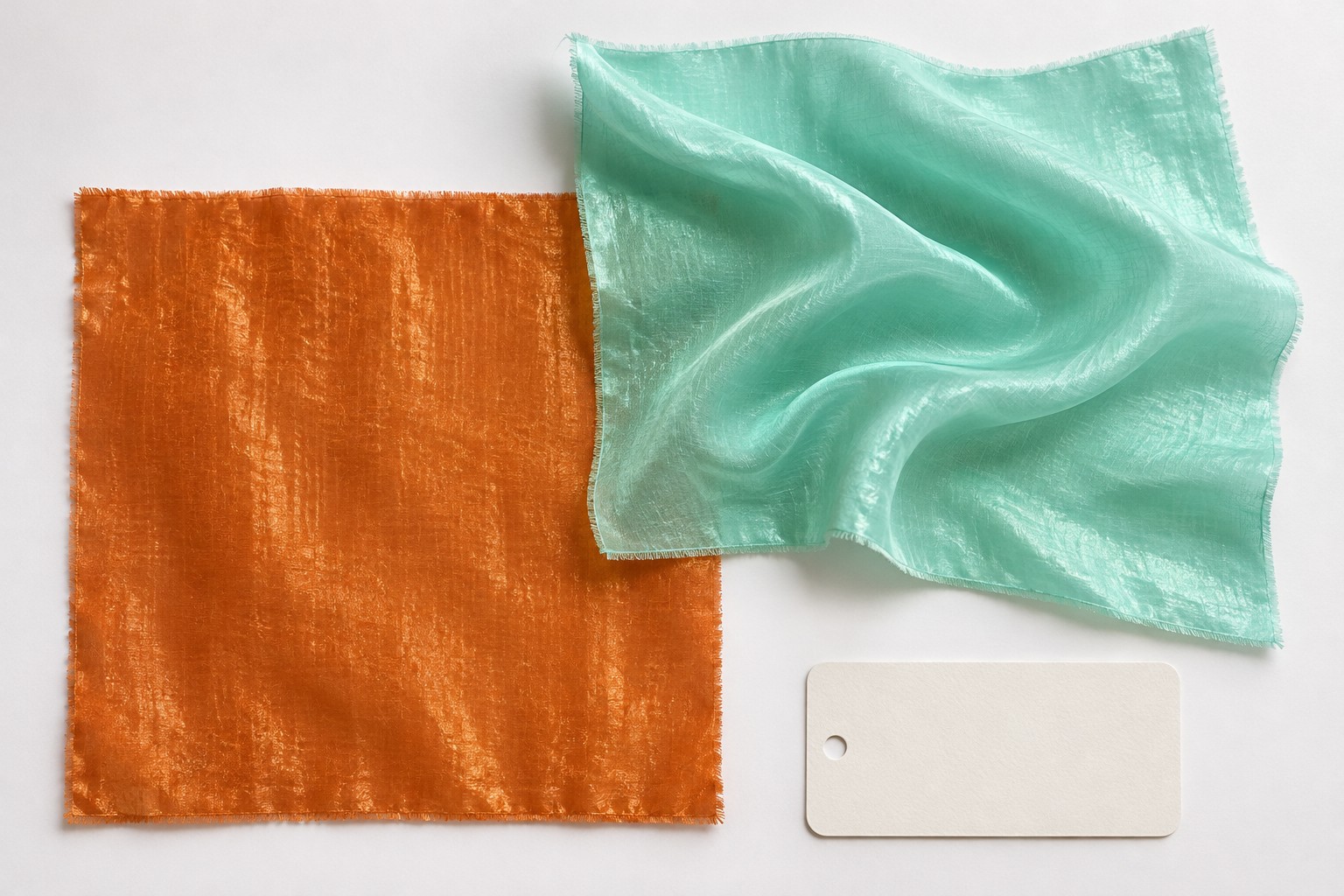
The coloured sample images in this guide illustrate the visible cloth only. They do not show damage resistance, a certified test specimen or a successful laboratory result. If the development brief requires a particular performance level, request evidence tied to the exact submitted article rather than treating the product description as a test certificate.
Use the fabric development brief guide as the parent planning resource. Include garment use, contact risks, care expectations and the test question in the brief. This gives the supplier and laboratory enough context to propose a meaningful sampling programme.
Investigate the actual garment failure
A slit near a pocket corner may reflect a local stress concentration, component edge or assembly detail. A tear report on unsewn fabric cannot identify that cause by itself. Retain the original garment and ask the development team to examine pattern shape, reinforcement, seam placement and any evidence of cutting or needle damage.
Yarn movement beside intact stitching may instead be a seam slippage question. The seam slippage explanation helps keep that failure separate from propagation of an existing cut. Record what actually failed before replacing the material or tightening a purchasing threshold.
When the fabric is distorted before cutting, examine that problem independently. The bow and skew inspection guide addresses alignment and cutting decisions. Correct alignment does not prove tear resistance, but preserving the cutting record helps an investigation avoid confusing several different production issues.
Compare candidates without inventing conversions
Compare reports only after checking method, directions, specimen preparation and article identity. Matching units alone do not make different tear procedures equivalent. Ask the laboratory to explain any method change, especially when an older supplier report is being used to approve a new material.
Preserve the reported values and units in the master record. If a purchasing system needs another unit, use a verified unit conversion while retaining the original value and label. A unit conversion changes how a measurement is expressed; it cannot turn one test method into another or remove differences in sample preparation.
Where results are close or inconsistent, seek the laboratory’s interpretation of validity and variation. Do not select only favourable directions or discard inconvenient specimens. Define the decision rule before reviewing the results, and document any concession with its quantity, use and approval owner.
Carry the approval into bulk supply
Identify the approved article, finish and production sample in the purchase order. Retain an untouched sample with the report reference. If the supplier changes an input that could affect the result, ask whether the existing evidence remains representative or whether another assessment is required.
For after-care requirements, record the treatment separately from the tear procedure. Keep initial and after-care results distinct rather than combining them under one unqualified pass. A favourable initial result does not establish retention through every cleaning process or throughout the garment’s service life.
When goods arrive, reconcile the report identity with the delivered article and lot documents. Escalate unexplained differences before cutting. This is a traceability check, not a claim that paperwork alone guarantees uniform performance across every roll. Agree the necessary sampling approach with the responsible inspection team.
Watch the educational loading explanation
NPTEL IIT Delhi’s lecture on evaluation of bursting and tear strength explains the two loading families in an educational context. Use it to understand the test question, while keeping the written method and your laboratory report as the basis for approval. It does not establish a tear rating for the pictured material.
Send the final approval record to the people responsible for receiving and cutting the goods. Include the report reference, approved direction convention and any unresolved limitation. That keeps later production decisions connected to the same evidence used during development.
Frequently asked questions
Is tear strength the same as tensile strength?
No. Tear testing examines growth from an initiated opening, while tensile testing uses a different loading arrangement. Choose evidence that matches the actual question.
Can Elmendorf and trouser tear results share one pass limit?
Do not assume that they can. They are different procedures. Confirm the required method and acceptance rule before comparing supplier reports.
Is every woven fabric suitable for Elmendorf testing?
No. The method has scope restrictions, including woven elastic and tear-redirecting structures. Ask the laboratory to review the actual construction.
Does a strong tear report guarantee a reliable garment?
No. It concerns a tested material under defined conditions. The garment’s seams, components, cutting and intended use still require appropriate development checks.