



















































































































Which Fabrics Actually Count as Waterproof Cloth
The short answer to what fabrics are waterproof is this: barrier constructions—coatings, laminates such as PUL, membrane sandwiches, vinyl/PVC, and silicone impregnation—built to stop liquid water under a stated test, not untreated polyester or nylon by themselves. Below you will get the waterproof vs water resistant fabric split, the main waterproof fabric types, how hydrostatic checks differ from spray checks, why seams matter, and when a water-repellent nylon sample is enough versus a stretch waterproof path.
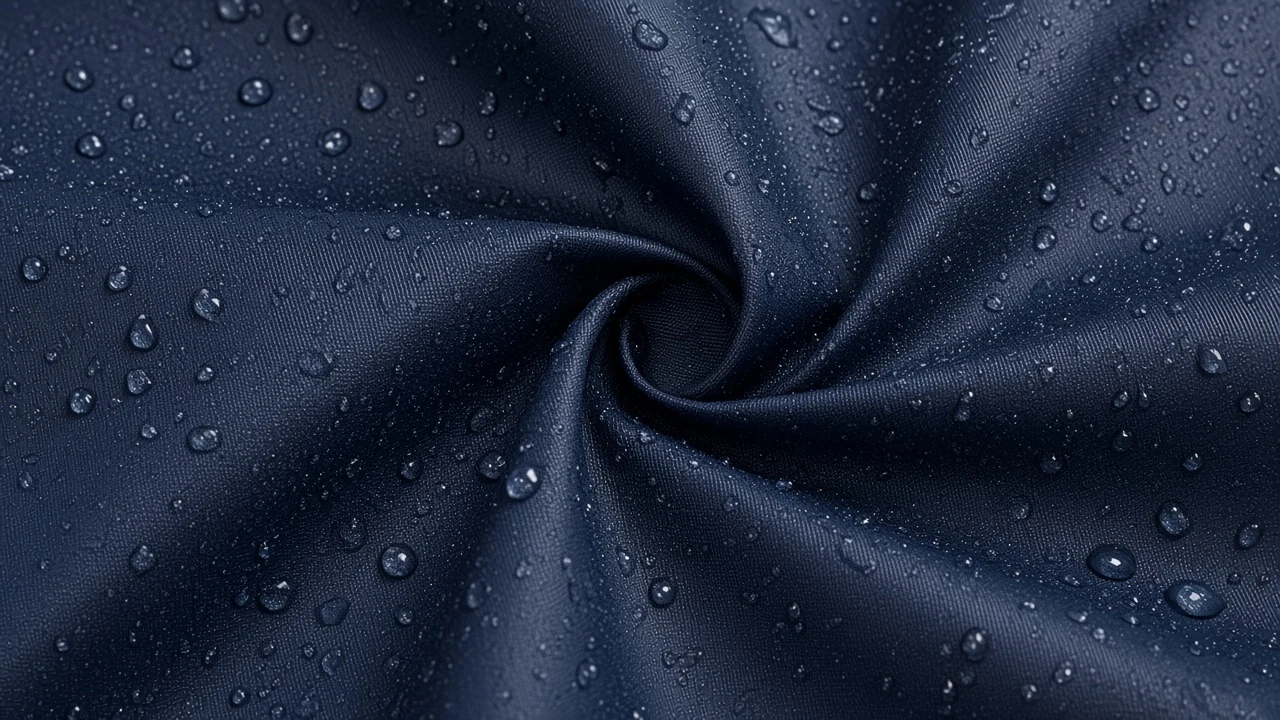
Hub: Waterproof Fabric.
Waterproof, Water-Resistant, and Water-Repellent Are Not Interchangeable
Waterproof implies a barrier story under pressure or a stated method; water-resistant and water-repellent describe lighter moisture jobs.
Retail copy often mashes the three labels. For sampling language, keep the jobs separate:
| Label | What the cloth is doing | Typical apparel use |
|---|---|---|
| Water-resistant | Tight weave or inherent behavior slows soak-in | Splash, mist, short drizzle |
| Water-repellent | Face finish (often called DWR) makes droplets bead | Light-rain shells that should stay dry-looking outside |
| Waterproof | Coating, laminate, membrane, or film blocks liquid under pressure | Rainwear that must stay dry in sustained weather, usually with a seam plan |
If your brief only needs shower-level protection, start with the water-resistant fabric literacy path and the water-resistant types shortlist. Save “waterproof” for barrier constructions.
Fabric Constructions That Actually Qualify as Waterproof
Coatings, laminates, membranes, vinyl/PVC, and silicone impregnation create barrier cloth; untreated fiber names do not.
These are the waterproof fabric types apparel and gear teams keep meeting on RFQs. Coated waterproof fabric is the most common commercial entry point.
| Construction | What the buyer is buying | Typical apparel or gear role | Watch-outs |
|---|---|---|---|
| PU / similar coating | Polymer film on one face | Rain shells, packs, covered panels | Breathability often limited; coating abrasion matters |
| PUL / polyurethane laminate | Knit or woven bonded to a thin PU film | Wet bags, protectors, some soft rain pieces | Needle holes and heat sensitivity |
| Silicone impregnation (e.g. silnylon families) | Polymer driven into yarn/fabric | Ultralight shelters, some rain gear | Great weight stories; different hand than fashion shells |
| Laminated membrane (WPB 2L/2.5L/3L) | Film bonded between or behind textiles | Performance rainwear | Face wet-out and seam plan still matter |
| Vinyl / PVC / modern oilcloth | Plastic sheet or heavy plasticized coat | Covers, heavy rain gear, wet-area goods | Little or no breathability |
Nylon and polyester show up inside many of those constructions. Neither fiber is waterproof on its own. Dense weave can help water resistance; the barrier still comes from the coating, laminate, membrane, or vinyl layer.
Waterproof-Breathable Fabrics Still Need a Face That Does Not Wet Out
WPB laminates aim to block liquid water while letting some vapor move; a worn face finish can still feel wet even when the membrane holds.
Membrane-based waterproof-breathable membrane stacks pair an outer face fabric with an ePTFE-style or PU film. That is why ski shells and cycling rain kits can claim rain blocking without feeling like a plastic tarp.
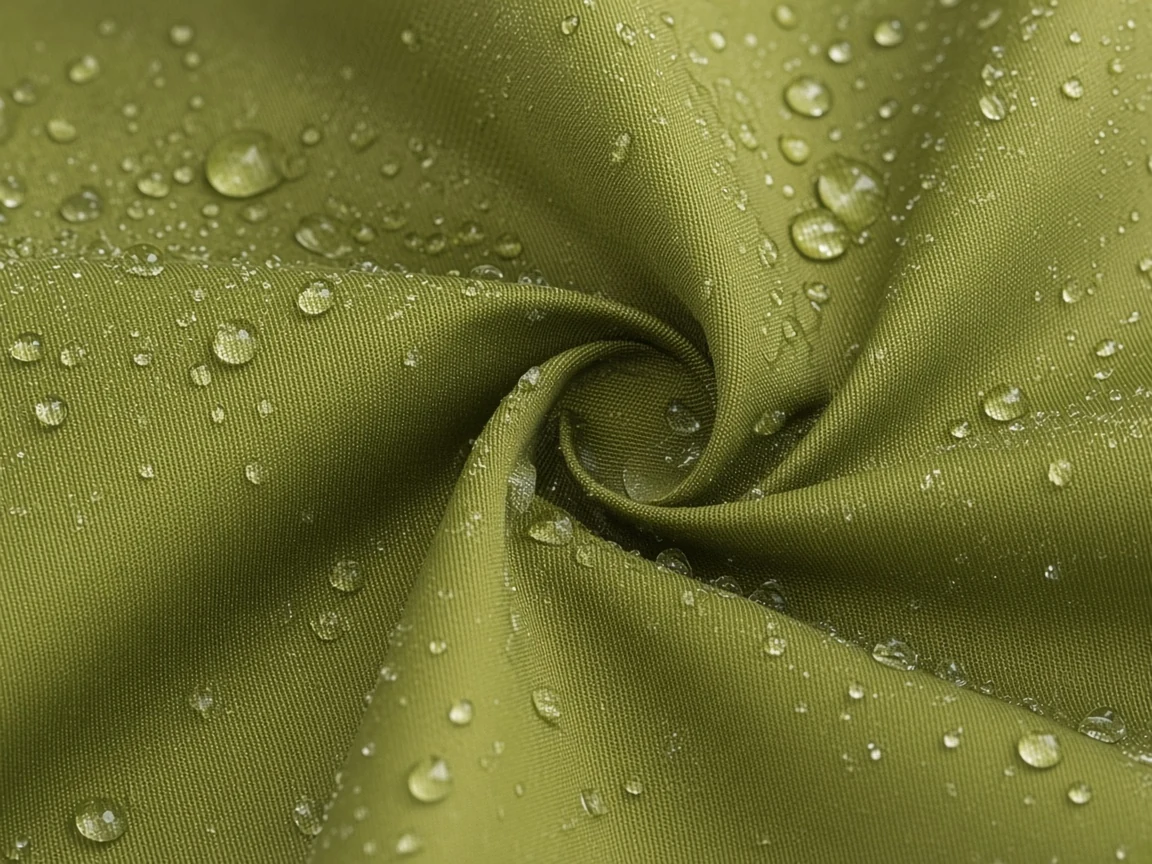
DWR on the face is the first line that makes water bead. When that finish wears, the face “wets out.” Liquid may still be blocked underneath, but the garment feels cold and clammy, and vapor transport suffers. Treat wet-out as a care and face-finish issue, not automatic proof that the membrane failed.
How Apparel Buyers Should Read Waterproof Fabric Tests
Ask for the method name, which face met the water, and whether rain or spray methods also ran—one hydrostatic number is not a rain-room result.
Labs run a hydrostatic pressure test (AATCC TM127 is a common apparel reference) by forcing water against one fabric face until leaks show in several spots. Independent labs commonly describe the endpoint as three leakage points, with specimens large enough to clamp (often at least 200 x 200 mm).
Put this on the sampling checklist:
- Method ID (for example an AATCC hydrostatic method).
- Face tested (face versus back can differ).
- Whether spray or rain methods ran in parallel.
- Any note about seams—fabric results are not the finished garment.
AATCC’s own method summary states that hydrostatic results may not match rain or spray methods. When a mill sheet only prints the word waterproof and skips the method name, treat it as a starting question—not a finished specification. Do not invent hydrostatic millimetre or spray grades for any Shengchao SKU that does not publish them.
Why Seams Decide Whether Waterproof Fabric Stays Dry
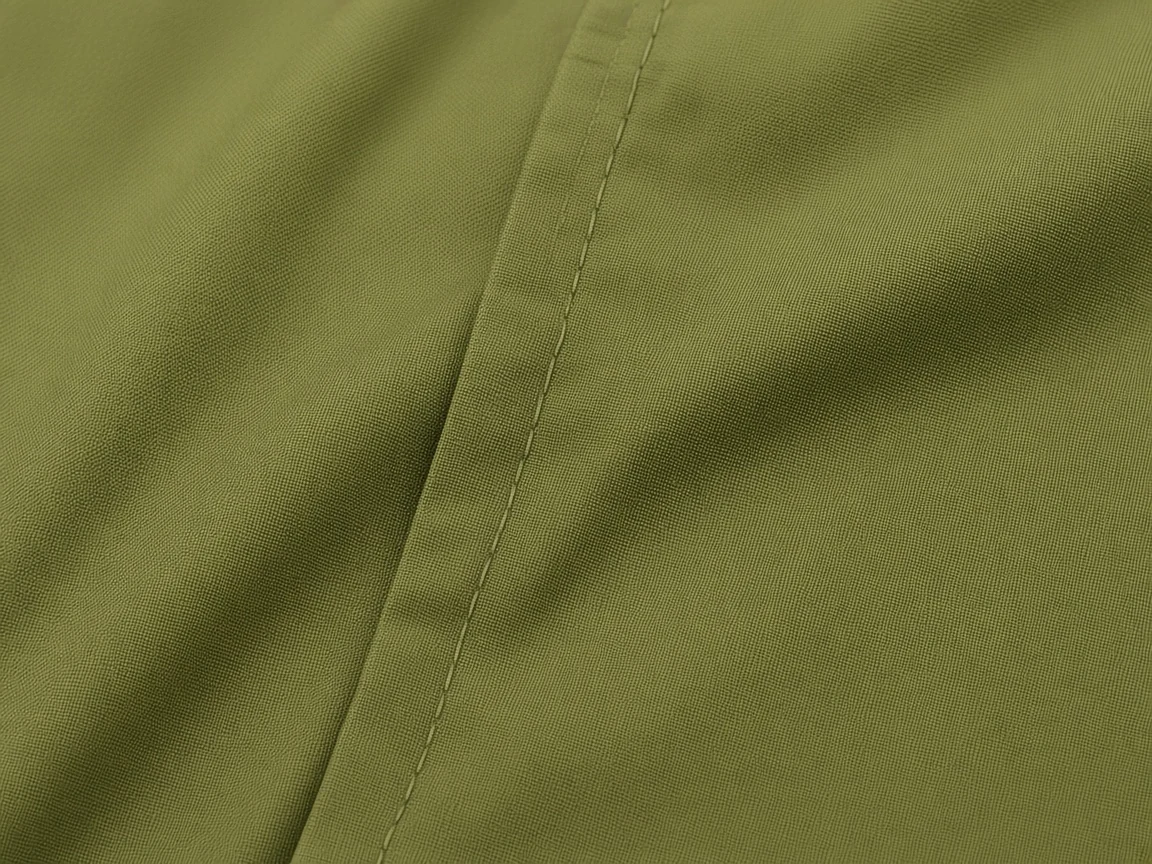
Needle holes are water paths; taped, sealed, or otherwise planned joins are what turn barrier cloth into a barrier garment.
Sewing punches the barrier. Pins leave lasting perforations on coated and laminated goods.
That is why rain jackets are usually built with taped seams, and why makers debating a “waterproof” bag still ask whether stitching must be sealed.
Seam sealing—including seam tape or liquid sealant—is what closes those needle paths when the finished item must stay dry.
From the field: In r/sewing, makers say water-repellent cloth is not a waterproof bag without sealing. One reply: without sealing, “the bag isn’t water proof just water repellant.” — Source: Wayback r/sewing stitching thread
If the garment must stay dry at stitch lines, plan tape, liquid sealant, welding, or another join the mill supports—before you argue about fabric coupons alone.
Apparel Shortlist: Match the Waterproof Family to the Job
Choose the construction by end use first: splash jacket, storm shell, wet bag, or stretch outdoor pant do not share one “best waterproof fabric.”
Use this quick routing:
- Commute splash and fashion “rain” looks: water-resistant or water-repellent synthetics may be enough. Stay on the WR siblings when that is the real job.
- Multi-hour trail rain with taped seams: coated or laminated waterproof shells, plus a seam plan.
- Soft wet bags and protectors: PUL-style laminates are common.
- Ultralight shelters: silicone-impregnated nylons show up often; they are a different handfeel lane than fashion outerwear.
- Heavy covers and zero-breathability needs: vinyl/PVC families.
- Mobility plus a waterproof story: stretch nylon-spandex waterproof programs—see the lightweight waterproof buyer path rather than forcing non-stretch tarp cloth into a pant pattern.
Browse the waterproof fabric hub after you lock the construction family.
Choose Water-Repellent Nylon for Light Rain—or Stretch Waterproof Next
Use published water-repellent nylon when the brief is light rain and splash; route stretch waterproof shortlists to the lightweight waterproof article instead of inventing hydrostatic grades.
When the garment only needs light rain and splash protection on a nylon apparel cloth, SHENGCHAO water-repellent nylon fabric matches that published job. The live page lists a water-repellent finish for light rain and splashes, a soft handfeel, wrinkle resistance, and a durable nylon structure for outdoor wear. Published overview values on that page are 100% Nylon, 130 g/m², 148 cm width, 280T density, and 70D x 200D yarn count.
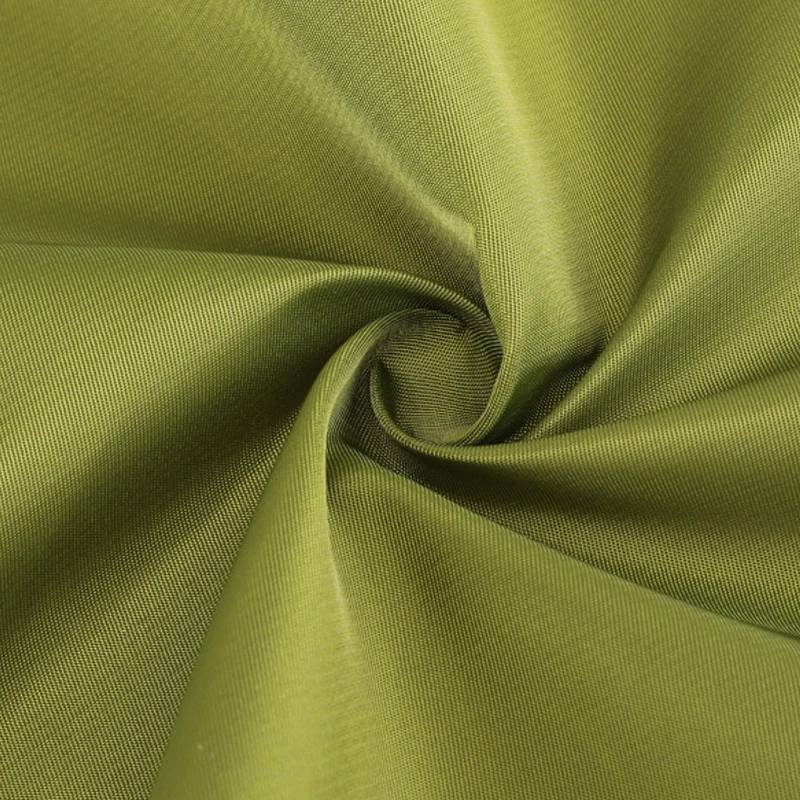
Use the published overview below when you pull a light-rain nylon sample.
| Spec | Published value |
|---|---|
| Composition | 100% Nylon |
| Weight | 130 g/m² |
| Width | 148 cm |
| Density | 280T |
| Yarn count | 70D x 200D |
| Stated finish job | Water-repellent finish for light rain and splashes |
The live page does not publish a hydrostatic head or spray grade. Do not invent one in the tech pack. This SKU is the wrong shortlist item when you need a documented waterproof barrier, taped-seam storm shell, or stretch waterproof hydrostatic buyer guide.
For stretch waterproof nylon-spandex programs aimed at outdoor jackets and hiking pants, use the lightweight waterproof fabric article. That sibling covers the 70D waterproof nylon-spandex lane (published 90% nylon / 10% spandex, 140–145 g/m², 150 cm width) without rewriting it here. Ask for method names if your brand later needs a numeric hydrostatic claim—the live 70D page also does not list an HH figure.
FAQ
What fabrics are waterproof?
Barrier constructions: coated nylon or polyester, PUL laminates, membrane waterproof-breathable stacks, vinyl/PVC, and silicone-impregnated families. Fiber names alone are not enough.
What is the difference between waterproof and water-resistant fabric?
Waterproof usually means a liquid barrier under pressure or a stated method. Water-resistant fabric slows soak-in for splash and short drizzle.
Water-repellent finishes add beading on the face. The three labels are not interchangeable on a mill sheet.
Is polyester 100% waterproof?
No. Polyester can be tightly woven or finished for water resistance, but waterproof performance still depends on coating, laminate, membrane, or another barrier—plus how the garment is sewn.
Which fabric is 100% waterproof?
No fiber name is “100% waterproof” by itself. Vinyl, PUL, coated synthetics, and laminated membranes are the classes people mean when they want a full barrier. Seams still decide whether the finished item leaks.
How is waterproof fabric tested?
Hydrostatic methods such as AATCC TM127 raise water pressure until leakage points appear. Spray or rain methods can disagree with hydrostatic results, so confirm both the method ID and which face was clamped.
Do waterproof fabrics still need seam sealing?
Often yes, when the finished item must stay a barrier. Needle holes and untaped seams are common leak paths even when the fabric coupon looks strong.
When is water-repellent nylon enough instead of a waterproof construction?
When the brief is light rain and splash on apparel cloth—and the team accepts that sustained pressure, pooling, or taped-seam storm use needs a different construction.
When should buyers look at stretch waterproof nylon-spandex?
When the pattern needs mobility and recovery alongside a waterproof story—hiking pants, closer-fit jackets, active outdoor wear. Start with the lightweight waterproof fabric guide for that lane.
References
- Waterproof fabric (Wikipedia) — constructions, WPB, DWR wet-out, seams/zips.
- AATCC TM127 Water Resistance: Hydrostatic Pressure (method summary) — hydrostatic purpose/scope; not identical to rain/spray methods.
- SGS-IPS AATCC 127 Hydrostatic Pressure Test — three leakage points; specimen sizing notes.
- Mastering Waterproof Fabrics (Sewing Guild) — needle holes, pins, seam tape/sealant.
- Waterproof Fabric Guide (The Sewing Directory) — oilcloth, PUL, ripstop caveats for makers.
- r/sewing: Do I have to waterproof the stitching? (Wayback) — water-repellent fabric vs sealed waterproof bag language.
- r/sewing: Seam techniques for a waterproof garment (Wayback) — taped-seam expectation on waterproof garments.