



















































































































Fabric Stretch and Recovery: How to Measure and Compare
Fabric stretch and recovery describe two different behaviors: how far a textile extends under defined conditions, and how well it returns after the force is removed. A fabric can stretch easily but remain longer afterward, creating baggy knees, loose openings, or changing fit. For activewear and swimwear development, evaluate extension, remaining growth, and the force needed to stretch the fabric in both principal directions. A spandex percentage or a “four-way stretch” label cannot replace those measurements.
This guide explains the terms, gives a transparent calculation example, and shows how to turn sample observations into a useful fabric approval requirement.
Stretch, recovery, and growth are not interchangeable
Stretch describes extension
Stretch is the increase in length relative to an initial measurement, under a stated load or procedure. A result is incomplete without the fabric direction and test conditions. Pulling a swatch as hard as possible by hand measures neither a repeatable load nor a useful garment limit.
The amount of force matters. Two samples may reach the same extension while requiring very different effort. One can feel comfortable in a fitted top; another can feel restrictive in the same pattern. Neither is automatically better, because intended support, garment shape, and wearer movement determine the requirement.
Recovery describes the return
Recovery concerns how much of the applied deformation disappears after unloading. Some return happens promptly, and some may occur over a longer relaxation period. Therefore, a report needs the time at which the recovered length was read. A value taken immediately after release should not be compared directly with a value read after an hour.
Growth describes what remains
Growth is the remaining dimensional increase relative to the original length after the specified loading and recovery procedure. A textile that looks almost unchanged may still retain enough growth to affect a close-fitting garment. Report the remaining growth explicitly instead of using “excellent recovery” as a substitute for a measurement.
ISO 20932-1 provides strip-based methods for elasticity and related fabric properties. Its scope is useful when discussing the assessment with a laboratory; it does not supply one universal pass level for every garment.
A worked example of stretch and recovery percentages
For an explanatory calculation, let the initial reference length be L₀, the extended reference length be L₁, and the length after a stated recovery period be L₂. Use the same units for all three lengths. The following relationships make the denominator explicit:
- Extension (%) = (L₁ − L₀) ÷ L₀ × 100.
- Remaining growth (%) = (L₂ − L₀) ÷ L₀ × 100.
- Recovered extension (%) = (L₁ − L₂) ÷ (L₁ − L₀) × 100.
Suppose a hypothetical reference length increases from 100 mm to 150 mm, then measures 103 mm after the agreed recovery interval. The extension is 50%, the remaining growth is 3%, and the recovered proportion of the applied extension is 94%. These are three descriptions of the same example, not conflicting results.
The recovery calculation is undefined when no extension has been applied because its denominator is zero. It also does not measure breaking strength, compression pressure, or service life. Laboratory standards may define particular procedures and reported quantities differently; follow the selected method and label the calculation used rather than translating every result into a generic “recovery percentage.”
| Quantity | Hypothetical example | What it tells you | What must accompany it |
|---|---|---|---|
| Initial length | 100 mm | Reference before loading | Preparation and direction |
| Extended length | 150 mm | 50% extension in this example | Load or specified extension procedure |
| Length after recovery | 103 mm | 3% remaining growth | Relaxation time and conditions |
| Recovered extension | 94% | Fraction of the 50 mm extension recovered | Explicit formula and test context |
The numbers are illustrative arithmetic, not Shengchao test results or acceptance limits. A purchase specification should state which quantity is required and how it will be measured.
Why four-way stretch does not prove good recovery
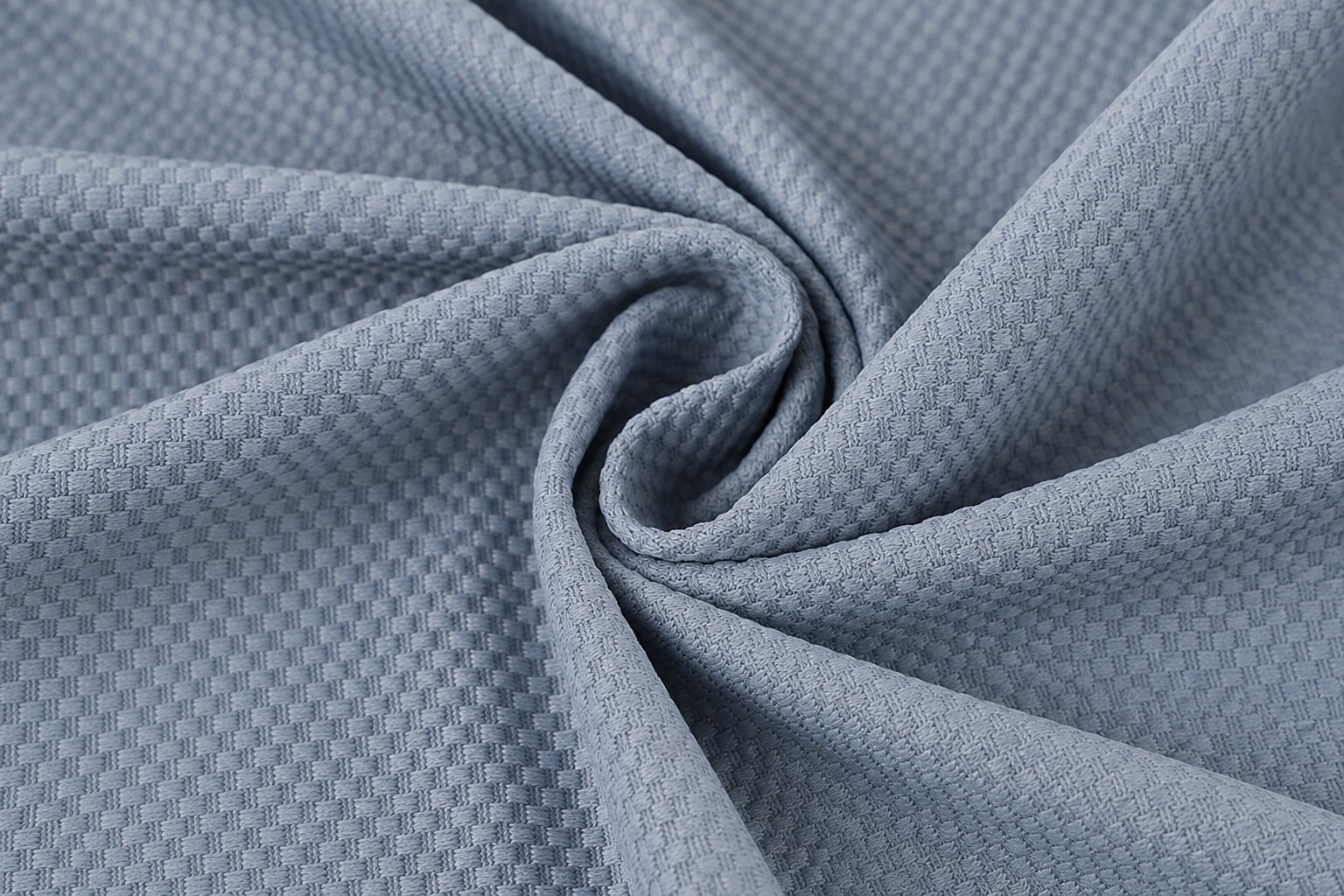
Four-way stretch commonly indicates extension in both the length and width directions. It does not establish equal extension, equal stretching force, or equal recovery in those directions. Ask the supplier to identify the directions on the sample rather than relying on a loose naming convention.
Knitted geometry can contribute movement as loops change shape, while elastic yarns can contribute a restoring response. Yarn selection, knit structure, finishing, and processing history influence the finished fabric. The fiber blend alone cannot describe this combination, and the same spandex percentage can appear in materials with quite different behavior.
After measuring the fabric, align its stretch directions with the pattern. Rotating a panel can change garment response even when the fabric itself is unchanged. Review straps, waistbands, seams, and high-extension zones as part of the assembly rather than assuming that a two-direction fabric result guarantees a successful garment.
Select a test method that suits the construction
ASTM D2594/D2594M addresses knitted fabrics with low-power stretch behavior. Higher-power support applications may need a different method. Discuss the intended material and garment with the laboratory before choosing a procedure, and request the current edition and complete reporting basis.
Do not combine numbers obtained under different loading, hold, cycling, or recovery conditions into a simple supplier ranking. A fixed-load assessment and a fixed-extension assessment ask different questions. Even where both are useful, label the results separately and keep the sample identity attached.
Institutional textile laboratories also treat elastic recovery as a distinct assessment. For example, ASU FIDM’s textile testing laboratory lists elastic-recovery evaluation among its capabilities. A complete testing brief helps the laboratory choose relevant measurements rather than merely reproduce a marketing term.
A sampling workflow for apparel buyers
Begin with the garment problem
State whether the main concern is bagging after movement, difficult dressing, excessive pressure, loose openings, or loss of fit after washing. Include a benchmark garment and the intended activity. A fabric chosen for gentle mobility may require a different force response from one used in a supportive panel.
Compare traceable samples in both directions
Record the article code, lot, color, composition, finished weight, finish, and intended face. Ask for a consistent sample preparation procedure. Evaluate both principal directions with the same defined conditions, and keep an untested reference cutting for appearance and hand comparison.
Check the processing and care conditions
Printing, heat treatment, washing, and other finishing steps can change the material presented to the patternmaker. Assess the production-representative fabric where possible. If the garment is intended for repeated laundering or pool exposure, agree what conditioning and repeat assessment are needed rather than assuming the initial result will persist.
Approve a sewn prototype
Use the intended seams, lining, elastic trims, and pattern. Look for local distortion after movement and rest. Separate measured fabric data from subjective fit comments, and investigate whether the problem is fabric response, pattern ease, seam construction, or a combination. Replacing the fabric without identifying the cause can simply move the problem elsewhere.
Apply the questions to a real fabric listing
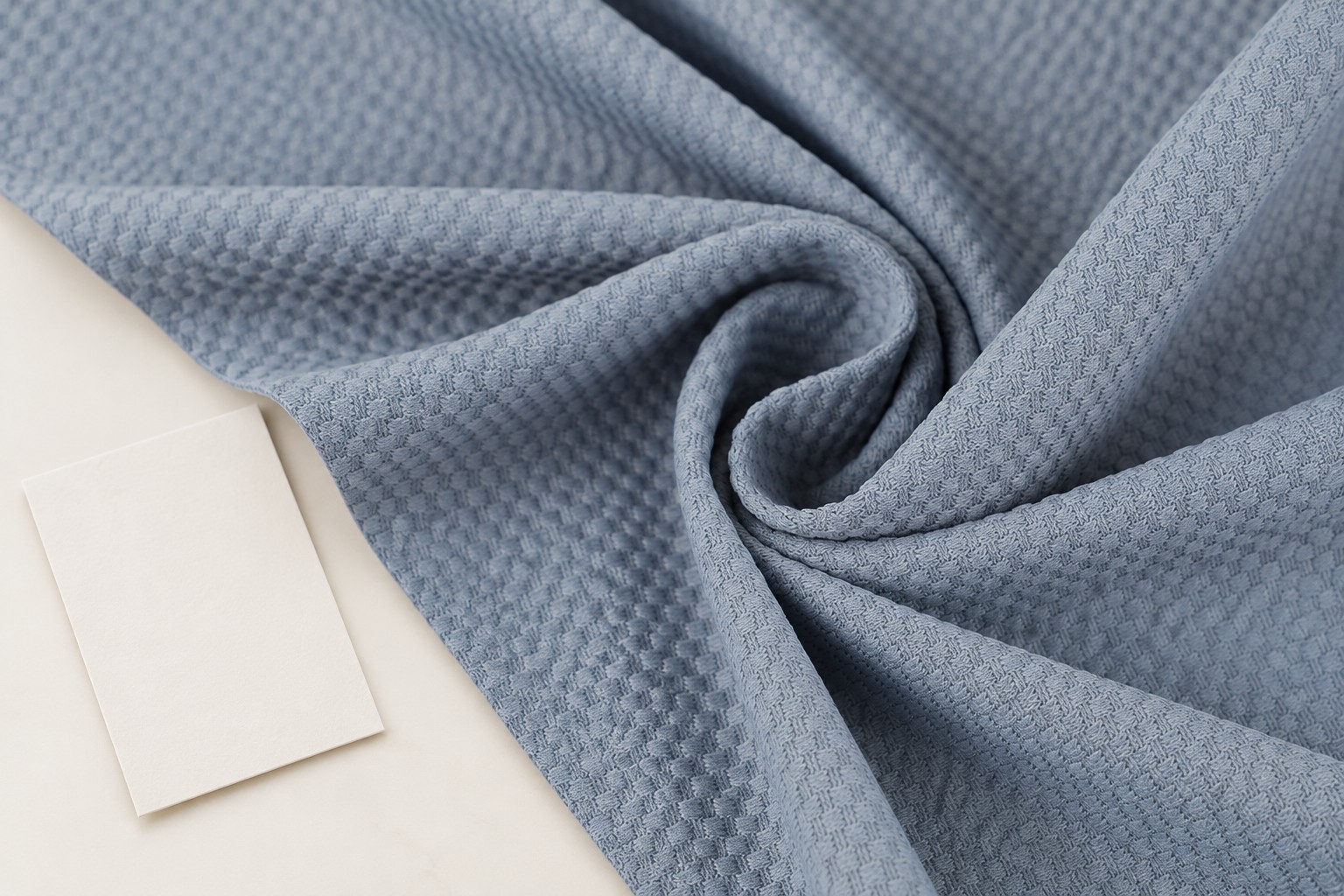
Shengchao’s nylon-spandex swimwear fabric is listed as 84% nylon and 16% spandex, at 180 g/m² and 160 cm wide. Those specifications identify a material to sample. They do not provide a measured extension, recovery percentage, or remaining-growth limit.
Ask for the relevant test report on the finished fabric and clarify the intended application. For a swimsuit, wet fit, lining behavior, and repeated water exposure may matter alongside dry recovery. For other fitted apparel, a different construction may be more suitable. Do not infer a support or chlorine-durability claim from the composition alone.
For broader material selection, use our stretch-fabric overview. The yoga-pants fabric guide explains garment priorities, while nylon versus polyester swimwear discusses the separate comparison between material families. This page focuses on interpreting and verifying their mechanical response.
Understand strain before comparing percentage claims
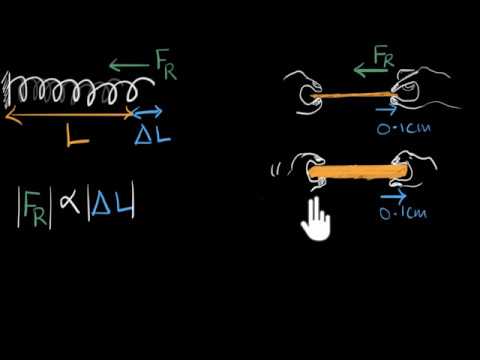
Khan Academy India – English explains stress and strain in the educational video below. Strain relates dimensional change to original length, which helps explain why the reference length and denominator matter. Textile structures can behave nonlinearly, so this general physics lesson is background rather than a fabric-testing procedure or a claim that every knit follows a simple spring law.
Watch the stress and strain lesson on YouTube.
Write an approval requirement that can be checked
A useful requirement names the fabric direction, method, load or extension, hold conditions, cycles, recovery interval, reported quantity, and acceptance level. Include the post-care condition if it is part of the garment claim. Keep the approved reference, the report, and the purchase specification together.
Avoid writing only “high stretch, good recovery.” That leaves both the measurement and the commercial expectation unresolved. Share your benchmark and fit problem through the stretch-fabric order checklist, then contact Shengchao Textile to discuss relevant samples and verification requirements.
Frequently asked questions
Can a fabric have high stretch and poor recovery?
Yes. Easy extension does not guarantee that the material returns sufficiently after unloading. Check remaining growth and the recovery interval as well as extension.
Does 20% spandex guarantee a particular recovery value?
No. Composition alone does not establish the finished textile’s response. Yarn, construction, finishing, loading conditions, and the measurement method also matter.
Are growth percentage and recovery percentage the same?
No. Growth describes remaining dimensional change relative to the original length. Recovery can describe the proportion of applied extension recovered; the formula and denominator must be stated.
Should stretch be tested before or after washing?
Use the conditions required by the garment brief. Initial and post-care assessments can answer different questions, so agree the care procedure and compare results under the same mechanical test conditions.