



















































































































Fabric Seam Strength: Methods, Failures and Lining Approval
Fabric seam strength is the load-bearing performance of a sewn assembly under a defined test. It depends on the fabric and the seam construction, so it cannot be inferred from a fabric tensile result alone. Buyers should specify the test method, seam type, thread, stitch conditions, material direction and sample state, then review both the maximum force and how the specimen failed. Seam strength is related to, but distinct from, yarn slippage at a seam. A useful approval connects the laboratory evidence with a representative garment rather than relying on a statement that the fabric is strong.
Define the failure that the product must avoid
When a seam opens, first describe what happened. Did the thread break, did the fabric tear beside the stitching, or did yarns move and create a gap? Preserve the affected item and a matching unused reference. Photograph both sides and record where the opening occurs. A clear description helps determine whether the investigation concerns sewing, fabric construction, loading or a combination.
Keep appearance and function in view. A visible gap can be unacceptable before complete rupture, while a broken stitch may require a different correction from damaged fabric. Do not treat every opened seam as proof of weak cloth. Ask what assembly was used and what conditions preceded the failure before selecting a repeat test or proposing a material change.
Choose a method that fits the material and seam
ISO 13935-2:2026 describes maximum force to seam rupture using a grab method. Its public scope concerns force applied across straight seams, primarily in woven fabrics, and identifies material exclusions. It is restricted to constant-rate-of-extension machines. Do not automatically transfer it to a curved garment seam or an unrelated textile category.
The ASTM D1683/D1683M-22 scope addresses sewn seams in woven fabrics and makes seam engineering choices relevant to interpretation. Confirm the applicable method and assembly with the laboratory. A result should retain its conditions rather than becoming a universal strength rating attached to the fabric name.
Keep seam strength and seam slippage separate
Maximum force and the development of a seam opening answer related but different questions. A specimen can reach a substantial force while showing an unacceptable opening under a lower load. The buyer needs the assessment appropriate to the end use. Ask the laboratory to identify the observed failure mode and any additional slippage evaluation required by the customer.
Do not use a seam-rupture number to close a slippage requirement without reviewing the actual specification. Equally, a satisfactory slippage result does not prove every stitched assembly will carry the intended load. Keep the required force result, opening assessment and construction details together, but preserve their separate acceptance decisions. This makes it easier to choose a correction that addresses the actual problem.
Record the assembly, not just the cloth
| Condition | What to identify | Why it matters |
|---|---|---|
| Fabric | Reference, lot, finish and direction | Connects the result to the proposed material |
| Seam construction | Seam and stitch types used | Defines the tested assembly |
| Thread | Agreed thread specification | Avoids comparing unlike sewn systems |
| Sewing conditions | Relevant stitch density and preparation | Supports reproducibility |
| Sample state | As received or after specified care | Clarifies the conditions approved |
| Failure observation | Thread break, fabric damage, slippage or combination | Directs corrective work |
| Acceptance criteria | Applicable buyer requirement | Separates a measured result from release |
This checklist organizes evidence; it is not a universal seam recipe. Let the applicable method and customer brief determine the detailed specimen preparation. A purchasing record should allow another team to understand which sewn system was tested and repeat the comparison without reconstructing missing conditions from photographs.
Start with the intended lining reference
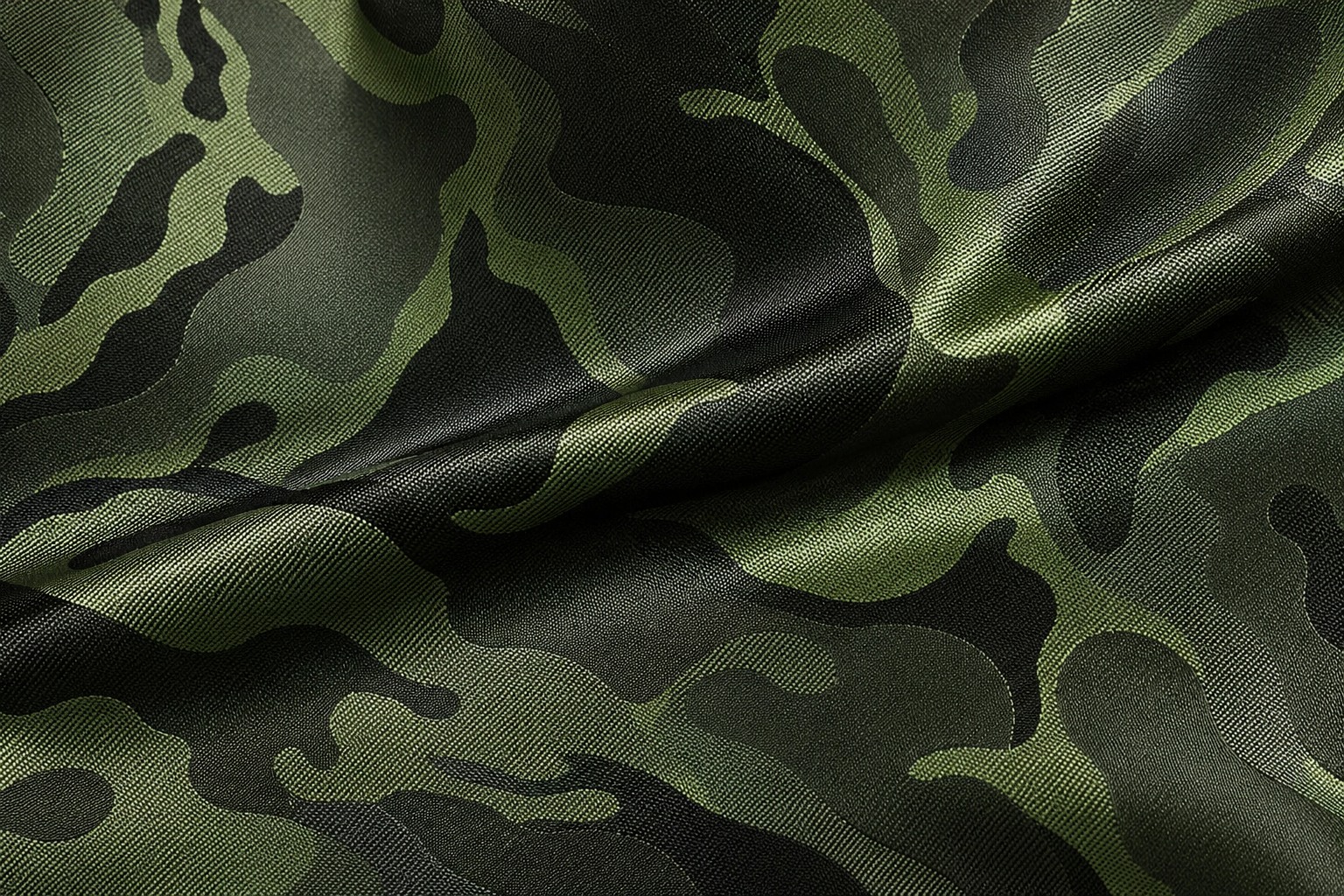
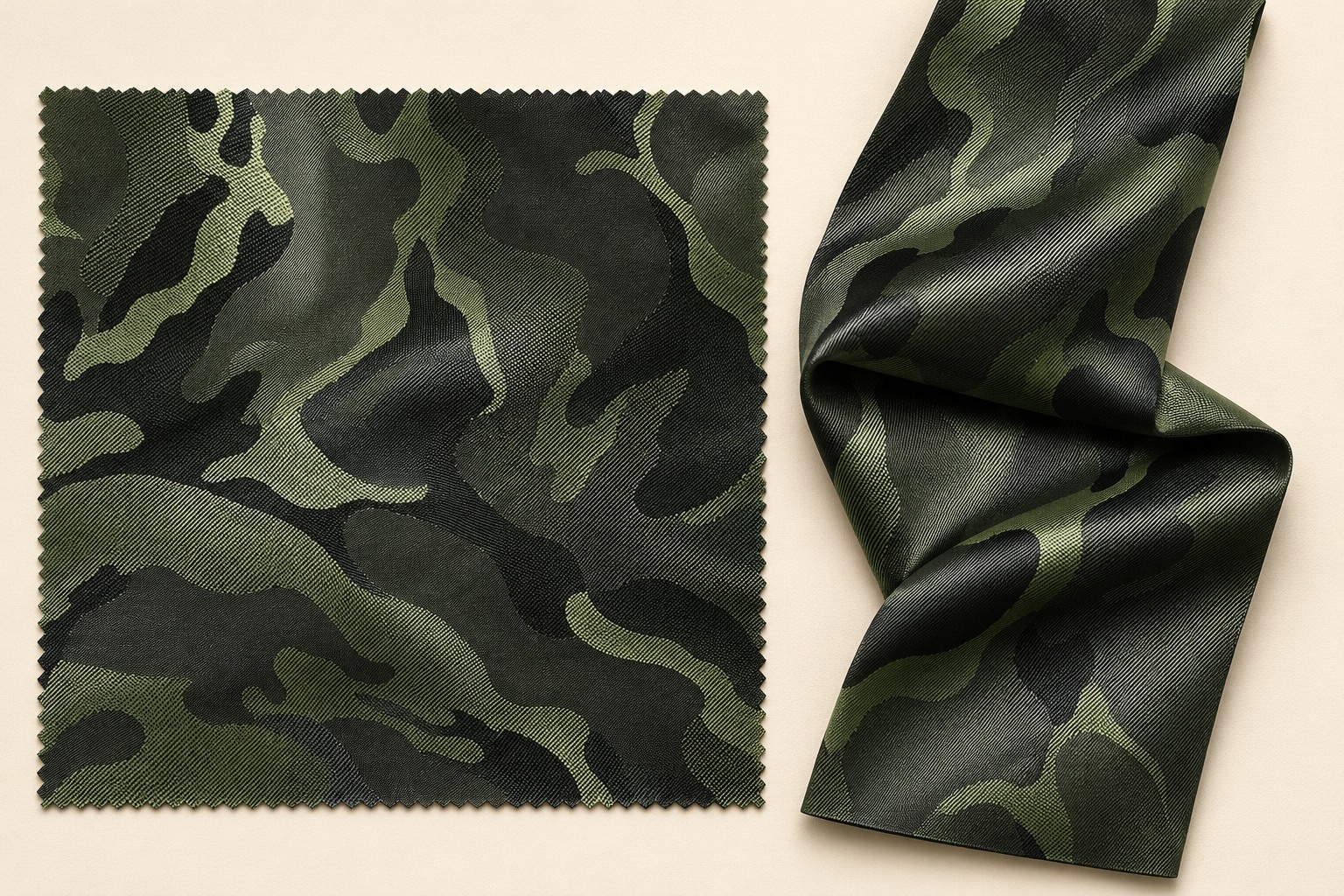
Shengchao’s jacket lining fabric reference is relevant to a woven-lining development enquiry. Its visible olive and dark patterned surface helps identify the sample being considered. Request current construction and finishing details, representative yardage and relevant test evidence. The image does not establish a seam-strength result or prove suitability for a particular jacket assembly.
The lining fabric types guide provides the parent selection context. A lining’s seam performance belongs alongside its handling, movement and interaction with the shell. Choose the material for the complete garment brief, then evaluate the proposed seams. A generic lining category cannot replace a representative sample made with the intended sewing construction.
Prepare comparable seams and material directions
Identify the directions being assessed and keep them in the test request. A woven material may need more than one orientation under the agreed plan. Ask the laboratory how the seam should be positioned relative to loading and how specimens should be sampled. Do not mix directions in a summary result without retaining the individual evidence and the method’s reporting requirements.
Use competent sewing preparation and record the agreed assembly. If the question is a controlled fabric comparison, keep the seam conditions consistent. If the question is which seam design to select, identify each design explicitly and compare it under a planned programme. Changing thread, stitch density and seam construction together without a record makes it harder to understand which change produced the observation.
Inspect failure mode as carefully as maximum force
Ask for an explanation of what failed and where. Retain photographs and, where practical, tested specimens for review. Broken thread, fabric damage and yarn displacement can suggest different next questions, but they do not by themselves identify a root cause. Compare them with the approved assembly and sample history before deciding on a manufacturing change.
A higher number is not automatically the best commercial outcome if the test leaves damage that conflicts with the product requirement. The buyer should agree how force, appearance and repair considerations are interpreted for the application. Do not invent a universal ideal failure mode. Use the customer’s requirements and qualified technical review to decide whether a particular result is acceptable.
Keep seam efficiency tied to its reference
Where seam efficiency is requested, ask which reference measurement and calculation the selected method requires. A percentage without its base fabric result and conditions can be misleading. Preserve the original force values and units with any derived figure. Do not compare percentages from unrelated constructions as though they provide a complete ranking of garment durability.
Discuss this field with the laboratory before testing, especially when reports from different suppliers use different terms. The goal is a meaningful comparison of the intended assemblies. If the customer only requires maximum force, do not add an improvised efficiency claim. If the customer requires both, ensure that the sampling and reporting support both decisions.
Use complementary fabric tests for the right questions
The seam slippage guide addresses yarn movement and opening around a seam. Use it when gaping is the problem, and keep the relevant assessment separate from rupture strength. A garment can need both checks; a single favourable result should not hide a failure against another agreed requirement.
The fabric tear-strength guide concerns the propagation of a tear under its selected method. It does not describe the same assembly as a sewn-seam test. Use complementary evidence when fabric damage appears near stitching, then review the actual seam and garment. Do not diagnose a sewing complaint from an unrelated headline fabric number.
Check a representative garment after the required care
Make the intended garment with its proposed shell, lining, thread and seam details. Examine movement and stressed areas under a defined development plan. If care is part of the required evaluation, document the process and inspect the same locations afterwards. Keep observations traceable to the garment version rather than describing several prototypes collectively as the tested sample.
When a correction changes the material or assembly, produce another representative sample and repeat the relevant checks. Increasing stitch density or changing thread should not be assumed to solve every opening problem. The revised construction needs evidence that it addresses the finding while preserving the other requirements, including appearance, movement and production handling.
Write the approval so production can reproduce it
A complete request names the material and lot, directions, sample state, applicable standard, required seam assembly and buyer criteria. Ask the laboratory to flag missing conditions before it proceeds. Keep the complete report, assembly record and approved reference garment together. When production changes a material or sewing condition, review whether the earlier evidence still describes the product.
For a disputed result, compare the specimen identity, preparation and method before judging either laboratory. Retain material from the affected lot for an agreed comparison and document the resolution. Release should close the specific open requirement. A new test result should not be used to erase an earlier failure without explaining what changed and why the final assembly is now acceptable.
Watch an educational garment-testing overview
Vidya-mitra’s INFLIBNET lesson on final apparel inspection includes garment-specific testing and seam strength. It helps illustrate why seam assemblies and failure observations matter. Use the applicable current standard and the agreed buyer specification for laboratory testing rather than copying a general educational example into the purchase order.
Frequently asked questions
Does strong fabric guarantee a strong seam?
No. The sewn system includes the fabric, thread and seam construction. Evaluate the intended assembly under an appropriate method.
Is seam strength the same as seam slippage?
No. Maximum force and seam opening concern different observations. The garment brief may require both assessments.
Can ISO 13935-2 be applied to every curved seam?
Its published scope concerns straight seams and specified material categories. Confirm the appropriate approach with the laboratory.
What should accompany a seam-strength number?
Keep the method, sample identity, direction, seam and thread details, preparation, units and failure mode with the result.