



















































































































Fabric Opacity Under Stretch: Leggings and Sample Approval Checks
Fabric opacity under stretch is the ability of an extended material to conceal what lies behind it under defined viewing conditions. For leggings and fitted activewear, a relaxed swatch is not enough: buyers should review the actual colourway at a relevant extension and in a representative garment. Agree the lighting, backing, movement and acceptance procedure before approval. Keep this assessment separate from GSM, stretch recovery and window-covering light-blocking tests. None of those measurements alone establishes that a garment remains visually opaque through the movements and fit conditions expected in use.
Turn an informal claim into a clear development question
Terms such as squat-proof sound decisive but leave important conditions unspecified. Ask which garment, size, colour and movement the claim concerns. A general statement about a fabric roll may not answer the buyer’s question about a fitted product. Write the intended use into the development brief before requesting samples or comparing suppliers.
Decide what must remain concealed and under which viewing arrangement. The objective is a repeatable product review, not a dramatic flashlight demonstration designed to make one sample look better. Agree who will assess the material, how observations will be recorded and what constitutes an unacceptable finding. Keep the procedure available for later sample rounds.
Evaluate an extended specimen rather than assuming relaxed coverage
An NC State textile design project on sheerness in stretch athleticwear explored instrumental assessments on stretched fabrics and garments. This illustrates why the measurement arrangement matters. Its particular method and findings should not be presented as a universal certification scheme or as evidence about an unrelated Shengchao product.
For purchasing, ask the laboratory or technical team to define the extension relevant to the intended product. Record how the specimen is mounted and how its starting dimensions are determined. A hand-pulled sample with an unknown amount of extension is difficult to compare with another sample, especially if different people apply different force.
Do not turn a window-covering method into an apparel certificate
AATCC TM203-2021 describes spectrophotometric light blocking with an intended application to window-covering textiles. A report bearing this method name should retain that scope. It does not automatically demonstrate how a fitted legging looks while stretched on a wearer.
If a supplier proposes an instrumental method, ask what the result measures and how it relates to the garment decision. Discuss any adaptation with the laboratory and document it honestly. Keep a study-specific or internal procedure labelled as such. Do not call an adapted assessment an official apparel certificate simply because the instrument produces a numerical output.
Control the conditions used for comparison
| Condition | What to record | Why it matters to review |
|---|---|---|
| Material identity | Product, lot, finish and colour | Connects the observation to the order |
| Extension | Starting size, direction and mounted size | Makes sample comparisons repeatable |
| Lighting | Source and viewing arrangement | Prevents changing the comparison scene |
| Backing | Agreed contrast reference | Defines what observers assess |
| Garment fit | Size and representative movements | Connects material review to the product |
| Care history | As-received or specified treatment | Identifies the state being approved |
This table proposes a development record, not a standardized test method or pass threshold. Work with the laboratory and customer to agree the actual procedure. Preserve the same conditions across comparison samples. If an arrangement changes, record that change and consider whether earlier observations remain directly comparable.
Choose a real activewear fabric reference
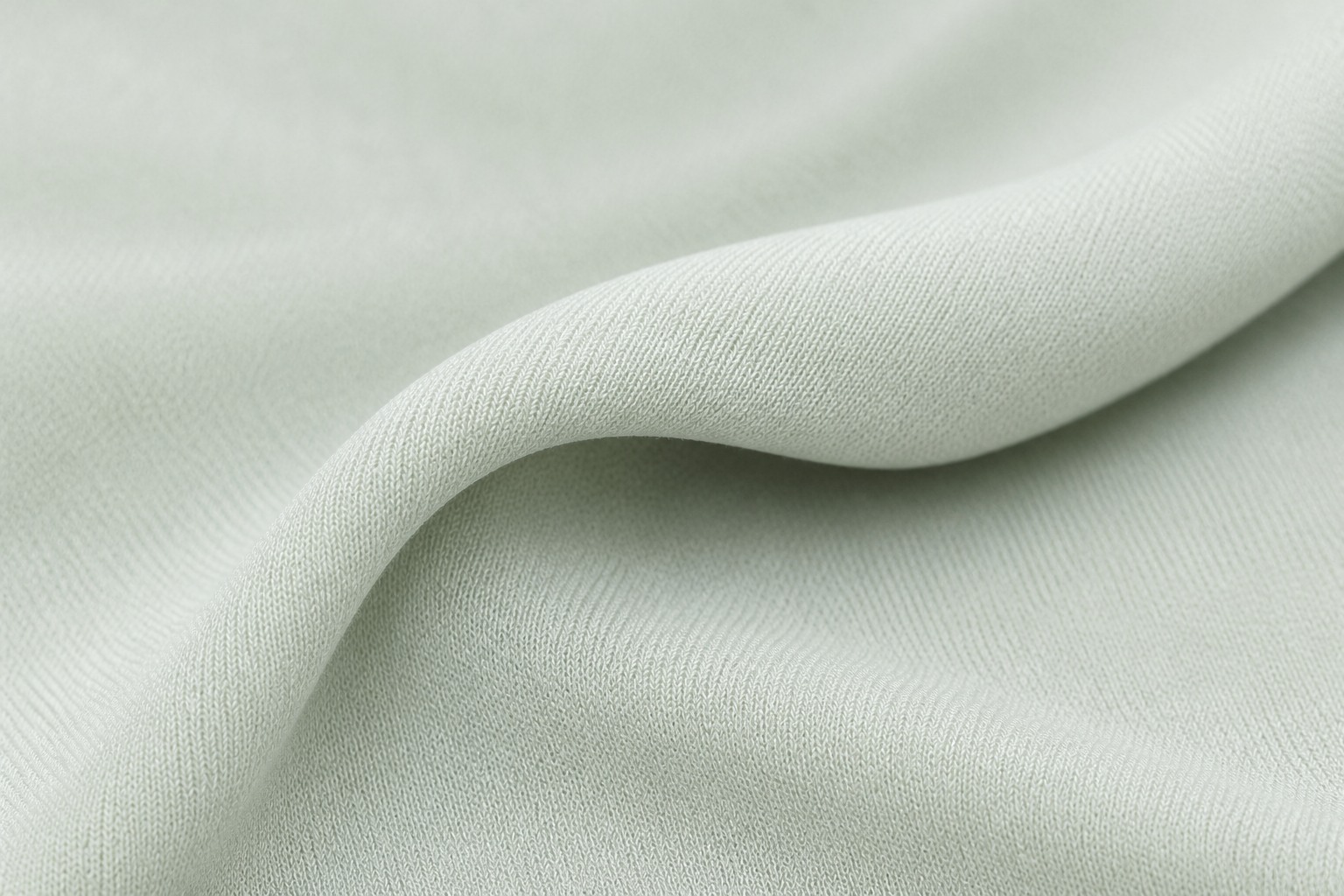
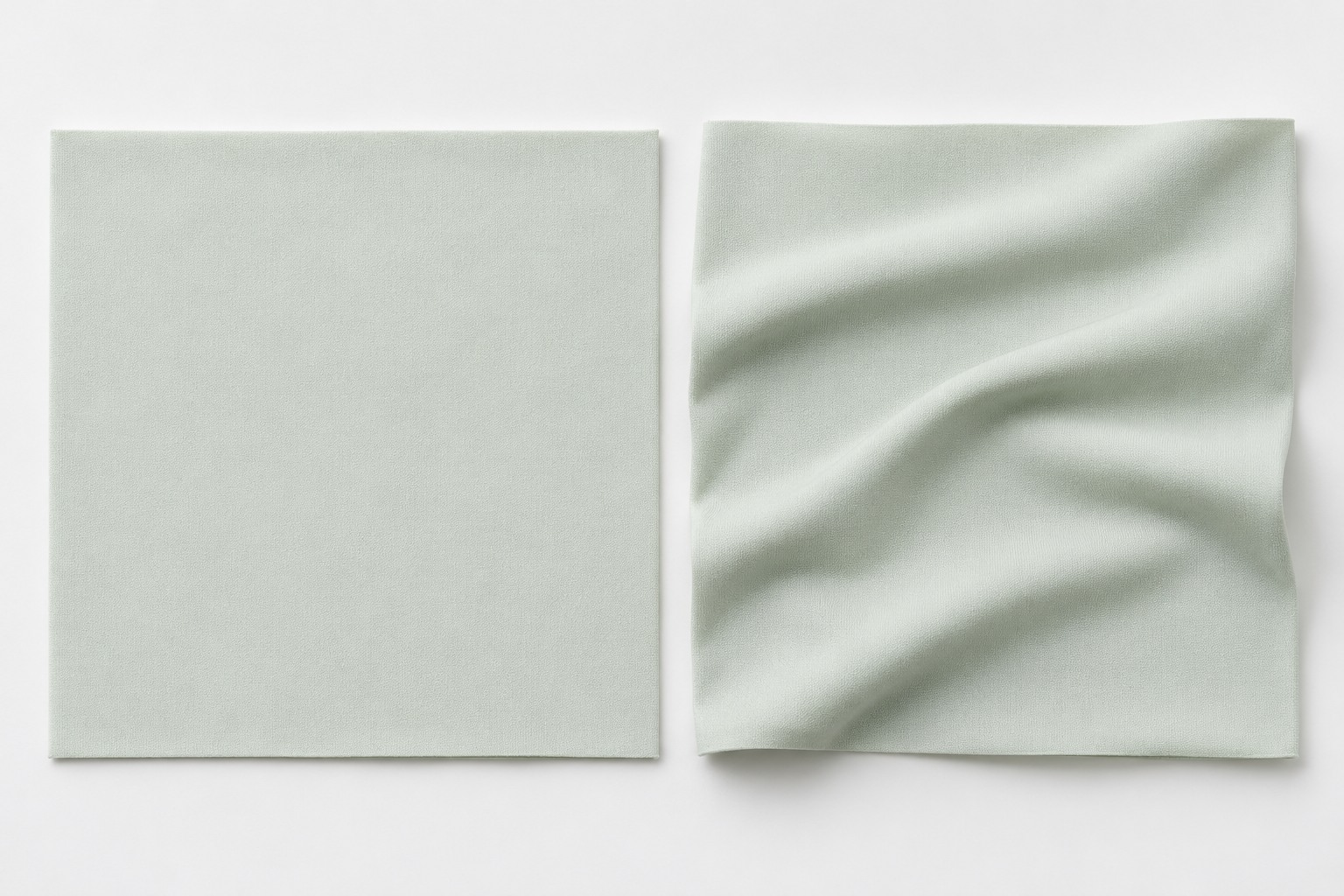
Shengchao’s 40D nylon double-knit high-elastic fabric is a concrete option for an activewear sampling discussion. Request the current finished material and confirm its declared construction and composition. Its pale appearance makes colour-specific review especially relevant to the enquiry, but the photograph does not establish either a pass or a failure.
Ask the supplier to connect the swatch to the actual order code, colour and finishing state. If a darker development sample was approved previously, do not assume that the pale version is covered by that approval. Obtain the evidence required for the proposed colourway. Retain a matching swatch so later sample rounds can be assessed against an identified reference.
Keep opacity separate from stretch and fabric weight
The parent yoga-pants fabric selection guide places material choice in a broader application context. Use that overview to organize the options, then evaluate the actual fabric and garment. A fibre blend or commercial fabric name is a starting description, not a complete performance specification.
The fabric GSM guide explains mass per unit area. Keep weight in the purchasing record where it affects the product, but do not use it as an opacity certificate. Two proposed materials should be assessed under the agreed viewing and extension conditions rather than approved from their weight labels alone.
Record extension with enough detail to repeat the assessment
Mark an initial gauge length using a method that does not obscure the area being observed. Record the direction and the extended length. As a development calculation, extension percentage is the increase in length divided by the original length, multiplied by one hundred. Keep the calculation separate from any claim about how a particular garment fits.
For example, an initial marked length of 100 mm extended to 130 mm represents 30% extension in that direction. This is only an arithmetic illustration, not a recommended test level or a product result. A one-direction measurement does not fully describe a two-direction garment deformation. Ask the technical team how the chosen arrangement represents the intended fit and movement.
Use fit samples to connect fabric observations with the garment
Build a sample using the proposed pattern, seams, waistband and fabric orientation. Review representative movements and sizes selected by the garment team. Identify areas where the material experiences greater extension or changes in appearance. Record what was actually observed rather than converting one successful movement into an unlimited claim about every wearer.
If a problem appears, consider the construction and fit alongside the fabric. A revised pattern, size range or material may require another assessment. Keep each development change traceable and compare like conditions. Do not quietly change the lighting or backing to make a revised sample appear improved, and do not approve a different material from an old garment photograph.
Review colourways, prints and care history deliberately
Create a sample matrix that identifies which colours and patterns need review. Record how the customer selected those combinations. Avoid claiming that a result on one shade proves every shade or print arrangement. Where the intended range contains contrasting areas, inspect the relevant parts of the actual garment rather than a convenient solid section alone.
If after-care behaviour matters, agree the preparation before assessment. Identify the procedure and cycle count, and keep treated specimens separate from as-received ones. Do not infer a lifetime guarantee from a single initial observation. For repeat orders, review whether material, dyeing, finishing or construction changes require renewed evidence under the same agreed comparison conditions.
Distinguish stretch recovery from visual concealment
The stretch and recovery guide addresses extension and the response after loading is removed. A material can require separate review for its visual appearance while extended and its recovery after movement. Keep the results in separate columns so one favourable property does not conceal missing evidence for another.
When evaluating alternatives, prepare a balanced brief covering fit, handle, opacity and the other relevant product requirements. Ask which changes are acceptable and which require customer approval. Avoid solving one concern by creating another unreviewed change, such as altering the intended fit or construction without checking the complete garment again.
Write an approval record that others can reproduce
Store the method description, material code, colour, extension arrangement, viewing conditions and observations together. Record the sample size and garment version where relevant. Photographs can help document an observation, but preserve camera and lighting details and retain physical samples when practical. A photograph without those conditions may be unsuitable for a direct comparison.
State the limits of the approval in ordinary language. Identify which materials, colourways, sizes and preparation conditions were covered and which remain open. If a supplier provides a numerical report, ask for the interpretation and its relation to the buyer’s acceptance procedure. Do not invent a universal pass percentage or imply that an unrelated standard settles the garment question.
Before bulk release, make sure the commercial description matches the approved evidence. If an advertising phrase implies wider coverage than the review actually established, revise the phrase or obtain the additional assessment. Keep the final wording with the purchasing decision.
Watch how knitted fabric properties are assessed
Vidya-mitra’s educational lesson on testing knitted fabrics provides background on physical fabric assessment. Use it to understand the importance of controlled specimens and separate properties. It is not an opacity certification procedure and does not establish a result for the material shown here. The agreed apparel review remains necessary.
Frequently asked questions
Does high GSM guarantee opaque leggings?
No. Weight is a separate specification. Assess the actual colourway under relevant extension, viewing and garment conditions.
Can AATCC TM203 alone certify squat-proof activewear?
Its stated intended application is window-covering light blocking. Do not extend that scope automatically to a fitted garment under movement.
Is the example 30% extension a recommended pass condition?
No. It illustrates the calculation only. Agree the relevant extension and assessment procedure for the actual product.
Should every colour be covered by the approval plan?
Identify which colourways require evidence and document the sampling decision. Do not assume one tested shade approves the whole range.