



















































































































Types of Waterproof Fabric Apparel Teams Actually Sample
The short answer to which types of waterproof fabric apparel teams actually sample is this: barrier constructions—coated cloth, laminated or membrane stacks, PUL, vinyl/PVC, and silicone impregnation—built to stop liquid water, while water-repellent / DWR finishes sit beside that map for light rain and splash.
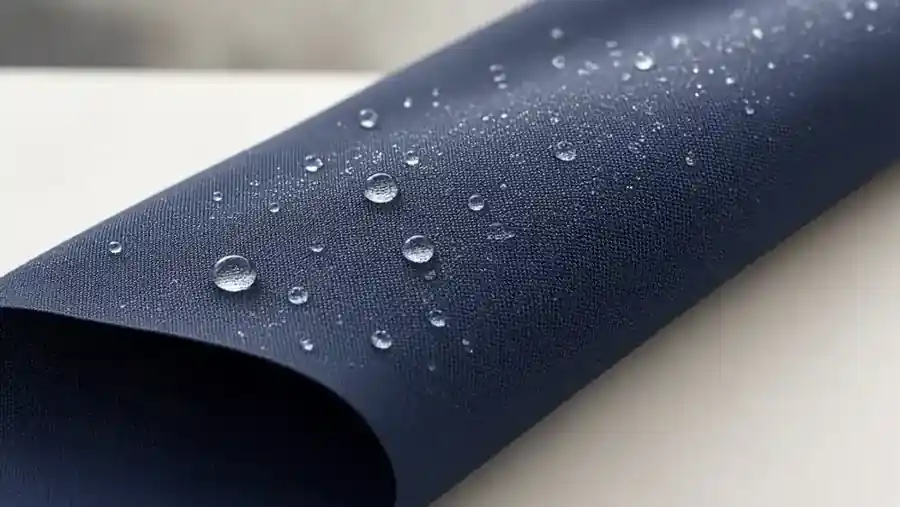
Below you get a construction taxonomy for RFQs, how each type behaves in real apparel and gear jobs, why WR/DWR is not a waterproof type, and when a published water-repellent polyester sample is enough versus when to open a stretch waterproof path. You will also keep waterproof vs water resistant language clean on the RFQ. Hub: Waterproof Fabric.
Waterproof Fabric Types at a Glance
Waterproof fabric types are barrier constructions—coated, laminated/membrane, PUL, vinyl/PVC, and silicone impregnation—while DWR sits beside them.
When buyers ask for types of waterproof fabric, they are usually naming a construction family for sampling, not picking a brand membrane slogan. Untreated polyester or nylon fiber names alone are not waterproof types.
| Type | What creates the barrier | Typical job | Common watch-out |
|---|---|---|---|
| Coated | Polymer skin on a textile face (PU, PVC, silicone coats, and related) | Rain shells, packs, covered panels | Breathability often limited; coating abrasion |
| Laminated / membrane | Film bonded into a textile stack (including WPB 2L–3L builds) | Performance rainwear | Face wet-out and seam plan still matter |
| PUL | Textile bonded to a thin PU film | Wet bags, protectors, soft barrier goods | Needle holes and heat sensitivity |
| Vinyl / PVC | Plastic sheet or heavy plasticized coat | Covers, wet-area goods, heavy rain gear | Little or no breathability |
| Silicone impregnation | Polymer driven into yarns/fabric | Ultralight shelters, some rain gear | Different hand than fashion shells |
For the barrier-definition deep dive—what actually counts as waterproof cloth—see what fabrics are waterproof. This page stays on the types map.
Coated Waterproof Fabrics
Coated waterproof fabrics put a polymer skin on a textile face; they block liquid well but often limit breathability.
A coating is a visible, tactile layer—often polyurethane (PU)—applied to nylon or polyester. Wax coats and silicone coats sit in the same broad family: the polymer does the blocking.
That is why coated rain shells and many packcloths feel different from fashion softshells. Liquid is stopped at the coated face or back face. Water vapor usually struggles to move the other way.
In maker and MYOG language, a PU-coated nylon may be described as water-resistant in hard rain even when the catalog calls it waterproof. Treat that as a reminder to name the coating chemistry and the end use on the RFQ—not as a lab certificate for any one mill.
Laminated and Membrane Waterproof Fabrics
Laminated and membrane types bond a waterproof film into a textile stack, including common 2L, 2.5L, and 3L rainwear builds. Laminated / membrane fabric is the construction family apparel teams mean when they ask for waterproof-breathable shells.
Lamination bonds a thin film—PU, TPU, ePTFE-style microporous membranes, or hydrophilic non-porous films—to one or more textile layers. Waterproof-breathable (WPB) apparel usually lives here.
Layer shorthand buyers meet on tech packs:
- 2L — face fabric bonded to the membrane; a separate hanging lining often protects the film.
- 2.5L — membrane or coating on the face back, with a printed or micro backer instead of a full liner.
- 3L — membrane sandwiched between face and bonded backer for durability in harder use.
Peer-reviewed textile reviews group commercial waterproof-breathable fabrics into high-density constructions, coated finishes, and membrane composites—with laminated WBM composites as a mainstream apparel route. Brand names change; the construction job stays the film-in-the-stack story.
PUL: Soft Laminate Waterproof Cloth
PUL is a polyurethane laminate: a soft textile bonded to a thin PU film for wet bags, protectors, and similar soft barriers.
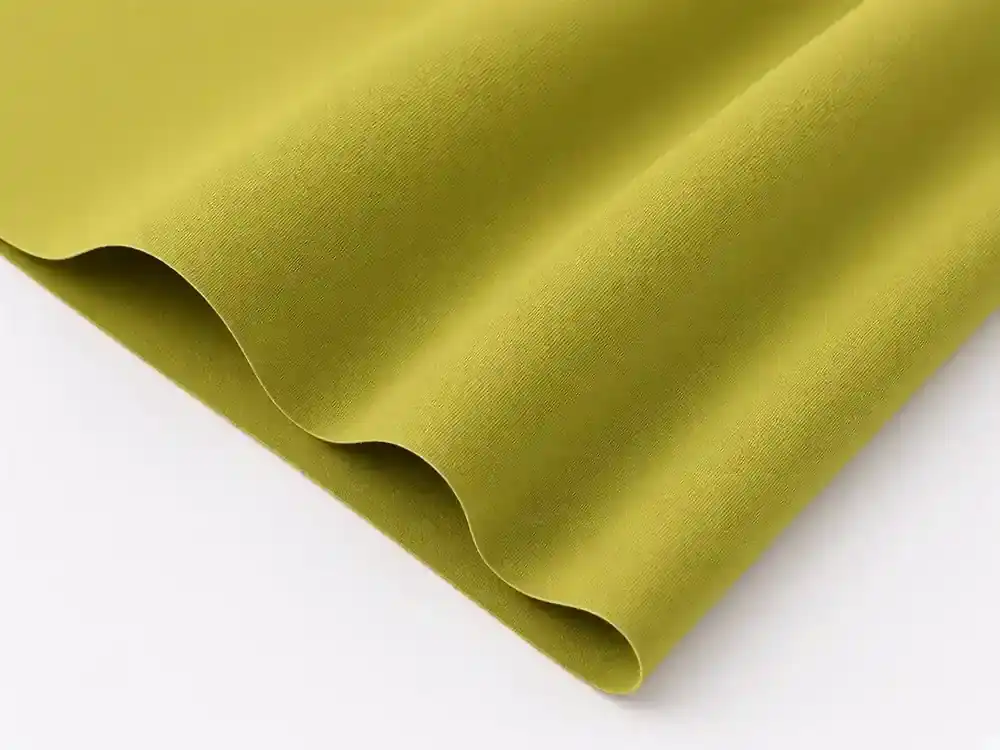
Polyurethane laminate (PUL) is not “another word for softshell.” Regular PUL is typically a two-layer soft barrier—knit or woven face thermally bonded to a thin PU film—used for bibs, wet bags, and washable protectors.
From the field: In r/SewingForBeginners, makers sorting the “waterproof realm” put it plainly: PUL is not the same as softshell. Softshell is usually thicker multi-layer cloth; regular PUL is the two-layer option people reach for on bibs, pads, and wet bags. — Source: r/SewingForBeginners PUL thread
If your program needs that soft laminate hand, say PUL (or name the film thickness the mill offers). Do not bury it under a generic “waterproof polyester” line.
Vinyl, PVC, and Silicone Impregnation Types
Vinyl/PVC types are heavy wipe-clean barriers; silicone impregnation drives polymer into yarns for ultralight shelter-style cloths.
Vinyl and PVC-coated cloths put a plasticized layer on a textile base. They wipe clean and shrug off standing water.
They usually offer little or no breathability. Aprons, covers, tablecloths, and heavy wet-area goods live here.
Modern oilcloth often means a PVC coat on a woven base—not a romantic wax-only finish.
Silicone impregnation is a different construction story. Polymer is driven into the yarns or fabric structure rather than only painted as a thick face film.
Ultralight shelter cloths (often discussed as silnylon-style families) use that lane. Expect a different hand, packability story, and seam-sealing chemistry than a fashion rain jacket.
Keep both types on the waterproof map when the RFQ is covers or ultralight shelters. Do not force them into a stretch outdoor pant brief.
How Water-Repellent and DWR Finishes Sit Beside Waterproof Types
Water-repellent and DWR finishes make water bead for light rain; they are not waterproof barrier types.
A DWR / water-repellent finish lowers how eagerly the face grabs droplets. Water beads and rolls. That is useful on light-rain jackets and as a face finish on many laminated shells.
It is still a finish class, not a barrier type. When DWR wears from washing, abrasion, or dirt, the face can “wet out.” On a membrane shell, liquid may still be blocked underneath while the garment feels cold and clammy. Treat wet-out as a face-finish issue—not automatic proof that the membrane failed.
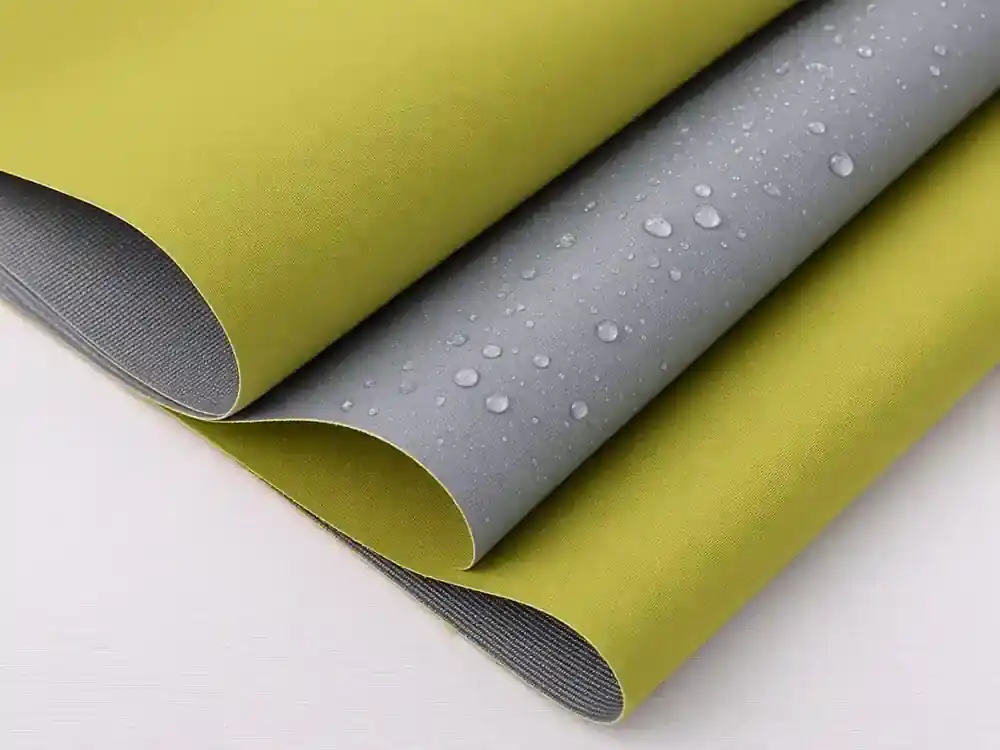
Water-resistant fabric literacy and the WR types shortlist live on sibling pages: what fabrics are water resistant and types of water resistant fabric. Keep those labels off a waterproof-only RFQ unless you mean them.
Match Waterproof Fabric Types to End-Use Jobs
Match coated, laminated, PUL, vinyl, or silicone types to the job first—then plan seams for finished dryness.
| End-use job | Type that usually fits | Switch away when… |
|---|---|---|
| Commute splash / fashion “rain” look | WR / DWR synthetics (beside this map) | Brand copy promises storm dryness |
| Multi-hour trail rainwear | Coated or laminated WPB + seam plan | Team only wants a beading face finish |
| Soft wet bags / protectors | PUL | Need rigid wipe-clean vinyl |
| Heavy covers / zero breathability | Vinyl / PVC | Need apparel comfort and vapor escape |
| Ultralight shelters | Silicone impregnation families | Need fashion shell handfeel |
| Mobility + waterproof story | Stretch waterproof programs | Non-stretch tarp cloth forced into a pant |
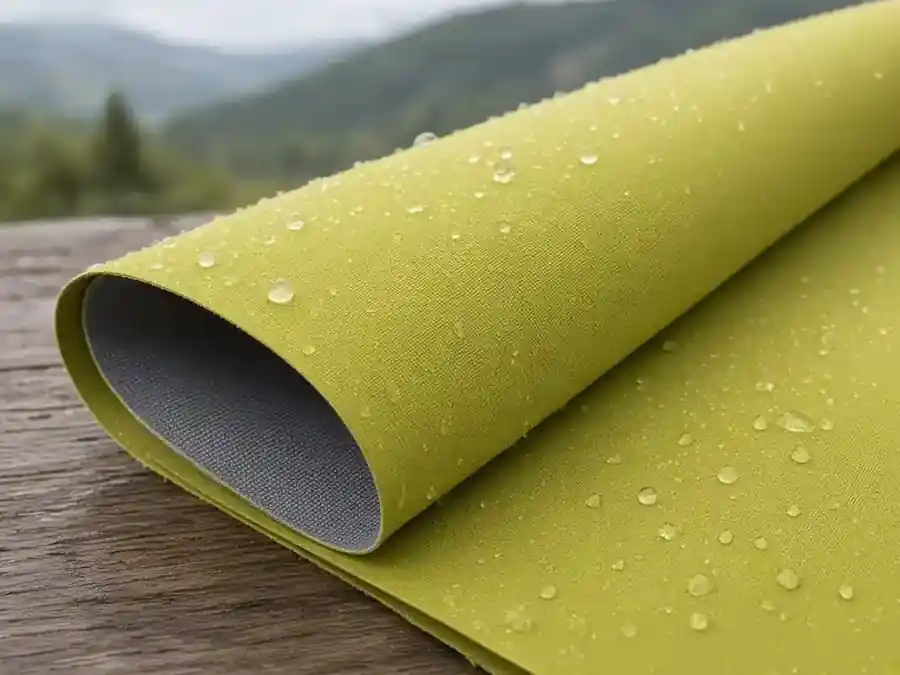
Spandex stretch waterproof sampling belongs on the stretch waterproof buyer path when the pattern needs mobility with a barrier story—not on a non-stretch tarp cloth forced into pants.
Needle holes are water paths. Taped, sealed, welded, or otherwise planned joins are what turn barrier cloth into a barrier garment. Fabric coupon ratings alone do not dry a finished item if stitch lines stay open.
Hydrostatic methods such as AATCC TM127 raise water pressure until leakage points appear. Those results may not match rain or spray methods, so ask for the method name—and do not invent a water-column figure for a SKU that does not publish one.
Choose Water-Repellent Polyester for Light Rain—or Stretch Waterproof Next
Use published water-repellent polyester when the brief is light rain and splash; open the stretch waterproof path when mobility plus a barrier story is required.
When the garment only needs light rain and splash protection on a polyester apparel cloth, SHENGCHAO Water-Repellent Polyester Fabric matches that published job. The live page lists a water-repellent finish for light rain and splashes, a soft handfeel, wrinkle resistance, and a durable polyester structure for outdoor wear.
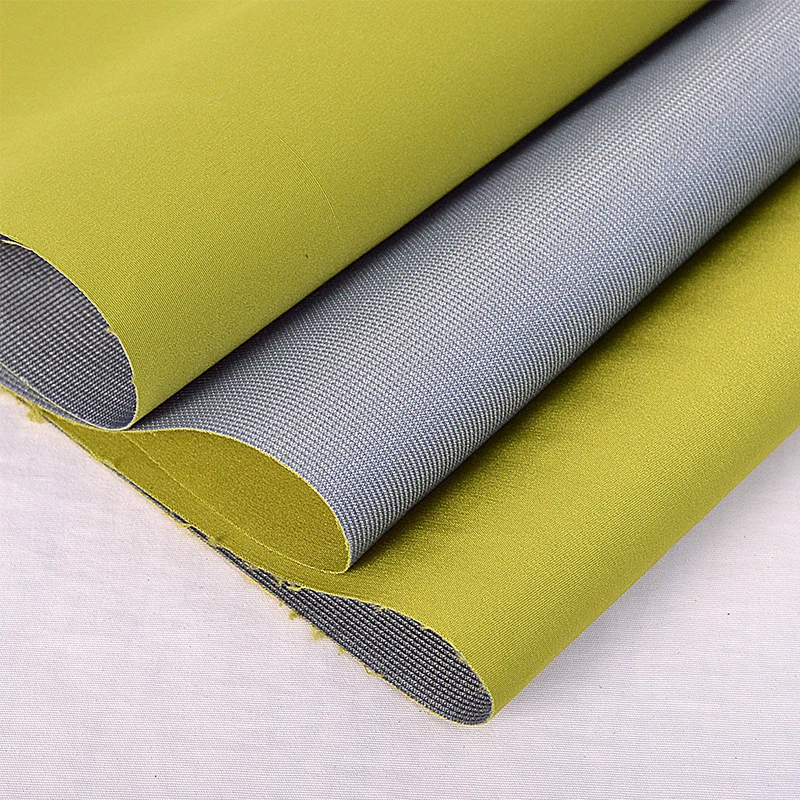
Use this published overview table for sampling.
| Spec | Published value |
|---|---|
| Composition | 100% Polyester |
| Weight | 198 g/m² |
| Width | 150 cm |
| Stated finish job | Water-repellent finish for light rain and splashes |
Path① publishes 100% Polyester composition, 198 g/m² weight, and 150 cm width on the live overview table.
The live page does not publish a hydrostatic head or spray grade. Do not invent one in the tech pack. This SKU is the wrong shortlist item when you need a documented waterproof barrier, PUL wet-bag cloth, vinyl cover, taped-seam storm shell, or stretch waterproof program.
For stretch waterproof nylon-spandex programs aimed at outdoor jackets and hiking pants, start with the lightweight waterproof fabric guide instead of restating that buyer path here. That sibling owns stretch waterproof sampling—do not force this WR polyester into that brief.
Browse the waterproof fabric hub after you lock the construction family. When both sides have the end use and the published sheet aligned, open a sample thread through Contact Us.
FAQ
What are the main types of waterproof fabric?
Coated fabrics, laminated/membrane stacks (including waterproof-breathable builds), PUL, vinyl/PVC, and silicone impregnation. Water-repellent / DWR finishes sit beside that list for light rain—they are not barrier types.
What is the difference between waterproof and water-resistant fabric?
Waterproof usually means a liquid barrier under pressure or a stated method. Water-resistant fabric slows soak-in for splash and short drizzle.
Water-repellent finishes add beading on the face. The three labels are not interchangeable on a mill sheet.
Is DWR a type of waterproof fabric?
No. DWR is a face finish that helps water bead. Waterproof constructions use a coating, laminate, membrane, vinyl layer, or impregnation intended to resist liquid as a barrier—usually with a seam plan on finished rainwear.
Is PUL waterproof?
PUL is a polyurethane laminate class used as a soft waterproof barrier for wet bags, protectors, and similar goods. Seams and needle holes still matter for finished dryness.
What is the difference between coated and laminated waterproof fabric?
A coating applies a polymer layer onto a textile face. A laminate bonds a film or membrane to one or more textile layers. Both can be waterproof; handfeel, breathability, and durability differ by chemistry and build.
Which fabric is fully waterproof?
No common fiber name is fully waterproof by itself. Barrier programs mean coated, laminated, PUL, vinyl/PVC, or silicone-impregnated constructions—and seams still decide whether the finished item leaks.
Do waterproof fabrics need seam sealing?
Often yes, when the finished item must stay a barrier. Sewing punches holes; tape, liquid sealant, welding, or another join method closes those paths.
When is water-repellent polyester enough instead of a waterproof type?
When the brief is only light rain and splash on apparel cloth—and the team accepts that hours of rain, pooling water, or taped-seam storm shells need a different construction family. Stretch waterproof sampling belongs on the lightweight waterproof path.
References
- Waterproof fabric (Wikipedia) — coatings, laminates, PUL, membranes, and DWR wet-out context.
- Review of Waterproof Breathable Membranes (PMC) — coated vs laminated WBM composite routes for waterproof-breathable textiles.
- AATCC 127 Hydrostatic Pressure Test (SGS-IPS) — hydrostatic purpose/scope; results may differ from rain/spray methods.
- r/SewingForBeginners: Is PUL basically soft shell or different? — maker language separating regular PUL from softshell. (If live Reddit returns ≥400 for bots, parent may swap to a Wayback capture at publish.)
- r/myog: Cordura 500D vs Ecopak EPLX600 — community contrast of PU-coated vs laminated film waterproofing stories.