



















































































































Fabric Width Measurement: Usable Width and Lining Buying Checks
Fabric width measurement records the transverse dimension of a textile under a stated procedure. For purchasing and cutting, distinguish total width from usable or cuttable width, and agree which edges or unfinished areas are excluded. A nominal width in a product table is not automatically a guaranteed cutting width throughout every roll. Confirm the definition, material condition, sampling and acceptance requirement before building a marker or comparing quotations.
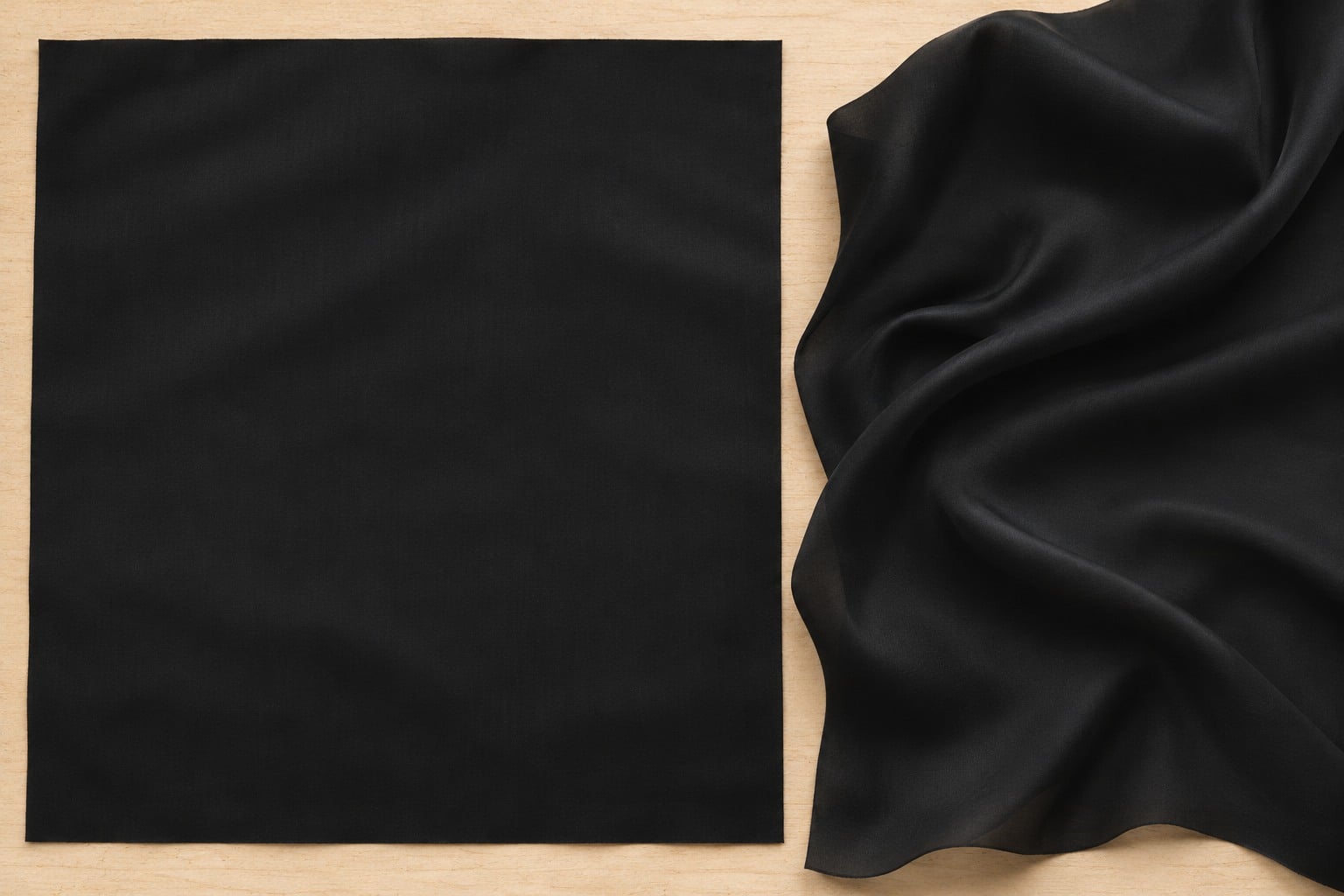
This guide explains how lining buyers can make width specifications and inspection records useful. It does not report measured dimensions for the black fabric pictured. The photographs show material surface and sample layout without a calibrated scale, so no numerical width or tolerance should be inferred from them.
Define total, usable and cuttable width
Total width and usable width can describe different boundaries. The first may include edges that the cutting room cannot use; the second should identify the area suitable for the agreed application. Avoid treating “width,” “net width” and “cuttable width” as automatically interchangeable terms on purchase orders.
The public scope of ASTM D3774-18(2024) covers woven or knitted fabric width, usable width, or both. It distinguishes full-roll or bolt measurements from short specimens and states that selvedges are included unless otherwise specified. This makes a clearly stated width definition essential when a buyer needs a cutting allowance rather than an unspecified overall dimension.
The Association for Contract Textiles quality guidelines describe usable width in relation to the intended application, excluding unsuitable edges and unfinished areas. Their usable-width acceptance is based on buyer-seller agreement. Those contract-textile guidelines are useful context, not a source of universal apparel-lining dimensions or tolerances.
Write a width requirement the cutting room understands
Specify the width type, units, material state and acceptance basis together. If the order needs a minimum usable width, write that explicitly rather than listing only a nominal total width. Agree how the usable boundaries will be identified and whether the requirement applies to every inspected position, a reported range or another defined sampling decision.
Discuss visible edge damage, pin marks, unfinished coating or print coverage where relevant to the actual product. Do not automatically deduct a generic edge allowance from every textile. The suitable exclusion depends on its construction, finishing and intended use, and should be agreed before inspection.
Ask the marker planner which width the layout assumes. If the plan was built for one usable width and the received material is narrower, the issue cannot be solved by relabelling its total width. Keep the purchasing specification and cutting assumption aligned so the same term has the same meaning across teams.
| Specification item | Record clearly | Avoid |
|---|---|---|
| Width definition | Total or usable boundaries | Unexplained “width” |
| Material state | Finished condition and relaxation | Comparing unlike states |
| Sampling | Rolls and positions checked | One swatch for all bulk |
| Acceptance | Agreed minimum or decision rule | Assumed universal tolerance |
| Cutting basis | Marker’s usable width | Using overall width by default |
This checklist helps define the commercial request. The selected standard and inspection agreement govern the actual measurement procedure.
Use the current lining sample as the reference
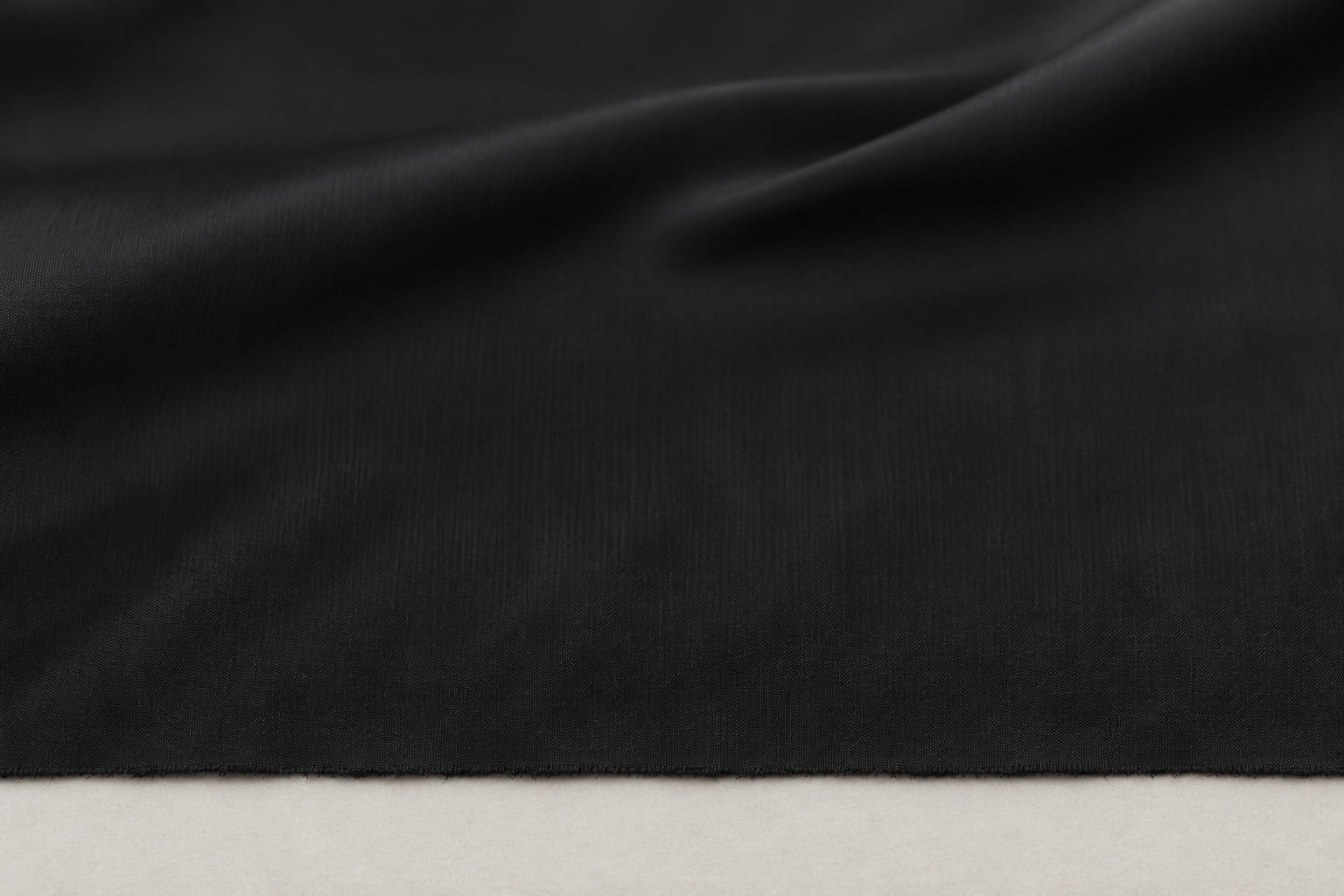
Shengchao’s black dress-lining fabric product page provides a relevant sampling candidate. Its photograph shows smooth, fine, lightweight black cloth with restrained sheen. The commercial table supplies a nominal width, but that entry does not establish the usable boundaries, roll-to-roll distribution or bulk minimum required by a particular garment marker.
Request a current sample and confirm the finished construction and material specification. The word “stretch” in a product title should also be clarified with direction and evidence where stretch matters. Do not stretch the cloth during an informal width check simply because its commercial name suggests that it can extend.
Use the broader lining fabric selection guide for the parent material decision. Width affects planning, but it does not replace checks on handle, compatibility, seam behaviour or care. A lining that fits the cutting layout still needs to work appropriately with the chosen shell and garment design.
Control the condition in which width is measured
A width recorded under tension may differ from one recorded after the cloth is relaxed. Ask which procedure and material condition the laboratory or inspection team will use, and preserve that information with the result. Avoid pulling opposite edges until the number matches the purchase order or measuring a wrinkled specimen without resolving its presentation.
For formal acceptance, follow the selected method’s conditioning and handling requirements. Record any agreed treatment before measurement, such as a defined relaxation stage. A sample after care and a newly delivered roll answer different questions, so they should not be compared as though their state were identical.
Explain whether the supplied material is open-width, folded or tubular. A folded package dimension is not necessarily its open usable width. When a tubular textile is relevant, specify the convention and conversion being used; do not assume that doubling any flat measurement supplies the cutting width for a different material form.
Keep units and boundaries visible in calculations
Convert units before comparing numbers. One inch equals 2.54 centimetres. As a purely illustrative example, 60 inches equals 152.4 centimetres. That conversion says nothing about the pictured product or the usable width inside its edges. Write both the original stated value and the converted value where a purchasing sheet mixes unit systems.
When the usable boundaries are explicitly defined as exclusions from total width, the bookkeeping relationship is: usable width equals total width minus the excluded left-edge width minus the excluded right-edge width. For example, an imaginary 150 cm overall width with agreed exclusions of 2 cm on each side leaves 146 cm usable. These numbers are explanatory inputs, not a recommended allowance or product result.
If the usable region is limited by another feature, such as the finished print area, use the agreed boundary definition rather than forcing that feature into an arbitrary edge deduction. Record the reason for any exclusion so a later team can understand why a reported usable width differs from the overall dimension.
Inspect variation instead of relying on one number
A single small specimen can help compare methods, but it cannot describe every position on every roll unless a valid sampling plan supports that conclusion. Agree which rolls and longitudinal positions will be checked. Record the actual readings, locations and any relevant edge condition rather than keeping only one convenient average.
Ask for the range or other agreed summary when width variation matters to cutting. An average can hide a narrow region that disrupts a marker. Conversely, one unusual result should be investigated within its sampling context before condemning an entire lot. Keep the measurement record sufficiently detailed to locate the concern.
Link each record to the roll label, item, colour, finish and inspection date. Where a width issue is found, identify the affected material so it can be reviewed before cutting. A photograph can document the location and condition, but the measurement still needs a suitable procedure, readable record and agreed boundaries.
Separate width from shrinkage and fabric distortion
Delivered width is one state measurement. Width change after a specified care or processing treatment is another question. The related fabric shrinkage guide explains why treatment and marked dimensions must be defined when dimensional change is assessed. Do not promise that a received width will remain unchanged after every manufacturing or care route.
The fabric bow and skew guide addresses alignment distortion. A piece may have sufficient transverse width while its yarn or pattern alignment creates a separate cutting concern. Keep width and distortion results distinct so a numerical width pass does not conceal a layout problem.
For patterned or directional material, usable area alone also does not calculate garment yield. Repeat matching, orientation, defects, seam allowances and marker efficiency may affect consumption. Ask the cutting team to evaluate the actual layout with representative material rather than estimating exact savings from width alone.
Resolve a short-width delivery with comparable evidence
Start by comparing the purchase definition, supplier record and inspection method. Check units, total versus usable boundaries, material state and specimen identity. If the parties measured different things, agree a comparable assessment before discussing a remedy. Preserve the original observations instead of replacing them with a newly interpreted figure.
If the material is below the agreed usable requirement, identify affected rolls and consult the cutting planner before production. Possible commercial responses depend on the contract and actual layout impact; no generic width rule decides them automatically. Keep any accepted revised marker, material allocation or specification change documented with the approval.
Watch an introduction to fabric geometry testing
EMMRC at the English and Foreign Languages University, Hyderabad, provides the following educational lesson on geometric fabric properties, including count and thickness. It offers context for keeping dimensions and measurement conditions clear. It is not a width-only procedure or evidence that this lining meets a particular dimension.
Frequently asked questions
Does nominal width always mean usable width?
No. Confirm the definition and excluded areas. A total dimension can include edges that are unsuitable for the intended cutting application.
Can I pull the fabric wider to check its width?
Follow the agreed measurement procedure. Uncontrolled stretching changes the condition being measured and can make results difficult to compare.
Does one swatch prove the width of every roll?
No. Agree representative sampling and retain roll and position identities. A short specimen has a limited scope unless the sampling plan supports broader conclusions.
Does more width guarantee a fixed reduction in consumption?
No. The actual marker, pattern direction, repeats and defects also matter. Evaluate cutting yield with the intended garment layout and representative fabric.